Why Do All AI Agents Love Supabase?
With Postgres at its core, Supabase is becoming the default state and memory infrastructure for agent developers.
This article discusses the views of Supabase founders Paul Copplestone and Ant Wilson: AI agents need persistent state, programmable APIs, fine-grained permissions, and vector retrieval, and Supabase's all-in-one composable architecture built around Postgres happens to cover this chain. Postgres plus pgvector lets structured data and semantic retrieval coexist within the same transaction boundary, avoiding the consistency problems of cross-database synchronization; open source and portability based on standard Postgres meet enterprise procurement considerations; and general capabilities such as row-level security and realtime subscriptions produce compound effects in agent scenarios. The article argues that the focus of competition in agent infrastructure is shifting from model capability to data and state management.
As AI agents move from the lab into real-world business, a frequently overlooked question surfaces: where should an agent's "memory" and "state" live? Supabase founders Paul Copplestone and Ant Wilson offered their answer in a recent discussion—this open-source backend built around Postgres is becoming the default infrastructure choice for agent developers.
What Kind of Backend Does an Agent Need?
The backend of a traditional application serves human users: request-response, page rendering, session management. But agents work in a completely different way—they continuously read and write state, call tools, and preserve context across long-running tasks. This means the backend must simultaneously handle several jobs: structured persistent storage, APIs that can be called programmatically, fine-grained access control, and the ability to support vector retrieval.
Supabase's architecture happens to cover this entire chain. In the discussion, Ant Wilson emphasized that Supabase is not a single-point product; rather, it packages database, authentication, storage, realtime subscriptions, and edge functions into a set of composable building blocks. For agents, this "all-in-one yet decomposable" characteristic lowers integration complexity: developers don't need to stitch together state management logic across multiple services.
Postgres as the Agent's "Memory Layer"
Both Copplestone and Wilson repeatedly returned to the same point: Postgres is not just a database—it's the ideal substrate for agent memory. The relational structure is well suited for storing task state and conversation metadata, while the pgvector extension lets the same database carry vector embeddings at the same time, avoiding synchronization between a vector database and a business database.
This "one database solves two kinds of storage" approach is especially important for agent scenarios. An agent's reasoning often needs to jump back and forth between structured records (user preferences, task progress) and semantic retrieval (historical conversations, knowledge fragments). Cross-database synchronization not only adds latency but also introduces consistency risks. Keeping both types of data within the same transaction boundary is the underlying technical reason Supabase is favored by agent developers.
pgvector Overview
pgvector is an open-source extension for PostgreSQL that adds a vector data type and corresponding index support (such as IVFFlat and HNSW), enabling Postgres to directly store and retrieve high-dimensional vector embeddings. In agent scenarios, developers often convert conversation histories and document fragments into vectors via embedding models, store them in the same table, and then use similarity queries to recall semantically relevant context. Compared with standalone vector databases, pgvector's advantage is that vectors share transactions, backups, and the permission system with business data, with no need to maintain a second data synchronization pipeline; the trade-off is that performance at very large vector scale is inferior to dedicated vector databases, but it is sufficient for most agent applications.
Open Source and Portability
Another point highlighted in the discussion is the open-source nature. Agent systems often require deep customization—custom functions, extensions, permission models—and closed-source backends create a ceiling in these areas. Supabase's open codebase means developers can audit, fork, and self-host it, which directly affects procurement decisions in enterprise-grade agent deployments.
Portability is equally critical. Supabase is built on standard Postgres, which means that even if a team changes its hosting solution in the future, the data and application logic can still be migrated. For teams treating agents as a long-term infrastructure investment, this "no lock-in" commitment carries more weight than short-term convenience.
Row Level Security (RLS)
Row Level Security is a native Postgres feature that allows policies to be defined on tables, automatically filtering visible or writable rows based on the current user's identity (such as the role or user ID in a JWT). For agents, this means that in multi-tenant scenarios each user can only access their own sessions, tasks, and memory data, without writing a large amount of permission logic in the application layer. Supabase connects RLS with its authentication system, so frontend or agent tool calls can directly carry the user token to access the database; permissions are enforced at the database layer, reducing the risk of unauthorized access and simplifying backend code.
The Compound Effect of Developer Experience
Wilson mentioned that many of Supabase's capabilities were not designed specifically for agents but are natural extensions of general backend needs—row-level security, realtime subscriptions, and auto-generated APIs. These capabilities, proven in traditional applications, produce a compound effect in agent scenarios. Agent developers don't need to reinvent permission systems or realtime notification mechanisms; they can simply reuse them.
This also explains why Supabase appears more and more frequently in the agent ecosystem. It does not win through some agent-specific feature; rather, it wins through a mature, open, composable infrastructure that happens to match agents' needs for state management and tool invocation.
Realtime Subscriptions and Auto-Generated APIs
Supabase's realtime subscriptions are based on Postgres's logical replication mechanism, pushing database changes to clients over WebSocket. For agents, this means that state updates from long-running tasks can be perceived immediately by external systems without polling the database. Auto-generated APIs expose database tables and views directly as REST and GraphQL interfaces, so an agent's tool calls can operate directly on data tables, reducing the work of writing glue code. These two capabilities were originally general backend features for traditional applications, but in a context where agents need to continuously perceive environmental changes and flexibly invoke tools, they happen to form a low-cost integration foundation.
A Signal Worth Watching
From this discussion, it is clear that the focus of competition in agent infrastructure is shifting from "model capability" to "data and state management." The preference of agent developers for Supabase essentially reflects a judgment: an agent's intelligence ceiling depends not only on the model but also on how reliably it can remember and operate on its own world. At this level, choosing a battle-tested foundation like Postgres may be more pragmatic than chasing the latest agent framework.
One-line Summary
With Postgres at its core, Supabase is becoming the default state and memory infrastructure for agent developers.
Paragraph Summary
This article discusses the views of Supabase founders Paul Copplestone and Ant Wilson: AI agents need persistent state, programmable APIs, fine-grained permissions, and vector retrieval, and Supabase's all-in-one composable architecture built around Postgres happens to cover this chain. Postgres plus pgvector lets structured data and semantic retrieval coexist within the same transaction boundary, avoiding the consistency problems of cross-database synchronization; open source and portability based on standard Postgres meet enterprise procurement considerations; and general capabilities such as row-level security and realtime subscriptions produce compound effects in agent scenarios. The article argues that the focus of competition in agent infrastructure is shifting from model capability to data and state management.
Related articles
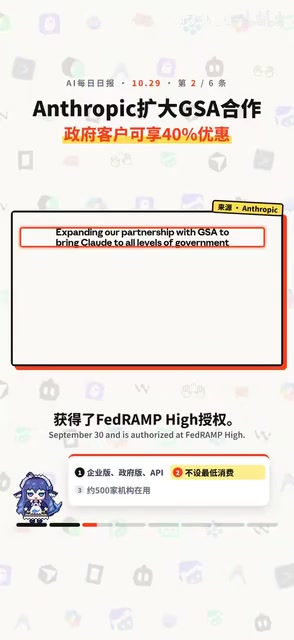
Google Releases Gemini 4 Carbon; Qwen Model Requests to Overseas Servers Spark Security Debate
Google releases Gemini 4 Carbon, topping the intelligence index but with a higher hallucination rate; Anthropic offers 40% off to government customers and reports drug discovery progress; Cohere and Palisade find Qwen 3.8 models attempting to connect to Alibaba servers; MiniMax open-sources a workflow; Anthropic launches an enterprise usage tool.
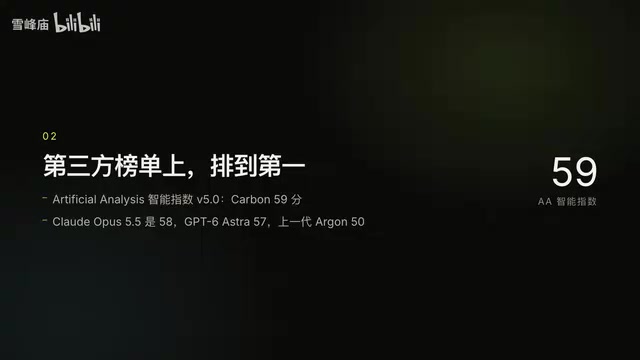
Gemini 4 Carbon Released: Tops Third-Party Leaderboard, But Ordinary Developers Still Left Out
Gemini 4 Carbon tops third-party intelligence index with standout long-context and cybersecurity capabilities, but trails Claude in coding agents and remains limited to Fairwind cyber defenders.

Google's Gemini 4 Carbon Tops the Rankings, Anthropic Achieves First Quarterly Profit
Google releases Gemini 4 Carbon, topping the Artificial Analysis benchmark, while Anthropic achieves its first quarterly profit thanks to Claude Code. This roundup covers the Artificial Analysis Intelligence Index V5 overhaul, NVIDIA's open-source speech transcription model, Ant Group's open-source Ling 3.1 Flash, and Google earnings and Chrome updates.