Why Do Insurance Adjusters Resist AI? The Hidden Concerns Behind Claims Automation

Insurance adjusters resist AI due to job threats, judgment concerns, and fairness issues in claims automation.
Insurance claims adjusters are pushing back against AI-driven automation, and their concerns go beyond job security. While AI excels at processing simple, standardized claims and detecting fraud, it struggles with complex cases requiring nuanced judgment. The deeper tension lies between insurer efficiency gains and policyholder fairness. The most promising path forward is human-AI collaboration, where AI handles routine work while adjusters focus on complex, high-value cases.
When AI Enters the Insurance Claims Office
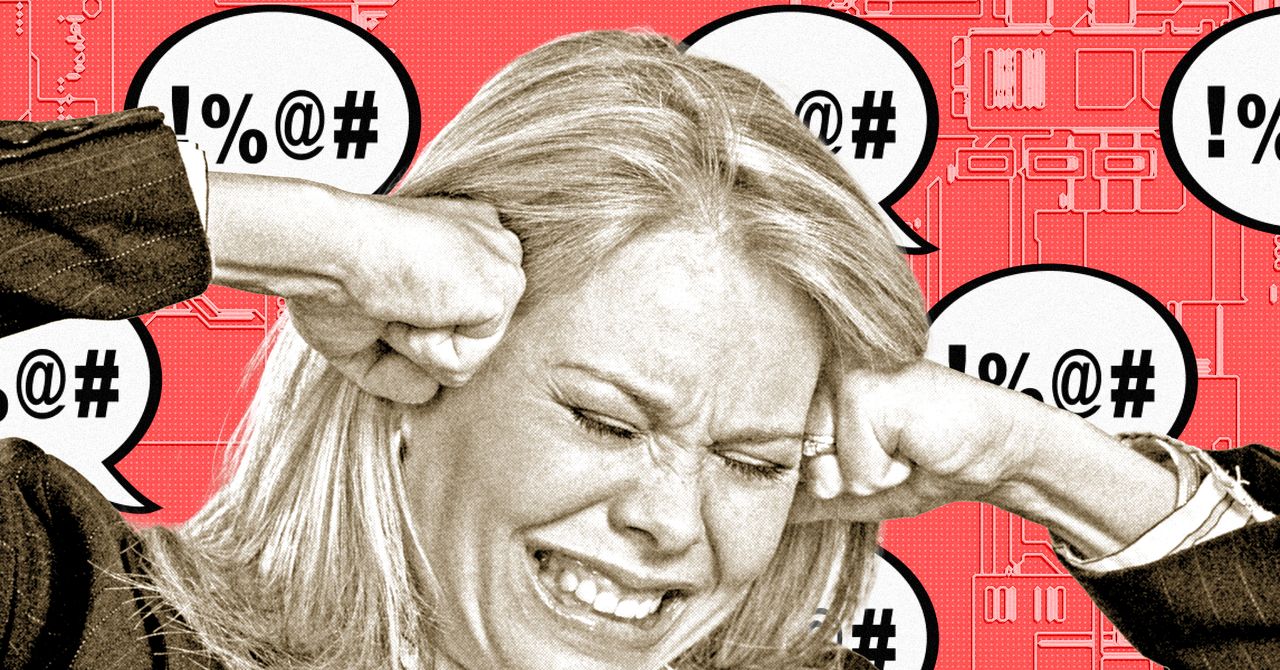
As artificial intelligence sweeps across virtually every industry, the traditional world of insurance claims is facing unprecedented transformation. And amid this upheaval, one group holds particularly complex — even resistant — attitudes toward AI technology: insurance claims adjusters.
Claims adjusters are key players in the insurance claims process. They assess damages, verify the legitimacy of claims, and determine payout amounts. This work has long depended on professional experience, on-site inspections, and human judgment. In the United States, adjusters typically need state-level licenses and fall into three categories: Staff Adjusters (in-house insurance company employees), Independent Adjusters (third-party contractors), and Public Adjusters (who represent policyholders). Their core competencies span on-site investigation, loss assessment, policy interpretation, liability determination, and negotiation. According to the Bureau of Labor Statistics (BLS), there are roughly 300,000 claims-related professionals in the U.S., earning an average annual salary of about $70,000. However, job growth in the field has nearly flatlined in recent years — partly due to the encroachment of automation. In China, auto insurance adjusters face similar challenges, with AI products like Ant Group's "DingSunBao" already deployed across multiple insurance companies.
Now, as more and more insurers adopt AI to automate these processes, the core interests and professional dignity of practitioners are inevitably at stake.
The Core Reasons Adjusters Resist AI
The Real Threat of Job Displacement
The most immediate concern is job security. AI-powered image recognition can already assess vehicle damage severity from photos in seconds. Natural language processing can parse claims documents. Machine learning models can generate payout estimates in moments that once took hours.
Behind these capabilities lie convolutional neural networks (CNNs) from the computer vision field. These models are trained on vast datasets of labeled vehicle damage photos, learning to identify dents, scratches, deformation, and fractures, then cross-referencing them with repair cost databases to automatically generate payout estimates. Companies like Tractable and CCC Intelligent Solutions have already commercialized and deployed such technologies. Natural language processing (NLP) is used to parse unstructured text from claims applications, medical records, and police reports, extracting key information such as accident timing, involved parties, and injury types — dramatically reducing the time spent on manual reading and data entry. The combination of these two technologies makes end-to-end automated claims processing — known as Straight-Through Processing (STP), where claims go from filing to payout with zero human intervention — a genuine possibility.
When an algorithm can handle thousands of simple claims cases, the value of a large number of entry-level adjuster positions is being fundamentally reassessed.
For adjusters who have spent years accumulating field experience, this shift means the professional skills they depend on for their livelihood could be devalued in short order. This isn't just a matter of income — it's a crisis of professional identity.
Deep Skepticism About AI Judgment Quality
Beyond job anxiety, adjusters' resistance to AI also stems from profound doubts about the technology's reliability. Claims work is full of gray areas: determining fault in an accident, deciding whether damage is actually related to the incident, assessing whether a claim is fraudulent — all of these require holistic judgment, not simple pattern matching.
Adjusters worry that over-reliance on AI will lead to rigid, one-size-fits-all decisions that overlook the unique circumstances of each case and the need for human consideration. An algorithm might reach the wrong damage assessment due to photo angle, lighting conditions, or training data bias — and that error ultimately falls on the policyholder.
The True Capability Boundaries of AI in Insurance Claims
Claims Scenarios Where AI Excels
Objectively speaking, AI does offer distinct advantages in insurance claims. For highly standardized cases — such as minor vehicle scrapes or clear-cut property damage — AI can significantly boost processing efficiency, reduce operational costs, and eliminate human-caused delays. Automated claims can deliver payouts to policyholders within minutes, dramatically improving the customer experience.
Additionally, AI shows considerable potential in fraud detection. By analyzing massive volumes of historical data, machine learning models can identify anomalous patterns that are virtually invisible to the human eye, helping insurers reduce fraud losses. Specifically, AI fraud detection relies on two main technical approaches: supervised learning models train classifiers on confirmed fraud cases and legitimate cases to assign fraud probability scores to new claims; unsupervised learning uses clustering analysis and Anomaly Detection to identify claims behavior that deviates from normal patterns — such as an unusually high frequency of claims from the same repair shop in a short period, or the same witnesses or medical facilities appearing across multiple unrelated incidents. Social Network Analysis is also widely used, mining hidden relationship networks among claimants, repair shops, attorneys, and medical providers to identify organized fraud rings. According to the Coalition Against Insurance Fraud, insurance fraud costs the U.S. over $80 billion annually, making AI applications in this area enormously valuable.
Complex Scenarios Where AI Falls Short
However, AI's limitations are equally apparent. Complex claims involving multiple parties still require human professional judgment and coordinated communication. Scenarios involving emotional trauma, dispute mediation, or special circumstances are areas where current AI simply cannot perform adequately.
More critically, claims decisions often involve significant financial stakes and legal liability. When AI makes an error, questions of accountability, appeal mechanisms, and regulatory compliance remain unresolved. Under the traditional model, an adjuster's judgment is governed by insurance regulations and industry standards, with clear accountability mechanisms when errors occur. But when decisions are made by algorithms, the "black box" problem makes liability assignment murky. The EU's AI Act has classified AI systems used in insurance claims as "high-risk" applications, requiring them to meet strict standards for transparency, explainability, and human oversight. Multiple U.S. states have also begun requiring insurers to disclose how AI is used in pricing and claims decisions. The International Association of Insurance Supervisors (IAIS) has issued AI governance guidelines emphasizing that AI applications must not result in unfair discrimination or systemic bias. Explainable AI (XAI) techniques — such as SHAP values and LIME methods — are attempting to make algorithmic decision logic understandable to humans, but their application to complex deep learning models still faces challenges. This is also a core reason many practitioners believe AI cannot fully replace human adjusters.
The Tug-of-War Between Efficiency and Fairness: Who Really Benefits?
It's worth reflecting on the deeper tension that adjusters' resistance to AI reveals: the fundamental conflict between efficiency and fairness in the insurance industry. The primary motivation for insurers adopting AI is to cut costs and boost efficiency. But whether the interests of policyholders and frontline employees are adequately protected in this process is a question that demands vigilance.
If AI is used to systematically lowball payouts or expedite claim denials, policyholders will be the ones who suffer. And adjusters, who have traditionally represented professional judgment and human consideration, serve in some sense as a counterbalance to this potential bias through their very resistance.
In other words, adjusters "hating AI" isn't solely about self-preservation — it also reflects legitimate concerns about the direction of the industry. When technology gives insurers even greater informational advantages and decision-making efficiency, how to safeguard consumer rights becomes an issue that cannot be ignored.
Toward Human-AI Collaboration: The Path Forward for Adjusters
The more realistic picture may not be AI replacing adjusters, but rather deep collaboration between the two. AI handles standardized, repetitive work, freeing human resources to tackle complex, high-value cases that require nuanced judgment. The adjuster's role may shift from "executor" to "supervisor" and "decision-maker," focusing on areas where AI falls short.
This Human-AI Collaboration model has already been implemented in several ways in insurance claims. The most common is the "AI pre-screening + human review" model: AI systems first triage claims, automatically processing simple cases (typically 60%-70% of total volume) while flagging and routing complex cases to adjusters. Lemonade insurance once announced that its AI system approved a claim in just 3 seconds, though the company also acknowledged that complex cases still require human handling. Another model is "AI-assisted decision-making," where AI provides adjusters with data analysis, comparable case references, and risk scores, but the final decision authority remains with the human. Global reinsurance giants Swiss Re and Munich Re are both promoting the concept of Augmented Intelligence, emphasizing that AI should enhance rather than replace human judgment.
For practitioners, proactively embracing technology and strengthening capabilities in complex case handling, client communication, and ethical judgment may be more constructive than outright resistance. This transformation requires adjusters to shift from traditional field investigation skills toward data literacy, technology collaboration, and complex problem-solving. For insurers and regulators alike, building transparent, appealable, and accountable mechanisms alongside AI deployment will determine whether this transformation can truly deliver a win-win for all stakeholders.
Conclusion
The phenomenon of "adjusters hating AI" is a microcosm of the human-machine tensions inherent in deploying AI technology. It reminds us that any technological transformation is not merely a question of efficiency — it also involves employment, fairness, accountability, and trust. While celebrating the conveniences AI brings, we also need to genuinely listen to the voices of professionals disrupted by technology, because their concerns often point to the blind spots most easily overlooked in technological adoption.
Related articles

Workbuddy for Absolute Beginners: How a Desktop AI Agent Fits Into Real Workflows
A beginner's guide to the Workbuddy desktop AI agent: installation, claiming credits, file management, and building automated workflows—compared with CodeX for fit and cost, helping professionals shift from AI question-askers to AI managers.

OpenAI's New Agent Stack: Computer Use, Decisions API, and Ultra-Fast Workflows
OpenAI Dev Day unveiled a new agent stack: Computer Use outperforms humans, Decisions API delivers ultra-low-latency classification via Luna, Agents API opens the same Computer Use capabilities, and GPT-6.1 Sol costs only one-seventh of Astra. Core updates, benchmark data, and developer insights.

Liang Wenfeng Open-Sources DeepInfo Inference Framework, Takes On U.S. Ban
DeepSeek open-sources its DeepInfo inference framework after its models, featuring GPU/CPU cross-pipelining, small-model prediction with large-model verification, and full Huawei Ascend and NVIDIA chip support—facing the U.S. federal ban head-on. This article analyzes its significance for AI deployment and open-source strategy.