Why Hydra Might Be Immortal: Unraveling the Secrets of Undying Regeneration

Hydra went from being mistaken for a plant to becoming a model organism for studying regeneration and immortality.
The article reviews the discovery history of Hydra: in 1740, Swiss naturalist Trembley discovered this organism in pond water and was confused about whether it was a plant or an animal due to its regenerative ability. Today Hydra is classified under Cnidaria, remains in polyp form throughout its life, lives a sessile existence, and can reproduce both asexually by budding and sexually. The article highlights two remarkable abilities of Hydra: first, its extreme regenerative capacity, which can even reassemble into a complete individual after being completely dissociated into single cells; second, its stem cell pool remains constant throughout life, with all cells renewed about every 20 days, preventing the accumulation of age-related damage and making it theoretically immortal. Hydra research provides important clues for developmental biology, regenerative medicine, and anti-aging research.
Hydra is a tiny freshwater organism whose story is full of surprises—from being mistaken for a plant in the 18th century to becoming a model organism for studying regeneration and aging today. This TED-Ed science video reintroduces us to the immortal secrets hidden in what was once considered "pond scum."
From Myth to Laboratory: The Discovery of Hydra
In 1740, Swiss naturalist Abraham Trembley was tutoring noble children when he scooped up some pond water for them to observe, and unexpectedly discovered a strange little creature. He couldn't determine whether it was a plant or an animal—its movement and feeding were animal-like, but it could regenerate after being cut apart or even bisected, which seemed plant-like, and it was also green. Trembley noticed its resemblance to the Hydra of Greek mythology, and the name has stuck ever since.
Today we know that Hydra is a genus under the phylum Cnidaria, and a true aquatic animal. Unlike close relatives such as jellyfish, Hydra remains in the polyp form throughout its life and does not go through a free-swimming medusa stage. Their bodies are simple cylinders with a foot at one end and a mouth at the other, surrounded by tentacles that fan out.
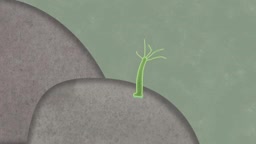
Hydra will prey on almost anything small enough to catch. Although they can move when necessary, most of the time they anchor themselves in place using sticky substances secreted by their foot. They can reproduce sexually, but more commonly reproduce asexually—budding new individuals from their bodies. Different species of Hydra inhabit different locations in freshwater ponds and slow-moving streams, and vary in shape, size, and color. For example, the green hydra prefers sunlit waters to nourish the photosynthetic algae within its body; the algae give it its green color and repay it with sugars and other nutrients. This partly explains Trembley's confusion over whether it was an animal or a plant. Species such as the brown hydra, on the other hand, prefer shaded areas and are more aggressive predators.
Cnidaria is a large phylum of mostly marine invertebrates, including jellyfish, sea anemones, corals, and Hydra. Their common features include bodies composed of two epithelial layers (ectoderm and endoderm) separated by a non-cellular mesoglea, and unique cnidocytes used for predation and defense. Cnidarians typically have two basic body forms: the sessile polyp and the free-swimming medusa, and many species alternate between these forms in their life cycle. Hydra belongs to the class Hydrozoa, one of the more diverse classes within Cnidaria, but not all its members remain in polyp form throughout life like Hydra—for example, the Portuguese man o' war, though a hydrozoan, is a floating colony. Thus, Hydra's "no medusa stage" trait is not a universal rule among cnidarians but a reflection of its specific life-history strategy.
Regeneration: From Severed Limbs to Reassembly
Hydra's tentacles are covered with cnidocytes containing pressurized harpoon-like structures. Once triggered, these structures fire at explosive speed, paralyzing small prey. This adaptation does not protect Hydra from larger predators, but their lack of defense is compensated by unparalleled regenerative ability.
Hydra can not only regrow lost appendages but can also reassemble themselves after undergoing a process akin to "blending"—during which they are completely dissociated into individual cells. These cells first aggregate into a sphere, then begin to self-sort, gradually hollowing out and elongating, grouping into outer and inner layers. Soon, several buds grow at one end to become tentacles, and the other end develops into a foot. Within days, the Hydra is fully restored, swaying and catching worms as if nothing had happened.
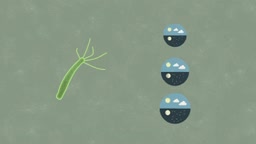
In the laboratory, this process helps reveal the mysteries of embryonic development, because some of its stages and proteins are shared across all animals—though the ability to do this at will, as Hydra does, clearly is not. Interestingly, if multiple Hydra undergo this dissociation process, the resulting cells can form a single Hydra. This may be because their immune systems do not distinguish self from non-self, even across species. However, Hydra formed from a mix of multiple species will disintegrate because their cell types cannot adhere properly. But when they all come from the same species, they are nearly unstoppable.
The Cellular Mechanism of Never Aging
All animals have stem cells, which can divide and differentiate into specialized cell types. But in humans, stem cells decline after embryonic development and are confined to specific parts of the body. In Hydra, however, stem cell levels remain constant, can help replace any part of the body, and appear to divide indefinitely. Over about 20 days, all of a Hydra's cells are renewed. This continuous renewal prevents the accumulation of age-related cellular damage while enabling seemingly unlimited regeneration and reproduction.
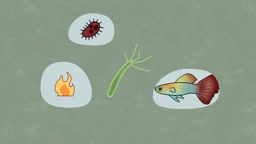
Hydra are not indestructible, but as long as nothing kills them, they can theoretically live forever without aging. Many Hydra have indeed survived for years in laboratories, teaching us about development, regeneration, death, and tentacled freshwater life. All of this comes from organisms once mistaken for pond scum.
Research on Hydra reminds us that immortality may not be an unattainable myth, but a biological problem that some organisms in nature have already solved. By understanding how Hydra maintains its stem cell pool and prevents aging, scientists may find new clues for human tissue regeneration and anti-aging research.
Stem cells are undifferentiated cells with the ability to self-renew and differentiate into one or more specialized cell types. Depending on their source and differentiation potential, stem cells can be classified as embryonic or adult stem cells; by potency, they can be divided into totipotent, pluripotent, multipotent, and unipotent stem cells. In most adult animals, stem cells reside in specific tissue microenvironments (niches), are limited in number, and their regenerative capacity declines with age. What makes Hydra special is that large numbers of pluripotent interstitial stem cells are distributed throughout its body; they continuously divide and replenish all cell types, including cnidocytes, nerve cells, and gland cells. This state of "constant stem cell pool" means that Hydra's tissue renewal is systemic and lifelong, rather than confined to a few tissues. Understanding how Hydra maintains stem cell pool homeostasis—for example, through signaling pathways that regulate the balance between proliferation and differentiation—is precisely the core question scientists hope to apply to human regenerative medicine.
One-line Summary
Hydra went from being mistaken for a plant to becoming a model organism for studying regeneration and immortality.
Paragraph Summary
The article reviews the discovery history of Hydra: in 1740, Swiss naturalist Trembley discovered this organism in pond water and was confused about whether it was a plant or an animal due to its regenerative ability. Today Hydra is classified under Cnidaria, remains in polyp form throughout its life, lives a sessile existence, and can reproduce both asexually by budding and sexually. The article highlights two remarkable abilities of Hydra: first, its extreme regenerative capacity, which can even reassemble into a complete individual after being completely dissociated into single cells; second, its stem cell pool remains constant throughout life, with all cells renewed about every 20 days, preventing the accumulation of age-related damage and making it theoretically immortal. Hydra research provides important clues for developmental biology, regenerative medicine, and anti-aging research.
Related articles

Kimi K3.1 Hands-On Test: Open-Source Model Nears Opus, Video Generation Steals the Show
Kimi K3.1 completed motion graphics, 3D rendering, mini-games, and video generation in a live test. Analysis of its 2.8T MoE architecture, gap vs Opus/GPT, and hidden video generation.

Sam Altman: Why Life's Biggest Advice Should Still Come from Humans
OpenAI CEO Sam Altman on the limits of AI advice: AI can talk you out of an impulsive email, but life's biggest advice should still come from humans.

"Black October": Did AI Uncover 3% of All Critical Vulnerabilities Ever?
A Reddit post claims 3% of all critical software vulnerabilities ever were found in the past month, dubbed 'Black October.' We break down the statistical issues, how AI-assisted code auditing accelerates discovery, and how developers should respond.