Why Is LangGraph Supervisor So Token-Hungry? A Hop-by-Hop Cost Breakdown
In LangGraph multi-agent architectures, the Supervisor re-reads context at every hop, driving its token cost above all workers combined.
The article opens with a Reddit case: a team built a multi-agent system with LangGraph, and the monthly token consumption of a single Supervisor node rivaled the combined total of its 8 expert agents. The root cause is create_supervisor's default behavior—the Supervisor gets re-invoked after every worker completes, each time re-reading an ever-expanding shared message list and routing prompt. Since the repository is archived and LangChain recommends implementing the supervisor pattern directly with tools in most cases, the article offers five source-level optimization directions and emphasizes hop-by-hop token measurement over monthly totals alone.
In the monthly token bill of a LangGraph multi-agent system, the consumption of a single Supervisor node turned out to equal the combined total of all 8 expert agents under it. This case from Reddit is worth a closer look not because the numbers are exaggerated, but because it exposes a long-overlooked cost structure problem in multi-agent architectures.
The Hidden Bill of Multi-Agent Architectures: Why the Supervisor Eats Half the Tokens
This team ran Qwen3-14B on vLLM, applied deterministic shortcuts for simple scenarios, yet their routing prompt kept expanding—in their own words, "we accumulated a lot of rules and examples to prevent misrouting." The end result was a rather ironic situation: the Supervisor in charge of "commanding" ended up costing more than the experts actually doing the work.
The problem isn't model selection, nor whether the prompt is well-written. It's that the default behavior of create_supervisor means the Supervisor gets re-invoked after every worker completes. That is, if the Supervisor first dispatches to Agent A, then to Agent B, it runs three times: once for the initial routing, then once more after each worker finishes.
create_supervisor is the factory function provided by the langgraph-supervisor library. With a single line of code, it hooks one or more worker agents under a central Supervisor, automatically generating routing logic, the handoff state machine, and the message-passing pipeline. Its default parameters (such as output_mode="last_message", add_handoff_messages=True) are designed for "generally usable" rather than "cost-optimal," so in production they often need to be explicitly overridden. Understanding the assumption behind the defaults—that the Supervisor is a lightweight dispatcher and workers are heavy-load executors—is a prerequisite for identifying the cost-inversion problem: when the routing prompt swells to the same magnitude as the task prompt, that assumption breaks down.
Where Exactly Do the Tokens Go: A Hop-by-Hop Breakdown of the Supervisor's Context
Every time the Supervisor is woken up, it has to re-read the entire shared message list. That list accumulates:
- Every user turn of input
- Every previous routing call the Supervisor itself made
- A pair of transfer messages generated by each handoff and return
- The last message of each worker, or its last tool call and result if it stopped on a tool call (
output_mode="last_message"is the default)
The key to this mechanism is: the Supervisor runs at every hop, and the history it carries grows longer each time. Anything you write into the Supervisor prompt—in that team's case, including each agent's description plus a large number of few-shot examples—gets passed along in full on every call.
Workers also receive the full history when handoff occurs. This is the root cause of non-linear token growth: it's not that a single call is expensive, it's that the number of calls multiplies against an ever-expanding context.
Prefix cache is a key cost-optimization mechanism in large model inference services. When multiple requests share an identical prompt prefix, engines like vLLM can reuse that portion of the KV cache, skip recomputation, and thereby dramatically reduce first-token latency and compute cost. But its precondition is that the prefix is byte-for-byte identical: any insertion, modification, or timestamp difference invalidates the cache from that point onward. In multi-agent scenarios, the Supervisor's routing prompt is typically fixed at the start of the prompt, with worker output appended afterward—a structure naturally suited to prefix caching. Conversely, if you place a changing timestamp or dynamic few-shot examples at the top of the prompt, you'll punch through the cache on every call, multiplying routing costs.
Official Stance: Repository Archived, Tool Mode Recommended Instead
Worth noting is that the langgraph-supervisor repository has now been archived. The README explicitly states that LangChain recommends "implementing the supervisor pattern directly through tools in most cases." LangChain's multi-agent documentation also points out this pattern's cost: subagents add "one extra call, because the result has to flow back through the main agent."
This isn't a rejection of the Supervisor pattern's value, but a reminder: when you need a central orchestrator, you should be clear-eyed about its cost structure and applicability boundaries. Simple task dispatch can be handled with tool calls alone; only scenarios that genuinely require multi-turn negotiation and dynamic planning justify a full Supervisor.
Cost Optimization: Five Source-Verifiable Fix Directions
The good news is that most fixes are small, and all have grounding in the source code:
1. Route follow-up questions straight to the current agent. Detect whether the topic has switched (a cheap check suffices); if unchanged, send it directly to the agent already handling the conversation rather than looping back through the Supervisor.
2. Trim the router's input. Pass only the latest user message plus a short summary to the router, not the entire history. Adding a pre_model_hook to the Supervisor can prune what it sees.
3. Stop the accumulation of transfer messages. create_supervisor's add_handoff_messages=False and add_handoff_back_messages=False can remove these paired handoff messages from the history.
4. Preserve the prefix cache. Ensure the start of the routing prompt stays consistent across calls. A timestamp placed at the top will break the prefix cache for everything after it. On vLLM, also make sure the router's enable_prefix_caching is turned on.
5. Intercept deterministic intents before the LLM. Handle unambiguous intents directly in code, just as that team is already doing.
Measurement Matters More Than Optimization: Breaking Down Token Usage Hop by Hop
Looking at monthly totals won't tell you which hop is most expensive. LangSmith's trace tree can break down token usage by run; the open-source project traceAI-langchain is an OpenTelemetry instrumentor that assigns an independent span to each LangGraph node and records token counts on the LLM calls beneath it (provided the model returns usage), so the Supervisor's share becomes visible hop by hop.
Before saving tokens, first understand which hop the tokens are being spent on.
LangSmith trace tree is the core view of LangChain's official observability platform. It expands a complete request into a tree structure: the root node is the top-level agent call, and child nodes are each LLM call, tool call, and node transition, with each node carrying token usage, latency, and inputs/outputs. For a Supervisor architecture, this means you can directly see how many tokens "initial routing" and "re-checking after worker completion" each consume, rather than having them masked by monthly totals. traceAI-langchain is an open-source alternative that, via OpenTelemetry's instrumentor mechanism, generates an independent span for each LangGraph node and records the usage field on the LLM calls beneath it (requires the model side to return that field). Both turn token consumption from a "total black box" into a "hop-by-hop breakdown."
A Question Left for Production
The original article ends with two questions worth asking yourself if you run a Supervisor:
Does your Supervisor really need to take another look after every worker completes? Or can the final answer be sent straight to END?
And: After trimming your few-shot examples, did your routing accuracy drop?
There are no standard answers to these two questions; it depends on your task complexity. But if your Supervisor cost already exceeds the sum of all your experts, it's probably time to reconsider this architectural choice.
One-line Summary
In LangGraph multi-agent architectures, the Supervisor re-reads context at every hop, driving its token cost above all workers combined—requiring source-level optimization and hop-by-hop measurement.
Paragraph Summary
The article opens with a Reddit case: a team built a multi-agent system with LangGraph, and the monthly token consumption of a single Supervisor node rivaled the combined total of its 8 expert agents. The root cause is create_supervisor's default behavior—the Supervisor gets re-invoked after every worker completes, each time re-reading an ever-expanding shared message list (user input, routing history, transfer messages, worker output) and the routing prompt. Since the repository is archived and LangChain recommends implementing the supervisor pattern directly with tools in most cases, the article offers five source-level optimization directions: route straight to the current agent, trim router input, disable handoff messages, preserve prefix cache, and short-circuit deterministic intents—emphasizing hop-by-hop token measurement over monthly totals alone.
Related articles
LangGraph Crash Course: Building Enterprise-Grade AI Agents and Workflows from Scratch
LangGraph crash course: learn its independence from LangChain, MIT license, FastAPI high-concurrency deployment, human approval, and memory storage for enterprise AI agents.
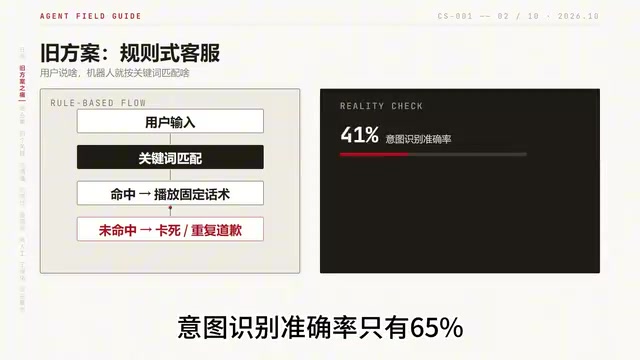
Building an AI Customer Service Agent from Scratch: A 92% Intent Recognition Case Study
A Bilibili case study: building an AI customer service agent from scratch with BERT intent recognition, dialogue state tracking, hybrid vector retrieval, and a weighted handoff model—raising intent accuracy from 65% to 92%, 78% conversation completion, handling 100K conversations daily.
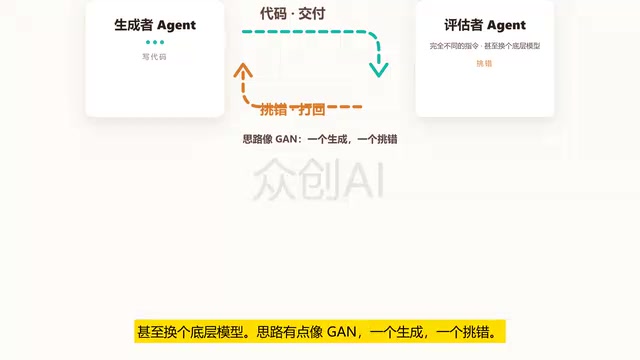
Loop Engineering: An Engineering Paradigm for AI That Writes Code and Merges PRs Autonomously
Loop Engineering is transforming AI development pipelines: Stripe's Minions system merges over 1,300 machine-generated PRs weekly. This article breaks down Loop Engineering's five core actions, six components, five failure modes, and three safety disciplines, explaining why independent evaluators, state files, and budget caps matter more than full automation.