Why LRU Cache Eviction Is Harder to Beat Than You Think: The Blind Spot in KV-Cache Papers
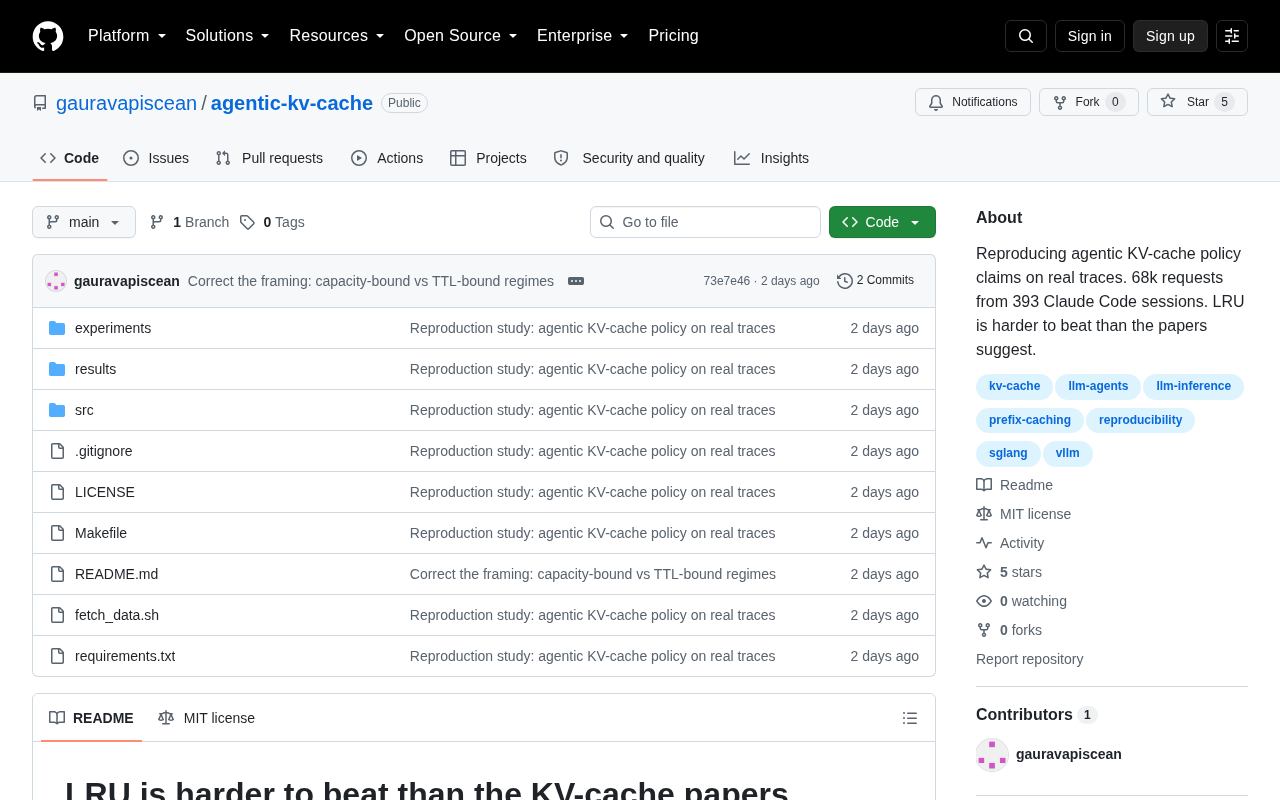
LRU's simplicity and robustness make it far harder to beat than most KV-Cache papers admit.
A growing body of academic work claims novel KV-Cache eviction algorithms significantly outperform classic LRU — but a discussed post argues LRU is far harder to beat than those papers suggest. LRU's low implementation cost, cross-scenario robustness, and zero assumptions about future access patterns set an extremely high bar. Algorithms claiming to beat LRU often rely on cherry-picked benchmarks, focus only on hit rate, and ignore hidden costs like CPU overhead and implementation complexity. The practical advice: tune LRU properly before comparing, test on real diverse workloads, account for total cost, and don't rush to replace a proven classic with a complex new scheme.
In the field of large language model inference optimization, KV-Cache (key-value cache) management strategies have become a hot research topic. Academic papers continuously propose increasingly complex cache eviction algorithms, claiming significant improvements over the classic LRU (Least Recently Used) strategy. Yet a post that sparked discussion on Hacker News raises a thought-provoking point: LRU is far harder to beat than those KV-Cache papers suggest.
An Underrated Classic: LRU's True Strength
LRU is a battle-tested algorithm in the cache eviction space, built on a remarkably simple idea — evict the data that hasn't been accessed for the longest time. That very simplicity is what has kept it relevant for decades. It requires no complex prior knowledge, makes no predictions about future access patterns, and introduces virtually no computational overhead.
Many newly proposed cache management papers tend to demonstrate their advantage over LRU on specific, carefully constructed benchmarks. The real question is whether those test scenarios genuinely reflect production workloads. This is the core of the original author's skepticism: when a paper claims a new algorithm beats LRU, the baseline comparison may be skewed, or the chosen workload may have been selected to amplify the new algorithm's strengths while sidestepping LRU's.
The Caching Challenge in KV-Cache Scenarios
During LLM inference, KV-Cache stores the key-value pairs already computed by the attention mechanism, avoiding redundant computation. As context lengths grow and concurrent requests multiply, KV-Cache consumes GPU memory at an alarming rate — making efficient management of this expensive resource a critical problem.
This has spawned a wave of research aimed at designing smarter eviction policies than LRU — for example, deciding which cache entries to keep based on token importance, attention scores, or access frequency. In theory, these approaches leverage domain knowledge to make better decisions than a simple "least recently used" heuristic.
In practice, however, the complexity tends to exceed expectations. These advanced strategies require additional metadata tracking, scoring calculations, and maintenance overhead. Once these costs are factored into the full picture, the net benefit over LRU can shrink dramatically — or even become a net loss in certain scenarios.
Why LRU Is Genuinely Hard to Beat
Based on the discussion the post sparked, LRU's resilience manifests across several dimensions.
Implementation Cost and Robustness
LRU is extremely lightweight to implement and performs consistently across a wide variety of access patterns. The advantages that complex algorithms show in specific patterns are often accompanied by performance degradation in other patterns. Cache policies must handle diverse, unpredictable real-world traffic — an algorithm that excels on a lab dataset may not hold up against the edge cases of a production environment.
Selection Bias in Benchmarks
Academic papers inherently have an incentive to showcase their method's superiority. Researchers may select workloads that highlight the new method's strengths, and this selection bias can unintentionally inflate the apparent improvement. A fair evaluation of a cache algorithm requires testing across broad, representative workloads, with LRU as a properly tuned, strong baseline — not a carelessly implemented straw man.
Hidden Engineering Costs
Many papers compare algorithms solely on hit rate while ignoring CPU overhead, memory footprint, and implementation complexity. An algorithm with a marginally higher hit rate but double the computational cost can actually be a disadvantage in latency-sensitive inference services. Only a holistic evaluation reveals the full picture.
Implications for AI Systems Engineering
The value of this discussion lies not just in rehabilitating LRU's reputation, but in urging the entire AI systems optimization field to maintain critical rigor. As more and more papers propose various optimization schemes, practitioners need to establish a more rigorous evaluation framework: use real, diverse workloads; tune simple baselines to their best before comparing; and incorporate implementation costs and runtime overhead into the complete accounting.
For teams building LLM inference services, this means there's no need to rush and abandon battle-tested LRU in favor of the latest complex scheme from a recent paper. A well-implemented and well-tuned LRU is often already a remarkably strong choice. Any alternative should be validated on your own actual workload, through a fair and comprehensive test, before a decision is made.
It's worth noting that this article is based on a Hacker News post with relatively low engagement (13 points, 4 comments), so the original source material is limited. The analysis above is primarily an extended interpretation of the core point revealed by the title. Readers interested in the details are encouraged to consult the original post and relevant KV-Cache research papers for more technical depth.
Related articles

QApilot MCP: Test Android Apps in Natural Language Inside Your AI Coding Assistant
QApilot MCP lets developers test Android apps in natural language inside Claude, Cursor, and Codex — no Appium code needed. Auto-generates reusable Gherkin test cases.

ajisai: A Preset Management Tool for Unifying Rules and Prompts Across AI Coding Assistants
ajisai is a Go-based preset manager for AI coding assistants like Cursor and Claude Code. Package rules and prompts once, deploy everywhere. Early-stage but promising.
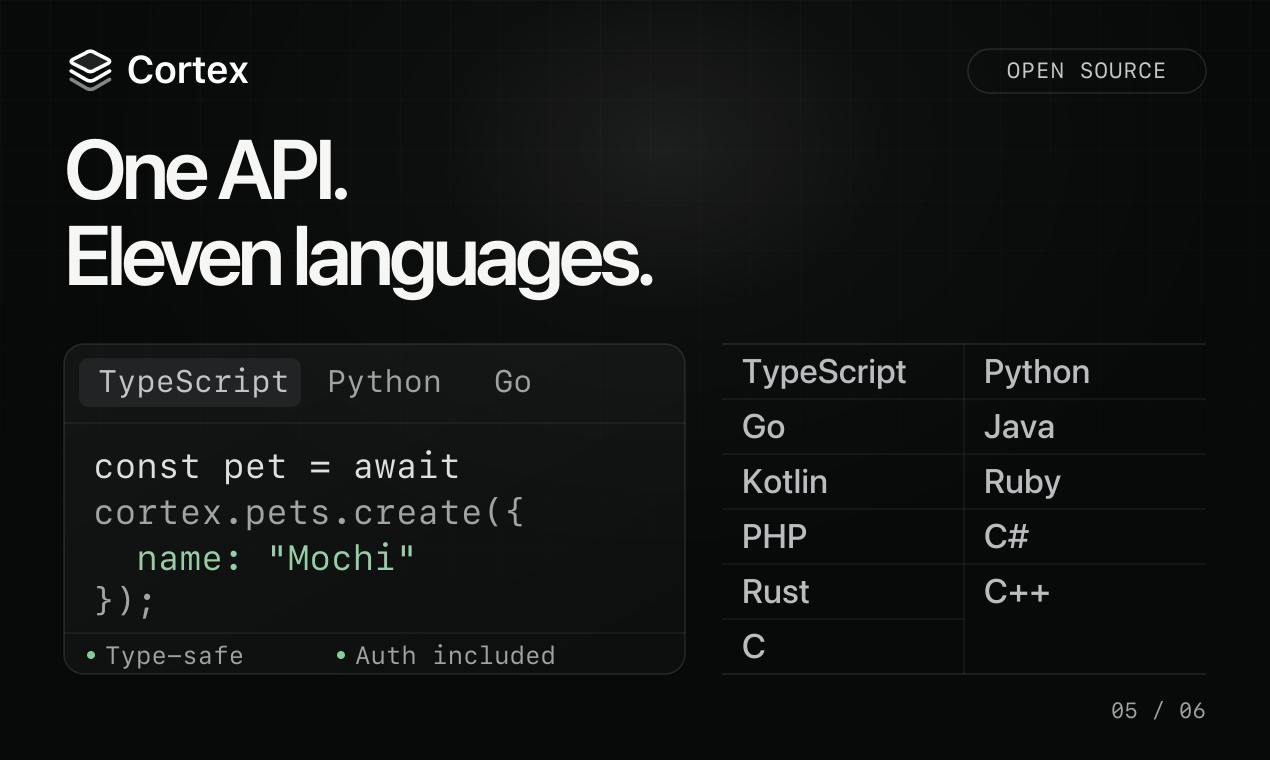
Cortex: Convert API Specs into Docs, SDKs, and MCP Servers in One Click
Cortex is an open-source tool that converts OpenAPI, GraphQL, gRPC and more into interactive docs, typed SDKs in 11 languages, and MCP servers for AI agents.