Why Military Experts Keep Getting It Wrong: Lex Fridman Podcast Reflects on War Prediction

A military expert reflects: limited knowledge of allies, information asymmetry, and missing scenarios cause war predictions to repeatedly miss the mark.
Based on a Lex Fridman Podcast interview, the article explores why military experts repeatedly misjudge wars. Three core reasons: analytical resources focus on adversaries, leaving limited knowledge of allies, which led to overestimating Russia and underestimating Ukraine early in the conflict; information asymmetry breeds anchoring bias, as more intelligence on Russia's offensive plans leads analysts to build judgments around known information; and military power cannot be ranked in the abstract, since geography and political objectives drive strategy and force employment. The article further notes that even knowing two armies doesn't predict how they'll interact in battle, because individual choices and contingency matter too. The lesson: analysts should stay humble and start from scenarios and objectives rather than rankings.
Why do military analyses so often miss the mark? In an interview on the Lex Fridman Podcast, a military expert candidly reflected on the difficulty of predicting war. The core point: military power cannot be compared in the abstract, divorced from specific scenarios—and experts often know far less about allies than about adversaries, which directly leads to misjudgments at the outbreak of war.
The Root of Misjudgment: We Know Our Adversaries Better Than Our Allies
The expert admitted that in the early days of the Russia-Ukraine conflict, observers broadly overestimated the performance of the Russian military while underestimating the Ukrainian military's capacity to resist. The reason is not complicated: most professional analytical resources are devoted to adversary forces, while knowledge of allies and partners remains limited. "That's the nature of the profession."
Another key factor is information asymmetry. Compared with Ukraine's defense plans, Russia's offensive plans were actually more available to outside observers. When analysts hold only a large body of intelligence on one side, they easily fall into anchoring bias—building judgments around known information from the outset and neglecting the variables the other side might reveal.
Volunteers and Contingency
Ukraine's performance exceeded expectations, not only in its regular forces but also in the large numbers of volunteers who emerged in the early days of the war. The expert noted that the situation at the outset was extremely chaotic, and the collision between offense and defense was full of contingency. These individual choices and battlefield chances are very difficult for pre-war analysis to capture.
Anchoring bias is a classic concept in cognitive psychology, referring to people's tendency to over-rely on the first information obtained (the "anchor") when making decisions, with subsequent judgments adjusted around that anchor—but usually by an insufficient margin. In military analysis, this effect manifests as follows: once analysts possess a large body of intelligence on one side (such as Russia's offensive plans), they unconsciously build the overall picture on that basis, interpreting the other side's behavior as a response to known information while underestimating the other side's independent agency. Anchoring bias often appears together with confirmation bias—the tendency to seek out and credit information that supports existing judgments. Combined, these two biases make analysts with "richer" intelligence all the more likely to form rigid judgments in the early days of a war—this is the deeper mechanism behind the expert's reflection on "knowledge put to the wrong use."
Military Power Cannot Be Ranked in the Abstract
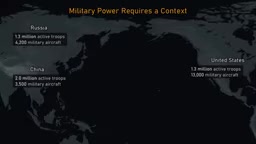
A point repeatedly emphasized in the interview: reducing a country's military power to a ranking (say, the US first, China second, Russia third or fourth) is meaningless. Military power can only be expressed in a specific context.
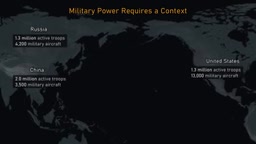
The same country can perform utterly differently in different scenarios. Imagining a US-China conflict over Taiwan is one scenario; imagining a war between China and India is another. Geography and political objectives both drive military strategy and operational concepts, which in turn determine how forces are employed—and that is the most critical part.
Knowing the Armies Is Not the Same as Knowing How They Fight
The expert further pointed out that even if you know a great deal about both armies, that does not mean you know how they will interact in a specific battle. The outcome of a clash between two forces depends on a great many individual choices, political decisions, military decisions, and a considerable degree of chance.
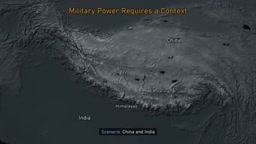
For this reason, abstract discussions of "who is stronger" often mislead judgment. The scenario itself—geography, political objectives, strategic choices—is the starting point for analysis. This also explains why military experts repeatedly miss the mark when predicting the course of wars: it is not a lack of knowledge, but knowledge put to the wrong use.
Scenario-based analysis is the core method in strategic studies that replaces static military rankings. Its basic premise is that the value of military capability can only be assessed within the triad of "mission—environment—adversary." Geography determines force projection, logistics, and operational tempo; political objectives determine how much cost one is willing to bear and how far to fight; and different adversaries expose the same force to completely different challenges. Therefore, modern defense assessment often uses the "net assessment" framework to compare the relative advantages and disadvantages of both sides in a specific conflict scenario, rather than giving a single score. This echoes the article's argument that "geography and political objectives drive military strategy": rankings answer "who has how much," while scenario analysis answers "who can accomplish what."
Fog of war and friction are classic concepts proposed by Clausewitz in On War, describing the state on the battlefield in which information is incomplete and plans are difficult to execute as intended. Friction includes the accumulation of countless small factors—weather, terrain, communications breakdowns, misjudgments, morale fluctuations—making it impossible to derive the actual clash of two armies from their respective paper capabilities. Although modern military analysis has satellite intelligence, wargaming, and combat models, it still struggles to simulate the randomness of individual decisions and the emergence of the battlefield. This is why the expert emphasizes that "knowing two armies is not the same as knowing how they fight": combat is a dynamic game between two sides in an uncertain environment, not a simple subtraction of two sets of static parameters.
Implications for Analysts
The value of this discussion lies in reminding analysts to remain humble. Military capability is not a static number that can be compared outside of context, and experts' blind spots about allies, the anchoring bias caused by information asymmetry, and the contingency of the battlefield will all cause predictions to deviate from reality. Rather than asking who ranks where, it is better to first ask: in what scenario, for what objective, and how would the two sides interact.
One-line Summary
A military expert reflects: insufficient knowledge of allies, information asymmetry, and missing scenarios cause war predictions to repeatedly miss the mark.
Paragraph Summary
Based on a Lex Fridman Podcast interview, the article explores why military experts repeatedly misjudge the course of wars. There are three core reasons: first, analytical resources are concentrated on adversaries, with limited knowledge of allies, leading to overestimating Russia and underestimating Ukraine in the early days of the Russia-Ukraine conflict; second, information asymmetry triggers anchoring bias—more intelligence on Russia's offensive plans leads analysts to build judgments around known information; third, military power cannot be ranked in the abstract outside of scenarios, as geography and political objectives determine strategy and force employment. The article further points out that even knowing two armies does not allow one to predict how they will interact in a specific battle, because individual choices and contingency are equally critical. The lesson is that analysts should remain humble and start from scenarios and objectives rather than asking about rankings.
Related articles

Prospero: A Lightweight Native AI Coding Tool Built with ImGui
Prospero is a bloat-free native AI coding tool built with ImGui, emphasizing lightweight design, high performance, and low dependencies. This article analyzes its design philosophy, technical choices, and the divergence between platformization and toolization in AI coding tools.

WebRTC Abused: New Variant of Credit Card Skimming Scripts on Shopping Sites
Security researchers found skimming scripts on popular shopping sites using WebRTC data channels to exfiltrate credit card data. This article analyzes the technical原理, differences from traditional Magecart attacks, and defense strategies for e-commerce platforms in third-party script governance and CSP policies.

Single GB10 Card Hits 101 tok/s: Inkling 2 Mini Performance Tested on vLLM
A developer shared on Hacker News running Inkling 2 Mini with vLLM on a single GB10 at 101 tok/s. This article analyzes the technical context, the significance of vLLM with small models on single cards, and caveats for interpreting tok/s metrics.