Why Musk Abandoned Ground-Based Solar: The Truth Behind xAI's Shift to Natural Gas

Musk shifts from solar advocacy to natural gas and space energy as AI compute demands reshape strategy.
Musk was once a staunch advocate of solar economy, building a clean energy loop through SolarCity and Solar Roof. But as the AI era arrives, his xAI has fully pivoted to natural gas for data centers needing stable, high-density, rapidly deployable power, while SpaceX explores orbital data centers using space-based solar. This reflects the entire tech industry's energy dilemma amid exploding AI compute demands — solar's intermittency and storage costs make it unable to independently support large-scale data centers.
Musk's Former Solar Vision
Elon Musk was once one of the loudest advocates for a solar-powered economy. From acquiring SolarCity to launching Solar Roof, from the Powerwall home battery to painting a grand vision of a "solar-electric economy," Musk once made people believe that solar energy would be humanity's ultimate energy answer.
In 2016, Tesla acquired SolarCity for approximately $2.6 billion — a solar company founded by Musk's cousins where Musk himself served as chairman. At the time, Musk framed this acquisition as a critical step toward building an "integrated sustainable energy company": generate power during the day with Solar Roof, store it with Powerwall, and charge a Tesla electric vehicle at night, forming a complete home clean energy loop. However, the deal was controversial from the start, with critics arguing it used Tesla shareholder funds to bail out a financially troubled affiliated company. In the years that followed, Solar Roof installation costs remained stubbornly high (at one point exceeding 3x the per-watt cost of conventional solar panels), and production ramp-up lagged severely, ultimately undermining this grand narrative.
Yet recent developments show that this tech billionaire has quietly shifted course in practice.
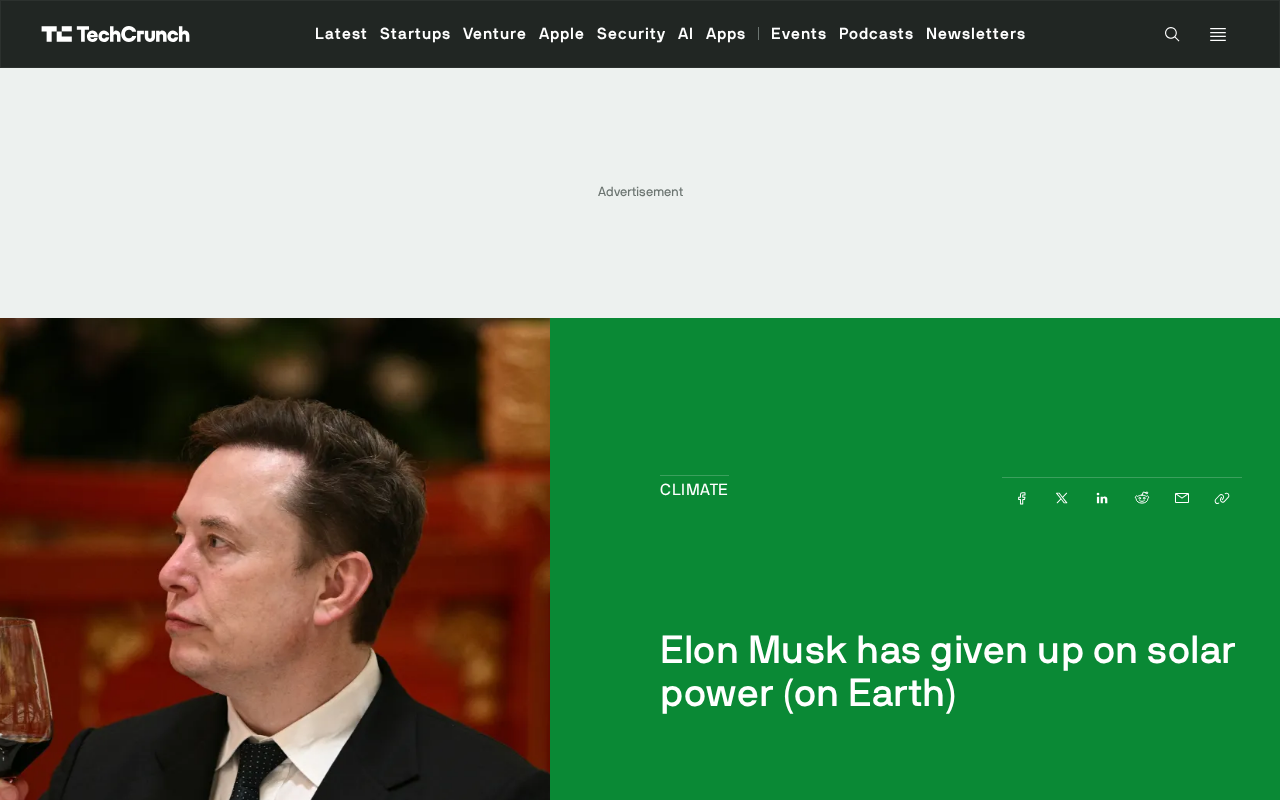
xAI Fully Embraces Natural Gas to Power Data Centers
Musk's artificial intelligence company xAI is making a massive bet on natural gas power generation. Facing the enormous computational demands of AI training and inference, xAI has chosen natural gas — not solar — as the primary energy source for its data centers.
To understand the weight of this choice, one must first grasp the staggering energy consumption of AI data centers. Training a single large language model (at the GPT-4 level) consumes electricity equivalent to hundreds of average households' annual usage. The inference stage (where the model continuously responds to user requests after going live) consumes several times — even dozens of times — more power than training. The International Energy Agency (IEA) predicts that by 2026, global data center electricity consumption will double, reaching approximately 1,000 terawatt-hours — equivalent to Japan's total annual electricity consumption. For a company like xAI that needs to deploy tens of thousands of GPUs in a short timeframe, the stability and rapid availability of power supply is the overriding priority.
This choice is driven by practical considerations:
- Stability requirements: AI data centers need uninterrupted 24/7 power supply; solar energy's intermittent nature makes it difficult to meet this demand
- Energy density: Natural gas power generation has far higher energy density than solar, delivering greater output within limited space
- Deployment speed: Compared to the construction timeline for large-scale solar farms, natural gas power facilities can be brought online much faster
The core technical challenge of solar power lies in its "intermittency": affected by day-night cycles, weather changes, and seasonal fluctuations, there is a massive gap between a solar panel's actual power generation and its rated capacity. The global average solar utilization is approximately 1,200-1,800 hours per year, meaning a 1-kilowatt rated solar panel actually generates electricity equivalent to running at full power only about 14-20% of the time. Bridging this gap requires large-scale battery storage systems, but at current lithium battery storage costs (approximately $150-200/kWh) and energy density levels, equipping a hundred-megawatt-class data center with enough storage to sustain nighttime and overcast operations remains economically uncompetitive. This is the fundamental reason solar cannot independently support AI data centers under current technological conditions, and the deeper logic behind why natural gas generators — deployable within weeks and capable of providing stable baseload power — have become the preferred transitional solution for AI infrastructure.
For an AI company urgently needing compute power to catch up with OpenAI and Google, time and reliability are clearly more pressing than environmental ideals.
SpaceX Bets on Orbital Data Centers: Another Possibility for Solar
Meanwhile, SpaceX is exploring the concept of orbital data centers. Deploying computing infrastructure in space, powered by continuous solar radiation unobstructed by the atmosphere — this sounds like an "upgrade" to solar rather than an abandonment, but fundamentally it means Musk no longer believes in the economics and scalability of ground-based solar.
Space-Based Solar Power (SBSP) was first proposed by American engineer Peter Glaser in 1968. The core principle involves deploying large solar cell arrays in geostationary orbit, converting collected solar energy into microwaves or lasers, then transmitting it to ground receiving stations for conversion to electricity. SpaceX's exploration of orbital data centers follows a different logic: placing computational loads directly at the energy source, eliminating transmission losses.
The core logic of orbital data centers:
- Solar radiation intensity in space is approximately 1,361 watts per square meter — 5-10 times the average usable radiation on the ground — unaffected by day-night cycles or weather, theoretically achieving nearly 100% time utilization
- Thermal management conditions are in some ways superior to ground environments (utilizing deep-space radiative cooling)
- Can bypass ground-based power grid capacity bottlenecks
However, the cost of launching sufficient computing equipment and cooling systems into orbit — even at SpaceX Falcon 9's approximately $2,700/kg launch cost — remains the biggest barrier to commercialization. This approach is still far from commercial viability, resembling a long-term vision rather than a near-term solution.
Why the "Solar-Electric Economy" Promise Fell Apart
Looking back at Musk's energy narrative, a clear evolutionary trajectory emerges. In the early years, he positioned Tesla as not just a car company but an energy company — building a complete clean energy loop through solar generation, battery storage, and electric vehicles.
But reality proved far harsher than the ideal:
Tesla Energy's Marginalization
Tesla's energy business continues to operate but has clearly dropped in priority within the company's strategy. Solar Roof installations have fallen far short of expectations, and the SolarCity integration is widely considered a failed acquisition.
The Energy Reality of the AI Era: An Industry-Wide Dilemma
As the AI era dawns, the explosive growth in compute demand has left all tech companies facing an energy crisis. Musk's choice is not an isolated event but a microcosm of the entire tech industry's collective pivot amid AI-era energy anxiety. Microsoft signed an agreement with Constellation Energy in 2023 to restart the Three Mile Island nuclear plant in Pennsylvania specifically to power its data centers; Amazon AWS acquired a data center campus adjacent to a nuclear power plant and invested in multiple small modular reactor (SMR) startups; Google signed a long-term geothermal power purchase agreement with Fervo Energy while also evaluating nuclear options. Behind this trend lies a brutal arithmetic: all renewable energy projects under construction and in planning across the United States may still not generate enough new capacity to cover AI data centers' new electricity demand over the next five years. Against this backdrop, natural gas serves as a "bridge fuel."
Related articles
Meta Muse Hits 900K Downloads in Six D…
Meta Muse Hits 900K Downloads in Six Days: The AI Agent Era Has Officially Arrived
Meta's AI agent Muse hit 902K downloads in 6 days, topping US App Store and Google Play charts above ChatGPT and Claude. A deep dive into Muse's capabilities and the AI Agent race.
 Industry Insights
IRS Fully Embraces Claude AI, Accelerating Federal Government's AI Adoption
The IRS is recruiting staff with 24/7 Claude AI access, marking Anthropic's breakthrough into the federal government. Explore the strategic implications and tax use cases.
 Industry Insights
The IRS Mobile App Debate: A Trust Crisis in Government Digital Transformation
The IRS's proposed mobile app has sparked heated debate. This article analyzes the core arguments, exploring data security, privacy, and the trust crisis in government digital transformation.