Why Non-Programmers Should Learn AI Coding: Three Build Patterns and Four Delivery Classes
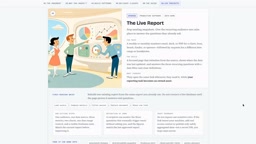
Three build patterns and four delivery classes to help non-engineers start using AI coding tools.
AI coding tools have crossed the engineering boundary — OpenAI enterprise data shows legal, sales, and finance teams growing Codex usage by 108x, 41x, and 20x respectively. The author offers two practical frameworks: three "build patterns" (Automate, Upgrade, Invent) to identify which problems in your work have software-shaped solutions, and four "delivery classes" (Prototype, Personal Software, Production Software, Product) to match the right level of polish and security. Using his podcast site AIDailyBrief.ai as a live case study, he walks through the full journey from prototype to production reporting system. The bottom line: start experimenting with Lovable, Replit, or Claude Code — building to do your own job better is now a must-have skill for knowledge workers.
Why Knowledge Workers Should Develop AI Coding Skills
Over the past year and a half, as tools like Lovable, Replit, Claude Code, and Codex have matured, a growing number of knowledge workers outside software engineering have started using code-writing and software-building to solve their own problems. This isn't about non-engineers pretending to be engineers — it's about finding new ways to do your actual job using software you can build yourself.
The host of AI Daily Brief shared a telling anecdote: a parent in his child's social circle had been deeply using AI for two or three years, subscribing to multiple high-end services and migrating a significant portion of their work into AI-assisted workflows — yet still found AI coding completely foreign. This person "lived in the Copilot-style chat world but had never stepped into the Claude Code side," and was missing out on a great deal as a result.
The author's take is direct: for non-engineer knowledge workers today, having AI coding tools in your toolkit is no longer optional. Without this capability, you will get left behind.
Enterprise Data: AI Coding Has Already Crossed the Engineering Boundary
The author cites recent enterprise research from OpenAI. Around late April to early May, the share of tokens consumed "agentically" via the API surpassed, for the first time, tokens consumed non-agentically through ChatGPT — and that share has continued to rise ever since.
Even more telling are the growth curves across different business functions. Using February as a baseline, Codex usage among engineering-related roles at enterprises grew roughly 5x — while nearly every other function grew far faster:
- Finance and accounting: ~20x growth
- Sales: ~41x growth
- Legal: ~108x growth
At the same time, "frontier companies" — those in the top 10% of enterprise users — consumed approximately 8.3x more tokens than average companies. In January, that gap was just 2.6x. In other words, the people who are actually building are compounding their advantage at an accelerating rate.
"Agentically" consuming tokens means the AI model isn't just having a single-turn conversation — it autonomously plans steps, calls tools, executes code, reads and writes files, and iterates based on intermediate results, with minimal human intervention throughout. In contrast, the "non-agentic" approach is traditional back-and-forth: user asks, model answers, done. Agentic token consumption can be tens of times higher than regular conversation, because the model continuously processes context, tool call results, and intermediate state. When agentic token share first surpassed non-agentic, it signaled that enterprises had shifted their AI usage from "asking questions" to "having AI do things for me" — the underlying driver behind the explosive growth of coding agents like Codex and Claude Code.
What's Actually Holding You Back Is a Mental Barrier
The author observes that people who haven't taken the plunge typically cite a few common reasons:
"I'm not a technical person" — But if you've been using AI for years and juggling multiple subscriptions, your technical literacy is already more than sufficient to step into this space.
"I'm afraid of breaking things" — There's a real worry about authorizing AI to make irreversible changes. This concern has some validity, but each fear has a corresponding solution. Fear shouldn't be the obstacle.
Starting with the wrong on-ramp — Some people encounter a terminal command-line interface on their first try and immediately turn around. Others follow tutorials that produce things completely unrelated to their actual work. The core problem is this: from where they're standing, they simply can't see what AI coding could do for them.
The tools mentioned — Lovable, Replit, Claude Code, and Codex — represent two dominant paradigms in AI coding today. Lovable and Replit target users with zero coding background, offering graphical interfaces and conversational interactions where users describe what they want in plain language and the tool generates a working web app — no command line required. Claude Code and Codex sit closer to developer workflows: users collaborate with AI in a terminal or IDE, where the AI can read and write local files, run commands, and debug errors. These are better suited for those with some technical background or willingness to learn basic command-line operations. The key difference isn't "which is more powerful" — it's "which fits your current way of working." For non-engineers, starting with Lovable or Replit involves the least friction. Once you've built an intuition for what software can do for you, migrating to more flexible tools is always an option.
Three Build Patterns: Automate, Upgrade, Invent
The author introduces the concept of "build patterns" to describe the relationship between the software you write and your existing work. There are three types.
Automate: Same Job, Same Output
The output doesn't change — it's just no longer done by hand. Think renaming files, syncing lists, populating templates, or processing exported data. The test: recipients notice no difference, and if the software breaks, you can always fall back to doing it manually. This is a great starting point because you already know exactly what "correct" looks like.
Upgrade: Same Job, Better Output
Reports become live dashboards. PowerPoints become web apps. Status emails become self-serve lookup pages. Recipients will notice a clear difference — and almost certainly appreciate it. If the software fails, you can revert to the old PDF or meeting, but you'll be quite dissatisfied. The payoff from upgrading isn't just time saved — it's turning a repetitive task into a genuine asset and competitive advantage.
Invent: New Job, New Output
This category covers work that wasn't previously feasible: interviewing every person individually, monitoring hundreds of information sources, testing thousands of copy variations. Software makes the previously impossible possible. It's the most exciting pattern — but also the hardest to see clearly in advance, because there's no existing template to copy. You might build a capability that ends up unused. The author admits he's built far more things than have actually entered his daily workflow, and that's the necessary cost of exploration.
Four Delivery Classes: From Prototype to Product
The second dimension is "delivery class" — the form the software takes, who uses it, and what it's used for. This determines how much security, documentation, UI/UX, and support it needs.
Prototype: A temporary build designed to answer a question, test an interaction, or move a decision forward. The output can be disposable. Optimize for speed, clarity, and representative examples — not security or polish.
Personal Software: A tool built for yourself or a small team around you that reliably solves a recurring need. It has to actually work, but can make compromises on UX, permissions, visual polish, and edge cases — because it's for you, and any tradeoff you're comfortable with is fair game.
Production Software: Used by people beyond you and your small team, where failures cost trust, time, or money. It needs to hold up under real usage by others, have channels for resolving problems, and provide adequate security, access control, and privacy — while still serving a specific, known audience.
Product: Serves an entire market, facing users you've never met. This is where you're truly back in the role of a traditional software engineer, bearing full responsibility for releasing software to the public.
The author emphasizes a key point: personal software and production software can still be disposable, even if they're more durable than prototypes. "Before, we wouldn't bother building something use-and-discard, because the construction cost couldn't be justified by that limited use or time. That equation has changed."
The practical value of this delivery class framework is that it helps builders align expectations before they start — avoiding two common mistakes. The first: treating a prototype as production software and running into security and stability problems. The second: over-polishing a personal tool to product standards, wasting enormous time on unnecessary UI and documentation. AI coding tools lower the barrier to building, but they also make it easier to over-invest in the wrong delivery class. A useful gut-check: "If this software broke tomorrow, who would be affected and how badly?" If it's only you, build to personal software standards. If it reaches unknown external users, you need to think about production-grade security, access controls, and failure handling. Tools like Lovable and Replit are especially suited for quickly validating prototypes and personal software, while production-grade software typically requires additional infrastructure — authentication services, database hosting, monitoring, and so on.
AIDB's Real Evolution: From Prototype to Production
The author uses his own podcast, AI Daily Brief, as a running case study. Listeners love the show's information density, but for new listeners, that density is also a barrier. He wanted to break each episode into chunks organized around key quotes, themes, or data points — making it easy for colleagues to share precisely relevant segments. That's how AIDailyBrief.ai was born.
The process started with a prototype: first testing whether AI at the time could reliably auto-extract these themes. It wasn't until models at the Gemini and GPT-5.6 level arrived that results were actually good enough. Once viability was confirmed, he pushed it into the personal software phase — building a pipeline from transcripts to new site entries — and then extended access to a small team, still within personal software territory.
From there, he built another pipeline that automatically converts the site's extracted content into Twitter and LinkedIn posts and publishes them. A more typical example of production software is the reporting system he's building for sponsors: an authenticated interactive experience replacing emails and spreadsheets, where sponsors can log in and view performance data for the episodes featuring their ads.
Which Parts of Your Work Can Become Software
The author acknowledges that no outsider can tell you which parts of your work are best suited for software — but he outlines six common scenarios to spark ideas: presentation work, content work, data work, documentation work, inbox work, and administrative work.
- Presentation work is a prime candidate for the "Upgrade" pattern: swap PDFs for interactive HTML pages; turn content you explain repeatedly into an interactive explainer or Q&A bot; turn recurring calculations into a self-serve calculator; turn option comparisons into a comparison tool; turn status update emails into an automated status page.
- Content work: AI excels at transforming content into other content. If you're converting transcripts to summaries or long articles to short ones, build it into an end-to-end automated pipeline instead of manually feeding content to ChatGPT every day.
- Data work is a common entry point for many non-technical people. Recurring data analysis, charts, and performance Q&A can become apps with dashboards and interactive queries. Data translation tasks — like converting CRM exports to sales tables — can be fully pipelined.
The author also flags one practical principle: just because you can build it doesn't mean you should. Once you start AI coding, you'll often look at a paid tool and think "I could build this myself, why am I paying for it?" — but there are usually good reasons not to self-build. A dedicated team serving that product's customers has far more capacity than you, for whom it's item 68 on your to-do list. When building his social media pipeline, he chose to use an existing service, Typefully, to handle automated publishing — saving considerable effort and token cost.
Six Hands-On Experiment Projects
The author offers two "idea starters" for each of the three build patterns:
- Automate · Invoice Stack: Turn the spreadsheet ritual you could do in your sleep into a reviewable transformation pipeline — drag in the raw export, preview the conversion, flag items needing attention, download a finished output in the exact same format as before.
- Upgrade · Live Reporting: Instead of sending periodic snapshots, give stakeholders a continuously updated page they can query themselves — showing the last update time and automatically answering key questions.
- Upgrade · What-If Sliders: When Excel isn't enough and there are too many variables, build a personal software page that exposes those variables as sliders so you can drag and see results, useful for scenario planning.
- Invent · Watcher: Your personal AI research agent — monitoring competitor prices, job postings, mentions, inventory, and other irregularly-changing data sources, filtering noise, logging history, and automatically alerting you to significant changes.
- Invent · Pattern Reader: For the support tickets, sales transcripts, reviews, or survey responses that no one has time to read in full, build a continuously updated analysis tool that categorizes themes, compares segments, and links conclusions back to original sources.
The author also honestly acknowledges that while Automate and Upgrade are easy to illustrate, the Invent category is genuinely hard to pre-specify: "you can't know what you'll invent until you start tinkering." He also astutely notes a coming trend: many "build projects" that currently require custom software may soon be handled directly by personal AI software like OpenClaw or Grokbot through presets and customization — and when a simpler solution can solve the problem, we should celebrate it.
Closing: Start Now
The author's core advice is simple: there's no reason left not to try. If you want the lowest-friction "training wheels," use Lovable or Replit. If you want to stay within an existing ecosystem, try Codex or Claude Code. Pick one idea from above that feels the most vaguely interesting to you, and go see how much effort it actually takes to build.
"Building to ship software to others" and "building to do your own job better" are two different things. The author firmly believes the latter has become a foundational capability that every knowledge worker needs to have.
Related articles
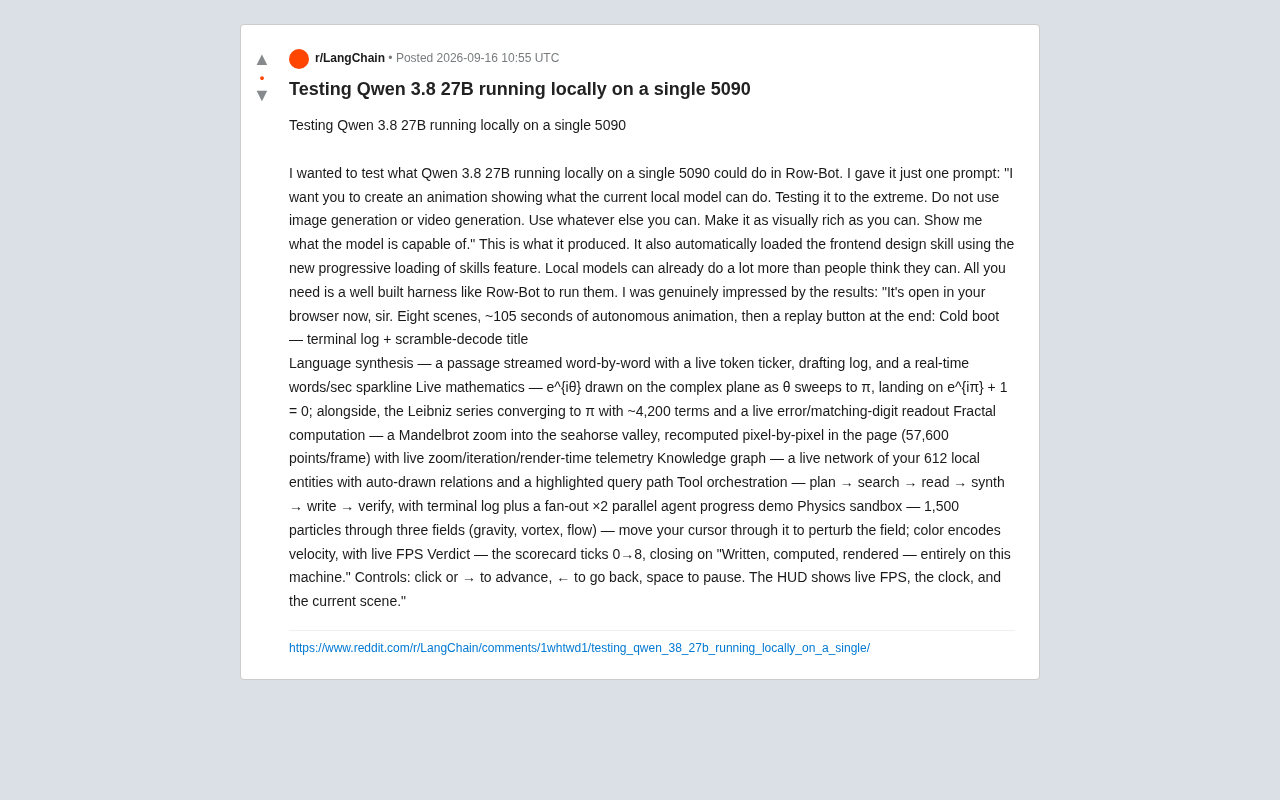
Running Qwen3 27B Locally on a Single RTX 5090: What Can It Actually Do?
A developer runs Qwen3 27B locally on a single RTX 5090 via the Row-Bot Agent framework, generating an 8-scene, 105-second interactive animation from one prompt — including real-time math, fractals, and physics.
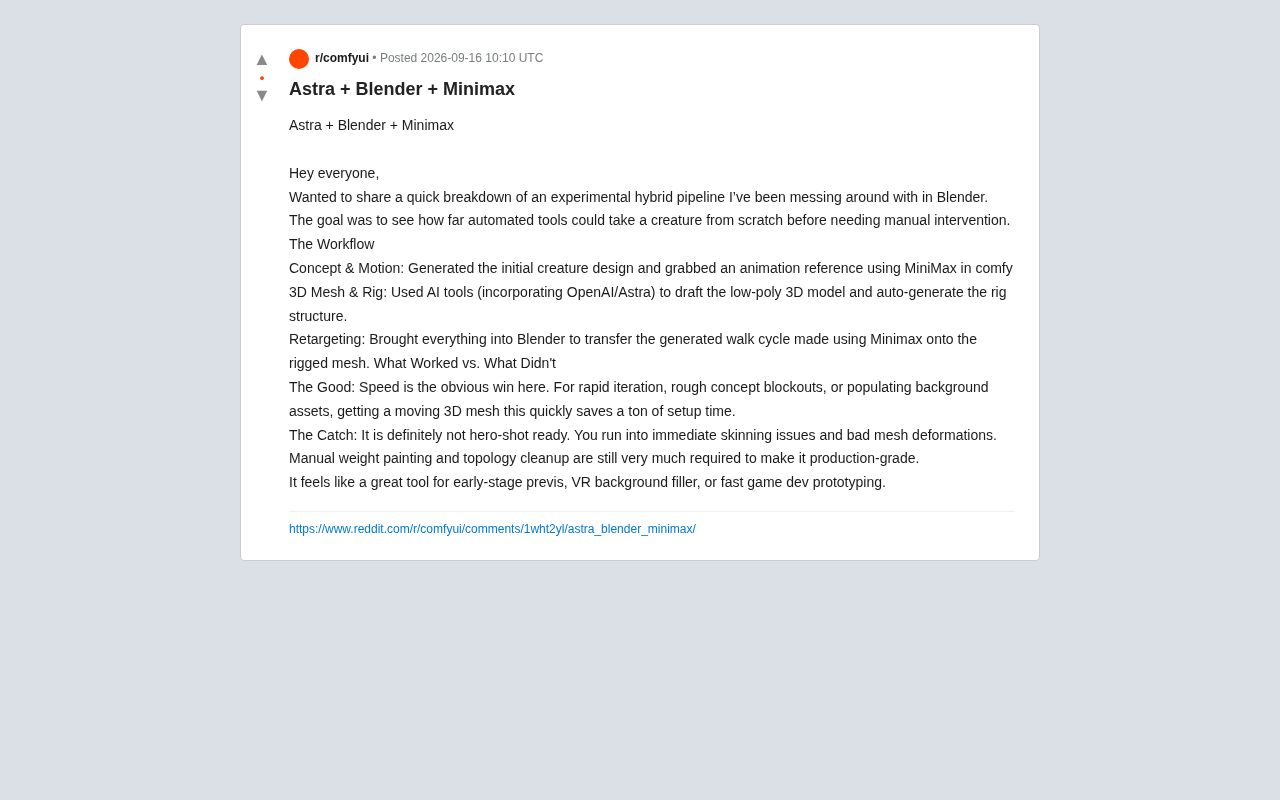
AI Hybrid Workflow in Practice: Auto-Generating 3D Creatures with Astra + Blender + MiniMax
A Reddit creator tests an Astra+Blender+MiniMax hybrid AI workflow for 3D creature animation — from concept to rigging to retargeting. Here's what works and what doesn't.

Apple Reference Image: A New Paradigm for Verifiable Photography
Apple's Reference Image proposal uses on-device cryptographic signing to establish verifiable baselines for real photos, tackling AI-generated image authenticity at the hardware level.