Why Platform Teams Fail—and AI Makes It Worse

Platform teams fail due to insufficient productization and vague positioning, and AI amplifies these flaws.
The article analyzes the common root causes of platform team failure: treating the platform as a project rather than a product, lacking a feedback loop, trying to solve everything at once, and organizational positioning caught between infrastructure and application teams causing mismatched authority. AI doesn't alleviate the problem—it amplifies existing flaws: AI features become "shiny objects" that分散 focus, opaque automation increases distrust, and lower tool-building barriers weaken the platform team's value proposition. The way out is product thinking: clear target users, feedback mechanisms, adoption-based measurement, and AI serving observability rather than acting as a selling point.
Platform engineering once held great promise—boosting efficiency and reducing cognitive load through internal developer platforms. But the reality is that many platform teams are struggling, and the introduction of AI hasn't alleviated the problem—it has made failure modes more insidious. An article that sparked discussion on Hacker News, "Why platform teams fail (and AI makes it worse)," breaks this down.
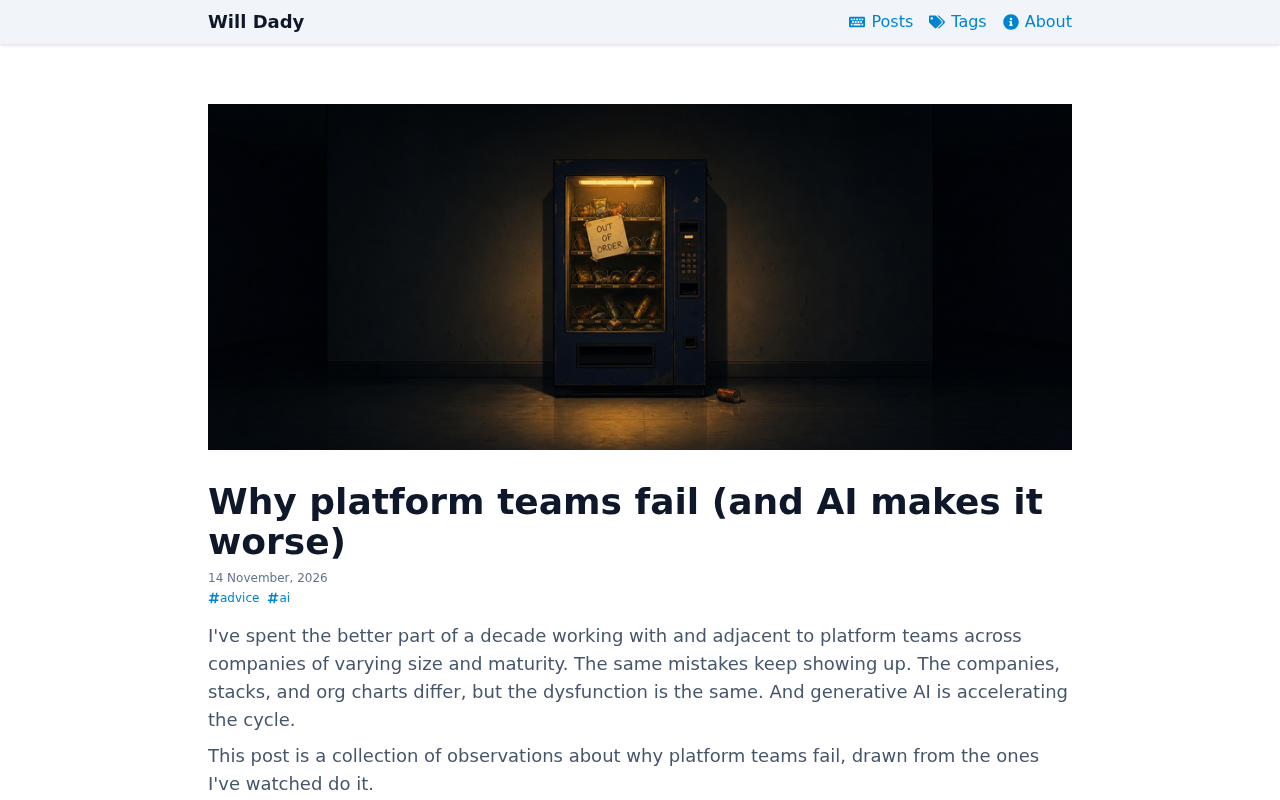
Common Root Causes of Platform Team Failure
The core tension for platform teams is that their "customers" are internal developers, but needs are fragmented and priorities conflict. The article points out that platform teams commonly make these mistakes: treating the platform as a project rather than a product to be operated, lacking a clear user feedback loop, and trying to solve everything at once. These factors cause platform building to drift away from developers' actual workflows, ultimately reducing it to infrastructure that gets "bypassed."
The deeper problem lies in organizational positioning. Platform teams are often caught between infrastructure teams and application teams—they lack sufficient authority to drive standardization, yet they're held to "efficiency improvement" KPIs. When a platform can't prove its value, the team's very reason for existing comes into question.
Internal Developer Platform (IDP) is the core deliverable of platform engineering, typically referring to a set of self-service tools and services built and maintained by a platform team, covering CI/CD pipelines, environment management, service catalogs, observability configuration, and more. The goal of an IDP is to let application developers complete deployment and operations without deeply understanding the underlying infrastructure, thereby reducing cognitive load. Gartner once predicted that by 2026 about 80% of software engineering organizations would establish platform teams, but actual results depend heavily on whether the platform is continuously operated as a product. If an IDP is just a pile of tools without unified abstractions and documentation, developers tend to fall back to familiar scripts and manual processes, wasting the platform investment.
Cognitive load is a concept from human factors engineering; in the context of platform engineering, it refers to the amount of information developers must simultaneously hold and process to complete a task. One of the core value propositions of platform teams is to reduce developers' cognitive load through abstraction and automation so they can focus on business logic. However, if the platform itself has complex interfaces, missing documentation, or unpredictable behavior, it actually increases cognitive load. The "bypassed" phenomenon mentioned in the article is essentially developers deciding, after evaluation, that the learning cost of using the platform exceeds cobbling together their own solution—and thus choosing to bypass it.
Why AI Makes the Problem More Complicated
AI was supposed to help platform teams automate operations and intelligently recommend toolchains, but the article argues that it amplifies existing flaws. On one hand, AI features easily become the new "shiny object," distracting teams into building demo-oriented features rather than solving developers' real pain points. On the other hand, if AI-generated suggestions or automated workflows lack transparency, they exacerbate developers' distrust of the platform—when the platform becomes a "black box," the motivation to bypass it only grows stronger.
Moreover, AI lowers the barrier to building internal tools, letting application teams cobble together their own solutions, which further undermines the platform team's centralized value proposition. If a platform team can't clearly define "why should I be the one doing this," AI will only accelerate its marginalization.
"Shiny object" syndrome refers to organizations being drawn to the novelty of new technology and investing resources in chasing demo effects rather than real value. In platform teams, this manifests as prioritizing high-visibility features like AI assistants and intelligent recommendations while neglecting foundational work like feedback loops, documentation, and reliability. The risk is that AI features' demo appeal easily attracts management attention, but if the underlying platform experience is poor, those features won't translate into adoption—and they crowd out resources that should be spent solving core pain points.
The trust problem of the platform as a black box becomes especially pronounced once AI is involved. When AI-generated suggestions, automated fixes, or resource recommendations lack explainability, developers struggle to judge their basis and risk, and are therefore unwilling to hand critical workflows over to the platform. Platform engineering emphasizes that "golden paths" should be transparent, predictable, and overridable, and AI's uncertainty conflicts with this. The article therefore suggests that AI should be prioritized for enhancing observability and developer experience (such as intelligent diagnostics and log summarization) rather than making decisions on developers' behalf, so as to maintain trust.
A Possible Way Forward: Return to Product Thinking
The article implies that platform teams need to operate like product teams: clearly identify target users, establish feedback mechanisms, and measure success by adoption rather than simply shipping features. AI should be used to enhance the platform's observability and developer experience, not as a standalone selling point. Only after addressing organizational positioning and product-oriented operations can AI become an asset rather than a burden.
Because the original material provided only the title and a small amount of discussion information, lacking detailed cases and data support, the analysis in this article is developed based on the core argument implied by the title. For more in-depth practical advice, consult the original article and the discussion in the Hacker News comments.
One-line Summary
Platform teams fail due to insufficient productization and vague organizational positioning, and AI only amplifies these flaws.
Paragraph Summary
The article analyzes the common root causes of platform team failure: treating the platform as a project rather than a product to be operated, lacking a feedback loop, trying to solve everything at once, and organizational positioning caught between infrastructure and application teams leading to mismatched authority and responsibility. The introduction of AI doesn't alleviate the problem—it amplifies existing flaws: AI features easily become "shiny objects" that分散 focus, automation lacking transparency exacerbates developer distrust, and the lowered barrier to building tools weakens the platform team's centralized value proposition. The way out is to return to product thinking: clearly identify target users, establish feedback mechanisms, measure success by adoption, and make AI serve observability and developer experience rather than act as a standalone selling point.
Related articles
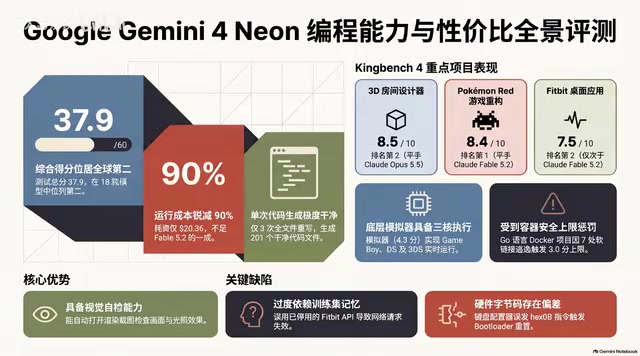
Gemini 4 Neon Hands-On: Value King or Confident Catastrophe?
Gemini 4 Neon review: 1M-token context, four thinking levels, 201 files in one KingBench4 pass at one-tenth Fable 5.2's cost—but it hallucinates fake data, leaves 7 symlink escapes, and bricks keyboards.

Google Gemini 4 Neon Hands-On: 6 3D Works That Impress and Fail
Hands-on with Google Gemini 4 Neon on a 3060 laptop: 6 3D works tested. Sunshower Fishing Harbor and mechanical keyboard impress; soft-body physics and faces fall short.

Gemini 4 Neo Web Novel Writing Test: Faint AI Flavor, Textured Dialogue
Bilibili creator's first-look review of Gemini 4 Neo for Chinese web novel writing: testing a Three Kingdoms transmigration opening with faint AI flavor, emotionally textured dialogue, and strong crisis building, plus comparison of 4A/4H/4C models and full workflow demos.