Why Should Ordinary People Learn Python in the AI Era? The Path from User to Master

Why Python is the key skill for ordinary people to go from AI users to AI masters.
In the AI era, knowing how to chat with AI tools isn't enough. This article explores why Python is the essential bridge for non-programmers to unlock AI's full potential — from calling LLM APIs and automating workflows to building custom AI applications. It identifies who benefits most and advocates for project-driven learning powered by AI coding assistants.
The Invisible Gap Between AI Tools and Coding Ability
AI tools have permeated every aspect of our work and daily lives. You can chat with ChatGPT, generate images with Midjourney, and boost productivity with various AI assistants. But when you want to go further — having AI automatically process data, calling LLM APIs to build custom applications, or automating workflows — you'll find an invisible wall standing in your way.

That wall is coding ability. Bilibili creator Code老猫 made a sharp observation in a recent video: not knowing Python in the AI era is like not knowing how to type in the smartphone era — you can survive, but you'll find yourself locked out of more and more opportunities.
While this analogy comes with a course promotion angle, the underlying logic is worth serious consideration for every working professional.
Why Python and Not Other Languages
Lowest Barrier, Highest Return
Among all programming languages, Python is widely recognized as the most beginner-friendly for non-programmers. Its syntax closely resembles natural language, the learning curve is gentle, and it's the "official language" of the AI field — virtually all major LLM APIs prioritize Python support.
Python became the de facto standard in AI for deep historical and technical reasons. Since the deep learning revolution in 2012, nearly every important machine learning framework — TensorFlow, PyTorch, scikit-learn — has used Python as its primary interface language. This isn't because Python runs fast (it's actually an interpreted language with execution speeds far below C++), but because its syntactic simplicity dramatically reduces the cost of expression for researchers, while C/C++ extensions under the hood ensure computational performance. Today, LLM SDKs from OpenAI, Anthropic, Google, and others all treat Python as their first-priority supported language, and HuggingFace's Transformers library has built an enormous Python model ecosystem.
For ordinary people, the goal of learning Python isn't to become a professional programmer, but to gain the following capabilities:
- Calling LLM APIs: Stop relying on off-the-shelf AI products and customize AI features to your own needs
- Automated data processing: Batch-process Excel files, auto-generate reports, schedule data scraping
- Building AI applications: Go from idea to prototype and quickly validate business concepts
The Fundamental Difference Between API Calls and Using AI Products Directly
It's worth understanding a key concept here: an API (Application Programming Interface) is a standardized way for software to communicate. When we use the ChatGPT web interface, we're interacting with the model through an interface designed by OpenAI, with functionality limited to what the product designers predetermined. Calling the API directly means you can control the model's temperature parameter (affecting output randomness), system prompts, context window management, output format, and other underlying parameters. It's like going from riding in a taxi to driving your own car — you gain complete control over the route. Through APIs, you can embed AI capabilities into any workflow and achieve true customization.
Programming Thinking in the AI-Native Era

You may not have noticed, but learning Python today is completely different from a few years ago. With AI coding assistants (like Cursor and GitHub Copilot), the learning process itself is accelerated by AI. You don't need to memorize syntax — instead, you understand programming logic and let AI write the actual code for you.
Cursor and GitHub Copilot represent an entirely new paradigm in programming assistance. GitHub Copilot, developed through a collaboration between GitHub and OpenAI, is trained on vast amounts of open-source code and can auto-complete code based on context. Cursor goes even further by integrating AI conversation capabilities directly into the code editor, supporting natural language descriptions that automatically generate complete code blocks. The emergence of these tools means the cognitive burden of programming has been dramatically reduced — you no longer need to remember specific function names and parameters for every library, but rather need to understand the logical structure and data flow of programs. This fundamentally transforms programming from a "precise memorization skill" into a "logical thinking skill."
This means the focus of learning shifts from "remembering how to write it" to "knowing what to ask AI to do" — a completely new programming mindset.
Who Should Consider Learning Python the Most

According to Code老猫's analysis, the following four groups stand to benefit most from learning Python:
1. Working professionals interested in AI but unsure where to start
You might use AI tools every day but remain at the "conversation" level. After learning Python, you can upgrade from an AI "user" to an AI "master."
2. Operations staff and designers who want to use AI to boost work efficiency
Repetitive tasks are perfect candidates for Python + AI automation. Think batch-generating marketing copy, auto-resizing images, scheduling content publishing, and more.
3. Students from non-technical backgrounds hoping to transition or expand their skill boundaries
In the job market, hybrid talent who "understands business + knows code" is increasingly in demand. Python is the lightest bridge across the technical threshold.
A 2023 McKinsey research report noted that by 2030, approximately 375 million workers globally will need to switch occupational categories or significantly upskill. In this transition, the growth rate of pure technical roles is actually lower than that of "tech + business" cross-functional positions. For example, a marketing professional who knows Python data analysis can independently complete user behavior analysis and A/B test evaluation, potentially achieving 3-5x the output efficiency of colleagues with purely marketing backgrounds. This type of "T-shaped talent" — deep expertise in one domain combined with cross-disciplinary technical capabilities — is becoming the most sought-after talent type for enterprises.
4. Entrepreneurs and freelancers who want to build AI applications
With a Python foundation, you can quickly build an MVP (Minimum Viable Product), validate your idea, and then decide whether to invest more resources.
MVP (Minimum Viable Product) is a core concept in lean startup methodology, systematized by Eric Ries in The Lean Startup. The core idea is to invest minimal resources to quickly build a product prototype that can validate core hypotheses, using real user feedback to determine the next direction. Python's advantage in MVP development lies in its rich ecosystem — Flask/FastAPI can quickly set up backend services, Streamlit/Gradio can create interactive web interfaces in just a few dozen lines of code, and LangChain can rapidly orchestrate LLM call chains. This means a non-professional programmer could potentially build a demonstrable AI application prototype in a single weekend.
Practice-Oriented: Learning by Doing Is What Matters

Whether or not you choose a paid course, the most important principle for learning Python is project-driven learning. Don't spend months learning syntax before you start building things. Instead, learn with specific goals from day one:
- Week 1: Use Python to call the OpenAI API and build a simple chatbot
- Week 2: Write an automation script to handle repetitive tasks from your job
- Week 3: Build a simple web application and share your AI tool with colleagues
This "learn while you build" approach, combined with AI coding assistants, can multiply your learning efficiency several times over. It's worth noting that this project-driven learning approach is fundamentally different from the traditional "theory first, practice later" model. Cognitive science research shows that knowledge learned in concrete contexts has significantly better transfer ability and long-term memory retention than abstract learning. When you learn a Python library to solve a real problem, your depth of understanding far exceeds what you'd get from simply reading documentation.
A Realistic Perspective: Python Isn't a Magic Key
It's important to be objective: learning Python doesn't mean you'll instantly become an AI expert. It's more like a key that opens doors to more possibilities. The real value lies in:
- Your understanding of AI will deepen from surface-level to underlying logic
- Your problem-solving approach will expand from "finding existing tools" to "creating your own tools"
- Your irreplaceability in the workplace will significantly increase
At the same time, learning requires time investment and continuous practice. If you only use ChatGPT occasionally, you might not need to learn Python right now. But if you want to stay competitive in the AI era, building a coding mindset early is a worthwhile long-term investment.
From a broader perspective, we're at a critical inflection point in the democratization of technology. In the past, coding ability was an exclusive skill of a small number of professionals; today, AI-assisted programming tools are dramatically lowering that barrier. But "lower barrier" doesn't mean "no barrier" — you still need to understand basic programming concepts, data structures, and logical thinking to effectively direct AI to work for you. This is why the return on investment of learning Python right now may be the highest it's ever been in history.
Conclusion
Core competencies in the AI era are being redefined. As the bridge connecting ordinary people to AI's underlying capabilities, Python's importance will only continue to grow. Whether you choose self-study or a structured course, the key is to take that first step — evolving from an "AI user" to an "AI master."
Key Takeaways
Related articles
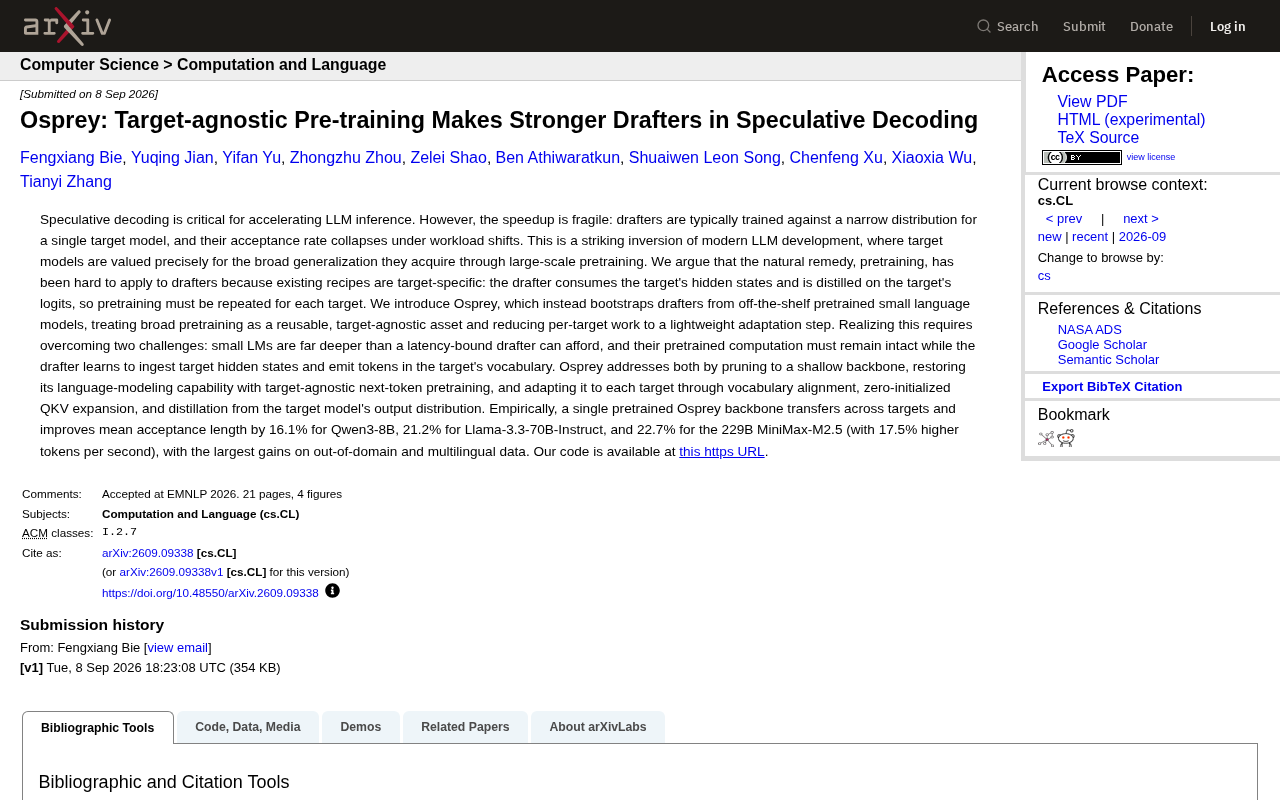
Osprey: General-Purpose Pretraining Makes Speculative Decoding Draft Models More Efficient
Osprey treats pretraining as a reusable, target-agnostic asset. Through pruning and lightweight adaptation, a single draft model transfers across multiple LLMs, boosting mean acceptance length by 16%-22%.
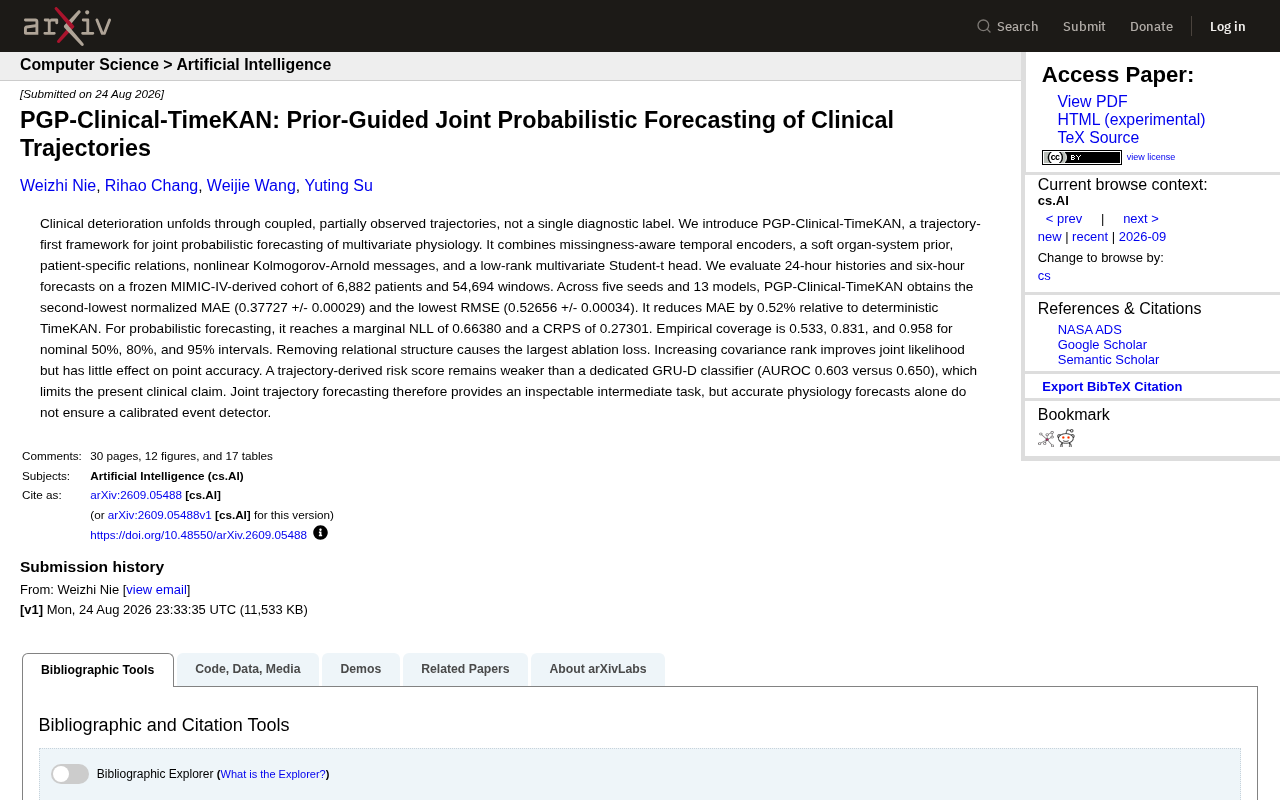
PGP-Clinical-TimeKAN: A Detailed Guide to the Multivariate Physiological Indicator Joint Prediction Framework
An in-depth analysis of the PGP-Clinical-TimeKAN framework for joint probabilistic prediction of multivariate physiological indicators, covering trajectory-first paradigm, KAN message passing, MIMIC-IV validation, and ablation studies.
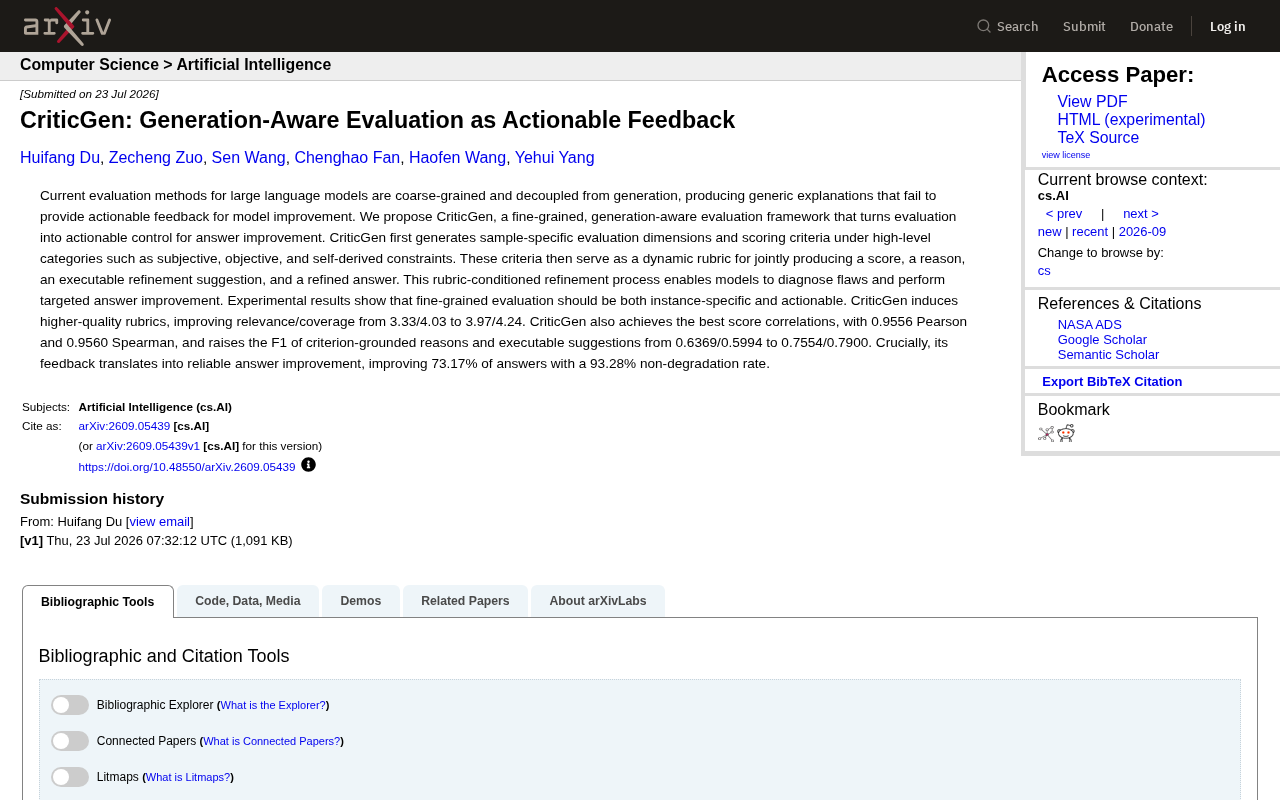
CriticGen: A New Framework That Transforms AI Evaluation into Actionable Improvement Feedback
CriticGen proposes a generation-aware evaluation framework that transforms AI assessment from passive scoring to an active optimization loop, achieving 73.17% answer improvement and 93.28% non-degradation rate.