Why Stop-Motion Animation Resists AI Replacement: The Craftsmanship Behind Coraline

Why stop-motion animation's handcrafted soul makes it irreplaceable in the age of AI generation
Stop-motion animation stands apart from the AI revolution. Using LAIKA's Coraline as an example, this piece examines how 3,300 hand-sculpted expressions, 150+ physical sets, and years of meticulous craftsmanship create value that algorithms cannot replicate. In an age of instant AI-generated content, the 'inefficiency' of stop-motion paradoxically becomes its greatest asset—proving that irreplaceable artistry lies not in results, but in the human process behind them.
When AI Meets Stop-Motion Animation: A Reflection on "Replacement"
In today's era where generative AI is sweeping through content creation, from text and images to video, nearly every creative form is being redefined by algorithms.
The Technical Context of Generative AI: Generative AI refers to artificial intelligence systems capable of creating new content, including GPT-series text models, image generation models like DALL-E and Midjourney, and video generation tools such as Sora and Runway. These models are based on deep learning technology and can generate corresponding content based on text prompts by learning patterns and rules from massive datasets. Since 2022, generative AI has experienced explosive growth. From the emergence of ChatGPT to various multimodal models, it is profoundly transforming the production methods of content creation. Creative work that traditionally required weeks or even months can now be drafted by AI in minutes.
However, one art form has consistently stood outside the AI wave—stop-motion animation.
The Unique Principle of Stop-Motion Animation: Stop-motion animation is an animation technique that creates the illusion of movement by photographing static objects frame by frame and playing them continuously. Its basic principle stems from the persistence of vision effect—when images are played at 24 frames per second, the human eye perceives independent static images as continuous motion. During production, animators must fine-tune the position or expression of physical models, photograph one frame, then make the next adjustment. One second of footage requires shooting 24 photographs, meaning a 90-minute film requires over 120,000 frames. This technique dates back to the late 19th century, with notable works including The Nightmare Before Christmas and Fantastic Mr. Fox.
Take LAIKA studio's Coraline as an example—many consider this work powerful evidence that "AI can never replace handcrafted animation."
LAIKA Studio's Industry Position: LAIKA was founded in 2005 and is headquartered in Oregon, USA. It is one of the world's premier stop-motion animation production companies. The studio was founded by Travis Knight, son of Nike founder Phil Knight, and focuses on combining traditional craftsmanship with cutting-edge technology. LAIKA's representative works include Coraline (2009), The Boxtrolls (2014), and Kubo and the Two Strings (2016), earning multiple Oscar nominations for Best Animated Feature. The studio is renowned for its extreme craft standards—a single film's production cycle typically spans 3-5 years, employing hundreds of artists and technicians. LAIKA's creative philosophy is that "the soul of handcrafted work cannot be fully replaced by digital technology."
What makes it special is not visual spectacle, but the almost obsessive manual investment behind it. Every frame condenses months or even years of human labor—a "time cost" and "craftsman spirit" that no current AI model can replicate.
Limitations of AI Animation Generation: Current AI video generation technology is primarily based on diffusion models and Transformer architectures. Representative tools like OpenAI's Sora and Runway's Gen-2 can generate coherent videos lasting seconds to minutes based on text descriptions. These models learn from millions of hours of video data to understand object motion patterns, light and shadow changes, and scene transitions. However, AI-generated animation has obvious limitations: difficulty maintaining long-term character consistency, tendency to violate physical laws (such as incorrect finger counts or objects suddenly disappearing), and lack of precise artistic control. More importantly, the "smooth perfection" of AI-generated content actually lacks the texture and personality of handcrafted work—that slightly irregular authenticity is precisely the charm of stop-motion animation.

3,300 Facial Expressions: The Ultimate Pursuit in Stop-Motion Animation
To create the protagonist Coraline, LAIKA studio produced over 28 different puppets and prepared more than 3,300 interchangeable facial expressions. Behind this number lies the core logic of stop-motion animation: in this art form, every character expression, every blink, is not computer-generated but manually adjusted frame by frame by the crew.
Engineering Complexity of Expression Replacement Systems: The replacement animation facial system in stop-motion is a precision engineering technology. Taking Coraline as an example, each facial expression requires digital modeling, 3D printing, manual polishing, and painting through multiple processes. LAIKA studio employed rapid prototyping technology, using high-precision 3D printers to create facial components with micrometer-level accuracy. 3,300 expressions means covering the character's various emotional states, speech phonemes, and micro-expression changes. These facial components are fixed to the puppet's head frame through magnets or snap systems, allowing animators to quickly swap them. Compared to traditional clay animation requiring repeated facial sculpting, this system dramatically improves efficiency while ensuring consistency and repeatability of expressions.
This differs fundamentally from AI-generated animation. AI can generate thousands of expression interpolations in milliseconds, but the "imperfect handcrafted feel" of stop-motion animation is precisely its soul—that slightly grainy authentic texture cannot be simulated by algorithmic smooth curves.
Engineering Hidden in Details: The Marriage of Mechanics and Aesthetics
Stop-motion animation is not just art—it's precision engineering. The ingenuity LAIKA's team invested in character design represents a perfect fusion of mechanics and aesthetics.

Mechanical Facial Systems and Character Breathing
To make characters appear more realistic, the production team installed special devices in Mr. Bobinsky's puppet to allow his belly to bounce with movement. The "Other Father" character went even further—the team designed a mechanical facial system enabling more complex emotional expression changes.
This pursuit of "life-like quality" extends to every detail. Even the hair wasn't neglected—to allow character hairstyles to move naturally, the team created hundreds of different wigs. Clothes were likewise hand-sewn, one by one, even simulating the subtle fluctuations produced during character breathing.

These details may seem trivial, yet they are key to constructing "authenticity." AI-generated characters are often flawless overall but lack these subtle, unpredictable variations bestowed by the physical world.
Over 150 Physical Sets: A Years-Long Miniature Art Exhibition
If characters are the flesh and bones of stop-motion animation, then sets are the carriers of its worldview.

An Entirely Real Miniature World
Coraline featured over 150 scenes in total, each handcrafted by the crew. For instance, to recreate Coraline's pink palace apartment, the team built a massive physical model.
Complex Craftsmanship of Miniature Model Making: Stop-motion animation set construction involves multidisciplinary knowledge, including architecture, materials science, and miniature model craftsmanship. Scene scales are typically 1:6 or 1:12, requiring consideration of material weight, strength, and visual effects. Common materials include: foam board for basic structures, resin for fine details, fabrics requiring special treatment to suit miniature scale, and metal wire for armatures of movable parts. Lighting design is equally complex—due to shallow depth of field, professional macro photography techniques and precise lighting control are necessary. Building a complex scene may take weeks, and over 150 scenes for an entire film means thousands of square feet of studio space are needed to simultaneously accommodate multiple sets, enabling parallel workflow.
In other words, the rooms, furniture, characters, and those eerie yet exquisite details audiences see in the film are almost all real, physical objects. This is why many consider Coraline not just an animated film, but a miniature art exhibition completed over several years.
Revaluing Handcraft in the AI Era
In an age when AI can rapidly generate massive amounts of content, the "inefficiency" of stop-motion animation has paradoxically become its most precious attribute. This raises a thought-provoking question: should technological progress pursue the ultimate in efficiency, or should it preserve space for unique human creativity?
Scarcity Equals Value
AI's core advantage lies in scale and efficiency—it can produce "good enough" content at extremely low cost. But precisely because of this, labor-intensive, time-intensive handcrafted works paradoxically highlight their scarce value.
Time Investment as a Value Marker: In economics, "scarcity" is the core source of value. When AI can mass-produce content in short timeframes, the time cost traditionally associated with "creation" is dramatically compressed. This creates a paradox: the more advanced the technology, the higher the relative value of handcrafted items. A stop-motion animation film's production cycle of 3-5 years becomes proof of its irreplaceability in the AI era. This phenomenon resembles the increased value of hand-woven products after the Industrial Revolution, or the revival of film photography after digital photography became widespread. Behavioral economics research shows that people are willing to pay a premium for "the effort creators invested," even when the final product is visually indistinguishable from AI-generated content. This "process value" is redefining the pricing logic of artworks.
What stop-motion animation carries is not just the final images, but the years of time and craftsmanship invested by creators.
AI and Handcraft Are Not a Zero-Sum Game
You may not have noticed, but "AI cannot replace stop-motion animation" does not mean the two are opposed. In fact, modern stop-motion animation post-production already extensively leverages digital technology for restoration and compositing.
Practical Applications of AI-Assisted Tools: Modern stop-motion animation production is no longer purely "anti-digital technology" but rather a hybrid workflow of handcraft and digital tools. AI and computer technology play roles in multiple stages: previsualization uses 3D software to simulate camera movements and scene layouts; during shooting, motion control photography systems achieve precise camera movement through programming; post-production uses digital rig removal techniques to eliminate wires and supports holding characters; facial animation can use AI-assisted generation of in-between frames, reducing the number of expressions needed; AI can also batch-process color correction and remove flicker (frame-to-frame brightness inconsistencies caused by minor lighting variations). LAIKA studio has even developed proprietary software for managing thousands of assets and complex production workflows. This "hybrid workflow" proves that technological advancement and handcraft are not opposing forces.
AI is more likely to become an assistive tool, helping artists handle tedious repetitive labor so they can devote more energy to the core aspects truly requiring creativity.
The insight stop-motion animation offers us may be this: in an era when AI can replicate all "results," those "processes" and "investments" that cannot be replicated precisely define art's irreplaceability. The value of handcrafted animation lies not in being more efficient, but in recording the entire process of humans creating beauty through almost stubborn persistence.
Related articles
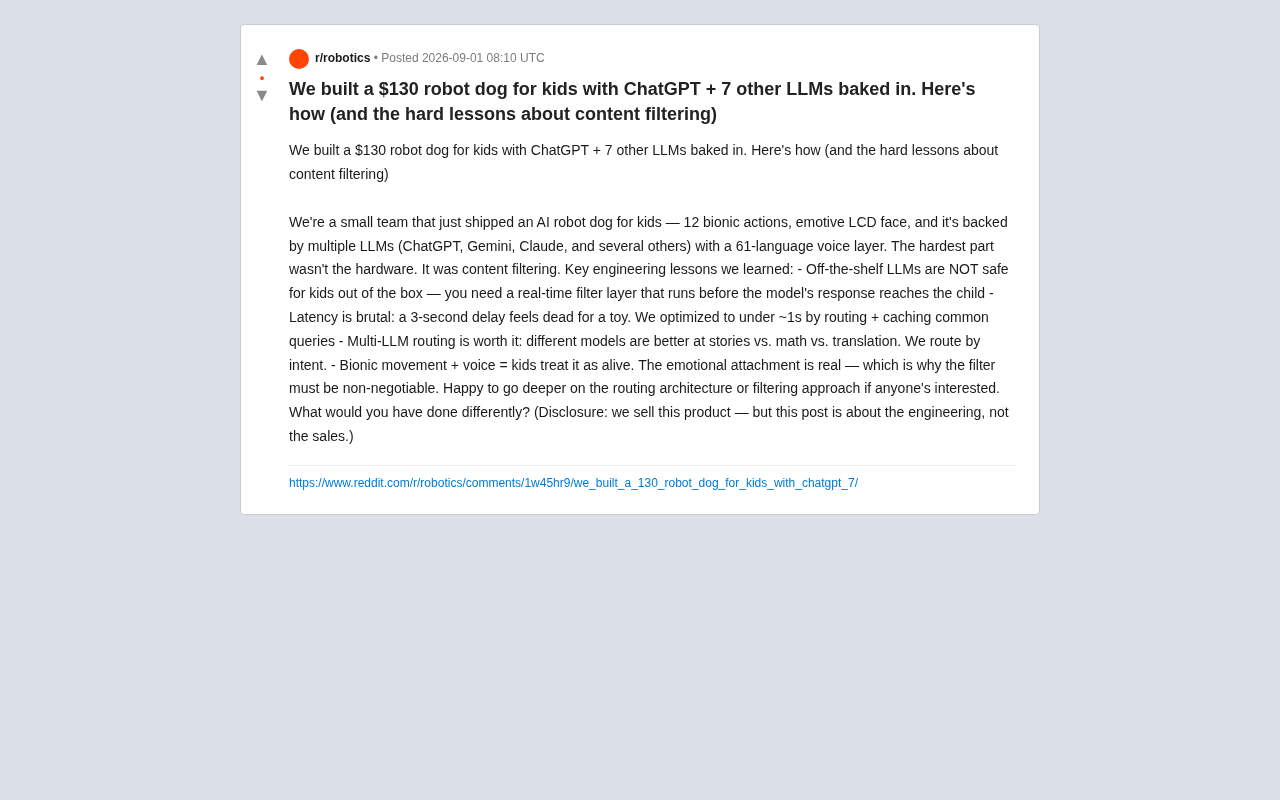
Building an AI Robot Dog for Kids: Multi-Model Routing, Content Filtering, and Latency Optimization
A $130 AI robot dog for kids integrates 8 LLMs with 61-language voice interaction. The team shares key engineering lessons on content safety filtering, multi-LLM intent routing, and sub-1-second latency optimization.
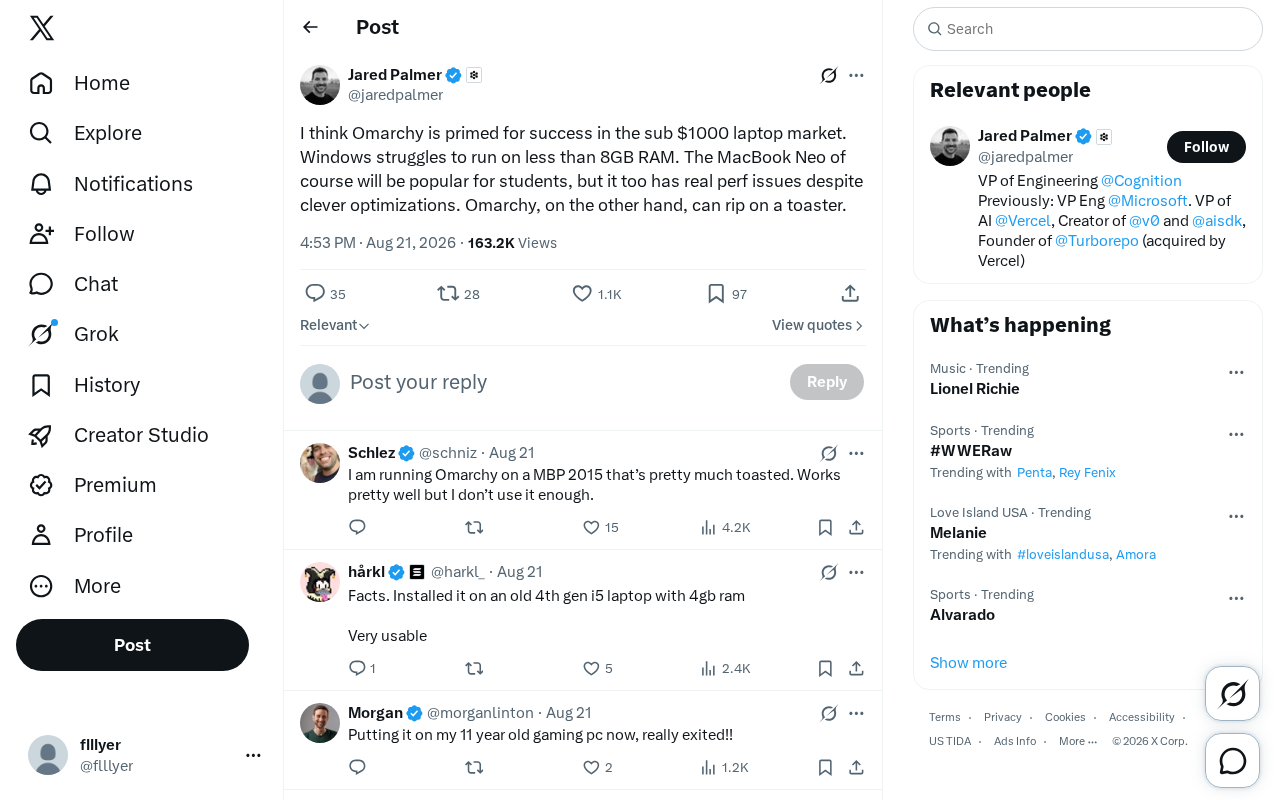
Can Omarchy Dominate the Sub-$1000 Laptop Market? An In-Depth Analysis
Omarchy, based on Arch Linux, shows unique advantages in the sub-$1000 laptop market. This analysis compares Windows and MacBook performance bottlenecks on low-spec hardware and examines why Omarchy enables cheap laptops to run smoothly, plus the ecosystem challenges and market prospects it faces.

AI Agent Beginner's Guide: Building a Creative Strategy Intelligent Assistant from Scratch
A complete guide to building a creative strategy AI Agent from scratch. No coding required — use tools like Dify and Coze to quickly build an intelligent assistant.