Why Was Thailand Never Colonized? The Survival Wisdom of Southeast Asia's Only Independent Nation

Thailand survived colonialism through geopolitical luck, royal modernization reforms, and pragmatic territorial concessions.
Thailand remained the only uncolonized nation in Southeast Asia through a combination of three factors: its geographic position as a buffer state between British and French colonial empires, King Chulalongkorn's sweeping modernization reforms that eliminated pretexts for colonial intervention, and a pragmatic diplomatic strategy of ceding peripheral territories to preserve core sovereignty. While its independence was real, it came with significant compromises including unequal treaties and substantial territorial losses.
The Only Exception on the Southeast Asian Map: Why Thailand Was Never Colonized
During the colonial expansion wave from the 19th to early 20th century, Southeast Asia was almost entirely carved up by European powers. Britain controlled Burma and the Malay Peninsula, France established French Indochina (present-day Vietnam, Laos, and Cambodia), and the Netherlands occupied the Indonesian archipelago. Yet on this map filled with colonial colors, Siam (present-day Thailand) consistently maintained a unique blank of independence.
It's worth noting that European colonization of Southeast Asia was not achieved overnight but occurred through a gradual process spanning centuries. Portugal occupied Malacca as early as the 16th century, the Dutch East India Company controlled the Spice Islands in the 17th century, and Britain gradually extended its influence from India to Burma and the Malay Peninsula through the East India Company. France's involvement came relatively later, primarily establishing protectorates over Vietnam, Cambodia, and Laos through military intervention and forced treaties in the mid-to-late 19th century. The formation of this colonial landscape was closely tied to post-Industrial Revolution Europe's demand for raw materials and markets, while also being profoundly shaped by the competitive dynamics among the colonial powers themselves.
This was no accident. Thailand's status as the only country in Southeast Asia never formally colonized was the result of geopolitics, diplomatic maneuvering, and internal reform working in concert. Let's analyze this historical phenomenon from multiple dimensions.
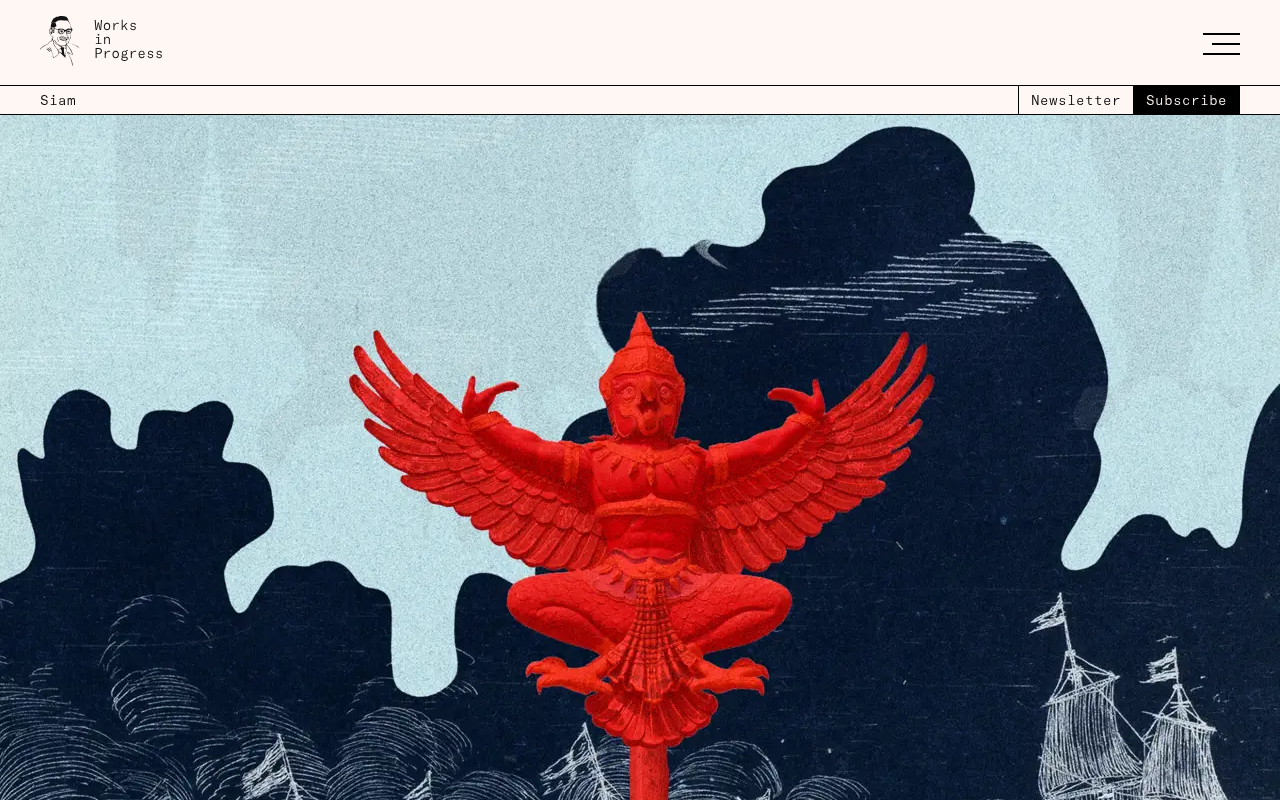
The Geopolitical Buffer Zone: A Fortunate Position Between British and French Rivalry
The most important external factor in Thailand's survival was its location precisely at the boundary between the two great colonial empires of Britain and France.
Strategic Balance Between Britain and France
By the late 19th century, Britain was advancing from the west (Burma, Malaya) and France from the east (Indochina) toward the heartland of mainland Southeast Asia. Neither empire wanted the other to monopolize Thailand, which would create direct military confrontation along their colonial borders.
Thus, Thailand naturally became a buffer state. The concept of a buffer state is an important geopolitical term in international relations, referring to a small or medium-sized country located between two or more great powers whose independent existence helps prevent direct military confrontation between those powers. Historical parallels include 19th-century Belgium (between France and the German states), Afghanistan (between British India and the Russian Empire, a product of the so-called "Great Game"), and Mongolia (between the Soviet Union and China). The fate of buffer states often depends on whether the balance of power between the great powers remains stable—once that balance is broken, buffer states often face the risk of annexation. What made Thailand special was that the Anglo-French balance remained relatively stable throughout the colonial era, allowing Thailand's buffer status to be maintained long-term.
In 1896, Britain and France signed an agreement that effectively acknowledged Thailand's core territory (the Chao Phraya River basin) as a neutral zone between them. Specifically, the Anglo-French Declaration regarding Siam, signed on January 15, 1896, divided Siamese territory into three zones: the central area of the Chao Phraya River basin was recognized by both sides as a neutral buffer zone; the eastern region was placed within the French sphere of influence; and the northern Malay Peninsula and Tenasserim coast in the west were placed within the British sphere. While this agreement protected Thailand's core territory from direct colonization, it also marked a tacit understanding between Britain and France to divide spheres of influence over Thailand—sovereignty in the peripheral areas had already been significantly compromised.
This mutual restraint between great powers provided Thailand with precious survival space—not because it was too powerful to conquer, but because its independence served the common interests of both empires.
King Chulalongkorn's Reforms: Proactive Modernization to Eliminate Colonial Pretexts
If geographic position provided the external opportunity, the Thai royal family's proactive response was the key to seizing that opportunity.
Chulalongkorn the Great's Modernization Strategy
King Rama V, Chulalongkorn (r. 1868–1910), is considered the founder of Thailand's modernization. His reforms didn't emerge from a vacuum—his father, King Rama IV Mongkut (r. 1851-1868), had already begun limited opening policies, including studying Western scientific knowledge and establishing diplomatic relations with foreign countries (the film The King and I is set during Mongkut's reign). After ascending the throne, Chulalongkorn deepened the reforms with the core logic of "defending against the West using Western methods."
He implemented a series of profound internal reforms:
- Abolition of slavery, gradually dismantling the old feudal system of personal bondage. This process lasted nearly thirty years (1874-1905), adopting a gradual approach to avoid social upheaval—first prohibiting new enslavement, then progressively freeing existing slaves, demonstrating exceptional political wisdom.
- Establishing a centralized modern bureaucracy to replace the dispersed feudal tributary structure. Following European administrative models, he transformed the formerly loose feudal tributary relationships into a directly governed provincial system (the monthon system), replacing local hereditary lords with centrally appointed administrators, greatly strengthening the state's actual control.
- Reforming the judicial, taxation, and military systems to align with Western standards
- Building railways, telegraphs, and other infrastructure to enhance national integration
These reforms made Siam appear in Western eyes as a "civilized" and orderly modern state, undermining colonizers' pretext of intervening to "civilize backward regions." This also demonstrated to the West that Siam was a "modern" governed state that didn't need foreign "civilizing."
Sending Students Abroad and Balancing Foreign Advisors
The royal family also sent large numbers of princes and noble sons to study in Europe, while hiring advisors from various European countries to participate in government operations. A notable detail: Thailand deliberately maintained national balance when selecting advisors—for example, using British advisors for finance and advisors from other countries for military matters, preventing any single power from gaining excessive influence.
Thailand's balanced diplomacy was also reflected in more institutionalized practices. Thailand was one of the first Asian countries to send permanent diplomatic missions to Europe. Chulalongkorn himself conducted his famous European tour in 1897, meeting Tsar Nicholas II of Russia, Queen Victoria of Britain, Kaiser Wilhelm II of Germany, and other heads of state—extremely rare for Asian monarchs of that era. Through this "royal diplomacy," Thailand successfully positioned itself as an equal member of the international community rather than an object waiting to be "civilized." Additionally, Thailand joined World War I on the Allied side in 1917 (though its actual military contribution was limited), using this to gain diplomatic leverage for revising unequal treaties after the war.
The Art of Diplomacy: A Pragmatic Strategy of Trading Territory for Sovereignty
Thailand's independence was not without cost. The core of its diplomatic strategy was "sacrificing pawns to save the king."
Ceding Peripheral Territories to Preserve the Core
To avoid direct confrontation, Thailand proactively ceded vast peripheral territories. It surrendered the Lao territories east of the Mekong River and western Cambodia to France, and several sultanates in the northern Malay Peninsula to Britain. Historians estimate that Thailand ceded approximately 456,000 square kilometers of territory from the late 19th to early 20th century—roughly one-third to one-half of the territory it then claimed sovereignty over. Specifically: after the 1893 Franco-Siamese Crisis, it was forced to cede all territory east of the Mekong (most of present-day Laos); in 1904 and 1907, it further surrendered the northwestern Cambodian provinces of Siem Reap and Battambang to France (these areas contained the world-famous Angkor Wat); and in 1909, it ceded four northern Malay sultanates (Kelantan, Terengganu, Kedah, and Perlis) to Britain.
However, by sacrificing these peripheral and difficult-to-control regions, the Thai royal family successfully preserved the core territory centered on Bangkok and national sovereignty. This pragmatic territorial exchange represented a clear-eyed strategic trade-off—though painful, the Thai ruling elite considered it a necessary price to avoid full colonization.
"Limited Independence" Under Unequal Treaties
It should be noted that Thailand's "independence" was to some extent qualified. It was likewise forced to sign unequal treaties containing extraterritoriality and tariff restriction clauses.
Extraterritoriality refers to the privilege whereby a country's nationals on another country's territory are not subject to local law but are tried by their own consular courts. This system was widely imposed by Western powers on Asian countries in the 19th century, including China (from the Treaty of Nanking in 1842) and Japan (from 1858, abolished in 1899). For Siam, the Bowring Treaty signed between British representative Sir John Bowring and Siam in 1855 was the first unequal treaty, stipulating that British subjects enjoyed extraterritoriality, Siamese import tariffs were limited to 3%, and British subjects could freely trade and own land in Siam. The United States, France, and other nations subsequently invoked most-favored-nation status to obtain similar privileges.
From this perspective, although Thailand was never formally colonized, it remained under semi-control of the powers for an extended period, only gradually recovering these sovereign rights in the early 20th century. Thailand didn't abolish these unequal provisions until the 1920s-1930s through judicial reforms and arduous diplomatic negotiations—achieving complete judicial sovereignty recovery earlier than China—which was also a fruit of its continuous modernization reforms.
Is the Claim of "Never Being Colonized" Oversimplified?
Regarding the statement that "Thailand was never colonized," more nuanced supplements and challenges exist in academic and public discourse.
Some argue that describing Thailand as completely independent may be oversimplified—it actually made enormous concessions in the Anglo-French crossfire, including compromises at both territorial and sovereignty levels. Others emphasize that the modernization vision and diplomatic flexibility of Thailand's royal elite were the key factors distinguishing it from other Southeast Asian polities. These discussions remind us that "independence" and "colonization" in historical narratives are not black and white but exist across a broad gray spectrum. In fact, some scholars use the concept of "crypto-colonialism" to describe Thailand's situation—while retaining formal sovereignty, it was profoundly constrained by Western powers in economic policy, legal systems, and foreign relations.
Conclusion: Historical Survival Wisdom Through Multiple Converging Factors
Thailand's survival cannot be attributed to a single cause but was the product of geopolitical buffering, proactive reform, and diplomatic compromise working together:
- Geopolitics gave it survival space as a buffer state;
- Internal reform gave it the form of a modern state and the capacity to resist intervention;
- Pragmatic diplomacy allowed it to trade territorial costs for the preservation of core sovereignty.
Thailand's history provides a thought-provoking case study: how a small-to-medium nation, caught between great power rivalries, can find its path to survival amid dramatic international upheaval through clear-eyed strategic judgment and proactive self-transformation. This wisdom remains instructive for understanding the survival strategies of smaller nations in international relations.
Related articles

M&M's Spent Millions Replacing Artificial Blue Dye — Why Is It So Hard?
Mars spent millions trying to replace artificial blue dye in M&M's with spirulina, but thick material clogs pipes and residue risks mold, forcing a full production-line rebuild. Here's the engineering behind the reformulation.
Teammate Wanted for Meta Global AI Developer Hackathon: Computer Vision & Medical AI
A Reddit developer seeks teammates for the Meta Global AI Developer Hackathon, focusing on computer vision and medical AI. This article analyzes the track logic, skills-complementarity needs, and topic selection strategy behind this teaming signal.
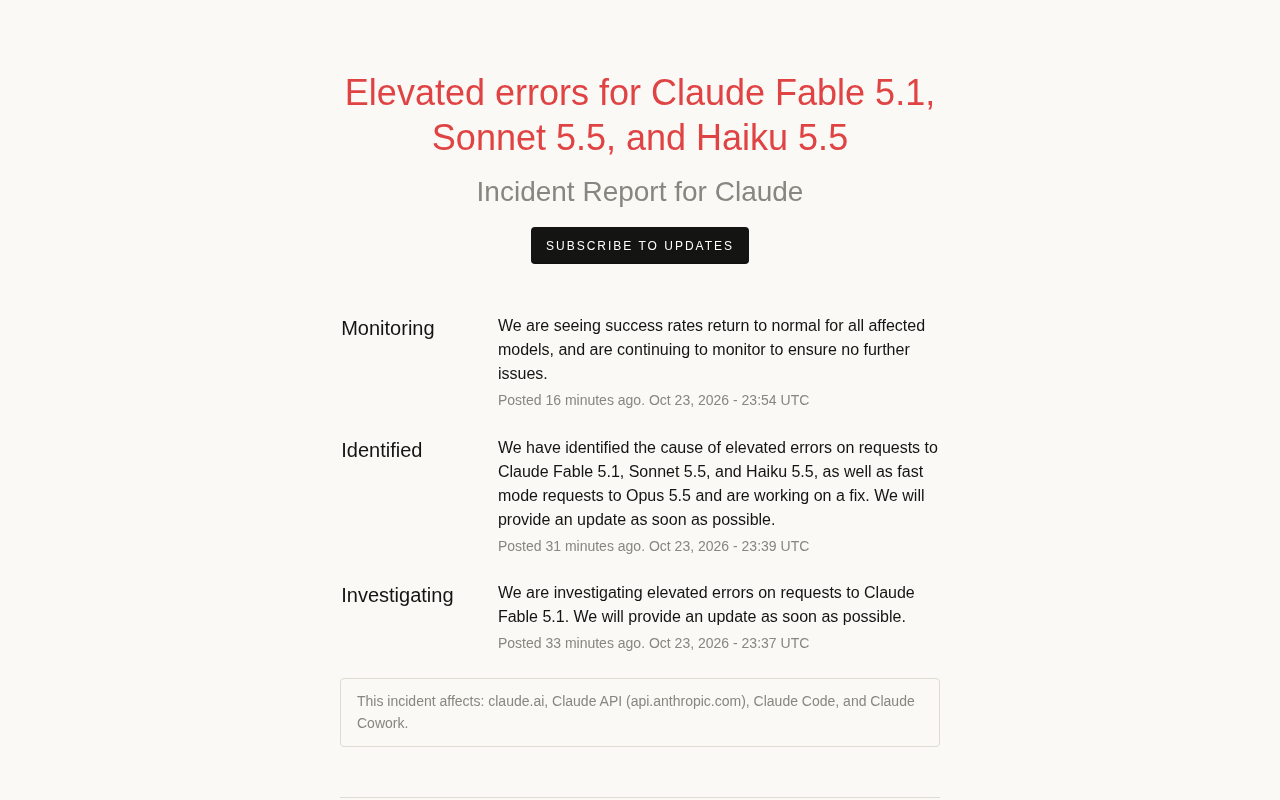
Multiple Claude Models Hit by Errors: A Postmortem of Fable 5.1, Sonnet 5.5, and Haiku 5.5
Claude Fable 5.1, Sonnet 5.5, Haiku 5.5, and Opus 5.5 fast mode saw elevated errors; Anthropic identified and resolved the issue in 17 minutes. This postmortem covers the timeline, the technical reasons for the multi-model cascading failure, and practical lessons for retry and degradation strategies.