Will AI Replace Java Backend Developers? A Four-Layer Value Model Gives You the Answer

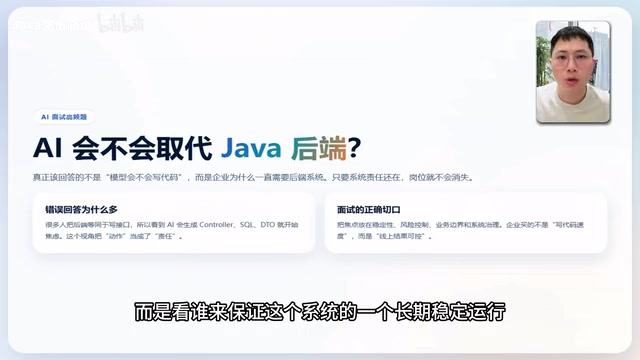
AI won't replace Java backend developers — it actually makes backend system governance more critical.
This article argues that AI will not replace Java backend developers. While AI excels at automating repetitive coding tasks, the core value of backend engineering lies in system design, business boundary identification, and production stability — areas requiring genuine engineering judgment. As AI adoption grows, issues like high latency, unreliability, and hallucinations actually increase the complexity of backend governance, making backend systems more important than ever.
Introduction: The Real Question Behind the Anxiety
There's a line making the rounds in tech circles that's particularly good at triggering anxiety: "AI is so powerful now — is Java backend development becoming obsolete?" Faced with this question, people tend to fall into one of two camps: either they spiral into pessimism, convinced that models will soon write all the code, or they dig in defensively, insisting AI will never replace backend developers.
Neither response is particularly thoughtful. Because the real question here isn't whether AI can write code — it's why enterprises continuously need backend systems. As long as that need exists, Java backend development isn't going anywhere.
The confusion stems from a fundamental misunderstanding: most people think of backend work as "writing APIs." The moment they see AI autocompleting code, generating endpoints, and writing SQL, they assume backend work is being swallowed whole. But real backend work in enterprise environments has never been as simple as just shipping an API.
The genuinely hard parts are: permissions, transactional consistency, caching, rate limiting, circuit breaking, auditing, monitoring, deployment, disaster recovery, and complex business rules. AI can help you produce code faster, but it can't inherently absorb responsibility for production stability — and it certainly can't automatically understand your company's business boundaries.
Will AI Replace Backend Developers? Start With These Four Key Facts
AI Replaces Repetitive Labor First — Not System Responsibility
AI has already made a measurable impact on certain foundational development tasks: generating API templates, autocompleting CRUD operations, writing DTOs, tweaking simple SQL queries, scaffolding boilerplate code, and organizing documentation. The more standardized and repetitive the work, the more susceptible it is to AI automation.
Today's mainstream AI coding assistants — GitHub Copilot, Cursor, Tongyi Lingma, and others — are fundamentally code completion systems built on large language models. Pretrained on massive corpora of open-source code, they can understand context and generate syntactically valid code snippets. However, these tools have several fundamental limitations: they lack deep understanding of specific business contexts, often producing code that is "syntactically correct but semantically wrong"; they cannot perceive non-functional system constraints such as SLA requirements, data consistency levels, or security compliance boundaries; and they bear no responsibility for how code behaves in production. This is precisely why AI tools can boost development efficiency without replacing engineering judgment.
But the parts of backend work that are truly valuable were never the mechanical tasks to begin with. What's actually valuable is: system design, identifying business boundaries, handling production incidents, managing risk, and balancing cost against stability. These responsibilities don't disappear just because AI can write code.
The More AI Is Adopted, the More Critical Backend Systems Become
Here's something most people overlook — AI isn't replacing the backend; it's adding more complex downstream dependencies to it. Models are expensive, slow, and unreliable, and they can hallucinate. That means backend systems aren't getting lighter — they're taking on significantly more governance work.

Integrating large language models into enterprise systems introduces an entirely new class of engineering challenges. Model inference latency typically ranges from hundreds of milliseconds to several seconds — far higher than traditional database queries — which forces backend teams to rethink timeout strategies and async architectures from the ground up. The model's tendency to "hallucinate"
Related articles
Meta Muse Hits 900K Downloads in Six D…
Meta Muse Hits 900K Downloads in Six Days: The AI Agent Era Has Officially Arrived
Meta's AI agent Muse hit 902K downloads in 6 days, topping US App Store and Google Play charts above ChatGPT and Claude. A deep dive into Muse's capabilities and the AI Agent race.
 Industry Insights
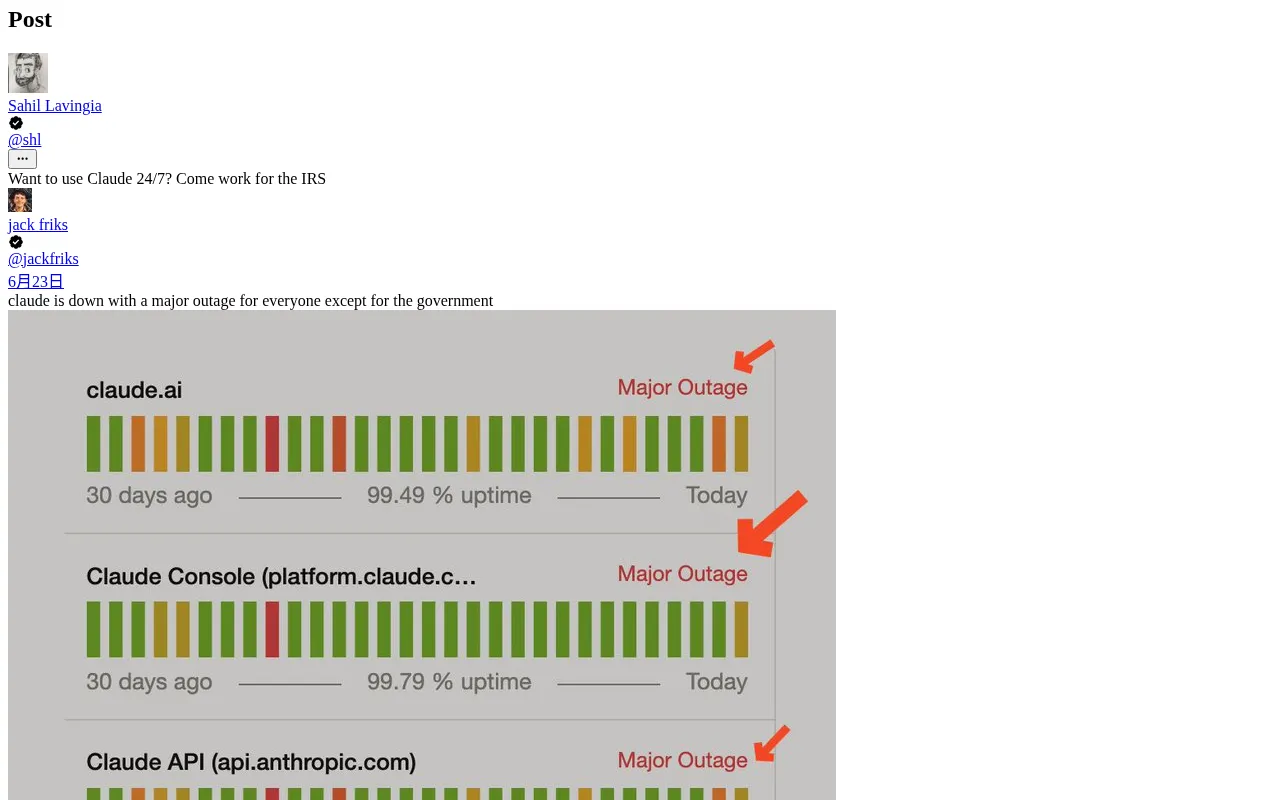
IRS Fully Embraces Claude AI, Accelerating Federal Government's AI Adoption
The IRS is recruiting staff with 24/7 Claude AI access, marking Anthropic's breakthrough into the federal government. Explore the strategic implications and tax use cases.
 Industry Insights
The IRS Mobile App Debate: A Trust Crisis in Government Digital Transformation
The IRS's proposed mobile app has sparked heated debate. This article analyzes the core arguments, exploring data security, privacy, and the trust crisis in government digital transformation.