WolveKafka: Consuming Kafka Messages via HTTP Endpoints

WolveKafka wraps Kafka consumption in HTTP endpoints, lowering the barrier for lightweight use cases.
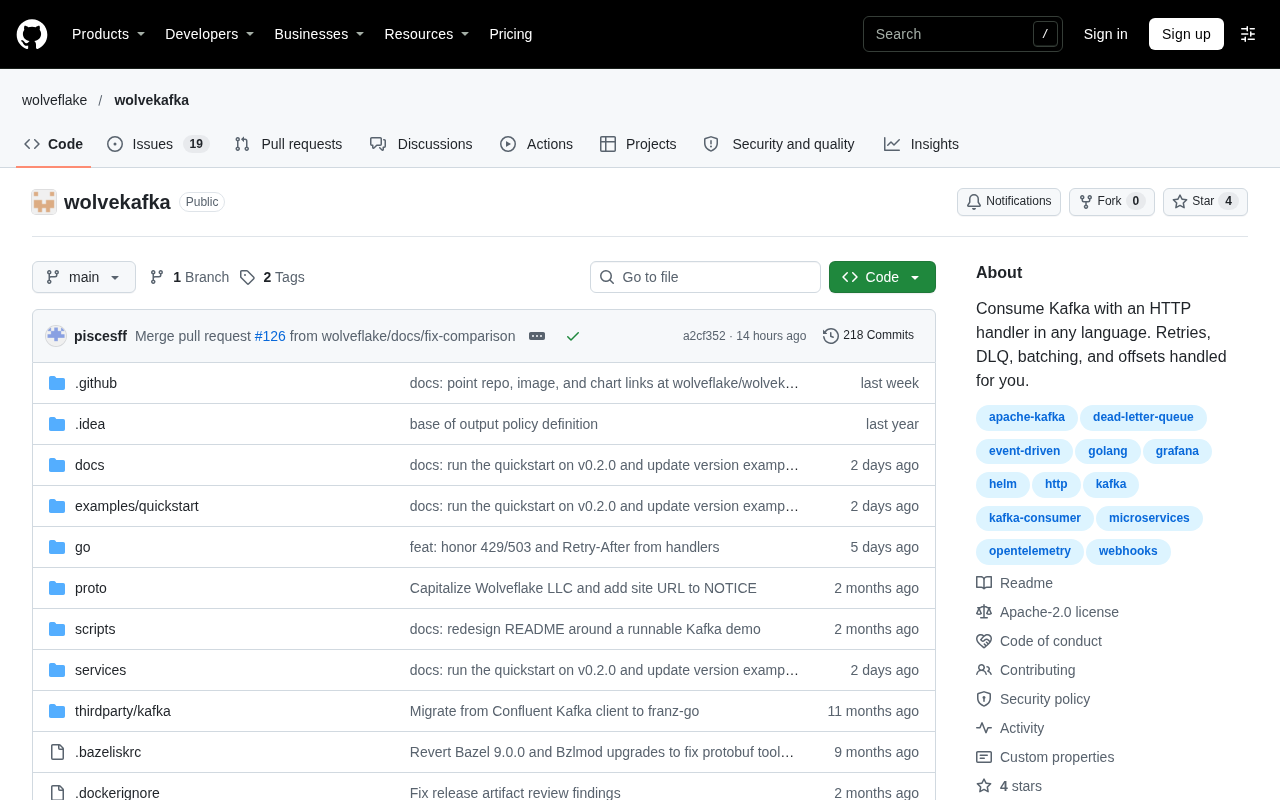
WolveKafka is an early-stage open-source project on Hacker News Show HN that turns Kafka message consumption into ordinary HTTP requests, letting browsers, Serverless functions, low-code platforms, and ops scripts act as Kafka consumers. The article notes Kafka's native clients rely on TCP long connections and a custom binary protocol—high performance but high barrier to entry. The HTTP wrapper suits lightweight integration, debugging, and periodic pulling, but not high-throughput, low-latency primary pipelines due to the tension between HTTP's statelessness and consumer group offset management. With only 4 points and zero comments, architecture, auth, and performance details remain undisclosed.
Kafka is the de facto standard in stream processing, but its client ecosystem has long been tied to the Java ecosystem and specific protocols. For developers accustomed to REST-style workflows who just want to use curl or a few lines of Python to quickly pull messages, connecting to Kafka often means dealing with a pile of dependencies and configuration. The Show HN project WolveKafka that appeared on Hacker News attempts to change this: it lets developers consume Kafka messages through an ordinary HTTP endpoint.
Why HTTP-based Kafka Consumption Is Worth Noticing
Kafka's native consumers are built on TCP long connections and a custom binary protocol. This design is highly efficient under high-throughput scenarios, but it also raises the barrier to entry. You need to bring in client libraries for the corresponding language, handle serialization, manage consumer group offsets, and deal with version compatibility issues.
WolveKafka's approach abstracts the act of consumption into a single HTTP request. This means any environment capable of sending an HTTP request—browser frontends, Serverless functions, low-code platforms, ops scripts—can become a Kafka consumer. For lightweight integration, debugging and troubleshooting, and edge-case data pulling, the value of this pattern is quite clear.
Consumer groups and the offset mechanism are fundamental to understanding Kafka's consumption model. Every message in Kafka has a monotonically increasing offset within its partition, and consumers mark how far they've consumed by committing offsets. Consumer groups then let multiple consumer instances share the messages across different partitions of the same topic; Kafka stores each group's committed offsets on the broker side, enabling consumption to resume from the last checkpoint after failover. Native clients encapsulate this coordination logic inside the library, but once the act of consumption is moved to the HTTP layer, questions like who stores the offset, how rebalancing is triggered, and how to avoid duplicate consumption across multiple instances shift from "the library handles it automatically" to "the architecture must explicitly design for it." This is also the first semantic boundary to clarify when evaluating any Kafka HTTP gateway.
Design Trade-offs and Applicable Boundaries
Wrapping Kafka in an HTTP layer is not a new idea; a common practice in enterprises is to build a gateway service in-house. WolveKafka appearing as a standalone open-source project saves the cost of reinventing the wheel, but it also inherits the inherent trade-offs of this kind of solution.
There is tension between the stateless nature of HTTP and the stateful offset management of consumer groups. If the server does not maintain consumption progress, the client must track offsets itself; if consumer group semantics are to be maintained, the server must take on additional state. Different implementations make different trade-offs between these two ends, and this is the key question when evaluating such tools.
Another practical constraint is latency and throughput. The round-trip overhead of HTTP requests and the efficiency of connection reuse are not on the same order of magnitude as native Kafka consumers. For primary pipelines with high real-time requirements and large message volumes, HTTP consumption is not suitable; but for periodic pulling, background tasks, and one-off data exports, it is sufficient and more worry-free.
Long polling is a common compromise used by such HTTP gateways: after the client sends a request, the server holds the connection open when there are no new messages, returning only when data arrives or a timeout occurs. It can alleviate the idle-spinning overhead and latency of pure short polling to some extent, but it still cannot match the efficiency of native TCP long-connection push. Related considerations include connection reuse (HTTP keep-alive), batch fetching (returning multiple messages per request to reduce round trips), and backpressure control. Judging whether a Kafka HTTP wrapper is practical largely comes down to how much work it has done on these engineering details, not merely whether it can "pull messages."
Current Stage of the Project and Information Gaps
This Show HN post received 4 points and 0 comments, indicating the project is still at a very early stage and the community has yet to form meaningful discussion. The original information only states the project's positioning; it does not disclose architecture details, supported authentication methods, message format handling strategies, or any performance data.
Judging these dimensions requires developers to review the repository source code and documentation themselves. Teams interested in trying it should focus on: how consumer offsets are managed, whether batch fetching is supported, how it integrates with the ACL system of an existing Kafka cluster, and connection pool behavior under high concurrency.
Where the Opportunity Lies for Such Tools
The value of WolveKafka is not in replacing native Kafka clients, but in covering scenarios where "it's not worth introducing a full client." A data engineer writing a temporary script to verify a message, a frontend team wanting to build a simple message monitoring dashboard, an ops colleague needing to quickly dump a batch of messages during an incident—in these scenarios, an HTTP endpoint is far more lightweight than a set of client dependencies.
Whether it can go far depends on the project's investment in protocol compatibility, security model, and ease of use. For developers focused on integrating AI applications with data pipelines, this kind of lightweight gateway also offers an idea: expose the capabilities of message middleware as more general interfaces, so that upper-layer applications are not locked into a specific tech stack.
One-line Summary
WolveKafka wraps Kafka consumption in HTTP endpoints, lowering the barrier to entry for lightweight scenarios.
Paragraph Summary
WolveKafka is an early-stage open-source project that appeared on Hacker News Show HN. It abstracts Kafka message consumption into ordinary HTTP requests, allowing any environment capable of sending HTTP—browsers, Serverless functions, low-code platforms, and ops scripts—to become a Kafka consumer. The article notes that native Kafka consumers rely on TCP long connections and a custom binary protocol; performance is high but the barrier to entry is not low. The HTTP wrapper suits lightweight integration, debugging, and periodic pulling, but is not suitable for high-throughput, low-latency primary pipelines, because of the inherent tension between HTTP's stateless nature and consumer group offset management, and because round-trip overhead cannot compare with native clients. The project currently has only 4 points and zero comments, and details on architecture, authentication, and performance are not public, requiring developers to review the source code themselves.
Related articles
Anthropic Model Benchmarking: Fable 5 vs 5.1 vs 5.2 Comparison
Based on Reddit community comparison material, this analyzes benchmark differences among Anthropic models Fable 5, 5.1, and 5.2, and discusses the practical implications of version iterations for developers and model selection advice.
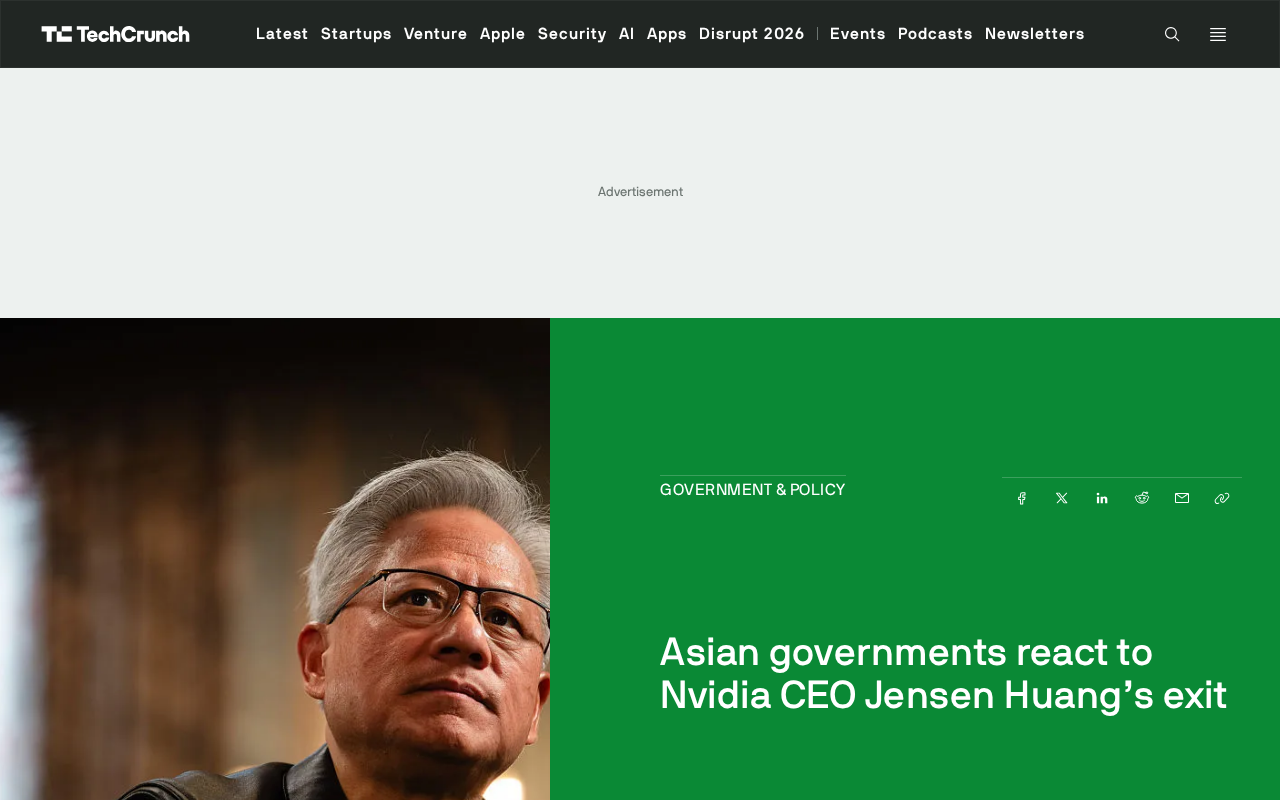
Jensen Huang Steps Down as Nvidia CEO, Asian Governments Scramble to Respond to Chip Supply Shifts
Jensen Huang's departure as Nvidia CEO triggers chain reactions across Asian governments: some confirm chip supply commitments, others monitor local AI project impacts and handle related investigations. This article analyzes supply chain stability, project risks, and compliance uncertainty.
Reddit Player Builds RISK Game Environment and Trains an AI That's Nearly Impossible to Beat
Reddit player builds a RISK training environment and trains an aggressive AI model that's nearly unbeatable. Strong at expansion but weak at defense, the author hits a bottleneck trying human data training, revealing common game AI development challenges.