WorkBuddy Complete Guide: A Hands-On Walkthrough of China's Homegrown Office AI Agent

A comprehensive hands-on guide to WorkBuddy, China's free office AI Agent built on Tencent's ecosystem.
This article provides a complete walkthrough of WorkBuddy, a free domestic AI Agent for Chinese office workers that eliminates the VPN and overseas account barriers of tools like OpenAI's Codex. It covers the tool's three work modes, six core features — Assistant, Projects, Experts, Skills, Connectors, and Automation — along with key chat settings, a live deployment demo, and practical tips for avoiding common pitfalls.
For office workers in China, WorkBuddy is one of the most worthwhile AI productivity tools to master right now. Many have called it the "domestic alternative to Codex," and its biggest advantage is clear — you can start using it for free without a VPN or an overseas phone number. Codex, OpenAI's powerful cloud-based Agent product launched in 2025, can autonomously write code, process documents, and execute multi-step tasks in a sandbox environment. However, it requires a ChatGPT Pro subscription ($200/month) and can only be used on overseas networks with an overseas phone number — a substantial barrier for the vast majority of Chinese users. As a product within Tencent's ecosystem, WorkBuddy runs on domestic infrastructure, eliminating network and account hurdles while offering a free tier, making it the pragmatic choice for users in China. This article will walk you through this office AI Agent's core capabilities and practical tips, step by step, from zero to one.
First, it's worth explaining the concept of an "Agent." An AI Agent differs from a traditional chatbot in that it not only understands natural language but also possesses the ability to autonomously plan, invoke tools, and execute multi-step processes. Traditional AI chat tools work on a "you ask, it answers" basis, whereas an Agent can receive a goal, independently break it down into tasks, call external tools (such as file systems, browsers, and APIs), execute them step by step, and return the final result. What makes a desktop Agent special is that it runs directly at the operating system level and can control local files and applications — which is why permission management is critically important, a point that will be emphasized repeatedly throughout this article.
Three Modes: Understanding the Tool's Positioning
When you open WorkBuddy, the first thing you see are three usage directions, each corresponding to entirely different work scenarios.
The first is the Daily Office mode, and it's the one used most frequently. Organizing files, processing spreadsheets, generating documents, and other daily tasks can all be handled here — it's the primary battlefield for the vast majority of office workers.
The second is the Code Development mode, suitable for writing lightweight scripts and web pages. Note that if you have more complex programming needs, the official recommendation is to use Tencent's dedicated professional tool, CodeBuddy. The two products have a clear division of labor.
The third is the Design & Creative mode, primarily for design-related work such as designing web pages and creating presentations. This clear mode separation essentially allows the AI to load different capability presets for different tasks (including system prompts, available tool sets, and output format specifications), avoiding the awkward situation of "knowing a little about everything but excelling at nothing."
Core Feature Area: Breaking Down the Six Key Capabilities
The left-side menu is WorkBuddy's core feature area, comprising six modules: Assistant, Projects, Experts, Skills, Connectors, and Automation. Understanding the division of labor among them is the key to using this tool effectively.
Assistant: Putting Your Computer in Your Phone
The Assistant feature acts as a "remote control" connecting your phone and computer. After scanning a QR code on the Assistant settings page, you can create an assistant on WeChat, Yuanbao, or Feishu, and then remotely command the computer-side WorkBuddy to execute tasks from your phone.

Here's a practical example: if you're out and suddenly need to check a file on your desktop, just send a message on your phone saying "Send me the document files on the desktop," and WorkBuddy will receive the task on the computer, find the files, execute the operation, and send them back to your phone. Preparing meeting materials before a morning standup, or continuing to summarize the day's data after leaving the office — tasks that previously required you to be sitting at your computer can now be triggered remotely. The practical value is enormous.
Projects: A Shared Workspace for Teams
The Projects feature serves as a team collaboration space, suitable for long-term, recurring work scenarios such as weekly operations reports or projects the team is collectively advancing. A project contains four sections:
- Activity page: View project messages
- Plan page: Manage team to-dos
- Task page: Record AI conversations
- Asset page: Store materials and deliverables
More crucially, the configuration panel on the right side allows you to uniformly adjust the project's description prompts, connectors, experts, skills, and more. This way, when team members work on tasks, these tools are automatically applied, saving a significant amount of repetitive configuration time. This design philosophy borrows from the workspace concept in modern project management tools (like Jira and Notion), but layers AI execution capabilities on top — turning the project space from merely an information container into an automatic task execution engine.
Experts and Expert Teams: Giving AI a Professional Identity
The Experts feature, in simple terms, gives the AI a professional identity to work with. In default mode, WorkBuddy is a generalist — it knows something about every field, but may not grasp the tacit knowledge and hands-on experience within specific industries. Expert mode, however, has been deliberately calibrated to align with real industry perspectives, significantly improving the professionalism of output in vertical domains. From a technical standpoint, Expert mode essentially preconfigures domain-specific system prompts, knowledge base references, and output standards for the AI, making the large language model's reasoning more precise and professional in that field.

Next to Experts, there's also an "Expert Team" feature. When facing complex task scenarios, multiple experts can each take on specialized sub-tasks and apply their respective domain knowledge — essentially forming a small professional team. For solo entrepreneurs, this effectively compensates for gaps in other areas of expertise.
However, keep in mind that invoking multiple experts simultaneously means token consumption multiplies and runtime increases, so small tasks don't warrant deploying an expert team. Let me explain the concept of tokens: a token is the basic unit of text processing for large language models. A single Chinese character typically corresponds to 1–2 tokens, while an English word corresponds to roughly 1–1.5 tokens. Every time you interact with AI, both the input prompt and the AI-generated response consume tokens. When multiple experts are invoked simultaneously, the system is effectively running multiple AI inference processes in parallel, each requiring its own context window and generation quota, causing total token consumption to grow linearly or even superlinearly with the number of experts. For users with limited free quotas, managing how often you invoke expert teams is key to cost control.
Skills: Solving the Execution Problem
Many people confuse Experts and Skills. Here's a clear way to think about it:
- Expert = What identity the AI uses (solves the perspective problem)
- Skill = What the AI can actually do (solves the execution problem)
Once equipped with skills, the AI gains stronger execution capabilities, and combining experts with skills often yields the best results. An analogy: an Expert is like hiring a senior CFO (who knows how to analyze), while Skills are like equipping them with advanced Excel formulas and pivot table capabilities (who knows how to get things done). Both are indispensable — without the expert identity, skills lack professional direction; without skill augmentation, an expert's judgment struggles to translate into concrete actions.
Connectors: Breaking Down External Data Silos
In real-world work, information is often not stored locally — it's scattered across WeChat, Feishu, email, or knowledge bases. Downloading everything and then re-uploading it to the AI every time is tedious. Connectors integrate these external platforms into WorkBuddy, so the AI can automatically read their content without you having to manually pass attachments.
Connectors address the long-standing "data silo" problem in enterprise digitization. In today's workplace, employees' work data is dispersed across WeChat group chats, Feishu documents, corporate email, DingTalk approvals, Notion knowledge bases, and a dozen other platforms, with no interoperability between them. The traditional approach — manually copying, pasting, downloading, and uploading across platforms — is highly inefficient and error-prone. Connectors are essentially an API integration layer that obtains read access to external platform data via OAuth authorization or API keys, enabling the AI to directly pull information across platforms. In the overseas market, this capability is best known through automation platforms like Zapier and Make, while WorkBuddy builds it in as a native feature, significantly lowering the barrier to entry.
Automation: The Most Promising Core Capability
Automation is considered WorkBuddy's most practical and promising feature. All the preceding features mostly work on a "you assign a task, the AI completes a task" basis, whereas automation can execute tasks automatically based on predefined schedules and prompts.

For example, you can have it compile the day's AI news before you go to bed, or automatically aggregate yesterday's operations data before you start work each morning. Automating the repetitive, replaceable parts of your work — the phrase "automate this workflow" is certain to appear more and more frequently in the future. From a technological evolution perspective, automation capabilities represent a critical leap for AI Agents from "passive response" to "proactive execution." Combined with Connectors' cross-platform data retrieval and Experts' professional judgment, automation can build complete end-to-end workflows: timed triggers → automatic data collection → professional analysis → formatted output → push notifications — truly achieving the effect of "work keeps running even when you're not there."
Three Key Settings in the Chat Box
Returning to the most commonly used chat box, there are three settings worth adjusting before you issue a task.
Work Mode is divided into Ask and Plan. Ask is the traditional Q&A mode where WorkBuddy won't take action for you — it essentially functions as a conversational assistant. Plan mode, on the other hand, first presents an execution plan and only begins operating after you confirm, making it suitable for complex tasks. These two modes correspond to different AI reasoning paradigms under the hood. Ask mode is essentially single-turn or multi-turn conversational Q&A, where the AI generates a direct response based on the current input without involving external operations. Plan mode adopts a "Plan-and-Execute" architecture, which is the mainstream design approach in the current AI Agent field: the AI first decomposes the user's high-level goal into multiple ordered sub-tasks, generates a visual execution plan, and then executes step by step only after the user reviews and confirms. This Human-in-the-Loop mechanism ensures both task controllability and the opportunity for users to correct any misunderstandings before execution — especially suitable for complex tasks involving irreversible operations like file manipulation and data processing.
Workspace essentially defines the AI's operating scope. For example, when processing invoices, set the corresponding folder as the workspace, and the AI's reading, organizing, and output will all revolve around that scope, making the workflow much clearer. Whenever file reading, moving, renaming, or exporting is involved, always select the workspace first — otherwise the AI is prone to errors because it "doesn't know where to read from or where to output to." The Workspace design concept is similar to the "Working Directory" concept in Linux — all relative path operations are based on this starting point, which both improves efficiency and creates a security boundary that prevents the AI from accidentally touching unrelated files.
Access Permissions determine what operational privileges the AI is granted. Default permissions are sufficient for standard reading, generating, and organizing tasks; when modification, moving, or deletion is involved, the AI will pause and ask for your confirmation. "Full Access" allows the AI to read content outside the workspace — it's not recommended for beginners. The safe approach is to stick with default permissions and only temporarily escalate when truly necessary. This design follows the "Principle of Least Privilege" from information security: grant only the minimum permissions required to execute the current task, minimizing the risk of accidental operations or security breaches. Especially for desktop Agents that can directly control the operating system, the importance of permission management cannot be overstated.
Hands-On Demo and Pitfall Avoidance Guide
In a practical demonstration, the author entered the prompt "Build me a navigation website for commonly used AI tools, deploy it, and give me the access link." After the task was completed, WorkBuddy returned a fully functional, accessible link. This case powerfully demonstrates an Agent's end-to-end execution capability — from understanding requirements, writing front-end code, and configuring the deployment environment to final launch, multiple steps were automatically chained together without the user needing to worry about any intermediate technical details.

Here are several high-value practical tips for avoiding common pitfalls:
- Processing files without selecting a workspace — This is the most common mistake. Whenever file reading, exporting, moving, or sorting is involved, always set the workspace first.
- Enabling full access permissions right from the start — WorkBuddy is a desktop Agent that can freely control your computer. Don't grant excessive permissions right away; default permissions are generally sufficient.
- Not specifying clear output standards — Simply saying "Make me a weekly report" is basically a gamble. It's better to be specific: Should it list this week's progress? Include next week's plan? Output as Word, Markdown, or PDF? The more specific your requirements, the more precise the deliverable. This is essentially the core principle of Prompt Engineering: clear input constraints significantly reduce the randomness of AI output. A good prompt should include four elements: task objective, input scope, output format, and quality criteria.
- Using results without review — For data analysis, contract reviews, financial reports, external presentations, and similar content, AI can only serve as an assistant. The final output still requires human review, and the responsibility always rests with you. Current large language models still suffer from the "hallucination" problem — they sometimes generate content that seems plausible but is actually inaccurate. Especially in scenarios demanding high accuracy, such as numerical calculations, legal clauses, and financial data, always treat AI output as a "first draft," never a "final draft."
Conclusion
For users in China, WorkBuddy is already a fully capable office AI Agent. If you're in operations, administration, product management, design, sales, or any role that involves dealing with files and spreadsheets daily, mastering it is like having an on-call "AI colleague" — one that can tangibly boost your work efficiency. As automation capabilities continue to mature, the value of desktop Agents like this will only become more pronounced.
Looking at the broader industry trend, 2025 is widely regarded as the "Year of the AI Agent." From OpenAI's Codex and Google's Project Mariner to Tencent's WorkBuddy and ByteDance's Coze in China, major tech companies are accelerating their Agent product strategies. The proliferation of desktop Agents signifies that AI is evolving from "providing information" to "replacing execution," which will profoundly transform how knowledge workers operate. Getting familiar with Agent usage patterns and collaboration paradigms early on will become a crucial competitive advantage for professionals in the future.
Related articles
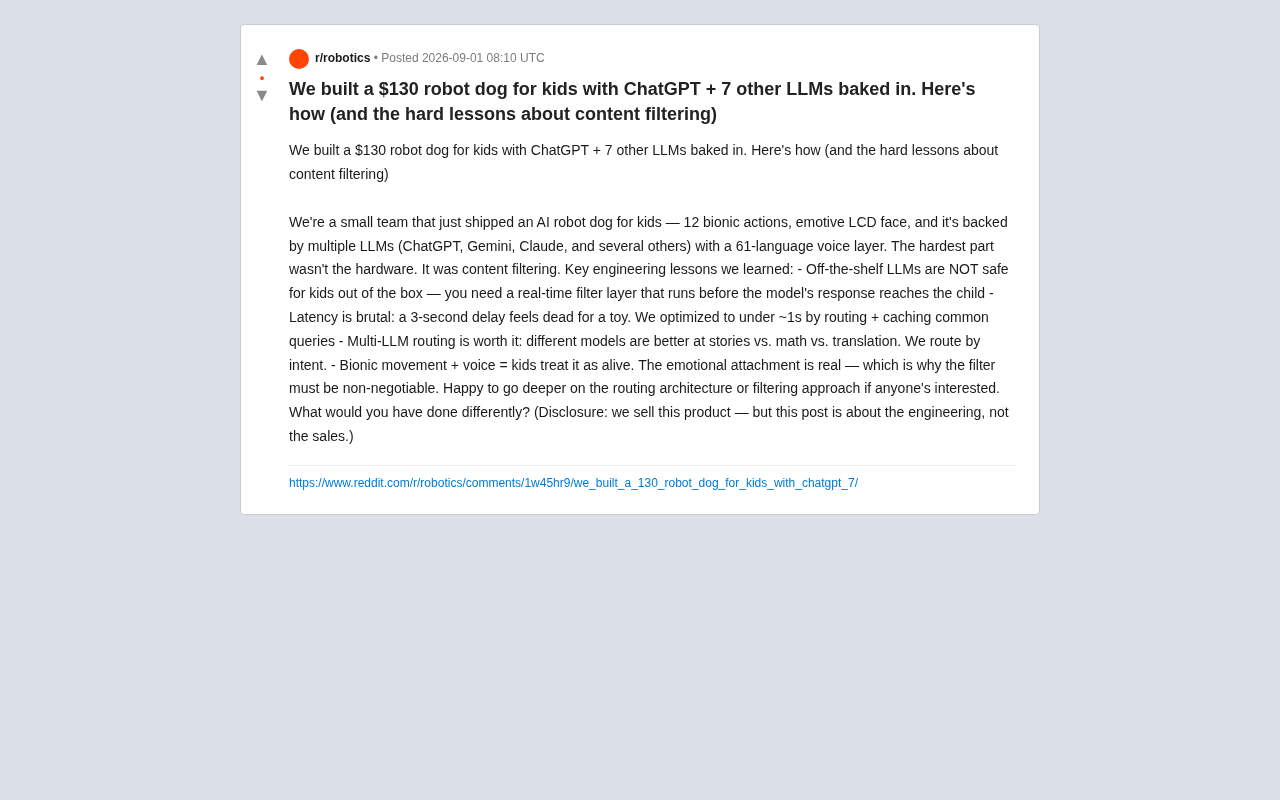
Building an AI Robot Dog for Kids: Multi-Model Routing, Content Filtering, and Latency Optimization
A $130 AI robot dog for kids integrates 8 LLMs with 61-language voice interaction. The team shares key engineering lessons on content safety filtering, multi-LLM intent routing, and sub-1-second latency optimization.
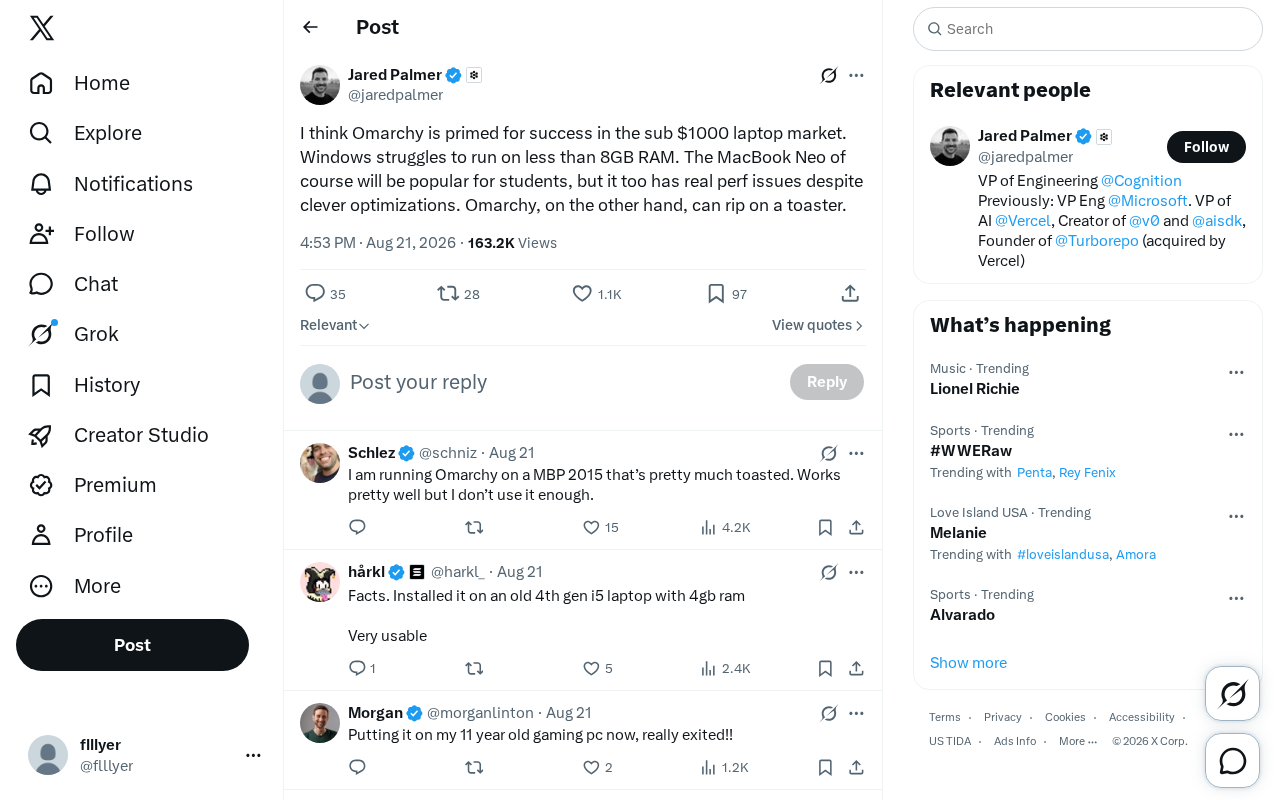
Can Omarchy Dominate the Sub-$1000 Laptop Market? An In-Depth Analysis
Omarchy, based on Arch Linux, shows unique advantages in the sub-$1000 laptop market. This analysis compares Windows and MacBook performance bottlenecks on low-spec hardware and examines why Omarchy enables cheap laptops to run smoothly, plus the ecosystem challenges and market prospects it faces.
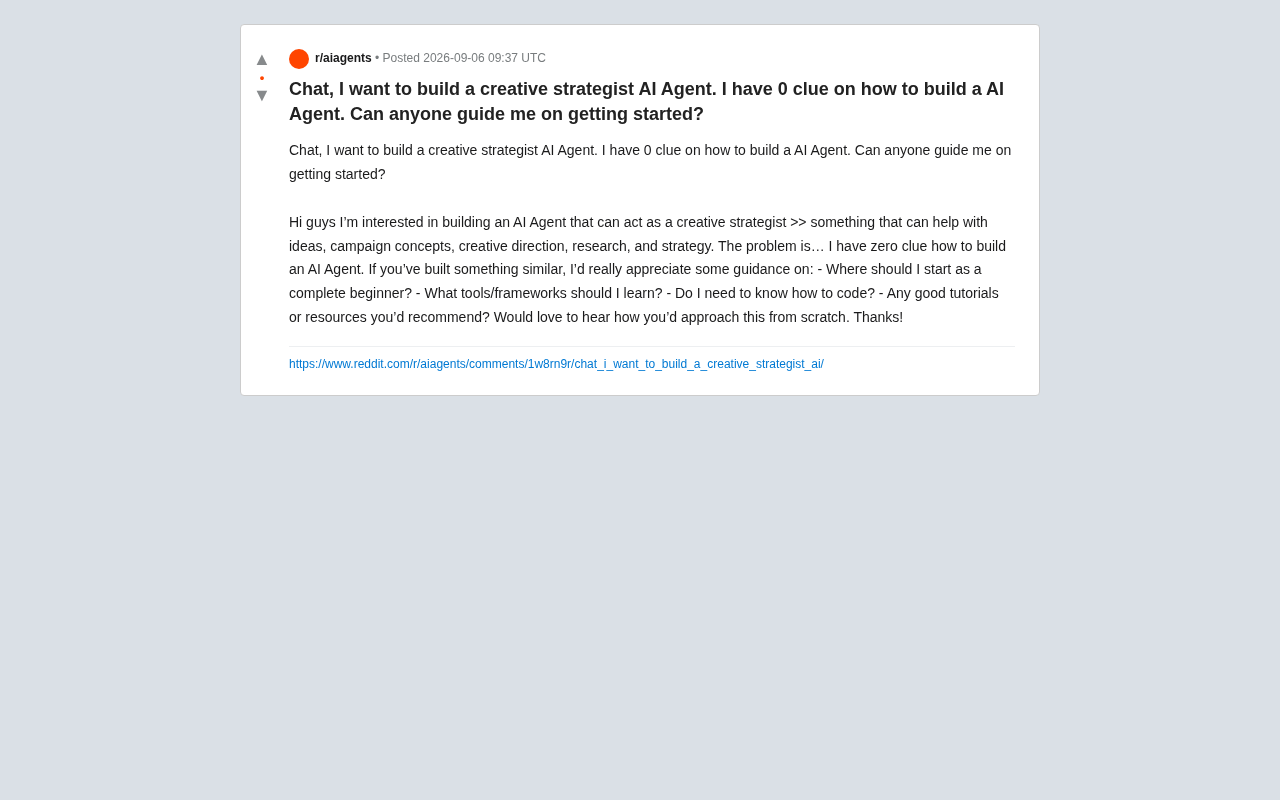
AI Agent Beginner's Guide: Building a Creative Strategy Intelligent Assistant from Scratch
A complete guide to building a creative strategy AI Agent from scratch. No coding required — use tools like Dify and Coze to quickly build an intelligent assistant.