World Humanoid Robot Athletics Championship Opens: Competition Reflects Industrial Evolution
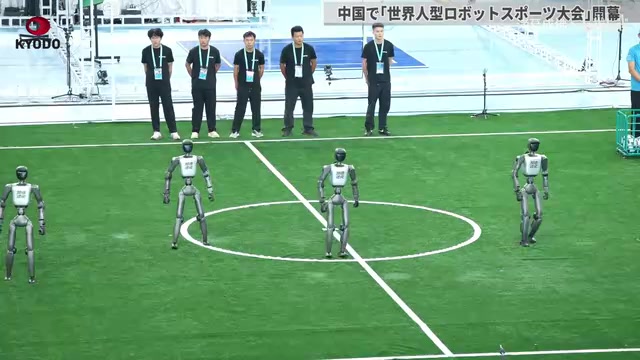
China hosts World Humanoid Robot Athletics, showcasing AI-powered robots competing in sports events
The World Humanoid Robot Athletics Championship in China features robots competing in sprints, soccer, table tennis, and combat sports. Beyond entertainment, the event serves as a proving ground for testing stability, reaction speed, and autonomous decision-making in real-world scenarios, marking humanoid robots' transition from lab to public competition.
An Athletic Event for Robots
According to Japan's Kyodo News, the World Humanoid Robot Athletics Championship hosted by China has officially opened, attracting global attention. This unique event transplants traditional sports competition formats onto humanoid robots, covering multiple events including sprints, soccer, table tennis, and combat sports. On the field, robot athletes chase each other on the track and engage in fierce confrontations on the court, presenting an unprecedented spectacle of technological competition.
Unlike human athletic events, the highlights of this competition lie not only in the race for rankings, but more importantly in the concentrated demonstration of each humanoid robot's stability, reaction speed, and autonomous decision-making capabilities in real-world athletic scenarios. As the on-site commentary stated, this process is "best viewed as our own process of testing our efforts"—competition has become the ultimate proving ground for humanoid robot technology maturity.
100-Meter Sprint: Engineering Challenges Behind Speed
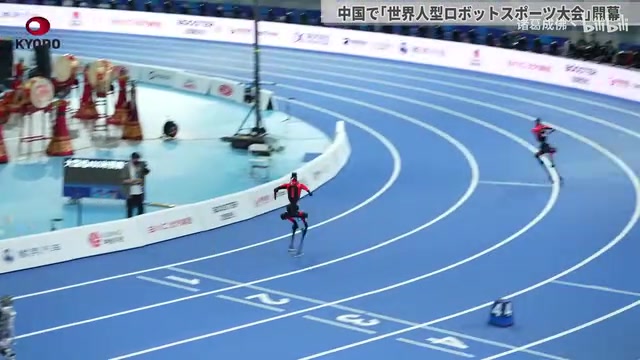
The most talked-about event in this championship is undoubtedly the robot 100-meter sprint. Reports used the attention-grabbing headline "speeds surpassing Usain Bolt," which, based on the actual footage, is more of a marketing expression, but the robots' performance in straight-line acceleration and cornering control is indeed noteworthy.
The Trade-off Between Acceleration and Balance
When describing the race, the commentator mentioned that as robots enter sustained running phases, they "run particularly steadily," but simultaneously exhibit "waist rotation"—this actually reveals the core challenge of humanoid robot motion control: how to use sensors to perceive direction in real-time and utilize waist rotation to maintain dynamic balance.
Bipedal walking and running in humanoid robots has always been a recognized technical pinnacle in robotics. From a fundamental perspective, this involves a classical control theory called the "Zero Moment Point (ZMP)"—when walking or running, robots must ensure their center of gravity projection always falls within the footprint of the supporting foot, or they will fall. This is similar to how humans automatically complete balance adjustments through the cerebellum and vestibular system, but robots must rely on Inertial Measurement Units (IMU), torque sensors, and high-frequency control algorithms to achieve this. Current mainstream bipedal motion control methods include traditional approaches based on Model Predictive Control (MPC) and recently emerging end-to-end control methods based on reinforcement learning. The latter allows robots to autonomously learn how to maintain balance on complex terrain through millions of trial-and-error training sessions in simulation environments. Boston Dynamics' Atlas and Tesla's Optimus have adopted these technical approaches to varying degrees.
It requires the system to complete posture estimation, center of gravity adjustment, and joint torque distribution within milliseconds. Situations observed on the field such as athletes "falling within a few steps" and "the initial number of teams gradually decreasing" precisely illustrate the stringent test of continuous high-speed motion on robot reliability. Being able to complete the race itself is already a significant technical achievement.
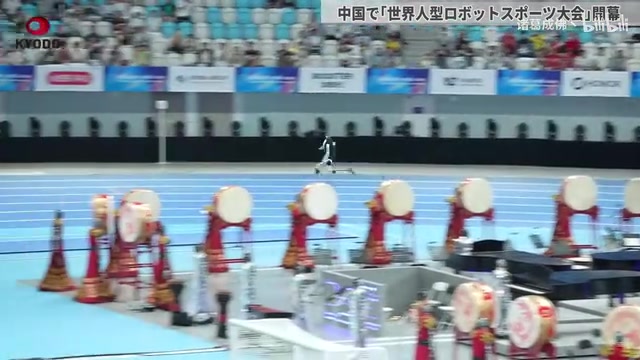
From Combat to Ball Sports: Comprehensive Competition Across Multiple Scenarios
Beyond racing, the event also features competitive events like table tennis, soccer, and combat sports, comprehensively testing the overall capabilities of humanoid robots.
Real-time Perception and Decision-making in Ball Sports
In table tennis matches, commentators noted that robots "handle spin judgments quite well," able to recognize backspin and execute proactive forward-cutting actions. Behind this is a visual perception system that tracks high-speed small ball trajectories in real-time, along with the robotic arm's ability to make hitting decisions in extremely short timeframes.
Specifically, this relies on a complete "perception-decision-execution" closed-loop system. The perception layer typically consists of high-frame-rate industrial cameras (120fps or higher) paired with depth sensors, using computer vision algorithms to detect the ball's 3D position, velocity, and spin direction in real-time. The decision layer needs to complete trajectory prediction and hitting strategy planning in extremely short time windows (typically requiring latency below 50 milliseconds), involving inverse kinematics and dynamics optimization. The execution layer has the robotic arm driven by high-precision servo motors complete the final hitting action. The end-to-end latency of the entire closed loop is the key metric determining performance limits—table tennis typically flies from the opponent's paddle to one's own table in less than 400 milliseconds, leaving an extremely limited reaction window for the robot system. Table tennis is regarded as a sport requiring extremely high reaction speeds, and robots' ability to participate marks significant progress in this closed loop.
Soccer matches are equally exciting, with commentary describing players completing "bow-and-arrow shooting motions" and noting "the shooting speed should be very fast." Team coordination, shooting force control, defensive positioning—all of these place higher demands on multi-robot collaboration and motion planning. Team sports like soccer present technical challenges for multi-robot collaboration far exceeding single-body control: each robot must not only complete its own motion control but also perceive teammates' and opponents' positions in real-time and make individual decisions within a global strategic framework. This involves core problems of distributed Multi-Agent Systems, including communication protocol design, role assignment algorithms, conflict resolution mechanisms, and real-time path planning. RoboCup (Robot World Cup), founded in 1997, has long been a benchmark event in this field, with the long-term goal of forming a robot soccer team capable of defeating the human World Cup champions by 2050. Current multi-robot collaboration mainly adopts a hybrid architecture combining centralized planning with distributed execution, with some cutting-edge teams beginning to explore natural language instruction collaboration schemes based on large language models.
Industrial Signals Behind the Competition
The significance of this humanoid robot athletics championship extends far beyond wins and losses on the field.
Continuous Expansion of Participating Teams
A commentator's forward-looking statement is quite meaningful: "By next year, with more and more participating teams, there will certainly be more excitement and more world-class athletes." This reflects the rapid heating up of the humanoid robot track, with increasing numbers of companies and R&D teams willing to put their products on public competitive stages for testing.
Public events provide a standardized capability comparison platform. Through unified tracks and unified rules, humanoid robots from different manufacturers can be evaluated on the same dimensions, which has positive effects on promoting technological transparency and accelerating industry iteration. Using events to drive technological progress has a deep tradition in robotics—the DARPA Robotics Challenge (DRC) directly spawned major breakthroughs in iconic platforms like Boston Dynamics' Atlas; RoboCup drove small soccer robots from simple obstacle avoidance to complex tactical coordination; and Amazon's warehouse robotics challenge accelerated the commercial implementation of logistics automation grasping technology. The core value of public events lies in creating a "quantifiable, reproducible, comparable" technical evaluation framework, forcing participating teams to expose system weaknesses in real, uncontrolled environments. Falls, failures, false starts—these "imperfect" moments are precisely portraits of current humanoid robots' true capabilities and also point to directions for next-step optimization. Each on-field failure translates into publicly visible improvement pressure, a mechanism more effective at driving engineering improvements than closed laboratory testing.

From Laboratory to Public Eye
Pushing humanoid robots from closed laboratory testing to public events is itself an important marker of industrial maturity. It not only enhances public awareness of robotics technology but also injects enthusiasm for investment, talent, and policy attention. When robots can run, compete, and score on the field like human athletes, people's imagination about the future direction of "embodied intelligence" is greatly expanded.
Embodied Intelligence is one of the most watched frontier directions in current artificial intelligence, with the core concept being: true intelligence cannot exist apart from physical bodies; AI must perceive, learn, and act through interaction with the real physical world. This concept differs from traditional "disembodied intelligence" (such as large language models), emphasizing that intelligent agents need physical forms and must complete tasks in real environments. Since 2023, as large model technology has penetrated the robotics field, the embodied intelligence track has experienced explosive growth. Tech giants like NVIDIA, Google DeepMind, and OpenAI have all entered the space, and the Chinese market has also seen a surge of humanoid robot startups. According to predictions from multiple institutions, the global humanoid robot market could reach hundreds of billions of dollars by 2035, with application scenarios covering industrial manufacturing, home services, medical rehabilitation, and hazardous environment operations. The competitive capabilities demonstrated by this athletics championship are vivid annotations of embodied intelligence moving from theory to reality.
Competition is a Starting Point, Not an Endpoint
The opening of the World Humanoid Robot Athletics Championship is an industrial showcase full of ceremony. It tells the world in the most intuitive way: humanoid robots are moving from concept to practicality, from static displays to dynamic competition.
Although "speeds surpassing Usain Bolt" is more of a communication device, and current robots' overall performance still has obvious gaps compared to top human athletes, each successful completion, each successful hit and goal, represents concrete embodiment of technological accumulation. As the on-site atmosphere conveys—this is not just a competition, but a collective expectation for the future. Next year's field may feature faster speeds, more stable movements, and more world-class competitors.
Related articles

How Short-Form Video Creators Are Using AI Video Generation Tools
Exploring the real-world application of AI video generation tools in short-form video creation. From Seedance to Runway, how do creators integrate AI assets? Revealing the gap between demos and production use.

Home Data Center Setup Guide: A Complete Self-Hosted Private Cloud Implementation
Deep dive into building a home data center: hardware selection, software architecture, cost analysis, and operational challenges. From data sovereignty to technical implementation, build your private cloud infrastructure and control your digital assets.

Engrim: A Local Memory Engine Solution for AI CLI Tools
Engrim is an open-source, local-first SQLite memory engine built for AI CLI tools like Claude Code and Aider, solving context loss while keeping data private.