World Runner Revealed: AI-Generated World Exploration in Your Pocket

Runway unveils World Runner, a pocket-sized AI world exploration tool — but key details remain scarce.
Runway has announced World Runner, positioning it as 'Runway for Game Boy' — a portable, AI-powered world exploration experience built for infinite play. The product appears to extend Runway's Gen series video generation capabilities toward interactive world models, dynamically generating evolving virtual environments based on user input rather than playing back fixed content. The Game Boy analogy also signals a strategic shift from professional B2B creative tools toward a lower-barrier, mass-market consumer entertainment product. However, Runway has released only a single tagline so far, leaving critical details — hardware vs. software, real-time generation architecture, and interactivity depth — entirely unconfirmed.
Runway Launches World Runner: AI-Generated Worlds That Fit in Your Pocket
AI video generation company Runway recently announced a new product on social media called World Runner, officially described as "Runway for Game Boy" — a pocket-sized, portable world exploration experience built for infinite play. The original announcement was refreshingly concise: "Explore worlds on the go with a pocket-sized console for infinite play."
From this brief statement alone, it's clear that Runway is pushing generative AI beyond content creation tools and into interactive, gamified experiences. The phrase "infinite play" most likely points to AI-generated virtual worlds that are created in real time and never repeat — allowing users to explore continuously within a lightweight, handheld-style interface.
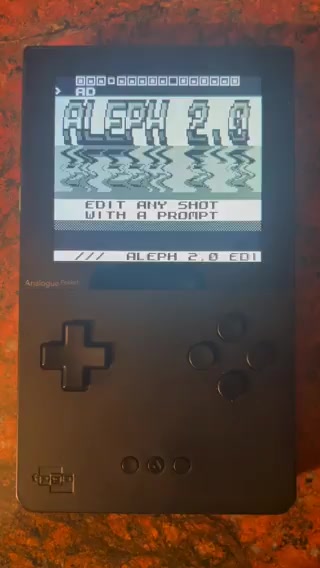

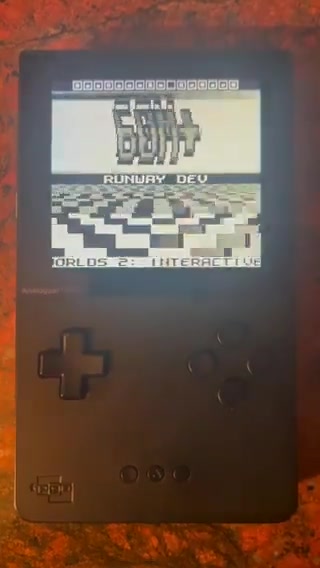
From Video Generation to Interactive Worlds
Runway has long been known for its AI video generation models, with its Gen series accumulating deep technical expertise in image-to-video and text-to-video generation. The launch of World Runner can be seen as an extension of these generative capabilities toward what researchers call "world models."
In recent years, the concept of a World Model has become a major focus in AI research. The core idea is to train a model to simulate an interactive, continuously evolving virtual environment — rather than simply generating a fixed video clip. If World Runner is indeed built on this premise, it means AI is no longer just "playing back" pre-generated content, but dynamically constructing environments in response to user input. That's the technical foundation behind the promise of "infinite play."
That said, official information remains extremely limited at this point — just a single product tagline and a link. Key details about the underlying technical architecture, generation resolution, interaction methods, and hardware form factor have not been disclosed.
The concept of world models was widely discussed in reinforcement learning as far back as 2018, when David Ha and Jürgen Schmidhuber published their seminal "World Models" paper, which proposed that agents could build internal predictive models of their environment and plan within "imagination." The idea has seen renewed interest with the rise of large generative models. Projects like Google DeepMind's Genie, Meta's V-JEPA, and GameNGen — which can render DOOM in real time using a neural network — are all exploring how diffusion models or video generation models can serve as interactive environment simulators. Unlike traditional game engines that rely on predefined rules and art assets, neural network-based world models can theoretically learn physical laws and visual styles directly from data, generating scenes that have never existed before. Runway's Gen series has accumulated significant engineering experience in video continuity and motion consistency — precisely the foundational capabilities needed to build interactive world models.
What Does the "Game Boy" Analogy Really Mean?
Runway's decision to position the product as "Runway for Game Boy" is loaded with meaning. The Game Boy represents portable, lightweight, low-barrier, mass-market gaming. By invoking this symbol, Runway is sending two distinct signals:
First, portability and ease of use. Compared to professional generative tools that require high-end GPUs and complex workflows, World Runner emphasizes being "pocket-sized" — suggesting it's designed for instant accessibility and a low-friction experience.
Second, a shift from production tool to consumer product. Runway's existing products have primarily targeted creators and professional users. The Game Boy analogy hints at a pivot toward mainstream consumers — turning AI-generated worlds into a casual, pick-up-and-play form of entertainment.
If this positioning holds, World Runner could become a textbook example of generative AI crossing over from B2B creative tools into B2C entertainment products.
Key Questions That Remain Unanswered
Based on what's been shared so far, several critical questions still await answers from Runway:
- Is it hardware or software? Words like "console" and "pocket-sized" naturally evoke a physical device, but this could just as easily be a lightweight app running on a smartphone or browser, using the "handheld console" as an experiential metaphor.
- How is "infinite" actually achieved? Truly infinite content requires stable, low-latency real-time generation — a massive challenge in terms of model efficiency and cost management.
- How deep is the interactivity? Is this purely a visual exploration experience, or does it include game mechanics, objectives, and feedback loops? The answer determines whether this is a "tech demo" or a genuine product.
Until Runway releases more demos and technical details, these questions remain open.
Latency and cost in real-time neural rendering represent the single biggest engineering bottleneck for bringing products like this to market. GameNGen, for instance, renders DOOM at roughly 20 frames per second on a single TPU — impressive by current standards, but still short of a smooth consumer-grade experience, and at extremely high inference costs. If World Runner aims to deliver genuine on-device real-time generation in a lightweight "pocket console" form factor, it would require significant breakthroughs in model compression, quantized inference, or edge computing. If it relies on cloud streaming instead, network latency and server costs become the critical variables constraining both user experience and commercial viability. This is the core technical threshold that will determine whether the promise of "infinite play" can actually be kept.
Summary
World Runner represents Runway's latest foray into interactive generative AI experiences. The "Runway for Game Boy" framing makes its intent clear: portable, lightweight, and aimed at mainstream entertainment. It may signal a broader shift in AI from content generation toward interactive world models — but with official information this sparse, the true form, technical implementation, and depth of experience all remain to be seen. For anyone tracking the consumer application of AI in entertainment, this is an early signal worth watching closely.
Related articles

Chain of Thought Isn't Just for AI: How Humans Can Use CoT to Improve Thinking Quality
Chain of Thought isn't just a prompt trick for large models. Starting from a Hacker News discussion, this article analyzes why CoT works for human thinking too, breaks down actionable ways to transfer it, and highlights the key differences between human CoT and machine CoT.
Cloudflare Teams Up with OpenAI: Closi…
Cloudflare Teams Up with OpenAI: Closing the Loop from Vulnerability Discovery to Defense with AI
Cloudflare uses OpenAI Daybreak to investigate security vulnerabilities and generate reviewable remediation plans, while developers use Codex to boost coding efficiency and quality.

Orca Multi-Agent Orchestration in Practice: A Guide to Parallel Collaboration with Claude and Codex
Orca is Stable AI's free open-source agent workbench supporting 34 agents like Claude Code and Codex in parallel. Learn its Git worktree isolation, multi-model orchestration, and mobile management.