WrenAI: An Open-Source GenBI Tool for Querying Databases with Natural Language
WrenAI: An Open-Source GenBI Tool for …
WrenAI is an open-source GenBI platform that turns natural language into governed SQL queries across 20+ data sources.
WrenAI is an open-source Generative BI (GenBI) project by the Canner team that uses an "Open Context Layer" to transform natural language questions into trustworthy SQL queries, charts, and dashboards. By introducing a semantic governance layer, it addresses the hallucination and accuracy problems of raw LLM-generated SQL. It supports 20+ data sources including BigQuery, Snowflake, and PostgreSQL, and is designed for both human users and AI agent workflows.
What is WrenAI
In the world of data analytics, SQL has long been a technical barrier standing between business users and their data. When a business team needs a report, they typically have to queue up and wait for a data engineer to write the query. WrenAI, an open-source project from the Canner team, aims to bridge this gap using generative AI.
WrenAI is positioned as a GenBI (Generative BI) platform. Its core capability is an "Open Context Layer" that transforms natural language questions into trustworthy dashboards, charts, and SQL queries. To date, the project has surpassed 16,000 stars on GitHub, gaining nearly a hundred new stars per day, with community interest continuing to grow.
GenBI represents a paradigm upgrade over traditional BI tools, made possible by the rise of large language models. Traditional BI tools like Tableau and Power BI rely on predefined data models and drag-and-drop interfaces — users still need a certain level of data literacy to build reports. Text-to-SQL technology appeared even earlier, but early implementations were rule-based or used small specialized models, yielding limited accuracy and making commercial deployment difficult. The emergence of LLMs like GPT-4 brought a qualitative leap in natural language understanding, giving birth to the GenBI category. The core idea: let users ask questions in plain language, while the system automatically handles the full pipeline from semantic understanding to data querying to visualization. WrenAI goes further by introducing a semantic governance layer, representing a critical technological leap for GenBI — moving from "functional" to "trustworthy."
It's worth noting that the fundamental difference between GenBI and traditional BI goes beyond interaction style — it lies in the depth of intent understanding. Drag-and-drop operations in traditional BI essentially require users to translate their business questions into tool-specific language. GenBI reverses this process: the system actively interprets human intent and performs the translation. This paradigm shift depends on LLMs having sufficiently strong contextual reasoning abilities — capable of distilling precise data query intent from ambiguous natural language and making reasonable semantic inferences without explicit instructions.
Unlike common text-to-SQL tools on the market, WrenAI emphasizes "governed" natural language to SQL conversion. It doesn't simply hard-translate statements into SQL; instead, it generates queries that are business-consistent and trustworthy, constrained by semantic context.
Core Technology: The Open Context Layer
Why Having LLMs Generate SQL Directly Is Risky
The problems with having a large language model generate SQL directly are obvious: the model doesn't know your table schema, field meanings, or business definitions, making it easy to generate queries that are syntactically correct but semantically wrong. Take "active users" as an example — different companies define this differently, and there's no way to guarantee accuracy by relying on LLM guesswork alone.
This is what academics call "Semantic Drift" — LLMs tend to infer based on general patterns from training data rather than strictly adhering to a specific company's business definitions. Research shows that even the most advanced LLMs, without explicit contextual constraints, still struggle to meet production-level accuracy requirements for complex multi-table JOIN queries or questions involving proprietary business terminology. LLMs also suffer from "hallucination" — they may confidently generate SQL referencing non-existent field names or table names, which only fails at query execution time. Users have a hard time catching these errors at the results level. In scenarios with high data accuracy requirements — such as financial reconciliation or inventory auditing — the risks are especially pronounced.
WrenAI's solution is to introduce a Semantic Layer, referred to as the "Open Context Layer." Developers can pre-define data models, business metrics, field relationships, and proprietary terminology in this layer. When users ask questions in natural language, the system first completes semantic mapping within this governed context, then drives SQL generation.
The semantic layer is not a concept invented by WrenAI — it has a long history in data engineering. Early OLAP cubes (such as Microsoft SSAS) already contained the seeds of a semantic layer. Modern semantic layer tools include dbt's Metrics Layer, Looker's LookML, and Cube.dev. Their core value lies in decoupling the underlying physical data model from higher-level business logic — definitions of business metrics (e.g., "active users," "monthly recurring revenue") are maintained centrally in the semantic layer, ensuring consistent definitions across teams and tools. WrenAI's innovation is the deep integration of the semantic layer with the LLM inference pipeline: the semantic layer doesn't just serve as documentation for the model to reference; it becomes a set of "guardrails" that constrain and validate SQL generation, fundamentally addressing the hallucination problem in enterprise data contexts.
From a technical implementation perspective, WrenAI's semantic layer adopts an architectural approach similar to Retrieval-Augmented Generation (RAG). A user's natural language question first triggers semantic retrieval, recalling the most relevant business definitions, table schemas, and metric definitions from a predefined context repository. These structured contexts are then injected into the LLM's prompt, guiding the model to generate SQL within a constrained semantic space. This mechanism ensures that generated SQL no longer depends on the model's "memory," but is anchored to the enterprise's own data semantics — significantly improving query accuracy and consistency.
From a Single Question to a Complete Analysis
The direct benefit of this architecture is that generated SQL is no longer a "black box" output, but a traceable query built on clearly defined business semantics. This is exactly what "governed text-to-SQL" means — the trustworthiness and consistency of queries are institutionally guaranteed.
Ultimately, WrenAI can transform a single natural language question into three outputs in one shot: SQL queries, visualized charts, and complete dashboards — covering the full pipeline from data retrieval to results presentation.
Broad Data Source Support
WrenAI's compatibility with major data platforms is one of its standout features. Officially supporting 20+ data sources, it covers the mainstream choices in enterprise data stacks:
- Cloud Data Warehouses: BigQuery, Snowflake, Amazon Redshift, Databricks
- Relational Databases: PostgreSQL
- Analytical Databases: ClickHouse
The data sources WrenAI supports cover the mainstream architectures of today's enterprise data stacks. BigQuery and Snowflake are the two benchmarks for cloud-native data warehouses, led by Google Cloud and Snowflake Inc. respectively, known for elastic scaling and columnar storage. Amazon Redshift is the core analytics database in the AWS ecosystem, deeply integrated with storage services like S3. Databricks, built on Apache Spark, holds an important position in the Lakehouse (data lake + data warehouse) architecture. ClickHouse is an open-source OLAP database that has risen rapidly in real-time analytics scenarios, renowned for its extremely high query throughput. While all of these platforms support SQL, they differ significantly in dialect, permission models, and performance optimization strategies. WrenAI abstracts away these underlying differences through a unified connector layer, enabling the same semantic definitions to be reused across platforms — a significant engineering advantage for large enterprises with data scattered across multiple cloud platforms.
Understanding the differences between these data sources helps gauge the technical complexity of WrenAI's unified connection layer. Take SQL dialects: BigQuery uses Standard SQL with unique support for arrays and nested structures; Snowflake has proprietary extended syntax for Time Travel and zero-copy cloning; ClickHouse's aggregate function ecosystem differs significantly from standard SQL; and the PostgreSQL ecosystem has spawned numerous extensions like TimescaleDB and Citus, each with different query optimization strategies. WrenAI needs to uniformly map business questions in the semantic layer, then generate SQL conforming to the dialect of the target database in the execution layer. This "one semantic definition, multiple dialects" design is at the core of its engineering complexity.
This means enterprises don't need to migrate or overhaul their existing data infrastructure. Whether data lives in Google Cloud, AWS, or a self-hosted PostgreSQL instance, WrenAI can serve as a unified natural language query entry point — truly plug-and-play.
For teams dealing with increasingly fragmented data stacks, this multi-source compatibility dramatically lowers the barrier to adoption.
Data Query Capabilities for AI Agents
WrenAI explicitly positions itself as "GenBI for AI Agents" — generative BI built to serve AI agents.
This positioning has clear product logic. As AI agents increasingly become a new paradigm for software interaction, data querying capabilities also need to be packaged as modules that agents can safely invoke. AI agents are AI systems capable of autonomous planning, tool invocation, and executing multi-step tasks — representative frameworks include LangChain, AutoGPT, and Microsoft's Semantic Kernel. When an agent needs to access an enterprise database, it faces three challenges: first, security boundaries — agents cannot execute arbitrary SQL, as this poses risks of data leakage or erroneous operations; second, contextual understanding — agents lack business context and don't know which field in the "orders table" represents a "valid order"; third, traceability — an agent's data querying behavior needs to be auditable for error diagnosis. WrenAI's Open Context Layer provides exactly this kind of standardized interface: agents access data through constrained natural language queries, and the semantic layer handles translation and validation — preserving flexibility while establishing governance boundaries. This aligns closely with the design philosophy of emerging standards like the Model Context Protocol (MCP).
Model Context Protocol (MCP) is an open standard proposed by Anthropic in late 2024, designed to standardize how AI models interact with external tools and data sources. Its core idea is to define standardized "tool call" interfaces for agents, enabling models to access file systems, databases, APIs, and other resources in a consistent manner, while tool providers control access permissions and data scope. WrenAI's architecture aligns closely with MCP's design philosophy — the semantic layer defines what agents can "ask," the connection layer determines what agents can "access," and together they form the governance boundary for data access. As the MCP ecosystem matures, WrenAI has the potential to become a standard MCP Server for enterprise data querying, directly integrated and invoked by various agent frameworks.
In other words, WrenAI doesn't just serve human users making natural language queries — it can also become a data retrieval component within AI agent workflows. In enterprise-grade AI applications, agents often need to read real business data to complete tasks, and WrenAI fills exactly that critical gap: enabling agents to query databases in a trustworthy way.
The Competitive Advantage of Being Open Source
WrenAI is developed in Python and is fully open source, giving it a clear differentiated advantage in the GenBI space.
Compared to commercial BI tools (like Tableau or Power BI) or closed-source text-to-SQL services, being open source delivers three core advantages:
- Transparency and control: Enterprises can audit the code logic, understand how SQL is generated, and satisfy data compliance requirements;
- Deep customizability: Teams can customize the semantic layer and data models for their own business needs, rather than working around the product's predefined logic;
- No vendor lock-in: In sensitive data querying scenarios, enterprises avoid being tied to a single vendor.
In the sensitive context of data querying, the significance of open source goes far beyond the technical level. From a compliance perspective, GDPR (General Data Protection Regulation), CCPA (California Consumer Privacy Act), and China's Data Security Law all require enterprises to have complete auditing capabilities over data processing logic. Closed-source SaaS tools have an inherent compliance blind spot here — enterprises cannot verify whether their data is being used by third-party vendors for model training or other purposes. Open source exposes the code logic entirely, allowing security teams to review the SQL generation process line by line. Additionally, open-source projects typically support private deployment, keeping all data queries within the enterprise's internal network without passing through external APIs — further eliminating the risk of data leakage. This is the underlying logic behind WrenAI's strong competitiveness in highly regulated industries like finance and healthcare.
From a broader perspective, the open-source GenBI space is forming a new ecosystem landscape. On the commercial product side, established BI vendors like ThoughtSpot and Sisense are layering AI capabilities onto existing platforms. On the open-source side, beyond WrenAI, projects like Metabase and Apache Superset are actively incorporating AI query capabilities. WrenAI's differentiation lies in the fact that it was designed from the ground up with semantic governance and AI agent compatibility as core architectural goals — not as features bolted on afterward. This gives it a first-mover advantage in the "AI-native BI" niche.
More than 16,000 stars and steady daily growth reflect strong community validation of this direction. This also mirrors a larger trend: as LLM capabilities continue to improve, "how to let AI access structured data safely and reliably" is becoming a central challenge for enterprise AI adoption.
Summary
WrenAI represents a pragmatic technical approach in the GenBI space: rather than blindly relying on LLMs' raw generative capabilities, it ensures the accuracy and consistency of natural language query results through a governed semantic context layer.
Its value operates on three levels: lowering the barrier to data analysis (business users query data in natural language), ensuring trustworthy results (semantic governance constrains SQL generation), and serving the AI agent ecosystem (providing intelligent agents with secure data access capabilities).
For teams exploring the convergence of AI and data analytics, WrenAI is an open-source solution worth serious evaluation. That said, building the semantic layer itself requires upfront investment — how to strike the right balance between "the work of predefining context" and "query accuracy" will be an unavoidable core challenge in real-world deployments. It's worth watching: as LLMs' context windows continue to expand (e.g., Gemini 1.5 Pro supporting million-token contexts), a lightweight approach with "low semantic layer dependency" may emerge — directly injecting complete database schemas and business documentation into the model to reduce the effort of manually defining a semantic layer. Whether WrenAI and other semantic governance pioneers can maintain their advantage as this technology evolves will be an important lens through which to observe the development of the GenBI space.
Related articles

Alibaba Launches Happy Shrimp: AI-Powered One-Click Complete Song Generation
Alibaba launches Happy Shrimp, an AI music generation tool that creates complete songs with lyrics, melody, arrangement, and vocals from natural language descriptions. In-depth analysis of its core features, differentiation from competitors like Suno, and industry impact.
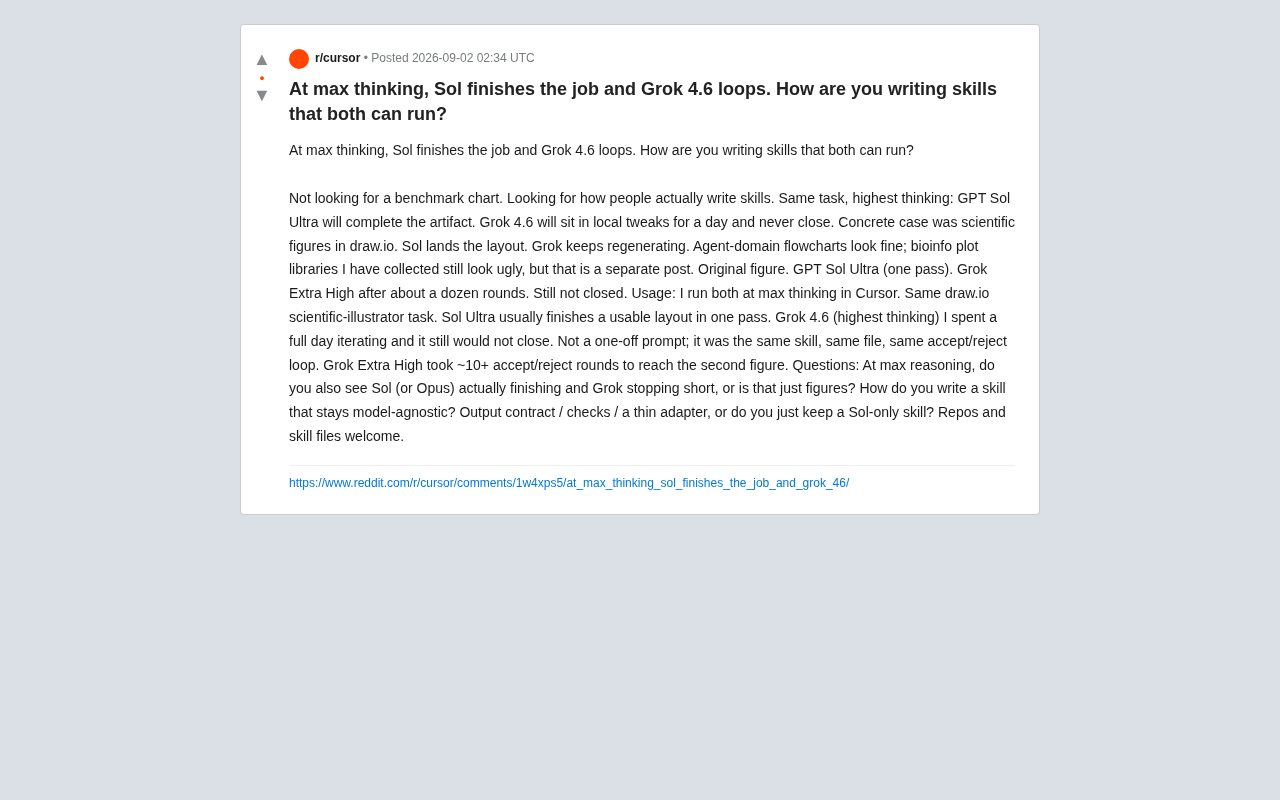
GPT Sol Ultra vs Grok 4.6: Real-World Task Completion Benchmark in Reasoning Mode
Developer benchmark reveals GPT Sol Ultra completes draw.io scientific diagrams in one iteration while Grok 4.6 fails to converge despite maximum reasoning mode, exposing that reasoning depth ≠ task delivery capability.
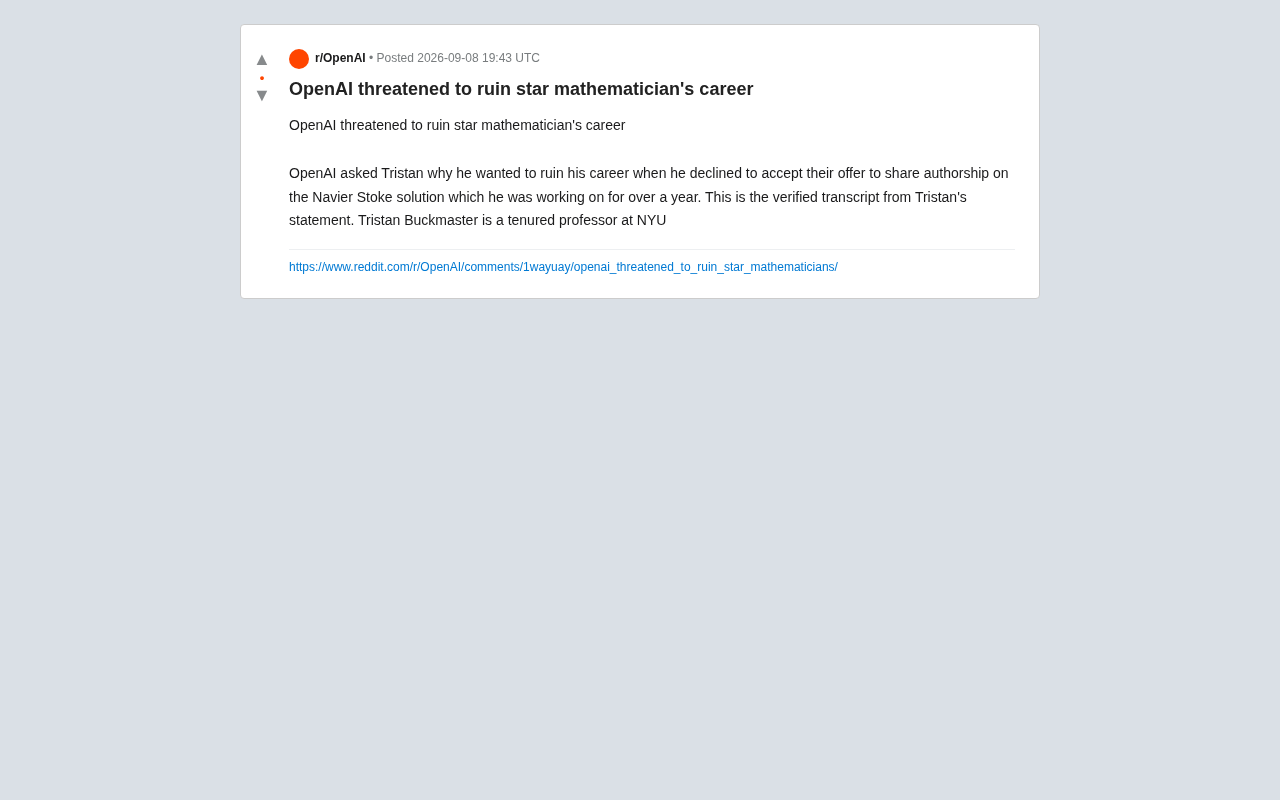
OpenAI Authorship Dispute: The Battle Over Academic Boundaries in the AI Era
OpenAI disputes authorship with mathematician Tristan Buckmaster over Navier-Stokes research, raising ethical questions about AI involvement in science.