Writing Code Others Can Collaborate On: The Leap from "It Works" to Maintainable

Professional code isn't just code that runs — it's code that teams can maintain and build on together.
This article exposes the most critical gap between beginners and professional developers: getting code to run is just the starting point. What employers truly value is maintainability and reliability. The discussion covers three dimensions: using OOP with sound judgment (knowing when not to use inheritance), writing small functions with clear inputs and outputs, and investing in naming conventions, project structure, and modular design to lower the cost for others to understand your code. These skills collectively mark the line between an amateur script writer and a professional engineer.
Why "It Works" and "It's Collaborative" Are Two Different Things
Many beginners fall into a common trap: once the code runs on their own machine, they consider the job done. But there's a massive gap between a script that succeeds exactly once on your computer and code that other developers can open, understand, and continue building on.
As one YouTube creator puts it bluntly: what employers are actually hiring for is the latter. Because work is fundamentally collaborative — you'll almost never code alone. You'll be pushing a project forward with a team. That means your code doesn't just need to run right now; it needs to stay maintainable and reliable over the long term.
In other words, employers aren't paying for "ran once" — they're paying for your ability to deliver an asset the whole team can keep benefiting from. Code often outlives the moment it was written by a wide margin. The person inheriting it might be a colleague three months later, or even your future self six months down the road.
The Core Elements of Maintainable Code
Bridging the gap from "it works" to "it's collaborative" requires developing real engineering skills — not just staying at the syntax level.

Object-Oriented Programming Isn't Just for Show
The author emphasizes truly understanding object-oriented programming (OOP): classes, inheritance, and — crucially — when to use it and when not to. This last part is especially important. Many people learn OOP only to overuse inheritance, which ends up making the structure more complex rather than less. The real value lies in sound judgment.
Nearly all real-world Python codebases, especially large-scale ones, are built around these organizational patterns. If your goal is to join a professional team, understanding how mainstream codebases are organized is non-negotiable.
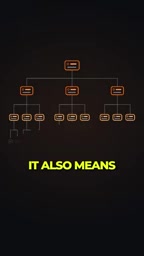
Over-relying on inheritance is one of the most common pitfalls for beginners. Inheritance is meant to express an "is-a" relationship (e.g., "a dog is an animal"), but many people treat it as a universal tool for code reuse — leading to ever-deeper class hierarchies where changing one thing breaks everything else. In modern Python engineering, composition over inheritance has become the widely accepted principle. Rather than having class A inherit from class B, you let class A hold an instance of class B as an attribute. Beyond that, Python's "duck typing" and Protocol mechanism often achieve polymorphism without introducing inheritance hierarchies at all. The core of good judgment: whenever you reach for inheritance, ask yourself — "Is this a genuine is-a relationship, or am I just trying to reuse a few lines of code?" If it's the latter, composition or standalone functions are usually the better choice.
Functions Should Have Clear Inputs and Outputs
Another telling distinction is how you design functions. The author criticizes the anti-pattern of "one giant 400-line file" — piling all the logic in one place makes code both hard to read and hard to change.
The alternative is writing functions with a single responsibility and well-defined inputs and outputs. A good function should behave like a black box: given a specific input, it produces a predictable output with no hidden side effects. That way, others can call it with confidence without having to read through all your code first.
The "hidden side effects" mentioned in function design refer to a function secretly modifying external state beyond its return value — such as directly mutating a global variable, modifying the contents of a passed-in list, or quietly writing to a file. Side effects aren't inherently bad (I/O operations are side effects by nature), but unpredictable side effects make it impossible for callers to safely reason about the code's behavior. This connects to the concept of "pure functions" in functional programming: the same input always produces the same output, with no reliance on or modification of external state. Even without fully adopting a functional style, good Python engineering practice recommends isolating side-effectful operations (like database writes or file I/O) to clearly defined boundary layers, while keeping core business logic pure — this makes unit testing dramatically easier and cuts debugging costs significantly.
Project Structure and Naming: The Underrated Foundations of Collaboration
Beyond OOP and function design, the author highlights several habits that are easy to overlook but critically important:
- Meaningful naming: Variable, function, and class names should be self-explanatory. Poor naming forces future readers to spend several times longer guessing at intent.
- Sensible project structure: Files and directories should be organized logically so anyone can find what they're looking for at a glance.
- Modules and packages: Understanding how to split code across different modules is a fundamental tool for managing complexity.
- Problem decomposition: Breaking a complex task into a series of simpler, more understandable steps.
These skills may seem basic, but they're precisely what separates "amateur script writers" from "professional engineers." They all point toward the same goal: lowering the cost for others to understand and modify your code.
In Python, a "module" is a single .py file, while a "package" is a directory containing an __init__.py. Together they form the basic units of code organization. Good module design typically follows the single responsibility principle: each module handles one category of functionality — for example, keeping database operations, business logic, and API routing in separate files. Well-known Python project structure conventions (like the src layout) and tools (like pyproject.toml) have gradually become community standards, and familiarity with them makes your project more welcoming to new contributors. Additionally, Python's official style guide PEP 8 has clear naming conventions: functions and variables use snake_case, classes use PascalCase, and constants use ALL_CAPS. Following these conventions is the lowest-cost investment you can make to reduce cognitive friction.
What This Means for Learners
This advice, though concise, points toward a clear path forward. If you can already write programs that run, your next step shouldn't be learning yet another new framework — it should be going back to sharpen the engineering fundamentals:
- Deliberately practice judging when OOP is appropriate, rather than applying it blindly.
- Build the habit of writing small, focused functions and resist the pull of giant files.
- Put real thought into naming and project structure, and use "can someone else understand this?" as your acceptance criterion.
- Learn to decompose complex problems with a modular mindset.
At the end of the day, programming is a team sport. The ability to write code that others are happy to take over and confident to build on — that's the true mark of the transition from learner to professional developer.
Related articles

JobRunner MCP Server: AI Agents Can Now Fix Failed Java Jobs
JobRunner launches an open-source MCP server enabling AI agents to view cluster status, diagnose failures, and recover Java jobs—incident response from any cloud coding environment or existing agent.

MLAI Digital Launches 9 Security Agents: MCP Server Safeguards the Full Lifecycle of Agentic AI
MLAI Digital launches Security MCP Server with nine built-in specialized security agents covering vulnerability discovery, attack simulation, prompt injection detection, API and infrastructure assessment, and accelerated remediation—embedding security validation across the full Agentic AI lifecycle from development to production.

Running Isaac Lab on H100 GPUs: Exploring Better Approaches
Exploring optimization methods for running Isaac Lab on NVIDIA H100 GPUs, including MIG configuration, mixed precision, TensorRT acceleration, and community experience to improve robotics simulation and reinforcement learning efficiency.