wshobson/agents: A Multi-Agent Orchestration Framework for Claude Code
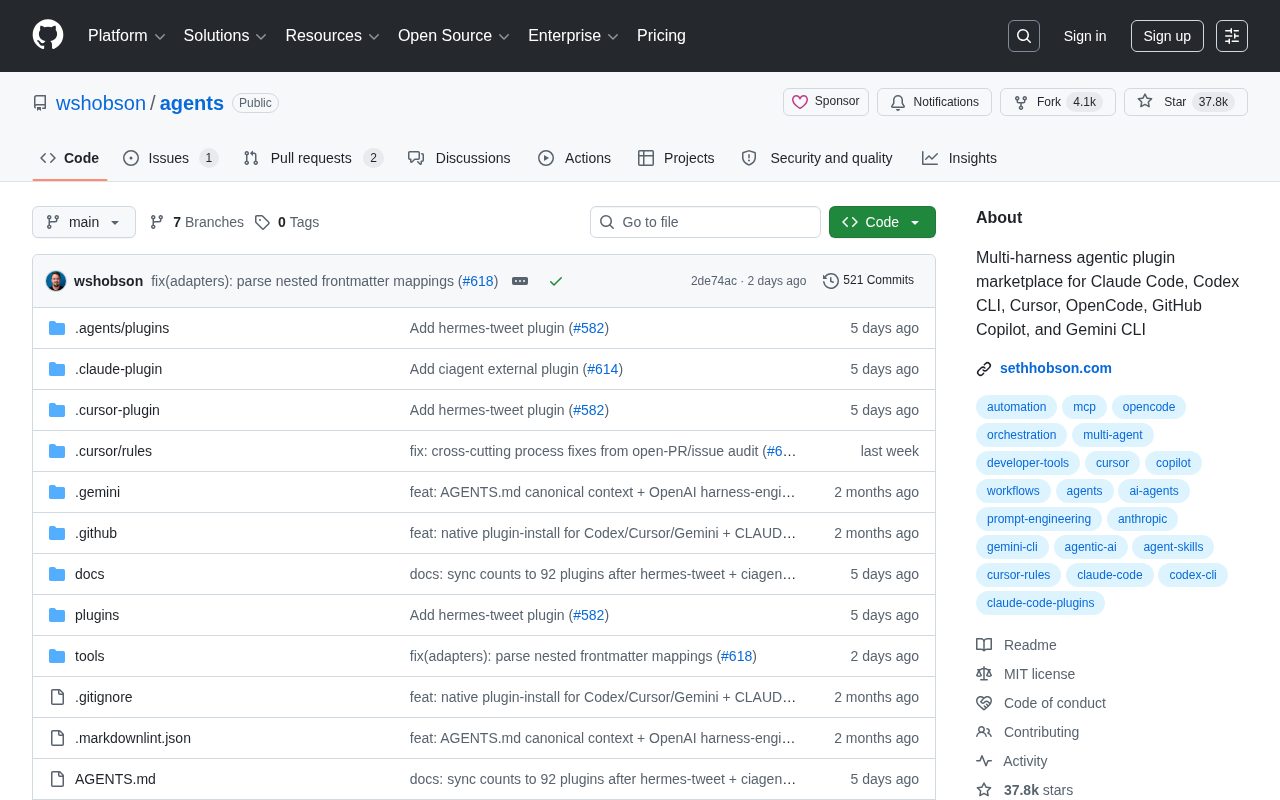
wshobson/agents extends Claude Code with multi-agent orchestration, turning a single AI assistant into a team-style dev workflow.
wshobson/agents is an open-source multi-agent orchestration framework built on Anthropic's Claude Code, written in Python with ~34,950 GitHub Stars. It decomposes a single AI coding assistant into specialized agents handling requirements, implementation, and review, coordinated through orchestration logic. This design addresses LLM limitations around context windows and self-correction, making AI-assisted workflows resemble real software team collaboration — ideal for developers and teams looking to push Claude Code automation further.
As AI coding assistants continue to evolve rapidly, enabling a single model to handle complex, multi-step development tasks across domains has become a central challenge in the tooling ecosystem. The open-source project wshobson/agents on GitHub offers one compelling approach: extending Claude Code's capabilities through intelligent automation and multi-agent orchestration. The project has attracted approximately 34,950 Stars and 3,804 Forks, reflecting significant traction in the developer community.
Project Overview: Bringing Multi-Agent Collaboration to Claude Code
wshobson/agents is an extension project built around Anthropic's official command-line tool, Claude Code. Its core idea is to decompose a single AI coding assistant into a group of specialized "agents," each with a distinct role, and then coordinate them through orchestration logic to complete tasks collaboratively.
The value of this design lies in specialization and division of labor. In a traditional single-model conversation, the model must simultaneously understand requirements, plan steps, write code, and review results — a process that can easily lose context or drift off course in long-horizon tasks. A multi-agent architecture delegates these stages to different roles: one agent handles requirements decomposition, another focuses on implementation, and a review agent ensures quality — creating a workflow that more closely resembles how a real software team operates.
The project is primarily written in Python, which aligns with the Python-dominant landscape of current AI toolchains and makes it straightforward for developers to build on top of or integrate into existing workflows.
Claude Code is Anthropic's official command-line coding assistant, launched in 2024 and built on the Claude family of large language models. It enables developers to complete code generation, debugging, explanation, and refactoring tasks using natural language instructions directly in the terminal. Unlike IDE plugins such as GitHub Copilot, Claude Code operates via the command line with a stronger emphasis on understanding entire codebases and performing cross-file operations. Through its tool use mechanism, it can directly execute file reads/writes and terminal commands, giving it a degree of autonomous execution capability. wshobson/agents builds an orchestration layer on top of this foundation, transforming it from a single conversational tool into a composable multi-agent system.
Why Multi-Agent Orchestration Matters
Multi-agent orchestration isn't a new concept, but it is showing distinct advantages in AI-assisted software development. A single LLM faces inherent bottlenecks when tackling complex engineering tasks: limited context windows, difficulty balancing planning and execution in a single inference pass, and a lack of self-correction mechanisms.
Orchestrating multiple specialized agents can help address these limitations:
- Role isolation: Each agent focuses on a single responsibility, keeping prompts and context more targeted and producing more consistent outputs.
- Controlled workflows: The orchestration layer manages the sequencing and information flow between agents, making the execution path of complex tasks more transparent.
- Extensibility: Adding new capabilities means adding a new agent rather than rewriting the entire system.
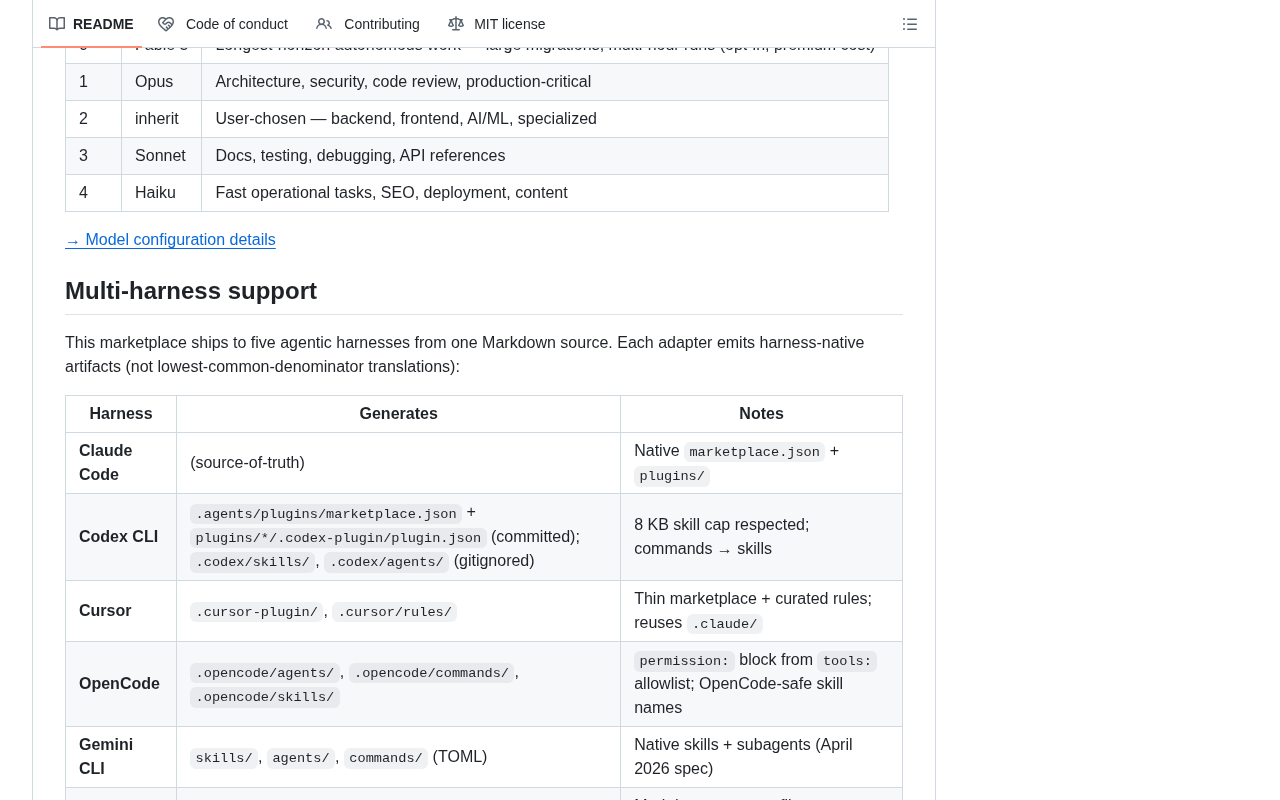
For developers who use Claude Code extensively, tools like this upgrade the command-line AI assistant from a "single-point Q&A" tool to a "team-style collaboration" system — particularly well-suited for refactoring, cross-module development, and automated review in medium-to-large projects.
The core idea behind Multi-Agent Orchestration draws from the divide-and-conquer principle in software engineering: distributing a complex task among multiple specialized agents that work in parallel or in sequence, each maintaining its own independent context and tool permissions. In the LLM space, typical implementations of this architecture include frameworks like LangGraph, AutoGen, and CrewAI, which provide abstraction layers for inter-agent message passing, state sharing, and conditional routing. Compared to single-agent loops (ReAct loops), orchestration architectures offer the advantage of selecting different models or prompting strategies for different subtasks, while reducing error accumulation across steps through well-defined interface contracts. wshobson/agents brings this concept to the Claude Code use case, grounding it in practical engineering needs.
What the High Star Count Signals
Nearly 35,000 Stars places this project in the top tier of open-source tooling, and it reflects two broader trends.
First, Claude Code — as Anthropic's dedicated coding tool — is forming its own third-party ecosystem. The high visibility of extension projects built around it signals that developers have genuine, unmet needs and are actively willing to fill gaps that official tooling hasn't yet addressed.
Second, multi-agent tooling is transitioning from research concept to engineering practice. Multi-agent systems were once largely confined to papers and demos; the popularity of projects like wshobson/agents suggests that developers are now treating them as everyday productivity tools.
It's worth noting that Star count is a measure of interest, not necessarily an indicator of maturity or stability. Before adopting any tool in production, developers should evaluate documentation quality, maintenance activity, and compatibility with their existing workflows.
Who Is This For?
Based on the project's focus, wshobson/agents is best suited for:
- Developers already using Claude Code who want to push automation further;
- Technical teams interested in multi-agent collaboration and looking to validate it in real projects;
- Engineers who want to build on an open-source framework to customize their own AI-assisted development workflow.
For developers new to AI coding assistants, jumping straight into multi-agent orchestration may involve a non-trivial learning curve. It's advisable to get comfortable with Claude Code's core functionality first before introducing extensions like this.
Conclusion
wshobson/agents represents one direction in the evolution of AI coding tools: moving from a single assistant toward multi-agent collaboration. By leveraging Claude Code as its capability foundation and applying orchestration logic to distribute complex development tasks among specialized agents, it achieves both professional specialization and process control. The impressive Star count is both a mark of community recognition and a signal that this direction is being taken seriously by a growing number of developers. For teams pursuing efficient engineering practices, it's worth adding to your evaluation shortlist.
Related articles

Spotit: Turn Every Mac App into a Real-Time Interactive Tutorial
Spotit is an AI-powered interactive tutorial tool for Mac. Press a shortcut, ask in plain language, and it highlights exactly where to click next — guiding you through any Mac app as you learn by doing.
OpenCode: The Open-Source Coding Agent That Hit 150K GitHub Stars
OpenCode is an open-source TypeScript coding agent with 150K+ GitHub stars. Learn about its features, advantages, and use cases for AI-powered development.
Learning AI Agent Development from Scratch: An Open-Source Tutorial Worth Bookmarking
Haozhe-Xing/agent_learning is a systematic, hands-on open-source tutorial for learning AI Agent development from scratch, with daily arXiv paper tracking built in.