Wu: A Native Code Editor Built with Rust That Aims to Match the VS Code Experience

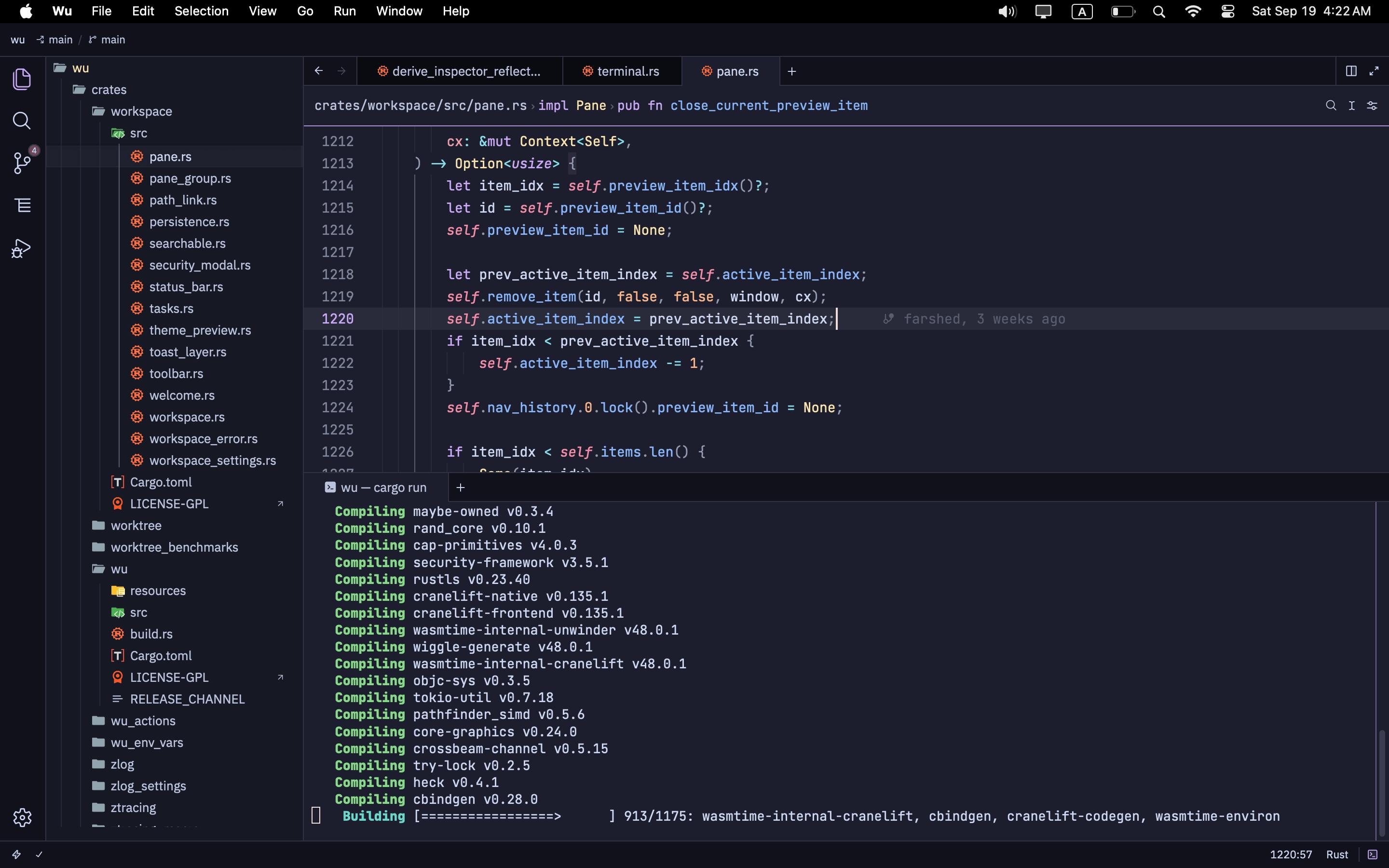
Wu is a Rust-built native code editor that delivers VS Code familiarity with native-level speed.
Wu is an open source code editor recently launched on Product Hunt, built in Rust by developer Faisal Arshed. Its core pitch is preserving VS Code's interaction habits while bypassing Electron's performance bottlenecks for faster startup and lower memory usage. The strategy is pragmatic — no relearning shortcuts or workflows, just a native Rust engine underneath. The project is still early-stage with plugin ecosystem and cross-platform stability yet to be proven, but it represents a clear continuation of the trend toward rewriting developer tools in Rust.
A Code Editor Betting on "Native Speed"
Wu is a code editor that recently launched on Product Hunt with a clear value proposition: deliver native application-level performance powered by Rust, while preserving the familiar VS Code experience. Built by developer Faisal Arshed, it has received 77 upvotes on Product Hunt, ranking 18th for the day, and is categorized under tags like Productivity, Open Source, and Developer Tools.
For developers who have long worked within the Electron ecosystem, Wu's angle isn't unfamiliar — it attempts to answer an old question: if VS Code's interaction paradigm has already been widely accepted, why not port it onto a lighter, faster technical foundation?
Why Rewrite an Editor in Rust
VS Code is built on Electron, which is essentially a web application running inside a Chromium engine. This architecture delivers massive advantages in cross-platform compatibility and plugin ecosystems, but at the cost of higher memory usage, slower cold starts, and performance hiccups on lower-end machines or large projects.
Wu's core selling point targets exactly this pain point. Choosing Rust as the implementation language means:
- Native compilation: Compiles directly to machine code without relying on a browser engine, resulting in faster startup and response times.
- Memory safety with low overhead: Rust's ownership model prevents memory leaks while keeping resource consumption predictable and lean.
- Consistent performance: For frequent operations like text editing, syntax highlighting, and handling large files, native implementations typically deliver a more stable frame rate experience.
In short, Wu wants the "feel of VS Code, without the baggage of VS Code."
Electron's performance issues have a structural cause: every Electron app bundles a full Chromium browser engine and Node.js runtime. Even a lightweight tool needs to initialize hundreds of megabytes of runtime environment on startup. VS Code typically uses 200–500 MB of memory at idle, easily exceeding 1 GB once multiple projects or extensions are loaded. By contrast, a native Rust application compiles directly to platform machine code with no virtual machine or interpreter layer — memory baselines are often one-tenth of that or less. This difference doesn't just affect daily usage; in CI environments, remote development, or resource-constrained scenarios, the gap becomes even more pronounced.
What "Like VS Code" Actually Means
The biggest barrier for any new editor has never been the technology — it's the migration cost. Wu explicitly chose to mirror VS Code's interaction logic, which is a pragmatic strategy. Developers don't need to relearn shortcuts, layouts, or workflows to get started.
This "familiarity-first" approach lowers the psychological barrier to trying a new tool. For users frustrated by Electron's performance but unwilling to take on the steep learning curve of Vim/Neovim, Wu offers a middle ground: nearly identical UI and habits, with a faster and lighter underlying experience.
Open Source Positioning and Community Significance
Wu is tagged as an open source project (listed under Open Source and GitHub categories), which is crucial to its long-term growth. The vitality of editor-type tools depends heavily on plugin ecosystems and community contributions.
Being open source means developers can directly participate in feature development, bug fixes, and custom modifications. That said, it's worth being realistic: building an ecosystem that can rival VS Code's massive extension marketplace will take considerable time and sustained community investment. The current 77-vote traction shows it has captured attention, but there's still a significant gap between now and a mature product.
Worth Watching — With Patience
Wu represents a clear technical trend that has been gaining momentum in recent years: rewriting developer tools in systems languages like Rust to achieve performance gains. From ripgrep to various terminals, from editors to build tools, this approach has been validated repeatedly.
For everyday users, the more sensible stance right now is to treat Wu as a promising early-stage project rather than a direct VS Code replacement. Its speed advantages and familiar interaction model are worth trying, but key dimensions like extension completeness, stability, and cross-platform support still need to be proven through real-world use. If you're sensitive to editor performance and believe in open source collaboration, it's worth checking out the GitHub repository to follow its progress.
ripgrep, mentioned in this context, is a useful reference point for understanding this technical trend: it's a command-line search tool written in Rust that far outpaces grep and ag in speed, becoming the de facto standard in the developer community and even being adopted internally by VS Code. This shows that Rust's penetration into developer tooling didn't start from scratch — it has already earned trust at the component level. Wu is extending that performance philosophy to an entire editor. Similar efforts include Zed (another native-speed editor built by the original Atom team) and Lapce, which together form a systemic challenge to Electron-based editors. Whether Wu can stand out among them depends on the execution quality of its plugin API design and community building.
Related articles

Felix Rieseberg Personal Homepage
Felix Rieseberg's personal homepage sparks attention on Hacker News. This article covers the Slack engineer's technical background, the rise and fall of nativefier, and the value of a developer homepage as a tech calling card.

@ai-sdk/vue 3.0.306 Patch Release Syncs with [email protected] Update
@ai-sdk/vue 3.0.306 released, synced with [email protected]. A routine patch release for the Vercel AI SDK ecosystem with no public API changes; the Vue adapter layer stays version-aligned with the core package.

Gemini 4 Argon API Launches: The Era of Million-Token Output Begins
Google launches Gemini 4 Argon with sparse MoE architecture, up to 1M output tokens, and a 68.90% Vals Index score, available across API, AI Studio, and the Gemini app.