Wuzhen Conference Signals: Open Source Becomes China's Key Card for Changing Lanes and Overtaking in AI
The Wuzhen Conference pushed open source and openness to center stage, marking China's AI shift toward a battle over ecosystems and rules.
Using this year's Wuzhen Internet Conference's inclusion of "open source and openness" in its theme as an entry point, the article points out that this is not a slogan but a route choice: closed-source models are powerful but black-boxed, with APIs and compliance controlled by others; open source publishes weights and toolchains, enabling sensitive scenarios such as government affairs, defense, and healthcare to run autonomously in local data centers on domestic chips, keeping data on premises. Huawei Pangu, Kimi, MiniMax, and DeepSeek form a differentiated open-source matrix, betting respectively on domestic computing power adaptation, long text, multimodality, and agent frameworks. The article also stresses that open source is not free or unregulated and must be paired with safety alignment and governance; domestic open source still faces three major risks—ecosystem isolation, malicious fine-tuning abuse, and commercialization sustainability—and the focus of competition has shifted from parameter comparisons to developer ecosystems and rule-setting discourse power.
At this year's Wuzhen Internet Conference, most attendees' attention was drawn to robots and 6G exhibits, but the keyword that truly determines the future direction of the global AI game is hidden in the conference theme—open source and openness. This is not a promotional slogan but a concrete choice of route: on one side, a handful of giants lock model weights, core capabilities, and APIs inside a black box—powerful to use but forever under someone else's control; on the other side, model weights, source code, and toolchains are opened up so that developers worldwide can modify, build, and use them together.
This year's Wuzhen put open source front and center. Huawei, Kimi, MiniMax, and DeepSeekAd—which the conference officially called a benchmark for domestic open source—along with a batch of other heavyweight domestic open-source models, made a concentrated appearance. According to analyses by multiple tech UP hosts on Bilibili and on-site attendees, behind this is a clear route declaration for Chinese AI.
The Hidden Worries of Closed Source and the Logic of Open Source
Over the past two or three years, the mainstream global AI narrative has been dominated by closed-source large models. Their capabilities are indeed strong, but they have a fatal flaw: black-boxing. How the model reasons internally, where the boundaries of its training data lie, and what safety thresholds are set—none of this is visible from the outside. It's like buying a home appliance with only a remote control and no manual: if it breaks, you can only wait for the manufacturer to come fix it, and whether and when they fix it all depends on their mood. Giants monetize quickly and have mature commercial loops, but the cost is that the ecosystem is locked down by a few platforms; downstream enterprises, universities, and research institutions all have to defer to the platform. If the API price goes up, it goes up; if they tighten everything across the board, it tightens; if compliance policy changes, existing businesses may simply stop running.
The logic of open source is the complete opposite. Model weights are made public, so developers can fine-tune further, deploy locally, adapt to industry scenarios, and even carry out their own security modifications. This is especially suitable for scenarios where data absolutely cannot be sent out—government affairs, defense, industry, healthcare, and scientific research. Many organizations' data simply cannot go onto someone else's cloud; closed-source models require connecting to their cloud and going through their APIs, which means data passes through someone else's hands. With open-source models, you pull down the code and weights and run them yourself in your own data center on domestic chips, with data never leaving the premises. This is called self-reliance and controllability, and it is a hard requirement.
Model weights are the core concept here. A large model after training consists of two parts: the network structure and parameters executed during inference (i.e., the weights), and the code interface that calls it. So-called "open weights" means publishing the trained parameter files so that developers can download them and directly perform inference or continue fine-tuning on their own hardware; this is not entirely equivalent to "open source"—full open source also requires the training code, data pipeline, and license to be opened together, while many models claiming to be open source actually release only the weights. Whether weights are public directly determines whether users can break away from the vendor's servers and run the model locally or on a private cloud, and this is also the technical precondition that makes "data never leaves the premises, self-reliance and controllability" in this article possible. By contrast, in the closed-source model that only opens APIs, what users get is always only the right to remote invocation, not the model itself.
The Deeper Meaning of Putting Open Source on the Table at Wuzhen
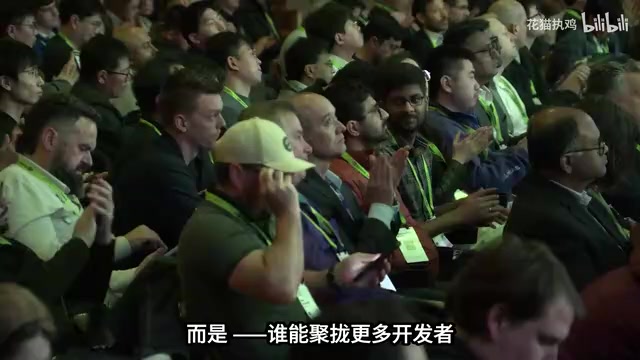
Raising the perspective to Wuzhen as a multilateral international platform, open source takes on another layer of meaning. The summit theme "open source and openness, co-building and sharing" aligns precisely with the narrative of "a community with a shared future in cyberspace." Closed source naturally tends toward technical barriers and blockade, while open source is inherently a discourse system through which standards can be collaboratively built across borders. Competition remains brutal, but the battlefield has changed: it is no longer about who has larger parameters or flashier launch events, but about who can gather more developers, who can establish ecosystem standards, and who can gain the right to set the rules.
This year's Wuzhen did several telling things: the main forum specifically set up an "AI Wuzhen Dialogue," whose core topic was how to build the global AI open-source ecosystem; the Wuzhen World Internet Science and Technology Museum newly opened a themed exhibition on open-source large models; and the Digital Academy carried out capacity building under the theme "open source and openness, co-creating the future." To put it plainly, this is putting the open-source route publicly on the table and sending a clear signal to global peers, international organizations, and overseas developers—we are going to take this road, and we are going to go all the way.
The Differentiated Strategies of the Domestic Open-Source Matrix
When many people hear "open source," their first reaction is, "Isn't it just putting the model online for anyone to download?" That is completely wrong; behind open source is a whole set of coordinated moves.
Huawei's Pangu large model is open source, focusing on domestic computing power adaptation and industry foundations, with the goal being heavy industrial scenarios such as manufacturing. Huawei's logic is clear: a model alone is not enough; it must be deeply integrated with the Ascend domestic computing power stack to form a closed loop.
Moonshot's Kimi K3 is fully open, with long-text processing as its signature strength, suitable for scenarios such as research document processing and knowledge bases that require chewing through long texts and deep reasoning—betting on contextual computing power.
MiniMax H3 is a multimodal open-source foundation integrating text, speech, and images, suitable for supporting agents, digital humans, and embodied intelligence. According to feedback from overseas developer communities, H3 quickly rose to the Hugging Face trending list after going open source, and even the founder of Stable Diffusion publicly paid tribute.
These players are on different tracks, but their goals are highly consistent: to build an open-source foundation that is self-reliant and controllable and can run on domestic chips.
Hugging Face is currently the world's largest hosting community for open-source models and datasets, often called "the GitHub of AI." Developers upload weights, publish model cards (which describe training data, capability boundaries, and licenses), download others' models, and submit evaluation results. Its Trending list largely reflects the international attention an open-source model receives. For domestic open-source models, whether they can gain downloads and discussion on Hugging Face is often an intuitive indicator of whether they have truly entered the视野 of global developers; the article's mention of MiniMax H3 rising to the trending list uses this external signal to illustrate its overseas influence rather than relying solely on the vendor's own claims.
DeepSeek: A Key to Understanding the Wuzhen Open-Source Narrative
DeepSeek is the key to understanding this year's Wuzhen open-source narrative. At the 2025 Wuzhen Summit, DeepSeek confirmed participation and carried great weight; the conference held the widely circulated "Six Little Dragons Wuzhen Dialogue," where founder Liang Wenfeng sat on stage together with the founders of several other Hangzhou AI unicorns. By the 2026 edition, DeepSeek's position had risen another step—at the September Wuzhen Summit press conference, DeepSeek was directly described by the conference organizers as a benchmark case of domestic open source, and was named alongside Alibaba and Zhijiang Lab as the "Three Open-Source Musketeers." During the conference preparations, the research team also specifically visited DeepSeek's open-source ecosystem pilot zone, which amounted to an official early assessment and early positioning.

However, according to the video author's disclosure, as of the time of discussion, the complete guest list for the main forum "AI Wuzhen Dialogue" had not yet been officially announced, and the officially announced exhibitor list for the expo did not include DeepSeek as a formal exhibitor. Therefore, the judgment is: the probability of participation is extremely high, but whether it can stand on the main forum dialogue stage remains uncertain, and this is the most worth watching point at this year's Wuzhen.
What is truly underestimated about DeepSeek is the Harness agent framework—upgrading AI from "able to chat" to "able to do work": given a task, it decomposes it itself, calls tools itself, collaborates across platforms itself, and runs the process to completion. At a time when agents are being deployed across the board, this engineering route for long-context agents fits perfectly with the newly established "Global Cooperation and Innovation Forum on Mutual Trust, Interconnection, and Interoperability of Agents" at this year's Wuzhen.
Agent refers to a system that uses a large model as its decision-making core and can autonomously plan steps and call external tools to complete tasks. Unlike the "question-and-answer" chat mode, an Agent usually includes task decomposition, tool invocation (search, code execution, browser operations, API calls), memory, and multi-round reflection, and the model needs to maintain a relatively long context to track intermediate states. The "engineering route for long-context Agents" emphasized in the article is difficult not because of single inference but because it must stably string together tool invocation protocols, error retries, cross-platform collaboration, and permission control into reusable processes; this is also where topics such as "mutual trust, interconnection, and interoperability of agents" land at the engineering level.
Open Source Is Not Equal to Free, Still Less to Letting Things Run Wild
Here we must insert a point that many people confuse: open source is not equal to free, not equal to zero barriers, and still less equal to letting things run wild. Open source also has licenses, governance rules, and security review mechanisms. The consensus now reached across the industry is that open source absolutely does not mean washing one's hands of it; on the contrary, open source requires even more supporting safety alignment and governance frameworks.
This year's Wuzhen did not just release models and hand out benefits; it also held a whole set of sub-forums on AI safety, model governance, and data governance—releasing the ecosystem with one hand and establishing rules with the other, to prevent wild models from flying everywhere and to prevent open-source models from being used for malicious fine-tuning, deepfakes, and wrongdoing.
Compared with overseas, overseas open-source communities started earlier and have deeper ecosystem accumulation; this is a fact. But overseas also has awkward problems that cannot be avoided: many open-source projects are constrained by local regulatory policies and can change or be cut off at any time—downloadable today, unavailable tomorrow after a rule change. This leaves a key positioning opportunity for the domestic open-source ecosystem: to provide a stable, long-term sustainable alternative foundation independent of the original system. If you fear being locked in by closed source and fear supply cuts with overseas open source, then come use our stable, continuously open source. This is the biggest differentiated selling point of Chinese open source, and it is also the signal Wuzhen wants to send to the world.
The Benefits of Open Source and the Risks That Cannot Be Avoided
There are three hardest benefits. First, it lowers the threshold for innovation and gives birth to new quality productive forces. SMEs, universities, and local industries do not need to train large models from scratch; they can directly build vertical applications on open-source foundations—banks for risk control, hospitals for diagnostic assistance, factories for quality inspection—greatly reducing costs and giving rise to a large number of niche innovations. Second, adapting to agents and embodied intelligence is a hard requirement. Robots must run models locally to do work, considering latency, privacy, and network disconnection; closed-source cloud-based invocation simply cannot withstand real-time scenarios—a robot cannot connect to the internet, upload data, and wait for a result at every step. Third, it is a major lever for external cooperation. For ASEAN and Belt and Road countries, open-source models are the best vehicle for digital cooperation: there is no need to forcibly bind to a particular commercial platform, and partners can master it independently, so cooperation comes without vigilance.
The risks are equally unavoidable. First, once weights are public, there is an inherent risk of malicious fine-tuning, abuse, and use for deepfakes, and governance pressure will rise exponentially; therefore open source must be paired with governance—without governance, open source is the self-harming side of a double-edged sword. Second, ecosystem involution and isolation. Domestic open-source models are already clustered; if their standards are not unified and their interfaces each play their own game, the result will be a pile of data islands that cannot form a combined force. Making the ecosystem big depends on unified standards, not on piling up quantity; this is exactly what the Wuzhen sub-forum's "mutual trust, interconnection, and interoperability of agents" means. Third, the commercialization problem. How open source can continue to make money and ensure a steady stream of computing power investment for iteration still has no perfect answer. Pure open source burns money until the end of time, and idealism alone cannot sustain it, so everyone is now exploring a hybrid model of "open-source foundation + commercial services"—the model is open source, but value-added parts such as enterprise services, cloud computing power, and customized security protection are charged for. Whether this can run through tests enterprises' long-term patience and ability to generate their own blood.
Changing Lanes to Overtake: From Chasing to Drawing Our Own Track
Let's pull the whole line together: closed source prioritizes short-term product capability and commercial returns, while open source bets on long-term ecosystems, standards, and rule-setting discourse power. This year's Wuzhen wrote open source into its theme, which is essentially a route declaration—Chinese AI does not only have a catching-up route; it is actively participating in shaping the rules of the next generation of the global AI ecosystem.
The watchpoints for the next few years are already clear: whether a unified, stable, and secure domestic open-source toolchain can be formed; whether global developers can be attracted to participate continuously in co-building and truly stay; and whether replicable, profitable implementation cases can be created in scenarios such as agents, robots, and industry digitalization. This road will not be smooth, and every risk above is a roadblock. But starting from this year's Wuzhen, one thing is certain: the game has changed tracks. In the past we chased along others' tracks; now we want to draw our own track, set our own rules, and get others to come up and play too.
Whether it is DeepSeek, Huawei, Kimi, or MiniMax, who wins or loses is not important. What matters is that these players stand together and, for the first time, put China's AI playbook plainly before the world.
Related articles

OpenAI Breaks ETH? P=NP Could Upend the Cryptography World
OpenAI reportedly disproved ETH with a sub-exponential algorithm, sparking P=NP speculation. What it means for RSA, blockchain, and protein folding.
When an Anti-Fingerprinting Script Is …
When an Anti-Fingerprinting Script Is Flagged as a Bioweapon: The Detection Dilemma of Security Tools
An anti-fingerprinting script was flagged as a bioweapon by security scanning, sparking Hacker News debate. This analysis covers the causes of keyword-matching false positives, how developers respond, and the long-term imbalance between automation and precision in security tools.
41,000 DHS Employee Records Leaked, Including Undercover ICE Agents
Data breach exposes 41,000 DHS employees, including undercover ICE agents. Analysis of sensitive data risks, law enforcement security gaps, and protection measures like access control and auditing.