X-energy Approved to Build First Batch of Small Modular Nuclear Reactors

X-energy receives NRC construction permit to build four SMRs in Texas, but operation still requires approval.
The U.S. Nuclear Regulatory Commission has issued a construction permit to X-energy, allowing it to build four small modular nuclear reactors in Texas, marking the transition of advanced nuclear technology from design to construction and providing a regulatory precedent for commercial SMR deployment. The permit covers construction only; an operating license is still required before fuel loading and operation. SMRs attempt to reduce schedule and financing risks through modular manufacturing, factory prefabrication, and smaller unit scale, while expanding scenarios such as data centers and industrial heating. Texas, with its deregulated electricity market and industrial load, becomes one of the first deployment locations. From permit to power generation, construction, testing, operating licensing, and new fuel supply chain development remain to be completed, and first-of-a-kind projects face design and construction uncertainties. The permit verifies the NRC's review pathway for advanced reactors, but commercialization still depends on levelized cost of electricity, financing, and customer contracting.
The U.S. Nuclear Regulatory Commission (NRC) has issued a construction permit to X-energy, allowing the company to build four small modular nuclear reactors in Texas. This decision marks the transition of advanced nuclear technology from the design phase into actual construction, and provides a regulatory precedent for the commercial deployment of small modular reactors (SMRs).
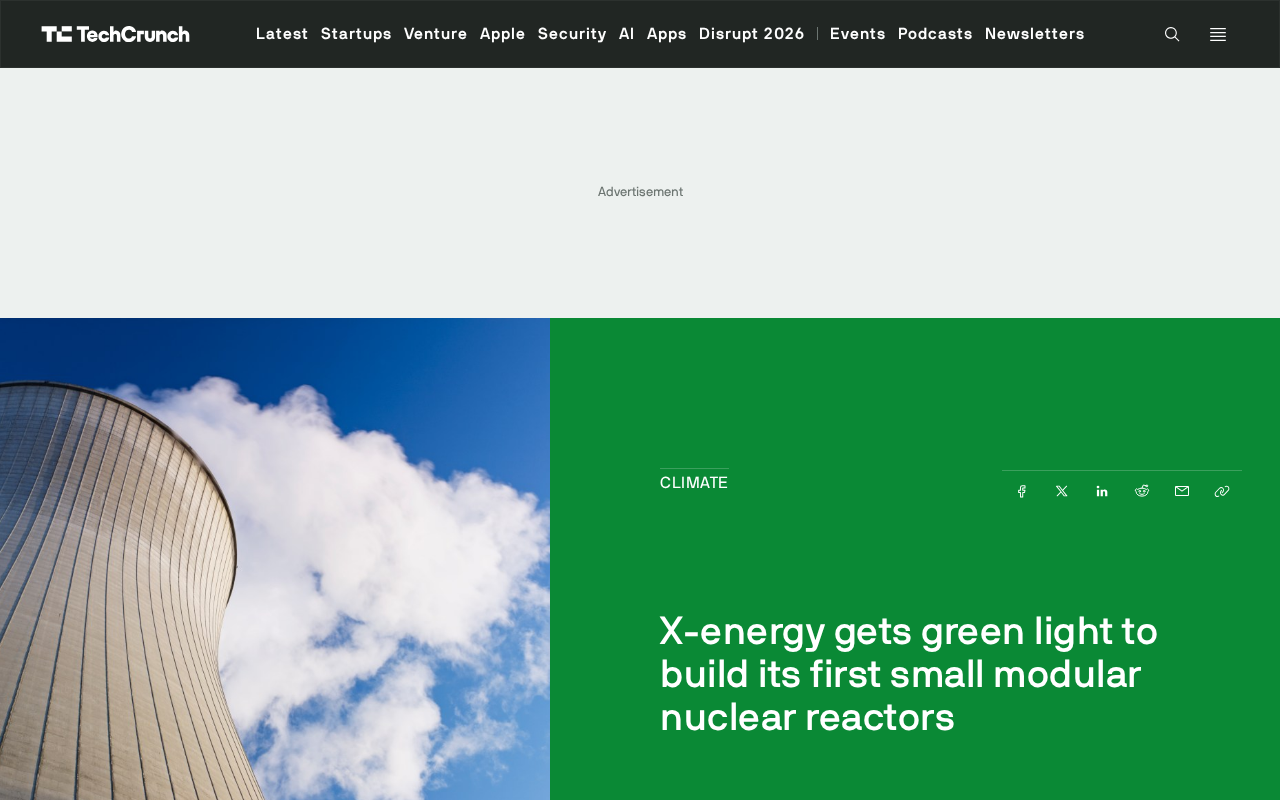
Permit Secured: The Texas Plan for Four Reactors
What X-energy received is a construction permit, not an operating license. This means the company can begin construction at the Texas site according to the approved design, but it must still pass a subsequent operating license review before fuel loading and operation. The scale of four reactors points to a modular, replicable deployment approach—lower power per unit, with multiple units combined to meet the needs of the grid or industrial users.
From a regulatory process perspective, the NRC's construction permit review focuses on design safety and site suitability. For new designs like SMRs, the review cycle and uncertainty are typically higher than for traditional large light-water reactors, so the approval of the permit itself is a signal of technical maturity.
The Difference Between Construction Permits and Operating Licenses: The U.S. Nuclear Regulatory Commission (NRC) implements a two-stage licensing system for nuclear reactors. A Construction Permit is issued under Section 103 or Section 104 of the Atomic Energy Act, with the review focusing on site suitability and the safety features of the design, allowing the permit holder to begin construction according to the approved design. An Operating License is applied for after construction is complete, requiring proof that the reactor has been built according to permit conditions, has passed startup tests, and has complete operating procedures and emergency plans. Between the two stages, the NRC conducts construction inspections and ITAAC (Inspections, Tests, Analyses, and Acceptance Criteria) verification. For advanced reactors, the NRC also offers pre-application tools such as early site permits and design certifications, but the construction permit remains the key regulatory threshold for a project to move from blueprints to the construction site.
Why SMRs Are Gaining Attention
The core selling point of small modular reactors lies in the transformation of the construction approach: modular manufacturing, factory prefabrication, and on-site assembly, which in theory can reduce project timelines and financing risks. Traditional large nuclear power projects often struggle with schedule delays and cost overruns, and SMRs attempt to avoid such problems through smaller unit scale and standardized designs.
Another driving factor is the expansion of application scenarios. In addition to grid-connected power generation, SMRs are expected to provide stable low-carbon power for data centers, industrial heating, hydrogen production, and other scenarios. Texas itself is a major energy state, with a deregulated electricity market and active industrial load, providing an industrial foundation as one of the first deployment locations.
High-Assay Low-Enriched Uranium (HALEU): Traditional light-water reactors use low-enriched uranium with U-235 enrichment below 5%, while many advanced reactor designs require high-assay low-enriched uranium with enrichment between 5% and 20% to reduce core size, extend refueling cycles, or support special fuel forms such as high-temperature gas-cooled reactors and molten salt reactors. Currently, the global commercial supply chain for HALEU is not yet mature, with only a few demonstration-level production capacities in the United States, and it involves nuclear material controls and transportation licenses. Whether fuel supply can be delivered on time and at the right price is one of the key constraints for SMR projects moving from construction to operation, and it is also a supporting issue that developers like X-energy must address in parallel.
There Is Still a Distance from Permit to Power Generation
A construction permit is only one link in a long chain. Next, X-energy needs to complete construction, pass inspections and tests, apply for an operating license, and resolve the fuel supply issue—SMRs mostly use new fuels such as high-assay low-enriched uranium, whose supply chain is still under development. In addition, first-of-a-kind projects generally face "first-of-a-kind" risks: design changes, supply chain bottlenecks, and construction learning curves can all affect schedules.
From an industry perspective, the significance of this permit goes beyond a single project. It verifies that the NRC's review pathway for advanced reactor designs is viable, providing a reference template for subsequent applicants. Whether SMRs can deliver on the promise of "cheaper and faster" will ultimately depend on the actual cost and schedule performance of these first-of-a-kind projects.
First-of-a-Kind Risk: Refers to the uncertainties faced during construction by technologies using entirely new designs or being commercially deployed for the first time, including changes due to designs not being fully finalized, equipment delivery delays due to supply chains not yet achieving scale, learning curve costs due to lack of experience among construction teams, and additional requirements that regulators may impose when reviewing new designs. Historical experience shows that the actual cost and schedule of first-of-a-kind projects are often significantly higher than initial estimates. SMR supporters believe that modularization and factory prefabrication can mitigate some of the risks, but first-of-a-kind projects still cannot completely avoid the "first-of-a-kind" premium, which is also a variable that investors focus on when evaluating project economics.
Competitive Landscape and Uncertainty
The small modular nuclear reactor sector has already gathered multiple developers, with technology pathways covering light-water reactors, high-temperature gas-cooled reactors, molten salt reactors, and others. X-energy's progress gives it a first-mover position in the regulatory approval process, but being first does not equal winning—commercialization depends on levelized cost of electricity, financing capacity, and customer contracting.
Regulatory approval is a necessary but not sufficient condition. Public acceptance of nuclear power projects, the attitudes of communities around the site, and the implementation of power purchase agreements will all affect whether a project can reach the operational stage. The four reactors in Texas will become a touchstone for observing the economics of SMRs.
One-line Summary
X-energy receives NRC construction permit to build four SMRs in Texas, but operation still requires approval.
Paragraph Summary
The U.S. Nuclear Regulatory Commission has issued a construction permit to X-energy, allowing it to build four small modular nuclear reactors in Texas, marking the transition of advanced nuclear technology from design to construction and providing a regulatory precedent for commercial SMR deployment. The permit covers construction only; an operating license is still required before fuel loading and operation. SMRs attempt to reduce schedule and financing risks through modular manufacturing, factory prefabrication, and smaller unit scale, while expanding scenarios such as data centers and industrial heating. Texas, with its deregulated electricity market and industrial load, becomes one of the first deployment locations. From permit to power generation, construction, testing, operating licensing, and new fuel supply chain development remain to be completed, and first-of-a-kind projects face design and construction uncertainties. The permit verifies the NRC's review pathway for advanced reactors, but commercialization still depends on levelized cost of electricity, financing, and customer contracting.
Related articles

Michael Nielsen Takes Down His Classic Neural Network Textbook, Sparking Community Discussion
Michael Nielsen's classic free textbook Neural Networks and Deep Learning has been taken offline, sparking discussion on Hacker News about the reasons and impact.

Inside the AI Training Data Market: The Trade-off Between Exclusivity and Discounts
G2i founder Gabe Greenberg reveals the dual-track pricing of the AI training data market: labs pay a premium for exclusive data or accept discounts that allow others to buy it.

SessionGraph: Unifying All Coding Agent Sessions in One Interactive Graph
SessionGraph aggregates coding agent sessions into an interactive graph, helping developers review, debug, and manage AI coding workflows across sessions. This article examines its positioning, value, and open questions.