xAI Ignores Environmental Regulations: The Compliance Dilemma and Double Standards of an AI Giant

xAI's alleged environmental violations spark debate on AI industry compliance and regulatory accountability.
Elon Musk's xAI faces scrutiny for allegedly operating gas turbine generators without Clean Air Act permits at its Memphis data center housing 100,000 H100 GPUs. The controversy has ignited Hacker News debate over whether AI companies can prioritize speed over compliance, highlighting broader tensions between technological power, regulatory lag, and public oversight in the AI era.
A Controversy Over AI Giants' Compliance Responsibilities
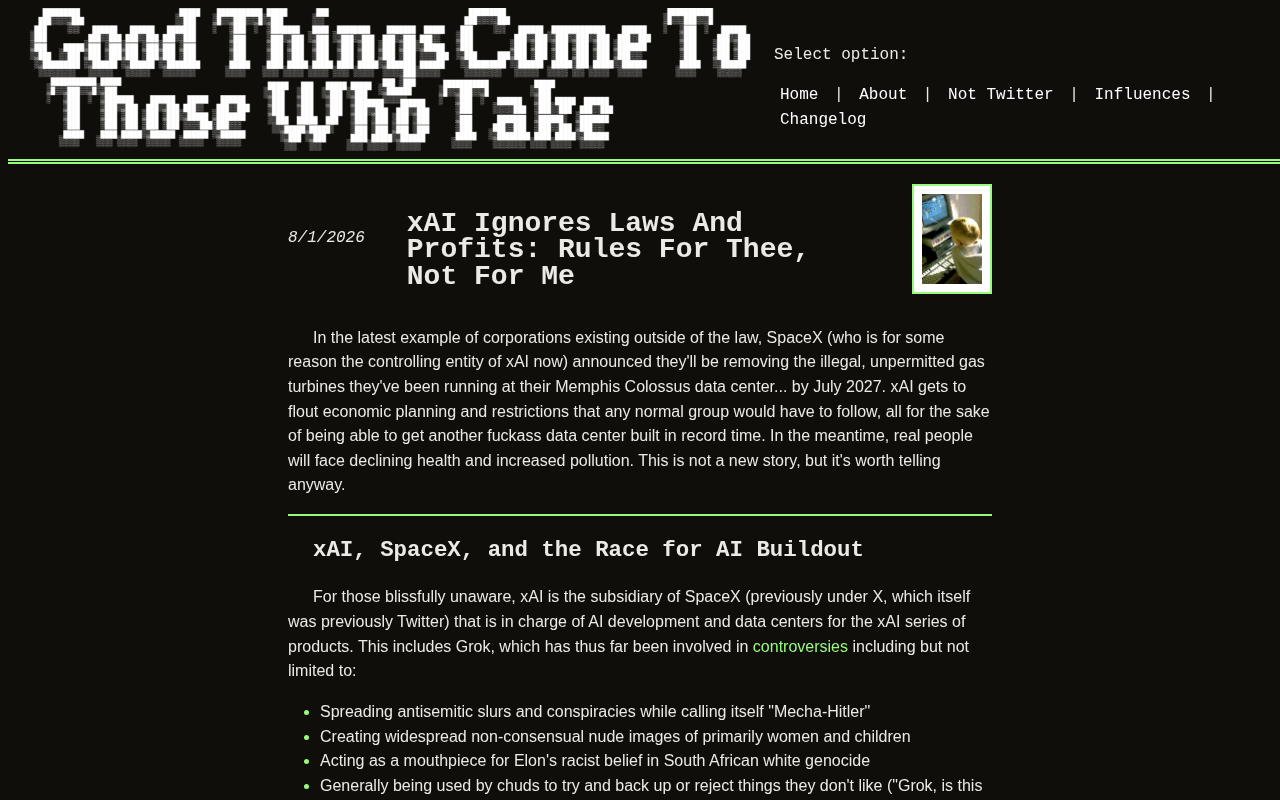
Recently, an article titled xAI Ignores Laws and Profits: Rules for Thee, Not for Me sparked heated discussion on Hacker News, garnering 59 upvotes and 20 comments. The article's core accusation targets Elon Musk's AI company xAI — alleging that while it rapidly expands and captures profits in the market, it takes an evasive or outright dismissive stance on regulatory compliance.
This "rules for thee, not for me" double standard touches a long-standing nerve in the tech industry. When a company wields enormous technological capabilities and capital advantages, should it be subject to the same legal constraints as ordinary businesses? Or can it navigate gray areas in the name of "innovation" and "speed"?
The Core of the Controversy: Environmental and Data Compliance
xAI's Data Center Environmental Compliance Issues
Among the many controversies surrounding xAI, the most closely watched involves its supercomputer cluster "Colossus" located in Memphis, Tennessee. According to multiple public reports, xAI deployed a large number of gas turbine generators to power this massive AI training cluster. Environmental organizations and local communities have pointed out that these facilities may have operated without the necessary air quality permits, potentially violating the Clean Air Act.
Colossus is reportedly equipped with approximately 100,000 NVIDIA H100 GPUs, making it one of the world's largest single-site AI training clusters at the time. The power consumption of such large-scale GPU clusters is staggering — a single H100 has a thermal design power of approximately 700 watts, meaning 100,000 units require about 70 megawatts of sustained power for GPUs alone. Adding cooling, networking equipment, and storage systems, the total power consumption of the entire data center could reach 150 megawatts or even higher. To meet this demand, xAI chose to deploy industrial-grade gas turbines or reciprocating natural gas generators — a solution that enables rapid deployment without relying on local grid capacity, but whose emissions of nitrogen oxides (NOx), carbon monoxide, and particulate matter typically require a pre-construction permit under the Clean Air Act.
Regarding the Clean Air Act itself, this is a U.S. federal environmental law enacted in 1970 and significantly amended in 1977 and 1990. The law establishes National Ambient Air Quality Standards (NAAQS) and requires new or significantly modified stationary pollution sources to undergo a "New Source Review" (NSR) process before commencing operations. For pollution sources in areas that meet air quality standards, a "Prevention of Significant Deterioration" (PSD) permit is required; for non-attainment areas, stricter emission offset requirements must be met. Violations can result in civil penalties exceeding $100,000 per day, and in severe cases, criminal liability may be pursued.
This issue has attracted widespread attention because it reflects the overlooked environmental costs behind the AI arms race. Large-scale model training requires enormous power supplies, and when the grid cannot meet demand in time, companies often choose to build their own power sources — creating vast gray areas in domains where regulation hasn't kept pace. According to the International Energy Agency's (IEA) 2024 report, global data center electricity consumption is projected to double from approximately 460 terawatt-hours in 2022 to over 1,000 terawatt-hours by 2026, with AI workloads being the primary growth driver. Power grids in multiple U.S. regions are already experiencing capacity constraints, with new power connection wait times in data center-concentrated areas like Virginia and Texas extending from the previous 1-2 years to 4-7 years. This infrastructure bottleneck forces companies to seek alternatives such as self-built power generation, nuclear power purchase agreements (PPAs), or on-site natural gas generation.
The Industry Logic of Speed-First
xAI's approach is highly consistent with Musk's trademark "move fast and break things" philosophy. From Tesla to SpaceX, Musk-led companies have often employed "act first, get approval later" as a competitive strategy. Supporters see this as the necessary boldness to drive technological breakthroughs, while critics view it as disregard for public interest and legal processes.
This strategy has a series of precedents across Musk's business empire. SpaceX's Starship testing facility in Boca Chica, Texas has repeatedly advanced construction and test launches without completing environmental impact assessments, prompting multiple investigations by the FAA and the U.S. Fish and Wildlife Service (FWS). Tesla's Gigafactory construction near Berlin, Germany also began large-scale tree clearing and foundation work before obtaining final environmental permits, triggering lawsuits from local environmental organizations. Neuralink faces ongoing questions about animal testing compliance. The core logic of this pattern is: in fiercely competitive markets, the time cost far exceeds potential compliance fines — in other words, fines are viewed as a "cost of doing business" rather than a genuine deterrent.
In the AI space, this tension is particularly acute. xAI needs to gain first-mover advantage in competition with OpenAI, Google, Anthropic, and other rivals, and any delays due to compliance approvals could mean loss of market position. Thus, "launch first, fix problems later" becomes a tempting choice.
The Divide in the Hacker News Community
Looking at the discussion this article sparked in the tech community, opinions are clearly polarized.
The Critics: Rule of Law Allows No Exceptions
Some commenters argue that no matter how innovative a company may be, it should not be above the law. Their concern is the dangerous precedent of "selective enforcement": if companies with sufficient resources and political influence can ignore environmental regulations with impunity, the credibility of the entire regulatory system will be eroded. This isn't just about xAI alone — it's about the compliance culture of the tech industry as a whole.
This concern is closely related to the concept of "Regulatory Capture" from public choice theory. Nobel laureate George Stigler proposed this theory in 1971, noting that regulatory agencies may ultimately be controlled or influenced by the industries they regulate, thereby deviating from public interest objectives. In the tech sector, this risk is amplified by corporate "revolving door" personnel arrangements, enormous lobbying expenditures, and information asymmetry around technology. Musk's close relationship with political powers — including his influence on federal agencies through DOGE (Department of Government Efficiency) — further heightens public concerns about the fairness of enforcement.
The Defenders: The Reality of Regulatory Lag
Another group of voices points out that the existing regulatory framework itself has failed to keep pace with technological development. The speed of AI infrastructure construction far outpaces the update rate of legislation and approval processes, and companies inevitably encounter situations where there's "no explicit law" or "approvals are indefinitely delayed." They argue that solely blaming companies for "ignoring the law" without reflecting on the inefficiency of the regulatory system is unfair.
This perspective is not without merit. Take the U.S. environmental permitting process as an example: an Environmental Impact Statement (EIS) for a large project takes an average of 4.5 years from initiation to completion, while technology iteration cycles in the AI field are typically measured in months. When a permit requiring 2-3 years to obtain meets a competitive window that will close in 6 months, the gap between institutional design and real-world needs becomes strikingly apparent.
Other commenters also note that media headlines like "ignoring laws for profit" carry strong editorial bias, and that the actual situation may be more complex than the headline suggests, requiring examination of specific legal documents and fact-checking to make proper judgments.
Deeper Reflections: Governance Challenges in the AI Era
The Imbalance Between Technological Power and Public Oversight
The essence of this controversy is the imbalance between the expansion of technological power and public oversight capabilities. When a handful of companies wield AI capabilities sufficient to reshape the economy and society, their every decision — from data center siting to energy procurement — generates broad externalities. Yet existing regulatory tools often struggle to effectively constrain this new, cross-domain form of power.
Traditional industry regulation is typically "departmentalized" — the EPA handles emissions, the Department of Energy manages electricity, the FTC oversees market competition — but AI companies operate across all these domains, and the speed and scale of their decisions far exceed the response capacity of any single regulatory body. This "regulatory fragmentation" means that even if each department is diligently fulfilling its duties, the comprehensive effect may still contain significant blind spots. The EU's AI Act attempts to establish a unified cross-domain framework, but its implementation effectiveness remains to be seen, while the U.S. currently lacks similar comprehensive federal legislation.
Compliance Should Not Be the Antithesis of Innovation
It's worth emphasizing that compliance and innovation are not inherently opposed. Truly sustainable technological leadership is built precisely on the foundation of earning public trust. Companies that view compliance as a "stumbling block" rather than a "moat" may gain competitive advantages in the short term, but in the long run, accumulated legal risks and reputational damage may come back to haunt their development.
History offers no shortage of such cases. Uber systematically ignored taxi regulations during its global expansion, achieving remarkable early growth speed but subsequently facing bans, massive fines, and ongoing legal battles in multiple markets. The exposure of tools like its "Greyball" program for evading law enforcement further severely damaged its brand reputation. Facebook (now Meta) long neglected data privacy issues, ultimately leading to the Cambridge Analytica scandal and a $5 billion FTC fine. These cautionary tales remind AI companies: regulatory debt, like technical debt, must eventually be repaid with interest.
For the AI industry, how to maintain innovation speed while fulfilling its due social responsibilities will be one of the most critical questions in the coming years. The discussion sparked by xAI is merely a microcosm of this larger issue.
Conclusion
Whether the accusation of "rules only for others" holds up must ultimately be determined by legal proceedings and factual investigation. But the controversy surrounding xAI itself has already sounded an alarm for the entire tech industry: in an era of rapid AI development, the balance between speed and responsibility, between innovation and compliance, cannot rely solely on corporate self-restraint — it also requires regulatory systems to keep pace with the times and sustained public oversight.
Regardless of the final conclusion, this topic deserves deep reflection from everyone following AI development — what kind of AI future do we actually want to build?
Related articles
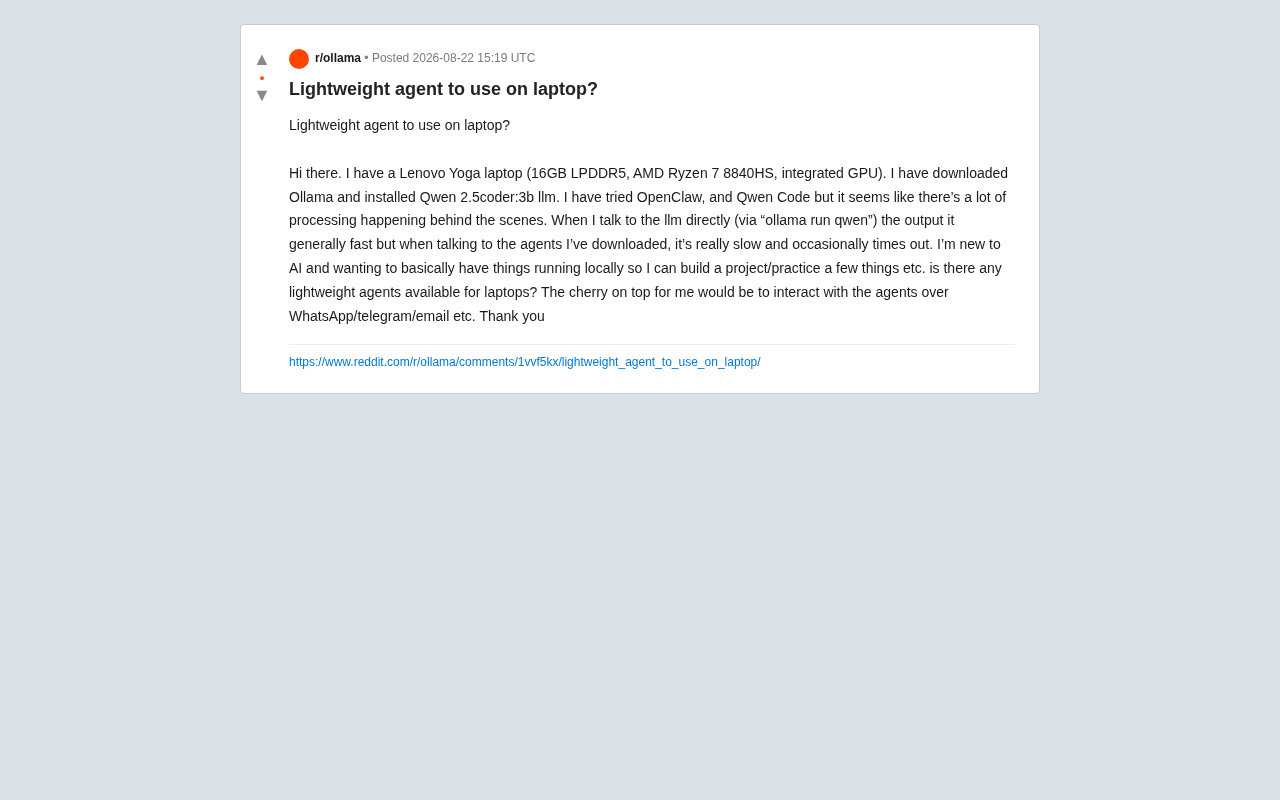
Local AI Agent Deployment Too Slow? A Lightweight Optimization Practical Guide
Local AI Agent deployment slow and timing out? This guide covers Agent framework overhead, hardware bottlenecks, and practical optimizations including context trimming, quantization, and Telegram Bot integration.

Choosing a Laptop for AI Studies: MacBook vs NVIDIA Laptop — An In-Depth Comparison Guide
In-depth analysis for AI students choosing laptops: MacBook Air M5 with remote GPU vs NVIDIA laptop, comparing CUDA support, portability, battery life, and value.

Self-Hosted LLM Tech Stack: A Complete Guide to Managing Your Local AI Cluster from the Terminal
A deep dive into self-hosting LLM tech stacks: inference engines, model management, vector databases, and how to manage your local AI cluster from the terminal.