Xbox Embraces AI Game Porting: The Era of Chaos with Official Support

AI-driven decompilation and recompilation are lowering the game porting barrier, and Xbox has chosen to embrace this chaotic ecosystem — but copyright and security risks follow.
Retro game porting is being transformed by AI. Decompilation and recompilation combined with AI models can automatically identify code patterns, fill in missing functions, and optimize cross-platform performance, enabling individual developers to independently port *Halo* to the web and even mod skateboards into *Call of Duty*. Xbox has shifted from blocking to actively embracing this, driven by the business logic of extending old IP lifecycles and supplementing ecosystem content. Yet the other side of chaos is copyright gray areas, unaudited generated code, and uneven port quality. Whether Microsoft's embrace marks the start of a regulated ecosystem or a signal of laissez-faire will determine whether this trend can develop healthily.
When Retro Games Meet AI: The Chaos and Order of Porting
Retro game porting is undergoing a transformation. Thanks to decompilation and recompilation techniques, players can now port classic titles to new devices, and even merge the code of two different games into an entirely new experience. According to foreign media reports, Microsoft has already witnessed the wild spectacles of skateboards being modded into Call of Duty and Halo running in a web browser.
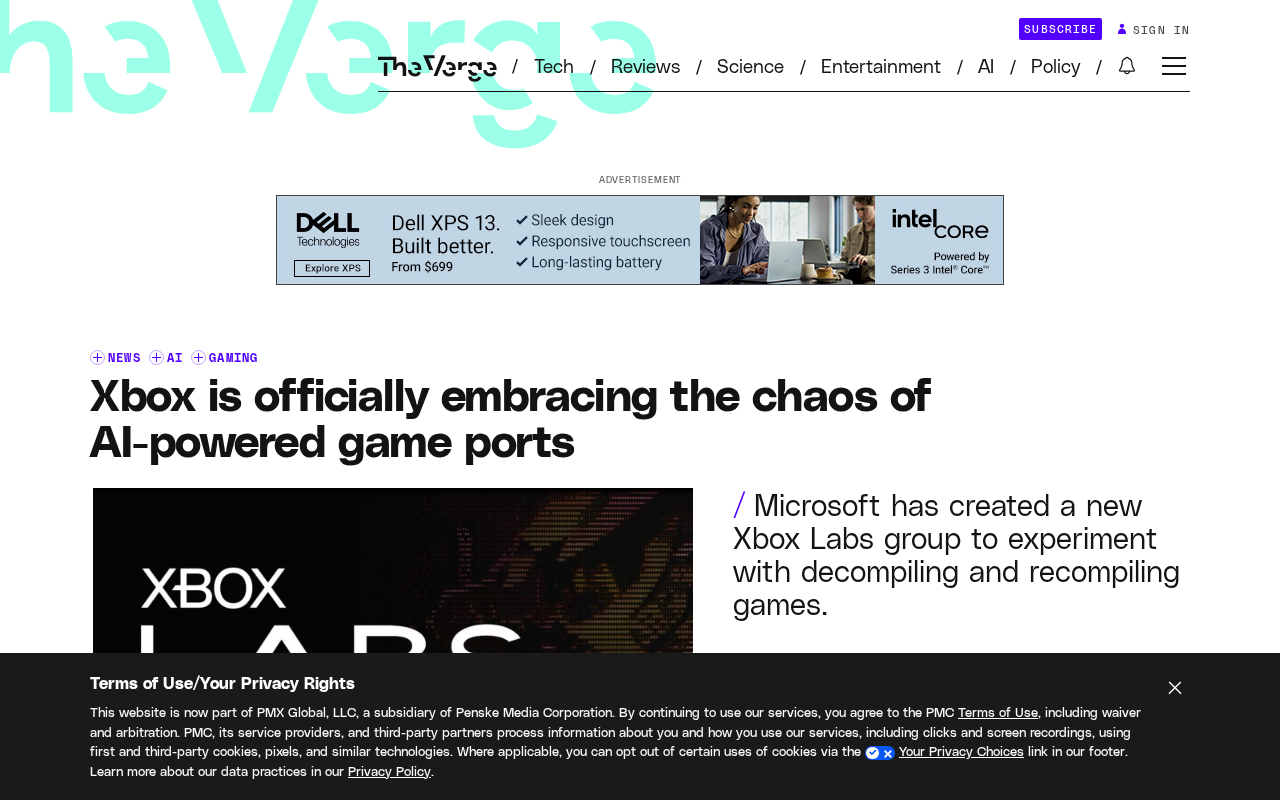
These seemingly absurd cases are a microcosm of AI-driven game porting going mainstream. And Xbox has chosen to actively embrace this chaos rather than clamp down on it.
Decompilation and Recompilation: How AI Lowers the Porting Barrier
Traditional game porting requires extensive manual reverse engineering, with high costs and long cycles. Decompilation can convert machine code back into readable high-level languages, while recompilation adapts old platform code to new platforms. AI's involvement has dramatically boosted the efficiency of both processes — models can automatically identify code patterns, fill in missing functions, and even optimize cross-platform performance.
This explains why individual developers can independently complete a web port of Halo, and why a skateboard mod can work across different games. The collapse of technical barriers brings an explosion of creative freedom.
Decompilation refers to the reverse conversion of compiled machine code or bytecode into a high-level language form close to the original source code, making it human-readable and modifiable. This process is particularly difficult in the gaming field, because early games were often written in assembly language and highly optimized, with variable and function naming information stripped during compilation. Classic examples include the decompilation projects for Super Mario 64 and The Legend of Zelda: Ocarina of Time, both completed manually by the community over several years.
Recompilation, building on decompilation, statically converts old platform code into executable code for the target platform, rather than relying on an emulator to interpret and execute it line by line. Static recompilation can significantly improve runtime efficiency and allows for the injection of modern improvements such as widescreen support, high frame rates, and controller remapping. AI models can automatically identify cross-platform API call patterns, infer data structure layouts, and generate adapter layer code, compressing what would originally take months of manual work into just days.
Xbox's Official Stance: From Tacit Approval to Active Support
Microsoft's shift in position is worth pondering. In the past, platform holders typically used legal or technical means to block unofficial ports. But Xbox has now publicly stated it embraces this "chaos," signaling that its strategic focus is tilting toward ecosystem openness.
There's a business logic behind this stance: AI porting can extend the lifecycle of old IPs, bringing more content supply and user activity to the Xbox ecosystem. Rather than being a copyright cop, it's better to be a platform enabler.
Platform holders have historically held contradictory attitudes toward unofficial ports. Nintendo has repeatedly issued legal warnings against fan-made remake projects, and even taken down published decompilation results; Sony has also halted some community ports over copyright issues. The underlying logic of this blocking strategy is to maintain IP exclusivity and hardware ecosystem barriers.
Xbox's shift reflects a different approach: treating unofficial ports as a low-cost means of extending the lifecycle of old IPs. When official remakes are costly and market returns uncertain, allowing the community to port with AI tools is effectively leveraging external forces to supplement content supply for the platform. This strategy aligns with Microsoft's recent pushes for cross-platform, subscription-based, and cloud gaming initiatives — ecosystem openness takes priority over tight control of individual titles.
Hidden Risks: Copyright, Security, and Quality Control
The other side of chaos is loss of control. AI porting may tread into copyright gray areas, the security of generated code is unaudited, and port quality varies widely. Whether Microsoft's "embrace" marks the beginning of establishing norms or a signal of laissez-faire will determine whether this ecosystem can develop healthily.
For players, the short term will bring more wildly imaginative porting projects; for developers, AI lowers the creative barrier but also poses a new challenge: how to find balance between openness and order.
On the copyright front, AI porting involves multiple rights holders: the copyright of the original game code, the copyright of art and audio assets, and the ownership of AI-generated code itself. Most jurisdictions have yet to clearly define the legal status of AI-assisted decompilation outputs, leaving individual developers exposed to potential infringement risks.
On the security front, AI-generated porting code may introduce unverified memory operations, network requests, or dependency libraries, becoming a vehicle for malware. Since community ports typically lack code audit processes, players running sideloaded versions face possible privacy leaks or device damage. On quality control, AI-completed functions may behave abnormally in edge cases, causing save corruption or game logic crashes — problems that are often difficult to fully test before release.
One-line Summary
AI-driven decompilation and recompilation are lowering the barrier to game porting, and Xbox has chosen to embrace this chaotic ecosystem — but copyright and security risks follow.
Paragraph Summary
Retro game porting is being transformed by AI. Decompilation and recompilation techniques combined with AI models can automatically identify code patterns, fill in missing functions, and optimize cross-platform performance, enabling individual developers to independently complete a web port of Halo and even mod a skateboard into Call of Duty. Xbox has shifted from blocking to actively embracing this, driven by the business logic of extending old IP lifecycles and supplementing ecosystem content. However, the other side of chaos is copyright gray areas, unaudited generated code, and uneven port quality. Whether Microsoft's embrace marks the starting point of a regulated ecosystem or a signal of laissez-faire will determine whether this trend can develop healthily.
Related articles

Workbuddy for Absolute Beginners: How a Desktop AI Agent Fits Into Real Workflows
A beginner's guide to the Workbuddy desktop AI agent: installation, claiming credits, file management, and building automated workflows—compared with CodeX for fit and cost, helping professionals shift from AI question-askers to AI managers.

OpenAI's New Agent Stack: Computer Use, Decisions API, and Ultra-Fast Workflows
OpenAI Dev Day unveiled a new agent stack: Computer Use outperforms humans, Decisions API delivers ultra-low-latency classification via Luna, Agents API opens the same Computer Use capabilities, and GPT-6.1 Sol costs only one-seventh of Astra. Core updates, benchmark data, and developer insights.

Liang Wenfeng Open-Sources DeepInfo Inference Framework, Takes On U.S. Ban
DeepSeek open-sources its DeepInfo inference framework after its models, featuring GPU/CPU cross-pipelining, small-model prediction with large-model verification, and full Huawei Ascend and NVIDIA chip support—facing the U.S. federal ban head-on. This article analyzes its significance for AI deployment and open-source strategy.