XCancel Goes Dark: The Struggles of Nitter-Style Tools
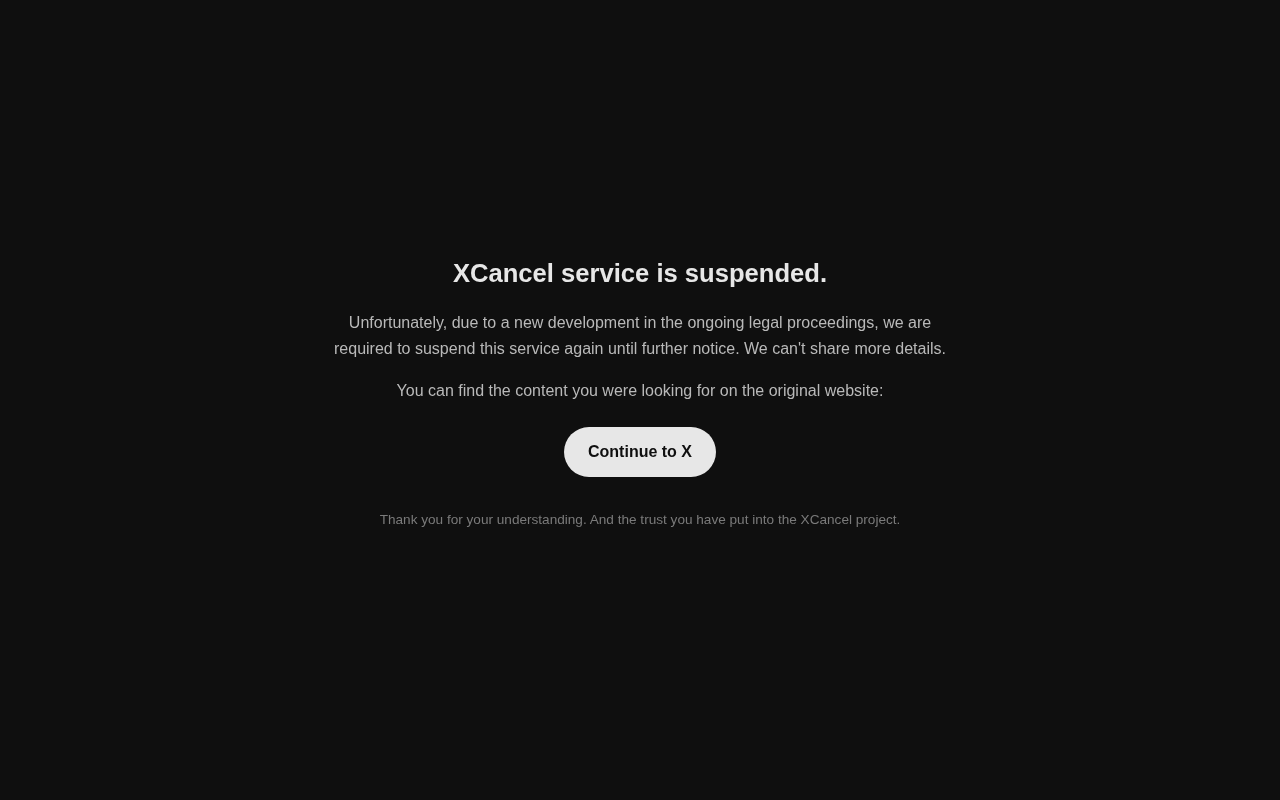
XCancel, a Nitter-based X frontend, suspends service — highlighting the fragility of third-party tools on closed platforms.
XCancel, a privacy-focused third-party frontend for X (Twitter) built on the open-source Nitter project, has announced an indefinite service suspension, sparking 500+ comments on Hacker News. The shutdown reflects the broader collapse of the Nitter ecosystem following X's elimination of its free API and enforcement of login walls. These tools rely on simulating guest sessions to scrape content, but face mounting anti-scraping measures and legal risks that make volunteer maintenance unsustainable — a stark reminder of how third-party services built on closed platforms are always one policy change away from failure.
Recently, XCancel — a third-party alternative frontend for Twitter/X — posted a notice on its website announcing that the service has been suspended "until further notice." The news quickly sparked discussion on Hacker News, accumulating over 250 upvotes and 500+ comments, reflecting the influence these alternative frontend tools hold within developer and privacy-conscious communities.
What Is XCancel?
XCancel is a public instance of X (formerly Twitter) built on the Nitter project. It allows users to browse tweets without logging in or loading official X client scripts, offering an ad-free, tracking-free, and lightweight experience. For users who want to avoid X's data tracking or who live in regions where X is restricted, tools like this were once an important alternative.
The announcement was brief — it stated the service was suspended without providing a concrete return date or detailed explanation for the shutdown.
Nitter is an open-source project launched in 2019 by developer zedeus, originally hosted on GitHub. Its goal was to provide a lightweight, privacy-respecting way to browse Twitter content. The core mechanism works by proxying requests to Twitter's unofficial endpoints server-side, then rendering results as clean HTML pages — meaning users' browsers never communicate directly with Twitter's servers and are therefore invisible to its tracking scripts and ad systems. Nitter also supports RSS feed output, which is particularly useful for people who follow specific accounts via RSS readers.
After its release, the community spun up a large number of self-hosted instances, with XCancel being one of the more prominent public ones. In early 2023, Nitter's primary maintainer published a notice explaining that Twitter had shut down the guest token endpoints that allowed anonymous access, causing most instances to degrade or fail entirely — marking the beginning of a sustained decline across the Nitter ecosystem.
Why Alternative Frontends Struggle to Survive
Based on public discussion, XCancel's suspension is not an isolated incident — it's another chapter in the long-running struggles of the Nitter ecosystem. Since X shut down its free API tier and began aggressively enforcing login walls, the technical barriers to data access for third-party frontends have grown steadily higher.
These services typically rely on simulating guest sessions or exploiting limited guest tokens to scrape content. Once the platform tightens access policies or starts blocking associated request sources, services break at scale. Maintainers must constantly battle API changes — a "cat and mouse" game that volunteer-maintained open-source projects simply cannot sustain indefinitely.
Beyond the technical challenges, legal and compliance pressure looms just as large. Platform operators have taken an increasingly hardline stance against third-party scraping, and individuals or teams running public instances may face real legal exposure.
In early 2023, X (Twitter) completely eliminated its free API tier. Developers now need to pay a minimum of $100/month just to access the official API, with enterprise-level usage running into tens of thousands of dollars per month. This shift was widely seen as a key part of the commercialization strategy Elon Musk pursued after acquiring the company, and it directly caused a wave of third-party apps, academic research tools, and developer projects to shut down.
For tools like Nitter — which bypass the official API entirely and instead scrape frontend data — the platform responded with a different set of measures: mandating login to view content (the "login wall"), and identifying and banning bulk-scraping IPs or guest tokens. These are anti-scraping techniques that require constant monitoring of platform interface changes and rapid adaptation. For volunteer maintainers without commercial backing, this is an unsustainable long-term burden.
Impact on Users and the Open-Source Community
XCancel has long been used by many people as an embeddable reference link or anonymous gateway to view public tweets. Its suspension means that bookmarks, links, and automated workflows built around the instance will break.
For the broader open-source community, this event once again highlights the fragility of third-party ecosystems in a "platformized" internet. When access to content is tightly controlled by a single platform, everything from academic research to news citations to casual browsing becomes vulnerable to the platform's policy decisions. The intense discussion on Hacker News reflects, in some sense, a collective anxiety within the community about this trend.
Alternatives and Outlook
A handful of Nitter instances are still running intermittently, but they generally suffer from poor stability and can go offline at any time. Users looking for similar functionality can watch community-maintained public instance lists, though they should expect frequent turnover.
In the long run, the survival of alternative frontends is entirely dependent on how open the source platform chooses to be. With API costs sky-high and anti-scraping measures continuously ramping up, these tools are unlikely to recapture their earlier heyday anytime soon. XCancel's suspension may just be another reminder: services built on top of someone else's platform never fully control their own fate.
Note: This article is based on XCancel's official announcement and discussions in the Hacker News community. For the actual restoration timeline, refer to any official updates from XCancel directly.
Related articles
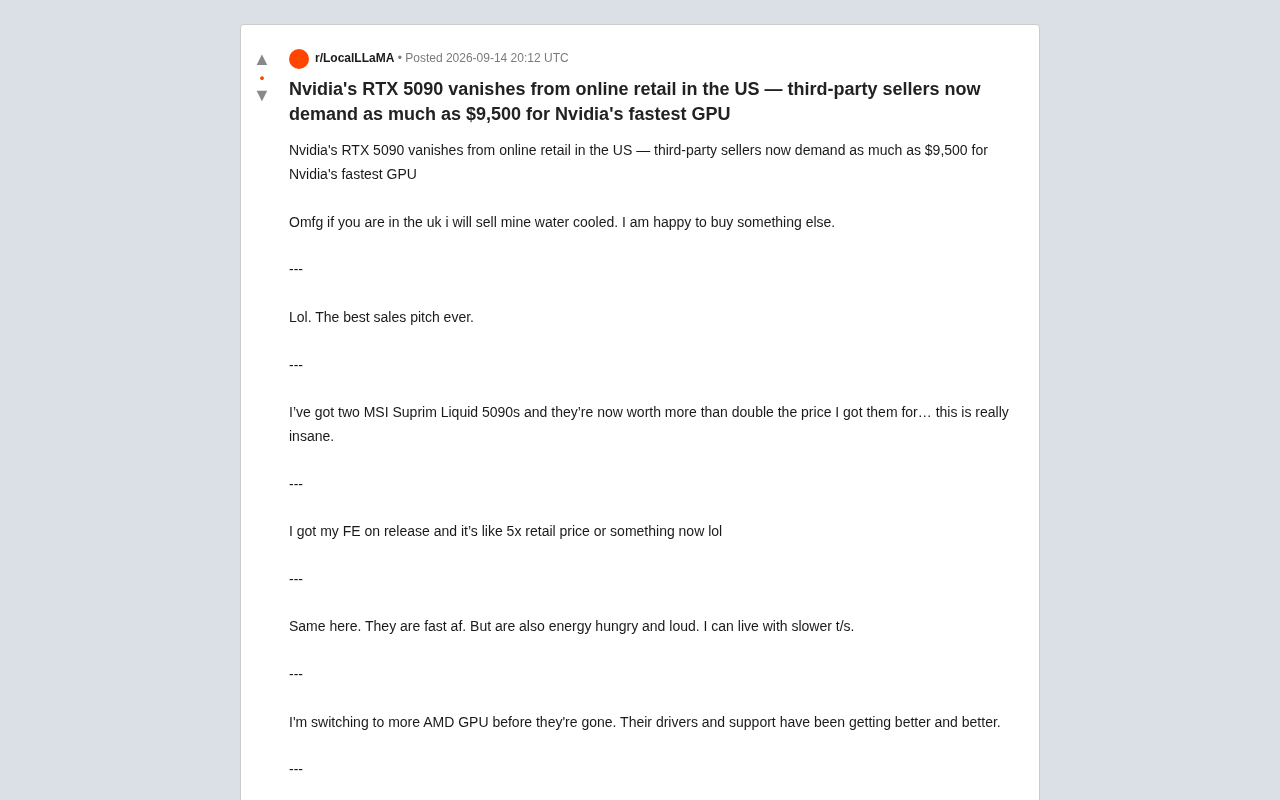
RTX 5090 Stock Crisis: Why Third-Party Sellers Are Charging $9,500
NVIDIA's RTX 5090 has vanished from U.S. online retail, with third-party sellers asking up to $9,500. Here's how AI compute demand is driving GPU prices to extremes.
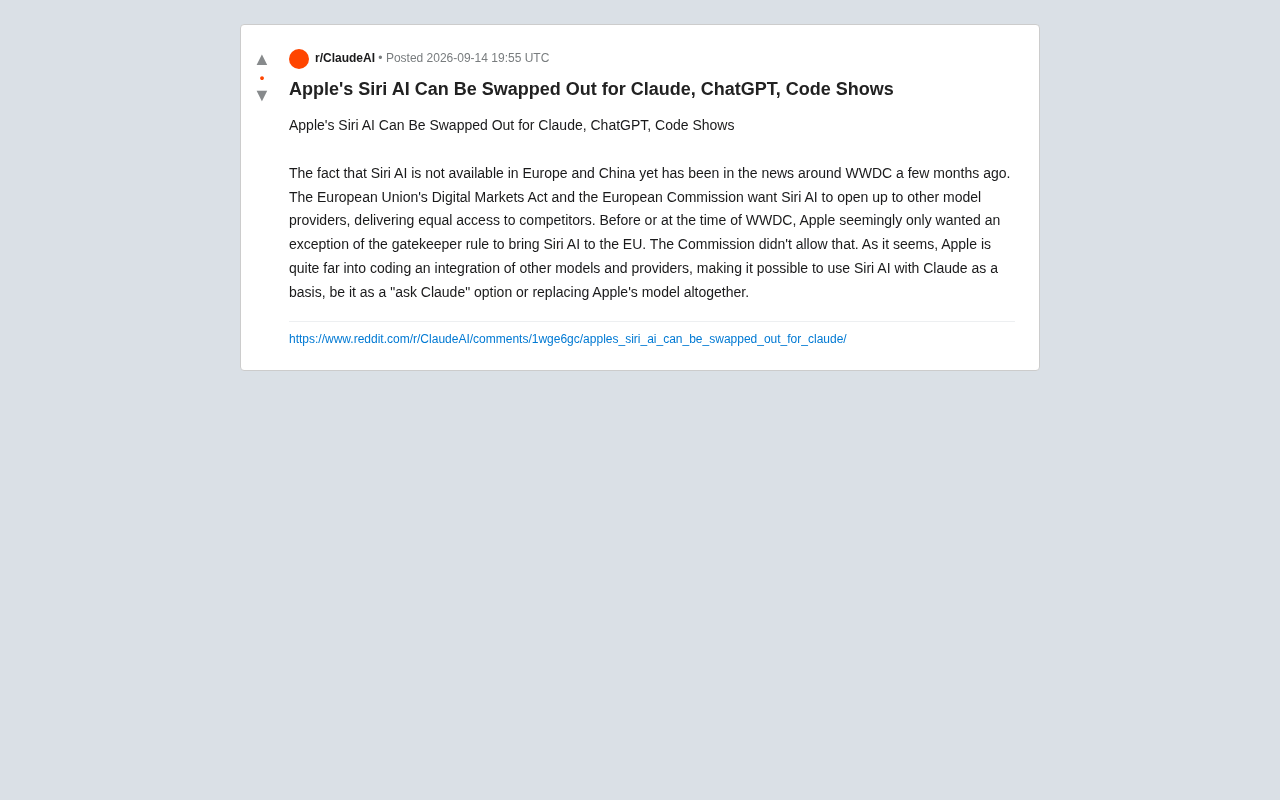
Apple Siri May Support Swapping in Claude and ChatGPT — Code Already Shows Signs
Leaked code shows Apple is developing third-party AI model integration for Siri, potentially allowing users to swap in Claude or ChatGPT under EU DMA pressure.
EPA Moves to Scrap Power Plant Greenhouse Gas Emission Standards Amid Surging AI Energy Demand
The EPA plans to eliminate all power plant greenhouse gas emission standards, just as AI, EVs, and manufacturing drive electricity demand higher — making U.S. power potentially far dirtier.