XCancel Suddenly Suspends Over Legal Proceedings: Another Blow to the Nitter Frontend Ecosystem
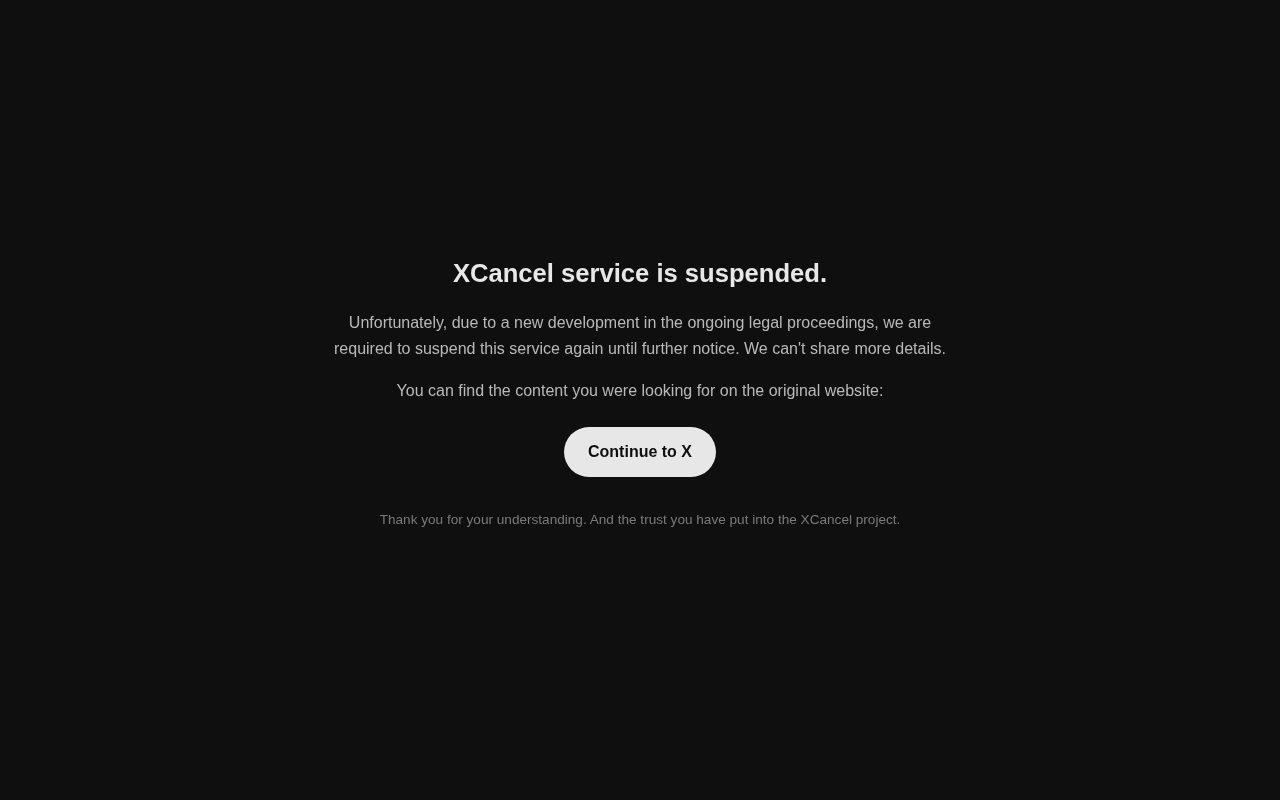
XCancel suspends over legal proceedings, highlighting growing platform pressure on privacy-friendly third-party frontends.
XCancel, a third-party Twitter/X frontend built on the open-source Nitter project, allowed users to browse public tweets without logging in or being tracked. It has now suspended operations, citing 'a new development in ongoing legal proceedings' — without disclosing specifics. The news drew significant discussion on Hacker News and is widely seen as another sign of major platforms systematically squeezing out third-party ecosystems. Since X overhauled its API policies and ramped up anti-scraping measures, the Nitter ecosystem has been steadily collapsing. XCancel's suspension underscores the growing fragility of privacy-focused tools under dual platform pressure — technical and legal — and raises deeper questions about the future of the open web and user autonomy.
Overview
XCancel — a third-party frontend built on the Nitter project that allows users to browse tweets without logging into X (formerly Twitter) — has abruptly announced a suspension of service. According to its public notice, the suspension is "due to a new development in the ongoing legal proceedings."
The news sparked widespread discussion on Hacker News, quickly accumulating 257 upvotes and over 228 comments, reflecting the tech community's deep concern over the fate of privacy-friendly frontend tools like this one.
Background: XCancel and Nitter
To understand the significance of this shutdown, it helps to know what Nitter is. Nitter is an open-source alternative frontend for Twitter, designed to be lightweight, ad-free, tracker-free, and accessible without an account. It scrapes or interfaces with X's content and presents it in a cleaner, more privacy-respecting way.
XCancel was one of the publicly accessible instances running on the Nitter ecosystem. For users who don't want to be tracked by the platform, or who face regional access restrictions, frontends like this have long served as important alternative access points.
However, since X dramatically overhauled its API policies and tightened restrictions on third-party access, the operational space for Nitter and its derivative instances has been steadily shrinking. Numerous public instances have shut down over the past year, leaving fewer and fewer still running. XCancel was one of the longer-surviving instances, which makes its suspension all the more notable.
What Does "New Development in Legal Proceedings" Mean?
XCancel has not publicly disclosed the specifics of the litigation — the suspension notice cited only a "new development in the ongoing legal proceedings." This kind of vague language typically signals that the service operator is facing legal pressure from the platform or rights holders.
For third-party frontends, the usual legal flashpoints tend to cluster around a few areas: violations of the platform's Terms of Service (ToS), whether data scraping constitutes an infringement on platform rights, and copyright or trademark issues related to content redistribution. In recent years, X has taken an increasingly aggressive stance against unauthorized data access, repeatedly using both technical countermeasures and legal action to crack down on third-party scraping.
In the Hacker News discussion, many users viewed this as yet another signal that large platforms are continuing to tighten their grip on open access and third-party ecosystems. When a service shuts down citing "legal developments," it often means the operators can no longer bear the risks and costs of continuing to run it.
Implications for the Open Web and Privacy Tools
XCancel's suspension reflects a structural crisis facing the open web today. There was a time when content on public social platforms could be freely scraped, aggregated, and re-presented in more user-friendly ways. But as platform business models have shifted toward paid API access, mandatory account logins, and aggressive anti-scraping mechanisms, independently maintained open frontends are being systematically marginalized.
This trend cuts both ways. On one hand, platforms have every right to protect their data and commercial interests, and tightening access controls has legitimate legal and business justifications. On the other hand, the disappearance of privacy-friendly tools means that ordinary users lose the ability to access public information without being tracked or forced to create an account.
For the open-source community, the continued decline of the Nitter ecosystem raises a practical question: when platforms hold an overwhelming advantage in both technology and legal resources, how far can community-driven alternatives realistically go? This isn't just a technical battle — it's a long-term struggle over web openness and user autonomy.
Closing Thoughts
XCancel's suspension remains an ongoing situation with limited public information. The full scope of the litigation has not been disclosed, and whether the service will ever return is unknown. But this episode is another reminder that relying on third-party frontends to access content from closed platforms always carries inherent fragility. For users who care about privacy and open access, staying informed about the status of these projects — and maintaining some redundancy and backup awareness in how you access information — may be the most practical approach for now.
Related articles
Xi Jinping Proposes Open Source AI Cooperation Zone Among BRICS Nations
Xi Jinping proposed an open source AI cooperation zone at the BRICS summit. Analyzing the strategic intent, open source rationale, and global AI governance implications.
Swift-Qwen3.8-27B: 58% Fewer Thinking Tokens, Nearly 2x Faster Inference
UkisAI open-sources Swift-Qwen3.8-27B, cutting thinking tokens by 58% and boosting inference speed 1.95x via overthinking token penalties and on-policy distillation — with under 1% accuracy loss.

Netflix Partners with Sega: Crazy Taxi Movie and New Sonic Animated Series on the Way
Netflix announces three Sega game adaptations: a Crazy Taxi movie, a new Sonic animated series with edge, and a live-action film based on RGG Studio's Stranger Than Heaven.