Xiaomi MiMo-V2.5 Pro Hands-On Review: Code Generation Rivaling GPT-5, Plus Free Token Application Guide

Xiaomi's open-source MiMo-V2.5 Pro reaches global top-tier code generation capability
Xiaomi's MiMo-V2.5 Pro open-source model approaches the benchmark levels of top closed-source models like GPT-5.4 and Claude Opus 4.6. In hands-on testing, it generates a fully functional shooting game in minutes and creates interactive management system prototypes from a single sentence, showing massive improvements in code generation quality and multi-module coordination over its predecessor. As a free open-source model, its value proposition is outstanding, and with the Quadrillion Token Creator Program, developers can use it at zero cost.
Xiaomi recently released the MiMo-V2.5 Pro model. As the latest version in the MiMo series, this model delivers impressive performance in code generation and system development. Bilibili creator Xiao Liu conducted a comprehensive hands-on test and shared a guide for applying to the Quadrillion Token Creator Program. Let's break down the real capabilities of this model based on actual test results.
MiMo-V2.5 Pro Benchmark Results: Among the World's Top Tier
MiMo-V2.5 Pro achieved remarkable scores across multiple benchmarks. When placed alongside global leaders like GPT-5.4 and Claude Opus 4.6, it even ranks at the top in certain metrics. Based on publicly available data, this Xiaomi-made open-source model now has the confidence to compete head-to-head with international tier-one closed-source models.

It's worth explaining what benchmarks mean here. Benchmarks are standardized test suites used in the AI field to evaluate model capabilities, typically covering dimensions like mathematical reasoning (e.g., MATH, GSM8K), code generation (e.g., HumanEval, MBPP), and general knowledge Q&A (e.g., MMLU). Model scores on these tests enable horizontal comparison of different models' ability levels. However, benchmarks have inherent limitations: test sets may overlap with training data causing "data leakage," and standardized questions cannot fully simulate the complex requirements, ambiguous instructions, and multi-turn interactions found in real-world development. That's why the industry increasingly values "Vibe Checks" — evaluating a model's practical usability through real tasks.
So benchmarks are ultimately just one reference dimension. Whether a model is actually useful depends on real-world tasks. Let's see how it performs in actual development scenarios.
Test 1: AI-Generated Shooting Game in Minutes
The tester first used MiMo-V2.5 Pro to generate a shooting game. The entire process took just a few minutes, and the generated game included complete core features:
- Shooting mechanics: Players can shoot normally
- Enemy spawning: Mobs automatically refresh and appear in the scene
- Scoring system: Points accumulate in real-time after killing mobs
- Hit effects: Clear visual feedback when attacked by enemies
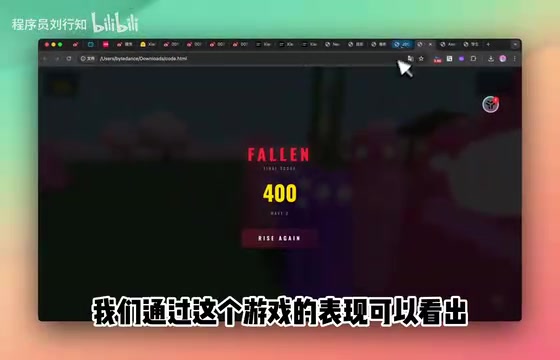
Compared to the previous MiMo model, V2.5 Pro shows dramatic improvement. Earlier versions frequently failed when generating games — issues like abnormal mob display and completely broken jumping mechanics were commonplace. The new version generates a fully functional, immediately playable game in one shot, demonstrating genuine qualitative improvement in code logic understanding and multi-module coordination.
It's worth understanding in depth that AI generating a complete game is far more complex than writing a single function. The model needs to simultaneously understand and coordinate dependencies between multiple code modules — for example, in a shooting game, the collision detection module needs to share coordinate data with the enemy spawning module, the scoring system needs to listen for kill events, and hit effects need to be linked with the health system. This "multi-module coordination" capability is a key indicator for measuring the strength of code-focused large models. Earlier models could often write individual feature snippets, but interface connections and state management between modules were error-prone, resulting in programs that "have code but won't run." MiMo-V2.5 Pro's progress in this area reflects significant improvement in long-context understanding and code architecture planning capabilities.
Test 2: One-Sentence Prompt Generates an Interactive Management System Prototype
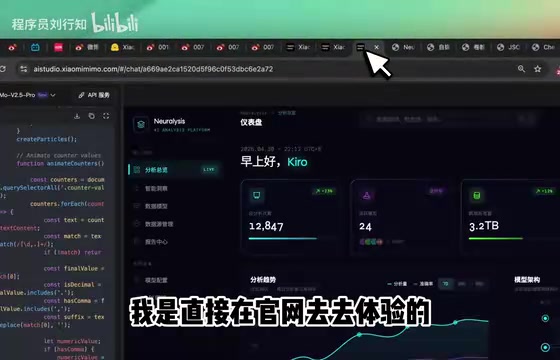
Even more surprising is MiMo-V2.5 Pro's performance in system-level development. The tester entered just one sentence — "Generate a social media management system for me" — and the model delivered a complete prototype.
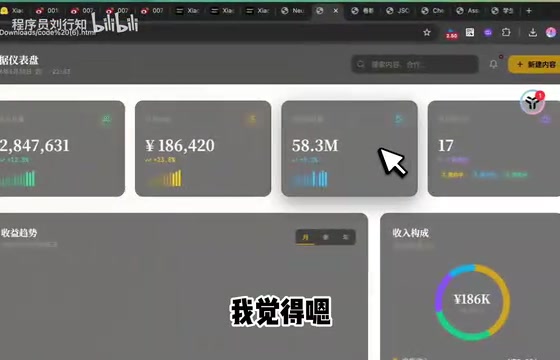
The generated result has several standout highlights:
- Every page is clickable and interactive, not static screenshot-style pages
- Navigation logic between multiple menus is fully connected
- Directly usable upon first generation, no back-and-forth debugging required
To appreciate the technical sophistication of this achievement, you need to understand the traditional prototyping workflow. Traditional system prototype development typically requires product managers to draw wireframes using tools like Figma or Axure, followed by front-end engineers implementing interactive prototypes with HTML/CSS/JavaScript — the entire process can take several days. An AI model directly generating interactive HTML prototypes from natural language essentially compresses the "requirements description → interface design → front-end coding" pipeline into a single step. The key technical challenge here is that the model must not only understand the user's business requirements but also automatically plan page structure, design navigation logic, write event handling code, and ensure all state transitions and route jumps between pages are correct. Being able to generate a multi-page interactive system in one shot demonstrates a considerable degree of "full-stack engineering thinking."
This point deserves special attention. The tester noted that running the same requirements through other domestic models like DeepSeekAd V4 often produced only static pages with missing interactivity. While Claude Opus 4.6 can achieve similar results, the fact that MiMo-V2.5 Pro delivers this level of quality as a free open-source model makes its value proposition overwhelmingly clear.
Regarding the open-source vs. closed-source distinction, it's worth supplementing some context about the current competitive landscape. Open-source models have publicly available weights and architectures that anyone can download and deploy, represented by Meta's LLaMA series and Alibaba's Qwen series. Closed-source models only provide services through APIs without revealing core technology, represented by OpenAI's GPT series and Anthropic's Claude series. Open-source models offer advantages in zero-cost usage, local deployment for data privacy protection, and fine-tuning for specific scenarios. Closed-source models typically lead in overall capability but come with high usage costs and data security concerns. MiMo-V2.5 Pro approaching top closed-source levels as an open-source model means developers can access near-tier-one code generation capabilities without paying hefty API fees — this carries significant implications for technology democratization across the industry.
Beyond these tests, the tester also used it to generate JSON formatting tools, student management systems, and several other projects, all with smooth and stable overall performance. All tests were conducted by simply selecting the MiMo-V2.5 Pro model on the official website and outputting in HTML — the barrier to entry is extremely low.
MiMo-V2.5 Pro Overall Assessment: A New Benchmark for Domestic Open-Source Code Capabilities
Based on hands-on experience, the tester gave their subjective ranking: MiMo-V2.5 Pro's overall code capability ranks just below Claude Opus 4.7 and GPT-5.4/5.5, firmly in the first tier. While there's still a gap compared to GPT-5.4 (mainly in flexibility for complex scenarios), considering this is a fully free and open-source model, the achievement is remarkably impressive.
Specifically, MiMo-V2.5 Pro's core strengths include:
- High-quality front-end code generation: Usable on first output with complete interaction logic
- Strong natural language understanding: A simple one-sentence description generates complex systems
- Massive improvement over the previous generation: Most bugs from earlier versions have been fixed
Current limitations: Compared to top closed-source models like GPT-5.4, there's still room for improvement in robustness and flexibility on certain complex tasks.
Quadrillion Token Creator Program: Free Quota Application Tutorial
Xiaomi is currently running a Quadrillion Token Creator Program where developers can submit their projects to apply for free usage quotas. Here's the application process:
- Submit your project: Submit a project you're developing or planning to develop on Xiaomi's official platform
- Wait for review: The platform evaluates project value before granting approval
- Receive quota: After approval, you receive approximately 200-300 RMB worth of Token usage per month
- Monthly reapplication: You can resubmit applications each month
It's helpful to explain the concept of token economics to understand the actual value of this program. A token is the basic unit by which large language models process text — Chinese roughly maps to one token per 1-2 characters, while English averages about 1-1.5 tokens per word. When using LLM APIs, costs are calculated based on the number of input and output tokens. For GPT-4-level models, costs typically range from a few to tens of dollars per million tokens, and a complex system development conversation might consume tens of thousands of tokens. For developers who frequently use AI-assisted programming, monthly token costs can reach hundreds or even thousands of RMB. Xiaomi's Quadrillion Token Creator Program essentially builds ecosystem by subsidizing developer usage costs — attracting more developers to build applications based on MiMo models, thereby expanding the model's influence and application coverage.
According to the tester's feedback, the program currently has a very high approval rate — they successfully applied with both a main account and a secondary account. The tokens received can be directly integrated into development tools like Claude Code, making the entire process zero-cost. For individual developers and small teams, this is an opportunity well worth seizing.
Conclusion: A Free Code Generation Powerhouse Worth Trying
The release of MiMo-V2.5 Pro marks a new milestone for domestic open-source large models in the code generation domain. It not only stands on the same level as global top-tier models in benchmarks but also delivers convincing performance in actual development tasks. Combined with the Quadrillion Token free quota program, this model offers extremely high practical value for domestic developers.
If you're looking for a free, capable AI code generation tool, MiMo-V2.5 Pro is absolutely worth a try.
Related articles
 Product Reviews
The Programmer's Desk Setup Guide: Building a Workspace That Feels Like Home
Discover how programmers build productive, comfortable workspaces. From multi-monitor setups to ergonomic design, explore the desk philosophy that drives focus and flow.
 Product Reviews
Qoder vs Cursor Real-World Comparison: Which $20/Month AI IDE Is Better?
Hands-on comparison of Qoder vs Cursor AI IDEs: Agent autonomy, human interaction count, and architecture decisions. Qoder needed only 2 interactions vs Cursor's 8.
 Product Reviews
Cursor Cloud Agent Demo: Eliminating Bottlenecks Across the Entire Software Development Lifecycle
Deep analysis of Cursor's Cloud Agent demo showing how cloud VMs, automated test artifacts, and a full-chain control plane systematically eliminate human bottlenecks across the software development lifecycle.