Xiaozhi AI Voice Assistant Flutter Client: A Practical Guide to Cross-Platform Voice Conversation App Development

Xiaozhi AI voice assistant Flutter cross-platform client supporting voice and text dual-modality interaction.
xiaozhi-android-client is a cross-platform AI voice assistant client built with Flutter, covering both iOS and Android with a single codebase. It supports real-time voice interaction and text conversation modes, using a frontend-backend separation architecture that communicates with xiaozhi-server via WebSocket, offloading AI inference, speech recognition, and synthesis to the server. With 1,471 Stars and 375 Forks, it serves as an excellent reference for AI developers, Flutter developers, and product teams.
Project Overview: What Is the Xiaozhi AI Voice Assistant Client?
In the open-source AI assistant ecosystem, xiaozhi-android-client is a widely recognized cross-platform voice conversation application project. Built on the xiaozhi-server backend service, it supports both real-time voice interaction and text-based conversation modes. As of now, the project has earned 1,471 Stars and 375 Forks on GitHub, demonstrating impressive community engagement.
The project has evolved from its original Android-native implementation into a Flutter cross-platform version, with a single codebase covering both iOS and Android platforms — significantly reducing development and maintenance costs.
Core Features in Detail
Real-Time Voice Interaction
Real-time voice interaction is the most critical feature of this AI voice assistant. Users engage in natural conversations with AI through voice, while the app handles the complete pipeline in the background — audio capture, transmission, speech recognition, and speech synthesis for AI responses.
Compared to pure text input, voice interaction is more natural and efficient, particularly suited for everyday mobile use cases — whether commuting or doing housework, users can simply speak to chat with AI.
Text Conversation Mode
Beyond voice interaction, the app also supports traditional text conversation mode. In situations where voice isn't practical (meetings, libraries, public transit), users can seamlessly switch to text input without disrupting the experience.
This dual-modality design combining voice and text covers users' interaction needs across virtually all scenarios.
Flutter Cross-Platform Technical Approach
The project is developed in Dart and built on the Flutter framework. Flutter is an open-source UI framework officially released by Google in 2018. Its core innovation lies in abandoning the traditional cross-platform approach (like React Native) that relies on platform-native widgets, instead using its proprietary Skia/Impeller graphics engine to render all UI elements directly on a Canvas. This means Flutter apps deliver pixel-identical visual results on both iOS and Android, while avoiding compatibility issues caused by version differences in native widgets across platforms. Dart's AOT (Ahead-of-Time) compilation produces near-native performance, while JIT (Just-in-Time) mode supports hot reload during development.
The choice of Flutter as the cross-platform solution is primarily based on these considerations:
- One codebase, multiple platforms: The same code compiles into native iOS and Android apps, significantly boosting development efficiency
- Near-native rendering performance: Flutter uses the Skia engine for direct rendering without relying on platform-native widgets, delivering excellent smoothness
- Mature plugin ecosystem: Audio recording, WebSocket communication, state management, and other features all have ready-made plugins available
- Hot reload accelerates iteration: Changes can be previewed in real-time during development, greatly improving debugging efficiency
Migrating from Android-native to Flutter was a pragmatic technical decision — preserving the core mobile interaction experience while gaining iOS coverage at minimal additional cost.
System Architecture: Collaboration Within the Xiaozhi Ecosystem
Backend Service: xiaozhi-server
This client is not a standalone application — it requires the xiaozhi-server backend service to function. The server handles compute-intensive tasks such as AI inference, speech recognition (ASR), and text-to-speech (TTS), while the client focuses on the user interface and audio stream capture and playback.
It's worth noting that ASR (Automatic Speech Recognition) and TTS (Text-to-Speech) are the two core technological pillars of voice AI applications. Modern ASR systems are predominantly based on end-to-end deep learning models (such as Whisper and Conformer architectures), achieving near-human accuracy in Chinese speech recognition. TTS employs neural network vocoders (such as VITS and VALL-E series) capable of generating emotionally rich, naturally prosodic speech output. Placing these compute-intensive tasks on the server side is the standard architectural choice for mobile AI applications.
Real-time communication between client and server relies on the WebSocket protocol. WebSocket is a full-duplex communication protocol defined in the HTML5 standard. Unlike the traditional HTTP request-response model, it establishes a persistent connection between client and server, allowing both sides to push data at any time. In voice AI scenarios, audio data needs to be streamed continuously to the server for real-time recognition while the user speaks, and AI-generated responses also need to be returned as a stream in real-time — compared to polling approaches, WebSocket typically reduces latency by over 50% in audio streaming scenarios, which is crucial for maintaining natural conversational flow.
This frontend-backend separation architecture brings several practical benefits:
- Not limited by phone computing power: Heavy computation tasks like AI inference are handled server-side, enabling smooth performance even on mid-to-low-end phones
- Model upgrades are transparent to users: When the backend switches to a more powerful AI model, users benefit immediately without updating the app
- Backend capabilities shared across multiple endpoints: The same backend service can simultaneously serve mobile apps, web clients, smart hardware, and other terminals
It's worth mentioning that as chipmakers like Qualcomm and MediaTek integrate dedicated NPUs (Neural Processing Units) into mobile SoCs, and as on-device inference frameworks like MLC LLM and llama.cpp mature, running small language models locally on phones has become feasible. The frontend-backend separation architecture also leaves excellent room for future transitions to edge-cloud collaborative modes.
Open Source Community Collaboration Ecosystem
The project is fully open-source on GitHub, and 375 Forks indicate that a significant number of developers are building upon it for secondary development or feature customization. In the GitHub ecosystem, Fork count is an important metric for measuring a project's practical application value — often more meaningful than Stars. Stars primarily reflect attention, while Forks represent developers genuinely incorporating the project into their workflows. Such open-source projects typically form informal knowledge-sharing networks: problems solved and experience accumulated in various Fork branches often flow back to the main repository through Issue discussions and PR merges, creating a positive community flywheel effect that accelerates bug fixes and feature iteration.
Who Should Use This Project?
This open-source project is particularly valuable for the following groups:
- AI application developers: Learn complete mobile voice conversation implementation, including critical technologies like audio stream processing and WebSocket real-time communication
- Flutter developers: The project provides practical reference for Flutter in advanced scenarios such as audio processing and real-time communication
- Xiaozhi ecosystem users: If you've already deployed xiaozhi-server, this client serves as a ready-to-use mobile entry point
- Product teams for prototype validation: Teams wanting to quickly validate AI voice assistant product concepts can build a usable MVP based on this project in a short time
Conclusion and Recommendations
xiaozhi-android-client is an indispensable mobile component in the Xiaozhi AI ecosystem. The Flutter cross-platform approach strikes a solid balance between development efficiency and user experience, and the dual-modality interaction design covering both voice and text addresses the vast majority of use cases.
With ongoing community contributions and continuously improving backend AI capabilities, lightweight AI voice assistant clients like this are likely to become one of the mainstream carriers for personal AI assistants. The rapid development of on-device inference technology also hints at future offline-capable, more privacy-focused evolution.
If you plan to build upon this project, I recommend first reading through the xiaozhi-server documentation to understand the complete frontend-backend interaction flow — especially the WebSocket message protocol and audio stream formats — before diving in. This will save you considerable time and effort.
Related articles
 Product Reviews
The Programmer's Desk Setup Guide: Building a Workspace That Feels Like Home
Discover how programmers build productive, comfortable workspaces. From multi-monitor setups to ergonomic design, explore the desk philosophy that drives focus and flow.
 Product Reviews
Qoder vs Cursor Real-World Comparison: Which $20/Month AI IDE Is Better?
Hands-on comparison of Qoder vs Cursor AI IDEs: Agent autonomy, human interaction count, and architecture decisions. Qoder needed only 2 interactions vs Cursor's 8.
 Product Reviews
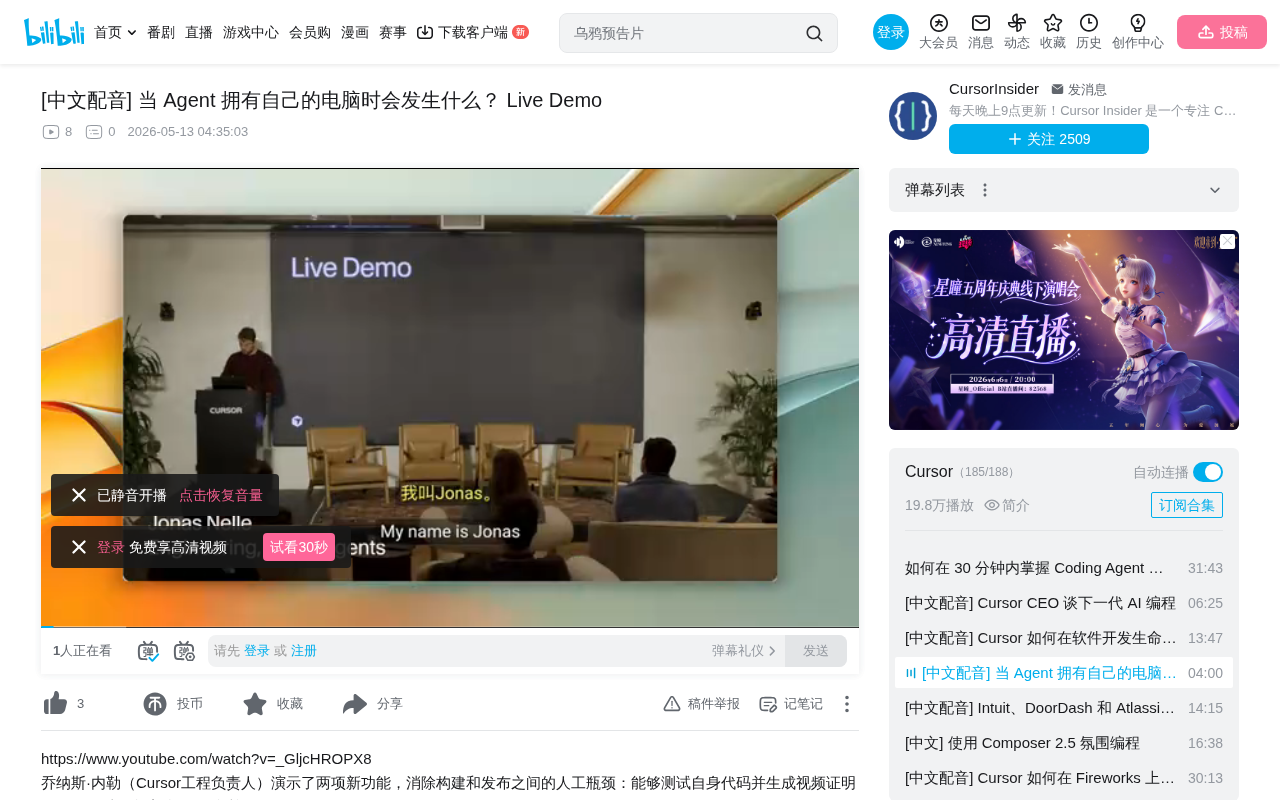
Cursor Cloud Agent Demo: Eliminating Bottlenecks Across the Entire Software Development Lifecycle
Deep analysis of Cursor's Cloud Agent demo showing how cloud VMs, automated test artifacts, and a full-chain control plane systematically eliminate human bottlenecks across the software development lifecycle.