XNU Linux: Running a Full OS X GUI User Space on Linux

The XNU Linux project attempts to run the OS X graphical user space on the Linux kernel, sparking heated community discussion about cross-system compatibility.
XNU Linux is an open-source project aimed at porting OS X's graphical user space (including the window server and system frameworks) to run on the Linux kernel, allowing users to experience the macOS desktop environment without Apple hardware. The project received 171 upvotes and 74 comments on Hacker News, with community discussion focusing on graphics driver compatibility, System Integrity Protection (SIP), and code signing challenges. Similar projects like Darling attempted to run macOS command-line tools, but the GUI has always been a bottleneck. If XNU Linux can break through at the GUI level, it will provide developers with a low-cost way to test macOS applications and become a platform for studying Apple's system internals, though legal and stability risks cannot be ignored.
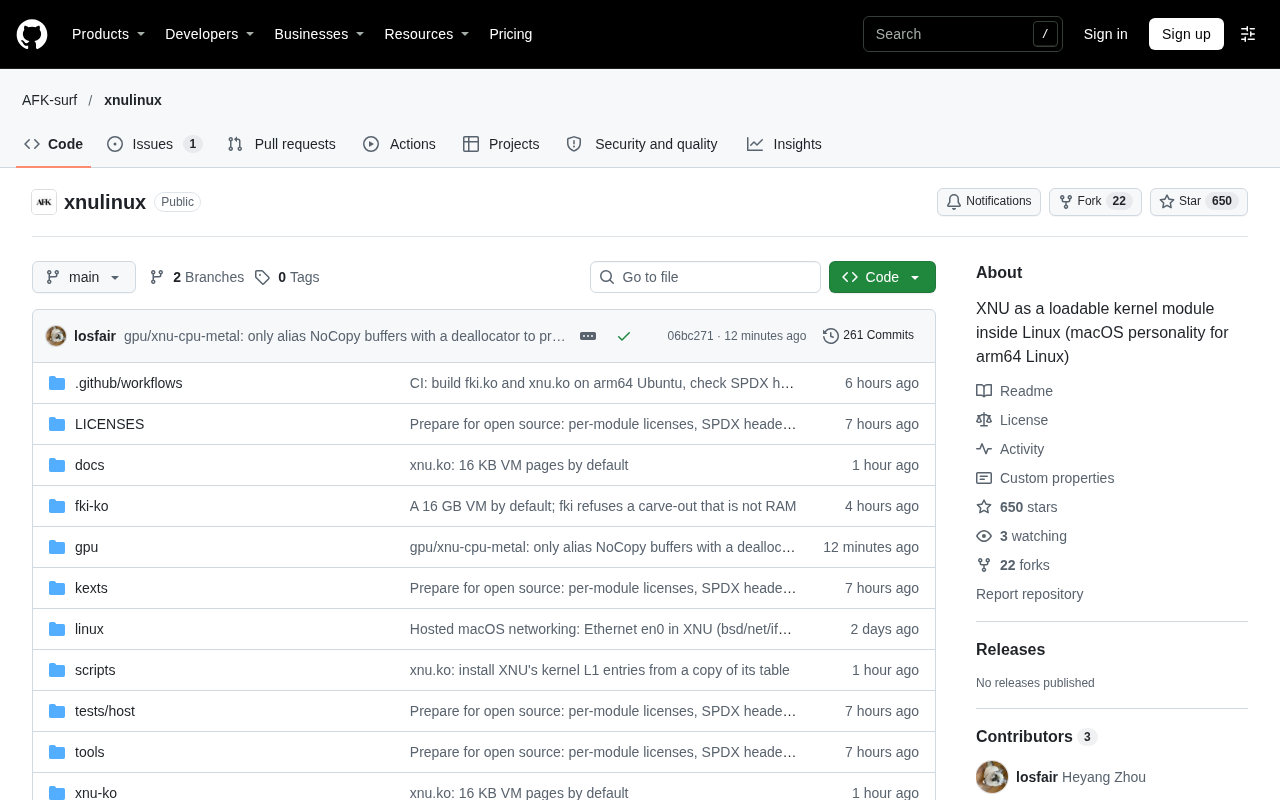
An open-source project called XNU Linux has sparked discussion on Hacker News, with the goal of running a complete OS X graphical user space on top of the Linux kernel. This means users might be able to experience the macOS desktop environment and application ecosystem without Apple hardware. After its release, the project quickly gained 171 upvotes and 74 comments, demonstrating the developer community's strong interest in cross-platform compatibility solutions.
Project Core: Separating Kernel and User Space
The idea behind XNU Linux isn't new, but the implementation approach is worth noting. Traditionally, macOS's graphics stack is tightly coupled with the XNU kernel, while this project attempts to port OS X's user space components (including the window server, system frameworks, and graphics driver interfaces) to run on the Linux kernel. This is similar to the approach in the GNU/Linux ecosystem of running different desktop environments on a unified kernel, but the difficulty lies in the fact that OS X's user space has more complex dependencies on underlying system calls and hardware abstraction layers.
According to the project's description on GitHub, XNU Linux is not simple emulation but rather uses a compatibility layer to allow native OS X binaries to execute on Linux. If this approach matures, it could provide developers with a low-cost way to test macOS applications, while also opening a window for studying the internal mechanisms of Apple's operating system.
The XNU kernel is the core of Apple's macOS operating system, with the full name "X is Not Unix," combining the Mach microkernel with BSD components, responsible for low-level hardware abstraction, process scheduling, and system calls. User space refers to all program execution environments outside the kernel, including the window server, system frameworks, and graphics interfaces. In macOS, the graphics stack (such as WindowServer and Metal drivers) is tightly coupled with the XNU kernel, depending on specific kernel extensions and private APIs. Porting the user space to the Linux kernel means these low-level interactions need to be reimplemented, for example, through a compatibility layer that translates system calls and hardware access, rather than directly running native kernel modules. This separation approach is similar to running other desktop environments on Linux, but OS X's user space has deeper kernel dependencies, increasing porting complexity.
Technical Challenges and Community Feedback
From the Hacker News comments, community discussion focused on several technical difficulties. The first is graphics driver support: OS X's graphics stack depends on Metal and specific kernel extensions, while Linux's DRM subsystem is incompatible with these interfaces, requiring the project to implement extensive translation layers. The second is System Integrity Protection (SIP) and code signing mechanisms—these security features need to be redesigned or bypassed on Linux, which may raise legal and compliance controversies.
Some commenters also noted that similar projects like Darling attempted to run macOS command-line tools on Linux, but the graphical interface has always been an insurmountable obstacle. If XNU Linux can achieve a breakthrough at the GUI level, it would significantly differentiate itself from previous approaches. However, the project is still in its early stages, and stability and performance remain to be verified.
Metal is Apple's graphics and compute API that replaced OpenGL and OpenCL, interacting directly with GPU hardware. It depends on specific kernel drivers and graphics stacks and has no native support on Linux. Linux's DRM (Direct Rendering Manager) subsystem manages GPUs and graphics buffers, but its interface model differs greatly from Metal's. Therefore, running the OS X graphics stack on Linux requires implementing a translation layer that maps Metal calls to Linux graphics APIs (such as Vulkan) or directly emulates hardware behavior. This translation not only incurs significant performance overhead but also requires handling differences in memory management and synchronization mechanisms, making it one of the core technical obstacles the project faces.
System Integrity Protection (SIP) is a macOS security mechanism that restricts modifications to system files and processes, while code signing ensures only trusted software runs. These features depend on the XNU kernel's security modules and Apple's certificate system. On Linux, these mechanisms cannot be directly ported, and the project needs to redesign or bypass them, potentially weakening security and causing conflicts with Apple's licensing agreements. For example, bypassing code signing could be seen as circumventing technical protection measures, bringing legal risks.
Potential Application Scenarios and Limitations
For ordinary users, the most direct appeal of running OS X user space on Linux is application compatibility—being able to use some macOS-exclusive software without buying a Mac. But it's important to recognize that this approach is unlikely to receive official Apple support and may involve copyright and licensing issues. For developers, it's more of a research platform for analyzing how the macOS graphics stack works, rather than a daily productivity tool.
From an industry perspective, XNU Linux reflects the open-source community's continued challenge to closed operating system ecosystems. Regardless of the project's ultimate success or failure, the compatibility layer technologies and reverse engineering experience accumulated during its exploration may benefit other cross-platform projects.
Conclusion
XNU Linux proposes a bold concept: allowing OS X's graphical user space to run natively on the Linux kernel. Although technical obstacles and ecosystem barriers cannot be ignored, the attention the project has received on Hacker News shows that cross-system compatibility remains a hot topic in the developer community. Future progress is worth continued observation.
One-line Summary
The XNU Linux project attempts to run the OS X graphical user space on the Linux kernel, sparking community discussion about cross-system compatibility.
Paragraph Summary
XNU Linux is an open-source project aimed at porting OS X's graphical user space (including the window server and system frameworks) to run on the Linux kernel, allowing users to experience the macOS desktop environment without Apple hardware. The project received 171 upvotes and 74 comments on Hacker News, with community discussion focusing on challenges such as graphics driver compatibility, System Integrity Protection (SIP), and code signing. Similar projects like Darling attempted to run macOS command-line tools, but the graphical interface has always been a bottleneck. If XNU Linux can break through at the GUI level, it will provide developers with a low-cost way to test macOS applications and become a platform for studying Apple's system internals, though legal and stability risks cannot be ignored.
Related articles

Prompt Engineering for Beginners: From Writing Prompts to Engineering Thinking
Starting from the essence and four functions of prompts, this article systematically explains the six-step process, four success criteria, learning value, and practical limitations of prompt engineering to help you build a complete understanding.

Anthropic Launches Nasdaq IPO: AI Giant's Listing and Risk Disclosures
Anthropic officially launches its Nasdaq IPO under ticker ANT, with market valuation expected to potentially exceed SpaceX's record. The prospectus devotes nearly 100 pages to AI risks, while first-half revenue grew over 14x but net losses widened sharply, reigniting the AI bubble debate.

Rust cURL Clone Uses 4,832 unsafe Blocks—Is the Memory Safety Myth Broken?
A Rust cURL clone uses 4,832 unsafe keywords, challenging Rust's memory safety narrative. We analyze what unsafe really means, compare Fil-C, and examine rewrite motives.