Xolace: How AI Catches You on Bad Days That Aren't Quite 'Mental Health Problems'
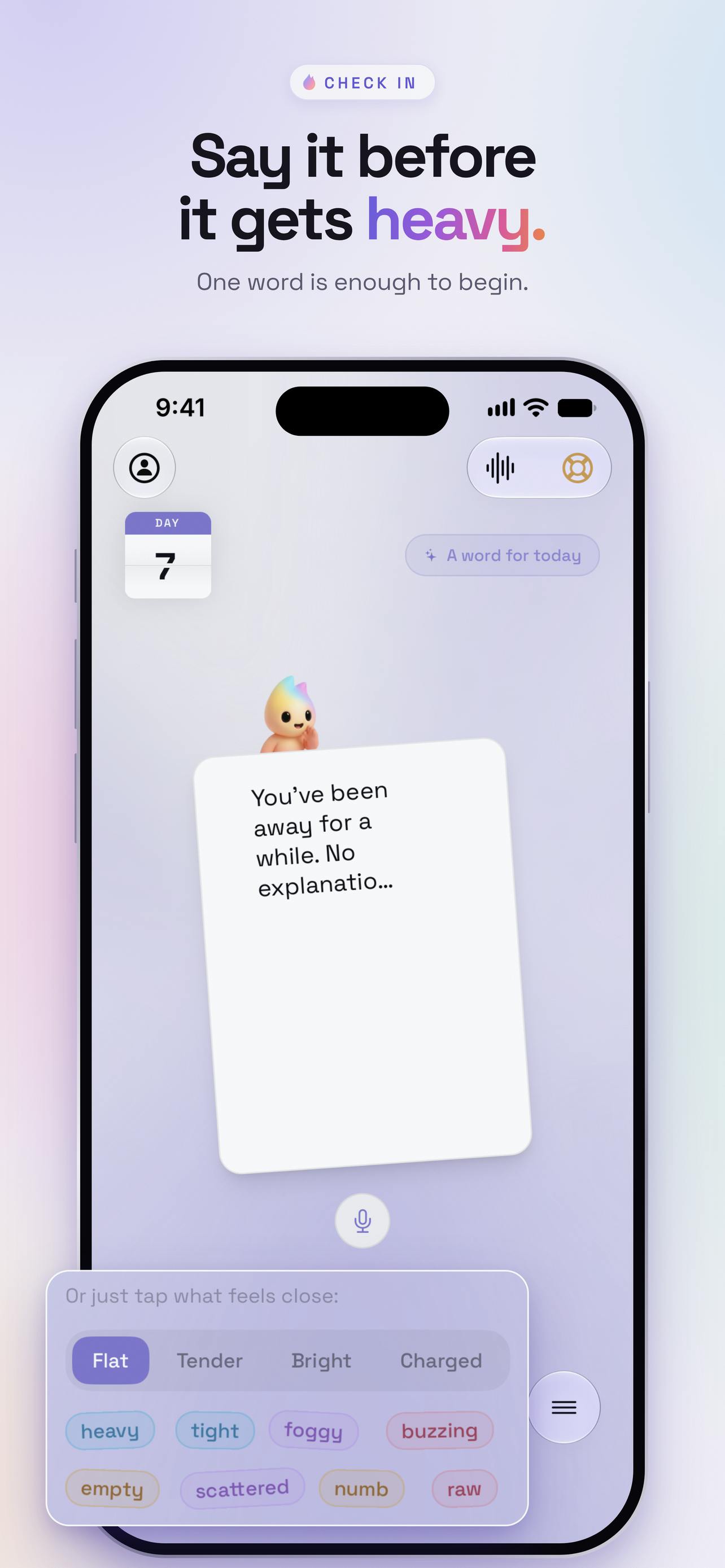
Xolace uses AI to unpack everyday emotions, filling gaps in professional mental health services.
Xolace is an AI emotional support product on Product Hunt, positioned for "bad days you wouldn't call a mental health problem," entering the gray zone between diagnosed populations and everyday emotional fluctuations. Users can vent via text or voice; AI analyzes emotional causes and offers peer support chats, letter-writing help, and guided audio. It deliberately stays restrained—peer support not clinicians, action steps not diagnoses.
When Emotional Lows Haven't Reached the Level of 'Illness'
A product called Xolace has appeared on Product Hunt, and its tagline precisely hits a long-neglected space: "For the bad days you wouldn't call a mental health problem."
This positioning itself is worth pondering. Traditional mental health services target diagnosed populations, while everyday emotional fluctuations, inexplicable irritability, and exhaustion from accumulated stress often fall below the threshold for seeking medical care—yet they genuinely affect life. Xolace chooses to enter precisely this gray zone.
According to information on its Product Hunt page, Xolace supports users in typing text or speaking directly by voice, then uses AI analysis to help users see "what's really behind" their emotions, and offers tailored action suggestions. During its time on the leaderboard, the product received 72 upvotes and 8 comments, ranking 17th.
From 'Speaking It Out' to 'Doing Something'
Xolace's interaction logic can be broken into two layers. The first layer is expression: when users feel something is off but can't articulate why, they can type or speak to pour out vague feelings. The second layer is feedback: the system doesn't just listen—it tries to reveal what lies beneath the emotions and offers concrete options.
These options include chatting with trained peer supporters, helping users write letters to people they trust, and guided audio. The cleverness of this design approach is that it doesn't put all the pressure on AI conversation—sometimes what people need isn't to keep talking to a machine, but a push to build real connections.
The "help you write to someone you trust" feature is especially noteworthy. It acknowledges AI's boundaries: the algorithm can help you sort out your wording and lower the psychological threshold for opening up, but the ultimate emotional support still needs to land in interpersonal relationships.
Peer Supporter is a role in the mental health service system distinct from clinical doctors. They typically receive some training, have personal experience with mental health struggles, and provide non-clinical emotional support through listening, empathy, and companionship. Unlike psychotherapists, peer supporters don't diagnose or formulate treatment plans. Their value lies in how their identity as "someone who's been there" lowers the psychological threshold for conversation, making users feel understood rather than scrutinized. In Europe and the US, peer support has been incorporated into some public mental health systems; in China, this role is still in early exploration. By offering peer supporters as a supplementary option beyond AI, Xolace is essentially building a layer of interpersonal buffer between professional medical care and pure AI conversation.
The Sense of Proportion in AI Mental Health Tools
Products like Xolace can't avoid a core question: where does AI fit in emotional support scenarios? From public descriptions, Xolace positions itself more as a "reflection tool" than a "treatment tool," and officially states that "Reflecting is free."
It offers peer supporters rather than clinical doctors, and provides action steps rather than diagnostic conclusions. This restraint is necessary in the current AI mental health space—most similar products emphasize capability boundaries to prevent users from equating AI advice with professional medical opinions.
Another point worth observing is the introduction of voice input. When feeling low, typing itself can be a burden; voice expression lowers the threshold for expression and also allows paralinguistic information such as tone and pauses to be captured. But this also raises privacy considerations—how the product handles voice data has not yet been elaborated in public information.
Paralinguistic cues refer to vocal features beyond linguistic content, including speech rate, intonation, pause length, volume changes, sighs, and so on. In emotional assessment, these signals often reflect true states better than the words themselves—the tone and pauses when someone says "I'm fine" may reveal more than the literal meaning of the sentence. Voice input has unique value in emotional support scenarios precisely because it naturally carries such paralinguistic data. However, for AI to truly leverage this information requires speech emotion recognition technology, which also means more sensitive voiceprint data being collected and processed, and correspondingly greater complexity in privacy protection.
The Imagination Space of the 'Bad Day Economy'
From a product category perspective, Xolace is available on both Android and iOS, categorized at the intersection of Health & Fitness and artificial intelligence. This indicates the team views everyday emotional management as an independent, high-frequency need scenario rather than an appendage to medical services.
This judgment has its rationality. Accessibility issues in mental health services have long existed: long wait times, high costs, and strong stigma. For the population that "hasn't reached that level," the market lacks lightweight, instant, low-threshold tools. Xolace uses AI for emotional analysis and real-life peers for warmth, attempting to find balance between efficiency and human touch.
Of course, the 72 upvotes indicate it's still in early validation. Whether the product can retain users depends on whether AI analysis truly produces "that's exactly it" moments of insight, and whether follow-up action suggestions are sufficiently tailored to individual circumstances. These all require longer-term user feedback to verify.
For practitioners focused on AI application implementation, Xolace provides an interesting sample: rather than using AI to replace professional services, use it to fill the gaps between services.
Accessibility of mental health services is a core issue in public health, typically measured across three dimensions: geographic accessibility (whether services can be obtained nearby), economic accessibility (whether costs are affordable), and social accessibility (whether stigma and cultural attitudes constitute barriers). Traditional psychotherapy has gaps in all three: insufficient supply of professionals leads to long wait times, the cost per session is burdensome for most people, and the label of "seeing a therapist" still deters many. Digital mental health tools are seen as a complementary path precisely because they can compress wait times, reduce per-session costs, and provide services more privately. But while improving accessibility, how to ensure service quality doesn't decline is a tension these lightweight products must face.
One-line Summary
Xolace uses AI to unpack everyday emotions, filling the gaps in professional mental health services with peer support and letter-writing assistance.
Paragraph Summary
Xolace is an AI emotional support product featured on Product Hunt, positioned for "the bad days you wouldn't call a mental health problem," entering the gray zone between diagnosed populations and everyday emotional fluctuations. Users can express themselves through text or voice, and after AI analyzes the causes of emotions, it offers action suggestions such as chatting with peer supporters, assisted letter-writing, and guided audio. The product deliberately maintains restraint: offering peer support rather than clinical doctors, action steps rather than diagnostic conclusions, and emphasizing that "reflecting is free." It received 72 upvotes on Product Hunt and ranked 17th, still in early validation. The article argues its value lies in providing ideas for AI application implementation—filling the gaps between professional services rather than replacing them.
Related articles

Michael Nielsen Takes Down His Classic Neural Network Textbook, Sparking Community Discussion
Michael Nielsen's classic free textbook Neural Networks and Deep Learning has been taken offline, sparking discussion on Hacker News about the reasons and impact.

Inside the AI Training Data Market: The Trade-off Between Exclusivity and Discounts
G2i founder Gabe Greenberg reveals the dual-track pricing of the AI training data market: labs pay a premium for exclusive data or accept discounts that allow others to buy it.

SessionGraph: Unifying All Coding Agent Sessions in One Interactive Graph
SessionGraph aggregates coding agent sessions into an interactive graph, helping developers review, debug, and manage AI coding workflows across sessions. This article examines its positioning, value, and open questions.