Yayan App Review: Vertical Rice-Paper Style Poetry Reading — An Indie Developer's Anti-Algorithm Practice

An indie developer builds classical poetry app "Yayan," using restrained design to counter a restless era.
An indie developer set aside his English vocabulary product to create Yayan, a classical Chinese poetry reading app featuring rice paper texture and ink-toned vertical layout, upholding a "Calm Technology" philosophy with no push notifications, no ads, and no algorithmic pressure. Rather than chasing efficiency and growth metrics, the product uses restrained interfaces and rhythm-respecting interactions to let technology retreat backstage, creating a quiet space for readers to encounter thousand-year-old verses — answering the question of how text can carry more warmth in the AI era.
From English Vocabulary to Classical Poetry: An Against-the-Current Indie Project
In an era where AI tools emerge endlessly and efficiency reigns supreme, an indie developer did something seemingly "out of step with the times" — he set aside PandaABC, his English vocabulary story product, and turned to building a Chinese classical poetry reading app called "Yayan" (雅言, meaning "elegant words").
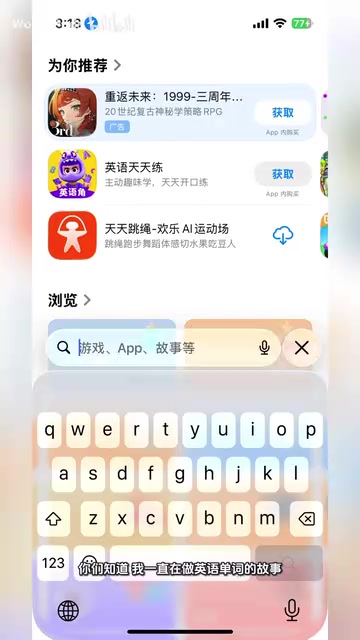
This is neither an electronic dictionary nor a structured course system. The developer defines it as "a portable personal study." This positioning itself reveals an attitude: in an age of information overload, reading classical poetry shouldn't be a utilitarian learning task, but a spiritual space you can enter at any time.
Yayan's Design Philosophy: Every Detail Pushes Back Against Restlessness
The Visual Restraint of Rice Paper and Ink
Yayan applies extensive "subtraction" in its visual design:
- Rice paper as canvas: The background simulates rice paper texture, evoking the atmosphere of classical scrolls
- Ink as structure: Traditional ink tones serve as the primary color palette, rejecting flashy color schemes
- Vertical right-to-left reading: Following the traditional layout of classical texts, content flows vertically from right to left
Vertical right-to-left reading isn't merely an aesthetic choice — it carries deep historical and cognitive science foundations. Vertical Chinese writing dates back to the oracle bone era, when bamboo strips served as writing material and vertical inscription facilitated scrolling. This tradition persisted for millennia until horizontal layout gradually became mainstream after the 20th-century vernacular Chinese movement. Modern cognitive research suggests that for classical poetry, vertical reading activates cultural memories associated with ancient text reading, creating a specific psychological field. Taiwan still maintains the vertical publishing tradition today, and many scholars believe vertical layout better preserves the aesthetic beauty of Chinese character forms and the rhythmic flow between lines. Yayan's choice of vertical layout isn't just visual style restoration — it's rebuilding a physical posture of reading. The eye movement from top to bottom, right to left, inherently slows the reading pace, echoing the chanting tradition of classical poetry.
These design choices feel extraordinarily "luxurious" in today's app ecosystem — they don't serve conversion rates, don't chase session duration, and exist solely to restore the sense of ritual that classical poetry reading deserves.
Warmth in Interaction Details
Tap the seal icon, and someone softly reads the poem aloud to you. This design extends visual reading into an auditory experience, allowing the rhythmic beauty of poetry to be fully presented. Every poem comes with a translation, appreciation essay, and annotations — tap "flip" to switch between the original text and interpretation. Readers can choose to immerse themselves in the original text's imagery or leverage annotations for deeper understanding — the depth is theirs to decide.
Anti-Algorithm Design: A Poetry App with No Push Notifications and No Ads
In the product description, the developer specifically emphasizes three absences:
- No push notifications: Your life rhythm won't be disrupted by alerts
- No advertisements: No commercial messages will be inserted into poetic moments
- No algorithmic pressure: No recommendation mechanisms to manufacture anxiety
These three absences happen to be the core operational strategies of the vast majority of apps today. Abandoning them means giving up conventional paths to user growth, but it also means the product can remain pure — a study should be quiet.
The philosophy Yayan upholds is known as "Calm Technology" in indie developer communities, first proposed by Mark Weiser, a researcher at Xerox PARC, in the 1990s. Its core argument: good technology should recede to the periphery, entering the center of attention only when needed, rather than continuously competing for user attention. This contrasts with the "attention economy" model prevalent in mainstream apps today — maximizing user session time through push notifications, infinite scrolling, and algorithmic recommendations, then converting this data into advertising revenue. Indie developers, free from fundraising pressure and DAU (Daily Active Users) metrics, actually have the space to practice calm technology. Yayan's choice of a limited free experience business model is precisely this philosophy made tangible at the commercial level — exchanging product value itself for revenue, rather than trading user attention for ad fees.
The Core Question of the AI Era: How Can Text Carry More Warmth?
From PandaABC to Yayan, the developer has been contemplating the same question: In the AI era, how can text carry more warmth?
This question deserves deep reflection. When AI can generate poetry in seconds, translate classical Chinese, and mass-produce content, the "warmth" of text has paradoxically become scarce. Large language models (LLMs) like GPT-4 and Claude can now fluently generate classical-style poems and translate literary Chinese — virtually flawless at the linguistic form level. However, linguists and literary scholars point out that the "warmth" of text derives from the embodied experience behind it — Su Shi's life circumstances when writing "May we all be blessed with longevity, sharing the beauty of the moon across a thousand miles," or Du Fu's historical moment when writing "Beacon fires have burned for three months; a letter from home is worth ten thousand gold." These are sources of meaning that AI cannot replicate.
Yayan's answer lies not at the technical level — it doesn't emphasize what large models or speech synthesis technology it uses — but at the design level: through restrained interfaces, appropriate white space, and interactions that respect reading rhythm, it creates space for readers to encounter these historical experiences, giving every character the chance to be truly "seen." This stands in stark contrast to some AI products that "regenerate classical poetry with AI" — the former restores and transmits, the latter produces and replaces. Against the backdrop of increasing content homogenization, "curation" and "presentation" themselves are becoming scarce creative acts. Technology retreats backstage; humanities take center stage.
Download Experience and Business Model
Yayan is currently available on the App Store, offering ten poems for free. This "try before you decide" model is consistent with the product's "no pressure" character. For users who love classical poetry and pursue reading quality, it's worth downloading to try.
Among indie developer works, Yayan represents a rare direction: not using AI to do more and faster things, but using design and aesthetics to let existing content — those verses that have endured for millennia — be read and felt in better ways. This itself is one answer to the question of "how text can carry warmth in the AI era."
Key Takeaways
- Yayan is a classical Chinese poetry reading app with rice paper texture and ink-toned vertical layout, positioned as a "portable personal study"
- Vertical layout originates from thousands of years of Chinese writing tradition, slowing the reading pace to match the chanting quality of classical poetry
- The product upholds a "Calm Technology" design philosophy with no push notifications, no ads, and no algorithmic pressure, pushing back against the attention economy model of today's app ecosystem
- The developer's journey from PandaABC to Yayan represents a continuous exploration of how text can carry warmth in the AI era
- The design philosophy lets technology retreat backstage and humanities take center stage, restoring reading ritual through restrained interfaces rather than using AI to replace the historical experience embedded in classical poetry
- Currently available on the App Store with ten free poems to experience
Related articles
 Product Reviews
The Programmer's Desk Setup Guide: Building a Workspace That Feels Like Home
Discover how programmers build productive, comfortable workspaces. From multi-monitor setups to ergonomic design, explore the desk philosophy that drives focus and flow.
 Product Reviews
Qoder vs Cursor Real-World Comparison: Which $20/Month AI IDE Is Better?
Hands-on comparison of Qoder vs Cursor AI IDEs: Agent autonomy, human interaction count, and architecture decisions. Qoder needed only 2 interactions vs Cursor's 8.
 Product Reviews
Cursor Cloud Agent Demo: Eliminating Bottlenecks Across the Entire Software Development Lifecycle
Deep analysis of Cursor's Cloud Agent demo showing how cloud VMs, automated test artifacts, and a full-chain control plane systematically eliminate human bottlenecks across the software development lifecycle.