Yila: An AI Code Assistant for Scientific Research — Can It Become the Scientist's Copilot?

Yila aims to build a dedicated AI code assistant for researchers, filling the scenario adaptation gap of general-purpose programming tools.
Yila is an early-stage project on Hacker News, positioned as "Codex for Scientific Research," arguing researchers write code differently from engineers—focusing on exploratory analysis, reproducibility, and strong documentation-code coupling rather than long-term maintained software. The article analyzes three special traits of research code and two major challenges for Yila: higher trust barriers for AI-generated code and disciplinary fragmentation. Yila's value lies in raising the right question about what AI assistants must relearn for research.
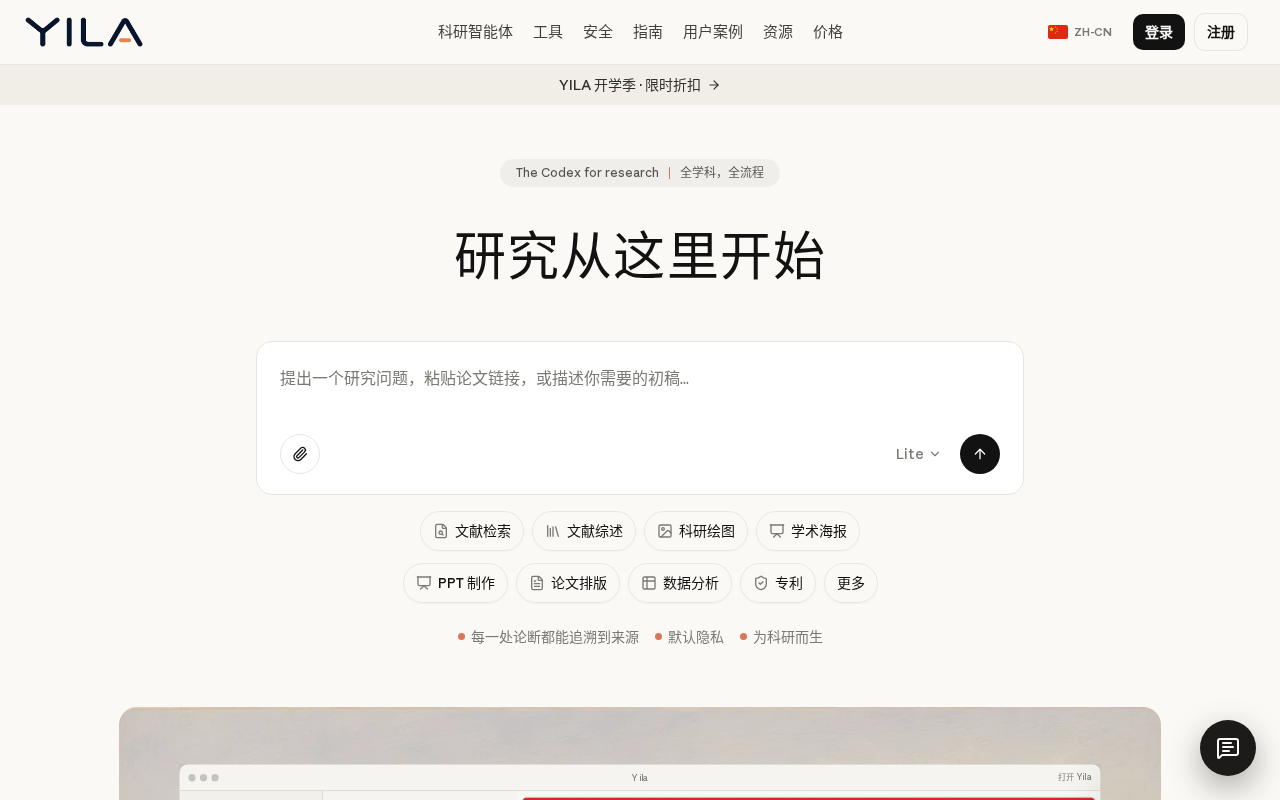
After AI coding assistants swept through the developer community, does scientific research also need its own dedicated "code copilot"? The newly unveiled Yila project on Hacker News answers with a definitive yes. Named "Codex for Scientific Research," this tool attempts to push AI assistance from general-purpose programming into a more vertical research scenario.
From General Programming to Research-Specific: Yila's Positioning Logic
Yila's core proposition isn't complicated: researchers write code differently from software engineers. Scientists are mostly doing data analysis, numerical simulation, and visualization validation, rather than building long-term maintained software products. This difference means that general-purpose programming assistants (like GitHub Copilot or Cursor) often feel "sufficient but not quite right" in research scenarios — they excel at completing functions and classes, but may not understand the unique rhythm of research workflows.
Yila chooses to position itself as "Codex for Scientific Research," essentially borrowing the AI code generation capability that the concept of "Codex" represents while anchoring it in the specific context of scientific research. The cleverness of this positioning lies in avoiding direct competition with mature programming assistants and instead emphasizing scenario specificity: research code iteration is exploratory, reproducibility requirements are extremely high, and documentation and code are often intertwined.
However, the original launch on Hacker News received only 4 points and 2 comments, indicating that the project is still at a very early stage with limited community awareness. This means Yila's product maturity and actual capabilities remain to be verified.
The dual meaning of the term "Codex"
Yila uses "Codex for Scientific Research" as its self-description, directly inspired by OpenAI's Codex model — an AI system fine-tuned on GPT-3 specifically for converting natural language to code, which was once the core engine behind GitHub Copilot. Codex has become synonymous with "AI code generation" in the developer community, so Yila's borrowing of this term both signals to potential users that "I can also do code generation" and limits the scope through the suffix "for Scientific Research." It's worth noting that Codex itself was deprecated by OpenAI in 2023, with its capabilities integrated into newer GPT models; Yila's naming is more of an analogical rhetoric than a technical inheritance relationship. Understanding this helps assess Yila's actual technical approach: it likely involves fine-tuning or prompt engineering on general-purpose large models for research scenarios, rather than training a dedicated model from scratch.
The Special Nature of Research Code: What an AI Assistant Needs to Understand
To judge whether a tool like Yila has value, one must first see clearly the essential differences between research code and engineering code.
Exploratory Over Engineering
Scientists often write code to answer a question, not to build a system. Scripts may run only once but must be reproducible; dependencies may be complex but version management is often neglected. If an AI assistant focuses only on code syntax correctness while ignoring reproducibility and environment configuration hints, its help to researchers is diminished.
Why reproducibility is a hard constraint for research code
Reproducibility means that other researchers using the same data and code can independently obtain results consistent with the original study. It is the cornerstone of the modern scientific method and the core of the recent "reproducibility crisis" discussions — multiple surveys show that a large number of published research results cannot be independently reproduced, with missing code and environment configuration being among the main reasons. Unlike engineering code, research scripts often depend on specific versions of libraries, specific random seeds, specific hardware environments, and even specific operating system patches. An AI assistant that focuses only on syntax correctness may generate code that runs successfully on the author's machine but fails on another. Therefore, for a research AI assistant to provide value in reproducibility, it needs to proactively suggest dependency version locking (such as requirements.txt or conda environment export), random seed settings, and data snapshot preservation — exactly the aspects that general-purpose programming assistants do not cover by default.
Strong Coupling Between Documentation and Code
Comments and documentation in research code often carry experimental conditions, parameter choices, and underlying assumptions. If Yila can automatically extract or complete this research context information while generating code, it can form a differentiated advantage.
Traceability Requirements for Data and Results
The core of scientific research is verifiability. An ideal research AI assistant should not only help write code but also assist in recording data sources, runtime environments, and result versions. This is an area rarely covered by general-purpose programming assistants.
Potential integration points between research workflow management tools and AI
Before Yila, the research community had already developed a set of tool ecosystems focused on traceability, such as MLflow and Weights & Biases for experiment logging and parameter tracking, DVC for data version control, and Jupyter for interactive notebook environment recording. The common goal of these tools is to link "data source — code version — runtime environment — result output" into an auditable chain. If Yila wants to truly enter research scenarios, a reasonable evolution direction is to combine with its code generation capability: automatically inserting experiment tracking hook code when writing analysis scripts, or attaching data fingerprints when generating visualizations. This "generate-as-you-record" approach better demonstrates the differentiated value of a research-specific assistant than simply improving code completion speed, and echoes the areas the article notes are rarely covered by general-purpose programming assistants.
Reality Check for an Early-Stage Project: Challenges Facing Yila
The low-key appearance on Hacker News actually reveals two practical issues facing Yila.
First, the trust threshold for research AI tools is higher. Developers are willing to try Copilot because code errors can be quickly identified and corrected; but researchers are more cautious about AI-generated code because incorrect analysis code can lead to incorrect research conclusions. Yila needs to invest more design in accuracy verification and error prompts.
Second, the fragmentation of the research field far exceeds that of software development. Bioinformatics researchers use Python and R, physicists use C++ and Julia, and social science researchers may use Stata or SPSS. The extent to which a "research-general" AI assistant can cover these differences is a product question Yila must answer.
Currently, public information about Yila is limited, making it impossible to judge its specific technical approach and coverage. But at the conceptual level, it points to a real gap in demand: what researchers need is not just "faster code completion" but "a collaboration tool that better understands scientific workflows."
The Future Path of Research AI Tools
Yila's emergence is not an isolated case. In recent years, AI tools for research scenarios have been increasing, from literature management to experimental design assistance to code generation, and research workflows are being gradually decomposed and optimized. Yila's choice to start with code is a pragmatic starting point — code is the most digitizable and most easily AI-accessible part of research.
But the real test is whether Yila can go beyond the "research version of Copilot" positioning and delve into research-specific aspects such as reproducibility assurance, experiment record integration, and result verification. If it merely repackages general code completion, it will struggle to establish long-term value in the research community; if it can achieve depth in the uniqueness of research workflows, it has the potential to become a tool that researchers genuinely want to use daily.
For those watching AI's implementation in vertical domains, Yila is an early sample worth continuous observation. Its value lies not in its current feature completeness, but in the question it raises: when AI programming assistants enter the research field, what exactly do they need to relearn?
One-line Summary
Yila aims to build a dedicated AI code assistant for researchers, filling the scenario adaptation gap of general-purpose programming tools.
Paragraph Summary
Yila is an early-stage project unveiled on Hacker News, positioned as "Codex for Scientific Research," arguing that researchers write code differently from software engineers — the former focuses on exploratory analysis, reproducibility, and strong coupling between documentation and code, rather than building long-term maintained software products. The article analyzes three special characteristics of research code: exploratory over engineering, documentation carrying experimental context, and data and results requiring traceability. It also points out two major challenges facing Yila: the higher trust threshold for AI-generated code in research scenarios, and disciplinary fragmentation making it difficult for a "research-general" assistant to cover all tech stacks. The project currently has only 4 points and 2 comments on Hacker News, with maturity yet to be verified. The article argues that Yila's value lies in raising the right question: what do AI programming assistants need to relearn when entering the research field?
Related articles

Chain of Thought Isn't Just for AI: How Humans Can Use CoT to Improve Thinking Quality
Chain of Thought isn't just a prompt trick for large models. Starting from a Hacker News discussion, this article analyzes why CoT works for human thinking too, breaks down actionable ways to transfer it, and highlights the key differences between human CoT and machine CoT.
Cloudflare Teams Up with OpenAI: Closi…
Cloudflare Teams Up with OpenAI: Closing the Loop from Vulnerability Discovery to Defense with AI
Cloudflare uses OpenAI Daybreak to investigate security vulnerabilities and generate reviewable remediation plans, while developers use Codex to boost coding efficiency and quality.

Orca Multi-Agent Orchestration in Practice: A Guide to Parallel Collaboration with Claude and Codex
Orca is Stable AI's free open-source agent workbench supporting 34 agents like Claude Code and Codex in parallel. Learn its Git worktree isolation, multi-model orchestration, and mobile management.