YouTube Launches AI Shopping Assistant "Ask YouTube" to Double Down on Video Commerce

YouTube launches AI shopping assistant "Ask YouTube" for in-video product comparison and faster purchase decisions.
YouTube has launched an AI feature called "Ask YouTube" that assists users in comparing products and surfacing key differences while watching unboxing and review videos, compressing the path from discovery to purchase. The move reflects YouTube's push to convert its massive content traffic directly into transactions and build revenue streams beyond traditional advertising. However, questions about the neutrality of AI recommendations, the accuracy of product information, and whether commercial partnerships could bias results are critical issues that must be addressed before a wider rollout. With public details still limited, the feature's real-world impact remains to be seen.
YouTube Puts AI Into the Shopping Cart
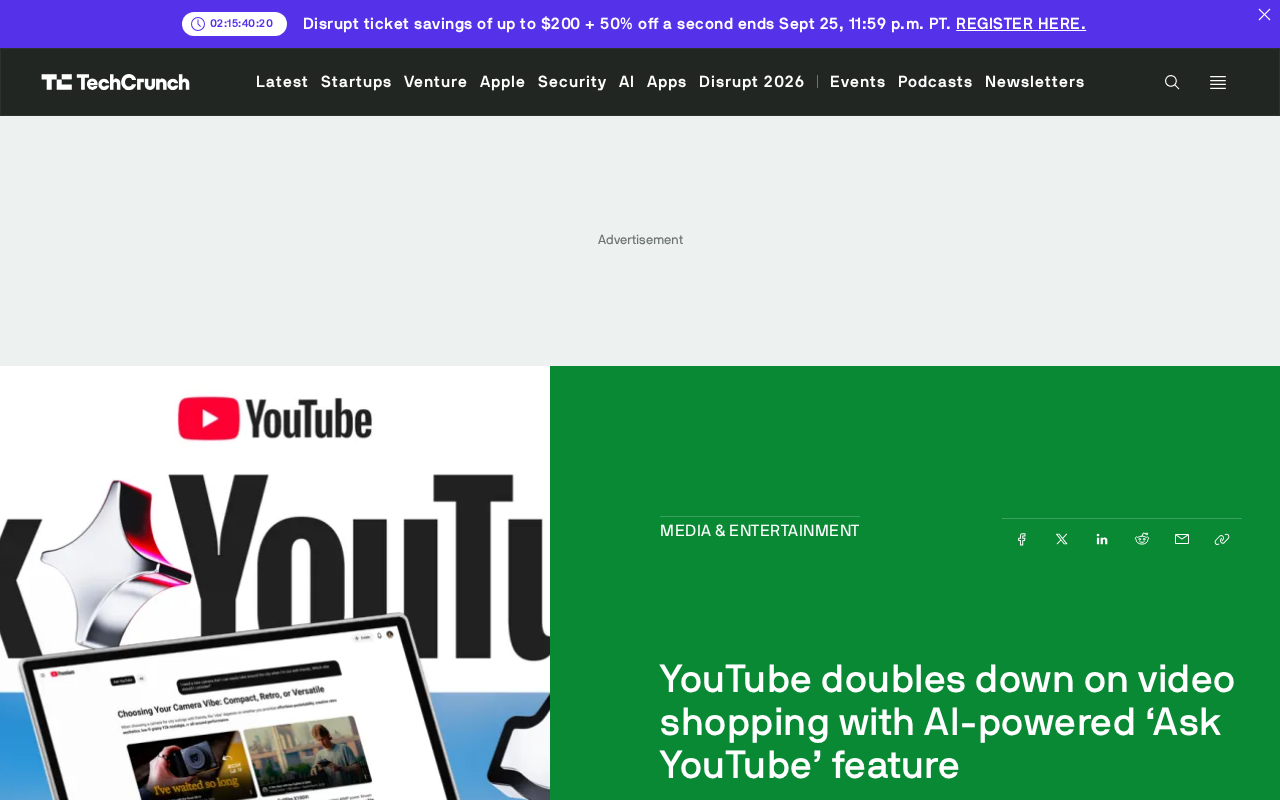
YouTube is extending its artificial intelligence capabilities into e-commerce. The platform recently launched an AI feature called "Ask YouTube" that helps users compare products while watching videos and browsing items, enabling faster purchase decisions. The move has been widely interpreted as YouTube's latest bet on the "video shopping" track.
For YouTube — a platform long reliant on advertising revenue — bridging content consumption with shopping behavior signals an attempt to embed transactional moments directly into the viewing experience. When users watch unboxing, review, or product recommendation videos, the AI assistant can instantly answer product questions and compare different items side by side, shortening the distance between discovery and purchase.
What Can "Ask YouTube" Actually Do?
Based on currently available information, the core capability of "Ask YouTube" is product comparison. When you're considering multiple candidate products during a shopping session, this AI feature can help map out the differences between them, acting as an on-demand shopping guide.
The value of this kind of feature lies in reducing the cognitive cost of processing information. Video is inherently a linear, time-consuming content format — users can't skim for key specs the way they can with text and images. With an AI assistant in the loop, the idea is that it can distill the key points from video content and product details, compressing "watch three reviews before deciding" into "just ask the AI what's right for me."
That said, the details disclosed so far remain limited. The exact interaction model, supported product categories, and reliability of recommendations all still require fuller information to properly evaluate.
Why Video Shopping Has Become Hotly Contested Territory
YouTube's move doesn't exist in a vacuum. In recent years, short-form video and livestream commerce have already validated the commercial potential of the "content as storefront" model. Video has a natural advantage in showcasing product details and building consumer trust, and platforms sit on rich user viewing data and interest signals — giving them an inherent edge in converting traffic into transactions.
Bringing AI into this equation is fundamentally about using generative technology to compress the decision-making chain even further. Traditional e-commerce relies on search and filtering, while AI shopping assistants aim to replace the tedious process of price comparison with conversational interaction. Whoever can get users to "think one less step before buying" is more likely to gain the upper hand in this race.
The competitive landscape here is already crowded. TikTok Shop has directly integrated short video with instant checkout, accumulating significant data across Southeast Asia and the US market. Meta's Instagram and Facebook both feature native shopping tags that let users jump straight to checkout while browsing content. Amazon has approached it from the reverse angle, trying to drive content traffic through its Amazon Live streaming channel. Pinterest established its "visual discovery as shopping" positioning years ago. YouTube's introduction of AI-powered product comparison leverages its massive library of in-depth review and unboxing videos — precisely the kind of substantive content that short-form platforms comparatively lack — as a differentiating asset in a landscape where content platforms are universally pushing into commerce.
Opportunities and Concerns
On the opportunity side, if "Ask YouTube" delivers a smooth experience, it could significantly improve the conversion efficiency for creator-driven product promotions and open up revenue streams for the platform beyond advertising. For creators, the commercial value of their video content stands to be amplified.
But concerns exist as well. The neutrality and transparency of AI recommendations is a critical question — when recommendations may be influenced by advertising or commercial partnerships, how can users judge whether the advice is objective? Whether the AI accurately understands product information and avoids generating misleading comparisons also directly bears on user trust. These are questions that need to be answered before the feature rolls out at scale.
The question of AI recommendation neutrality has already attracted regulatory scrutiny. The US Federal Trade Commission (FTC) has been tightening its requirements around undisclosed advertising and algorithmic recommendation disclosure obligations in recent years. The EU's Digital Services Act (DSA) explicitly requires platforms to explain their recommendation logic to users. For YouTube, if AI shopping results have commercial ties to advertisers without clear disclosure, the platform faces compliance risk. Search engines have historically faced multiple regulatory investigations for mixing paid and organic results — if AI shopping recommendations go down a similar path, regulatory pressure will be a variable that cannot be ignored.
Takeaway
"Ask YouTube" marks a concrete step forward for YouTube in merging AI with e-commerce. It aligns with broader industry trends in video shopping and reflects the platform's intent to build a tighter connection between content and transactions. Whether the feature can genuinely change user shopping habits remains to be seen — it will depend on how the experience plays out in practice and how carefully it's refined. Given how limited the publicly available information currently is, its real-world performance is worth watching closely.
Related articles

Is the Agent Harness Dead? Cursor's Early Engineer Breaks Down the Real Architecture of AI Coding Agents
Cursor early engineer Jediah breaks down the real architecture of the agent harness: why "the harness is dead" is only half right, how the data flywheel lets the harness obsolete itself, and how Grokbot, software factories, and primitive design open new frontiers for agents.

Python Visitor Pattern and Better Alternatives Explained
A deep dive into Python's visitor pattern and four alternatives: method pattern, pattern matching, dictionary mapping, and functools.singledispatch. Choose the best decoupling design by change frequency.

357 Days of Deep Experience: Why Omarchy Made Me Stop Distro-Hopping
A 357-day deep dive into Omarchy: 59-second install, out-of-the-box audio and GPU support, the Quattro QuickShell rewrite migration pains, and why Arch users should try it.