YouTube Launches Shorts Series: Bringing Episodic Storytelling to Short-Form Video

YouTube launches Shorts Series to bring TV-style episodic structure to short-form video, taking on micro-drama platforms.
YouTube unveiled "Shorts Series" at its Made On YouTube event, enabling creators to organize Shorts into TV-style Season and Episode structures for a serialized viewing experience. The move directly responds to the rise of micro-drama platforms like ReelShort, aiming to keep episodic short-drama content within YouTube's ecosystem. It lowers the barrier for creators to build continuous narratives and gives viewers a clearer, more compelling way to follow along — though wider adoption will depend on creator uptake and shifting audience habits.
YouTube Bets on Short Dramas: Shorts Gets Episodic Series Functionality
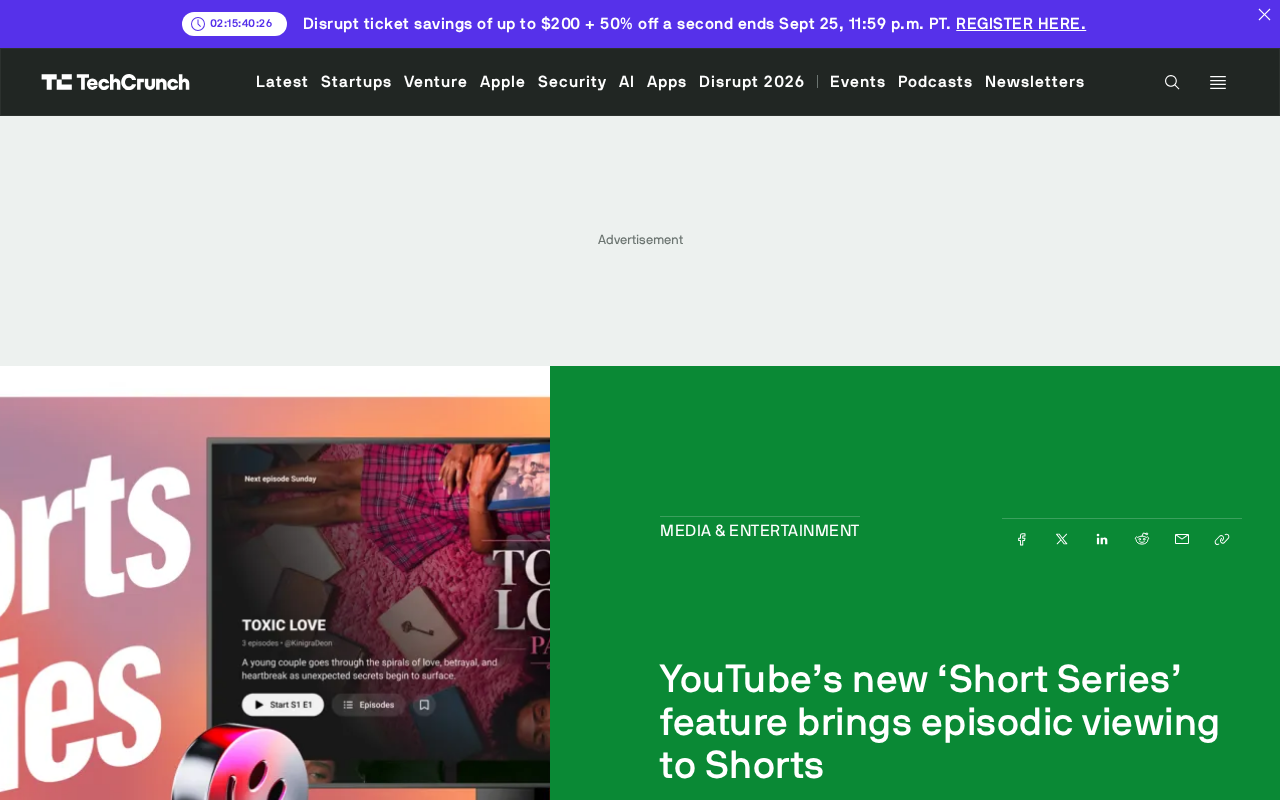
As micro-drama apps continue their rapid global rise, YouTube is officially placing its bet on episodic storytelling in short-form video. At Wednesday's Made On YouTube event, the company announced a new tool called Shorts Series, which allows creators to organize their Shorts content into full Season and Episode structures — just like a TV series.
The message is clear: YouTube believes that short, serialized storytelling is more than a passing trend, and that this format belongs on Shorts.
What Is Shorts Series?
The core idea behind Shorts Series is to transform scattered short videos into a "binge-worthy" viewing experience. Previously, Shorts were largely standalone pieces of content, making it difficult for audiences to follow a continuous story in sequence. The new feature introduces a season-and-episode architecture similar to streaming platforms, letting viewers watch short videos one episode after another — just like catching up on a TV show.
For creators, this means being able to build structured content sequences around a theme or narrative. For viewers, it means a clearer path through the content and a stronger motivation to keep watching. At its core, this "TV series-style" organization transplants the mature logic of serialized storytelling from long-form video into the short-form context.
A Strategic Response to the Micro-Drama Wave
This move isn't an isolated product update — it's a direct response to the current content market. In recent years, various micro-drama (microdrama) apps have rapidly accumulated users, validating the market potential of the "short format + strong plot + serial viewing" combination. These apps typically feature vertical video, very short episode lengths, and strong cliffhanger endings designed to hold fragmented user attention.
By adding episodic capabilities to Shorts, YouTube is clearly looking to capture the micro-drama wave within its own ecosystem — rather than watch users migrate to dedicated short-drama platforms. By natively supporting serialized narratives, YouTube is making the case that short-form video isn't just for comedy clips or viral moments; it can carry more complete, stickier storytelling.
In the micro-drama space, dedicated platforms like ReelShort, DramaBox, and Kuke have already built large paying user bases across North America and Southeast Asia. Individual episodes typically run 60–90 seconds, and monetization is based on subscriptions or per-episode unlocks. The explosive growth of these platforms proves users are willing to pay for high-density, suspense-driven vertical short dramas. By contrast, YouTube has not introduced a paid unlock mechanism for Shorts Series — its primary logic remains increasing user watch time to boost ad revenue and platform stickiness. This means YouTube's episodic strategy differs meaningfully from dedicated short-drama platforms at the user experience level: YouTube emphasizes free access and creator ecosystem, while the latter prioritizes monetization efficiency and exclusive content.
Potential Impact on the Creator Ecosystem
From a creator's perspective, Shorts Series lowers the barrier for producing serialized content on a short-form platform. Previously, creators who wanted to build a story series had to rely on title annotations, playlists, or manual guidance to string episodes together — a far from ideal viewing experience. With an official season-and-episode structure, organizing and distributing content becomes much smoother.
This could also shift how short-form content is conceived. When binge-watching becomes viable, creators have more incentive to invest in cross-episode suspense, character arcs, and long-term storytelling — ultimately raising overall content quality and user retention. For creators looking to pursue serious narratives or serialized drama on Shorts, this is a new opportunity worth paying attention to.
It's worth noting that YouTube already has a Playlist feature that allows videos to be arranged sequentially for continuous viewing — but playlists lack the concept of "seasons," and have no dedicated interface or recommendation logic optimized for Shorts. Shorts Series builds on this with two key upgrades: first, it introduces multi-level season/episode metadata, helping the algorithm understand content continuity and deliver more precise recommendations; second, it provides a dedicated episode navigation interface within the Shorts viewing flow, allowing users to easily switch to the next episode while in immersive vertical mode — without having to exit and manually select. These kinds of experiential details are often what determine whether a feature gets widely adopted by creators.
Conclusion
The launch of Shorts Series reflects YouTube's conviction about the future of short-form video: fragmented doesn't have to mean disjointed, and short videos are fully capable of supporting structured, serialized storytelling. Against the backdrop of the continuing micro-drama boom, this feature is both a move with the market and an important step for YouTube in reinforcing its content moat. Whether it truly sparks an episodic trend within Shorts will depend on creator adoption and audience viewing habits — but the direction is now set.
Related articles

Workbuddy for Absolute Beginners: How a Desktop AI Agent Fits Into Real Workflows
A beginner's guide to the Workbuddy desktop AI agent: installation, claiming credits, file management, and building automated workflows—compared with CodeX for fit and cost, helping professionals shift from AI question-askers to AI managers.

OpenAI's New Agent Stack: Computer Use, Decisions API, and Ultra-Fast Workflows
OpenAI Dev Day unveiled a new agent stack: Computer Use outperforms humans, Decisions API delivers ultra-low-latency classification via Luna, Agents API opens the same Computer Use capabilities, and GPT-6.1 Sol costs only one-seventh of Astra. Core updates, benchmark data, and developer insights.

Liang Wenfeng Open-Sources DeepInfo Inference Framework, Takes On U.S. Ban
DeepSeek open-sources its DeepInfo inference framework after its models, featuring GPU/CPU cross-pipelining, small-model prediction with large-model verification, and full Huawei Ascend and NVIDIA chip support—facing the U.S. federal ban head-on. This article analyzes its significance for AI deployment and open-source strategy.