Yudao Cloud: An Enterprise-Grade Microservices Development Platform Based on Spring Cloud Alibaba

Enterprise microservices platform built on Spring Cloud Alibaba with comprehensive business modules.
Yudao Cloud (yudao-cloud) is a popular open-source enterprise microservices platform built on Spring Cloud Alibaba, MyBatis Plus, and Vue. With 18,800+ GitHub Stars, it offers comprehensive features including RBAC permissions, multi-tenancy, workflow engines, payment systems, CRM, ERP, and cutting-edge AI/IoT integration, making it ideal for enterprises, outsourcing teams, and developers learning microservices architecture.
Project Overview
Yudao Cloud (yudao-cloud) is a fully reconstructed microservices version based on ruoyi-vue-pro. Built with the Spring Cloud Alibaba + MyBatis Plus + Vue & Element tech stack, it provides a comprehensive backend management system and user mini-program. The project has earned over 18,800 Stars on GitHub with 4,733 Forks, making it one of the most popular open-source projects in China's Java microservices development space.

Technical Architecture Analysis
Core Tech Stack
Yudao Cloud's technology choices reflect the mainstream solutions in the current Java microservices ecosystem:
- Microservices Framework: Spring Cloud Alibaba, integrating components like Nacos (service registry/configuration center), Sentinel (traffic control), and Seata (distributed transactions)
- Persistence Layer: MyBatis Plus, providing efficient ORM mapping and code generation capabilities
- Frontend Framework: Vue + Element UI, supporting modern frontend-backend separation development patterns
- Programming Language: Java, a mature and stable enterprise-grade development language
The advantage of this tech stack lies in its mature ecosystem, active community, and rich documentation, making it highly suitable for enterprise-level projects in China.
Architecture Design Highlights
The project has undergone deep optimization at the architectural level, with comprehensive functional reconstruction compared to the original ruoyi framework. The microservices are reasonably split, with inter-module communication via Feign for service calls, combined with Gateway for unified routing. The overall architecture is clean and easily extensible.
Complete Feature Module Overview
Core Permission System
- RBAC Dynamic Permissions: Role-based access control with fine-grained permission management at the menu and button level
- Multi-Tenancy Support: SaaS deployment capability — one codebase serving multiple tenants
- Data Permissions: Multi-dimensional data isolation strategies supporting department-level, individual-level, and more
- Third-Party Login: Integration with mainstream third-party login methods like WeChat and DingTalk
Business Feature Modules
Yudao Cloud's functional coverage is remarkably broad, spanning nearly every aspect of enterprise digital transformation:
- Workflow Engine: Process approval system built on Flowable/Activiti
- Payment System: Integration with mainstream payment channels like WeChat Pay and Alipay
- SMS Service: Integration with SMS platforms like Alibaba Cloud and Tencent Cloud
- E-Commerce System: Complete e-commerce business chain support
- CRM (Customer Relationship Management): Full customer relationship management lifecycle
- ERP (Enterprise Resource Planning): Core business management including inventory and procurement
- MES (Manufacturing Execution System): Production management for the manufacturing industry
- IM (Instant Messaging): Real-time message communication capabilities
Cutting-Edge Technology Integration
Notably, the project also integrates two trending technology areas:
- AI Large Language Models: LLM capabilities integrated to bring intelligent features to business systems
- IoT (Internet of Things): Support for device connectivity and IoT data management
This demonstrates the maintainers' keen awareness of technology trends, making the framework suitable not only for traditional business systems but also for emerging technology scenarios.
Use Cases and Value
Who Should Use It
- Small and Medium Enterprises: Those needing to quickly build internal management systems without reinventing the wheel
- Outsourcing Teams: As a project base framework to significantly improve delivery efficiency
- Independent Developers: For learning microservices architecture design and enterprise-level project best practices
- Technical Teams: As a reference for technology selection and a foundation for secondary development
Project Advantages
- Out-of-the-Box: Rich feature modules covering most enterprise-level requirements
- Code Quality: Comprehensively refactored and optimized with high code standards and maintainability
- Active Community: Nearly 19,000 Stars demonstrate strong community approval, with efficient issue feedback and resolution
- Continuous Updates: The project is actively maintained with ongoing integration of new features
Conclusion
As a benchmark project in China's Java microservices space, Yudao Cloud's value lies not only in providing a ready-to-use development framework but also in showcasing architectural design principles and best practices for enterprise-grade microservices projects. From basic permission management to cutting-edge AI and IoT integration, the project's functional breadth and technical depth are well worth exploring in depth. For teams and individuals evaluating technology choices or looking to learn microservices architecture, this is an invaluable reference project.
Related articles
 Product Reviews
The Programmer's Desk Setup Guide: Building a Workspace That Feels Like Home
Discover how programmers build productive, comfortable workspaces. From multi-monitor setups to ergonomic design, explore the desk philosophy that drives focus and flow.
 Product Reviews
Qoder vs Cursor Real-World Comparison: Which $20/Month AI IDE Is Better?
Hands-on comparison of Qoder vs Cursor AI IDEs: Agent autonomy, human interaction count, and architecture decisions. Qoder needed only 2 interactions vs Cursor's 8.
 Product Reviews
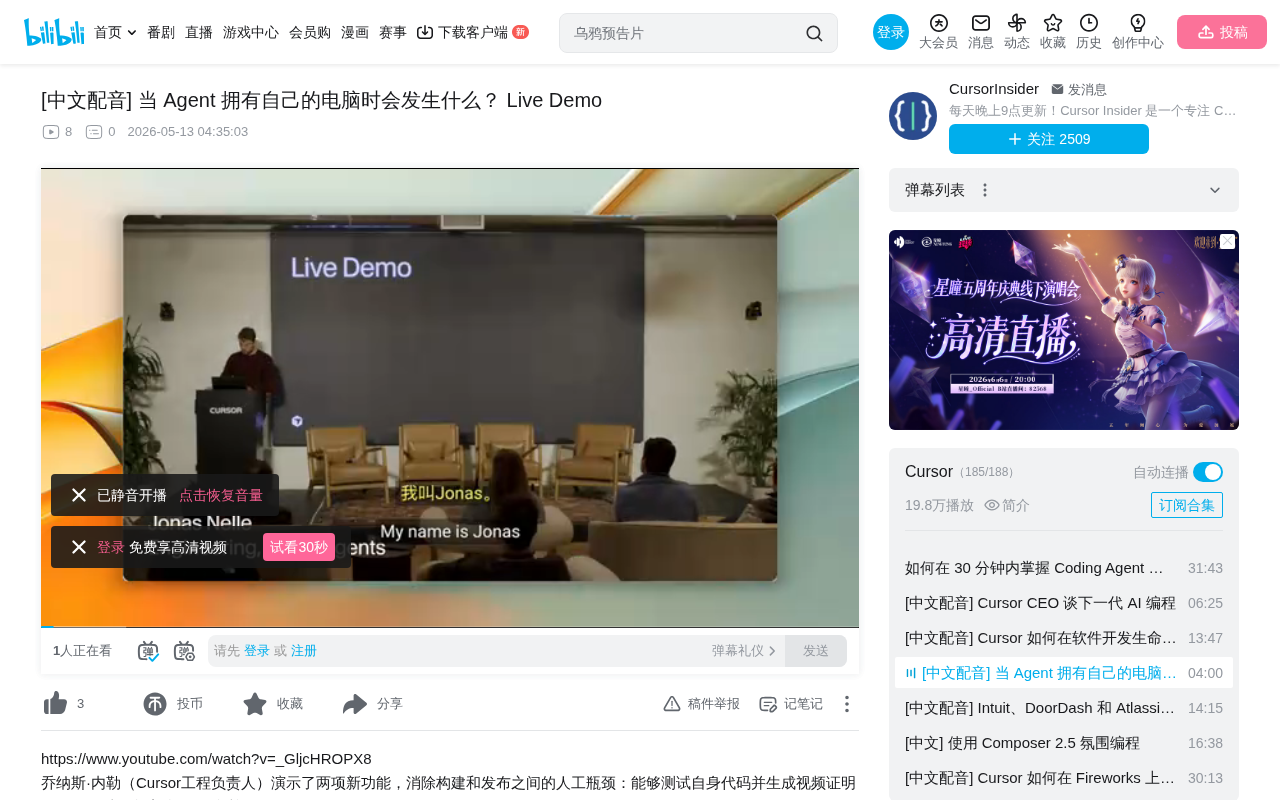
Cursor Cloud Agent Demo: Eliminating Bottlenecks Across the Entire Software Development Lifecycle
Deep analysis of Cursor's Cloud Agent demo showing how cloud VMs, automated test artifacts, and a full-chain control plane systematically eliminate human bottlenecks across the software development lifecycle.