Zero-Code Modding of a Naruto Minecraft Mod: A DeepSeek Hands-On Experience

Creator zero-code mods an open-source Naruto Minecraft mod with DeepSeek Harness, revealing AI's coding power and limits.
Bilibili creator 奔放加西马 used DeepSeek Harness to add skills like Kakashi's Raikiri, Sasuke's Amaterasu, and ranged Kamui to an open-source Naruto Minecraft mod without writing code, while having the AI fix a chain of bugs including faction conflicts, model misalignment, and Obito falling through blocks into the void. The article reconstructs the full process: setup only requires downloading, installing, entering an API key, and creating a workspace; the core workflow is describing requirements in natural language and shuttling between the finished package and source. The conclusion: AI is an efficient executor that can translate requirements into runnable code changes but doesn't understand the game engine's deep logic—zero-code isn't zero-debugging—and customization is limited to open-source mods, a hard legal and licensing prerequisite.
When AI can directly edit code, how far are ordinary players from "customizing their own game"? Bilibili creator 奔放加西马 gave a fairly convincing answer in a video: using DeepSeek Harness, he added a batch of new skills and new NPC behaviors to an open-source Naruto-themed Minecraft mod — without writing a single line of code — and even fixed a string of bugs he hadn't anticipated.
The Setup Barrier Is Lower Than Expected
The starting phase of the whole process is almost devoid of technical difficulty. The creator downloaded the appropriate version from the DeepSeekAd Harness official site, installed it, entered his API key, and created a new folder on the desktop as a workspace. That was the end of the setup.
The real working method is "describing requirements." He initially uploaded the mod's finished package, but later worried that the AI's support for decompilation wasn't stable enough, so he switched to a Zip source archive downloaded from GitHub. The AI output a pile of scattered source files, but those couldn't be directly dropped into the game, so he sent the finished package back and had the AI package and integrate all the new features. This back-and-forth is itself a very typical AI collaboration experience: the AI can do the work, but you're responsible for putting what it produces into the right container.
DeepSeek Harness and API Key
DeepSeek Harness is an AI coding assistant tool released by DeepSeek, in the form of a "command-line/desktop Agent": it doesn't just answer code questions — it can read and write files, run commands, and batch-modify source code within a user-authorized workspace directory. Such tools typically require an API key (an access credential for the large-model service) and are billed by usage or quota, so the creator's emphasis on "zero-cost starting point" is really "low-barrier trial."
Its key difference from a web-based chatbot is file system access: once the user puts the mod source into the workspace, the AI can directly read the entire project structure, locate class files, and generate patches. Only by understanding this can you see why the original repeatedly mentions "sending the finished package back to have the AI package and integrate it" — Harness's output is file changes, not an installable mod, and building must be completed manually or by delegating to the AI again.
Raikiri, Kamui, Amaterasu: How Skills Are "Spoken" Into Existence
The first set of skills the creator added to Kakashi Hatake revolves around Lightning Release. Raikiri requires charging; once charged, it thrusts in the direction of the crosshair, and a left-click hit deals massive damage, with a hit-detection range noticeably larger than a normal attack. The advanced version is "Raiden," where two clones release Raikiri and connect into a line — though no clones appear in the video, the thrust range is considerable.
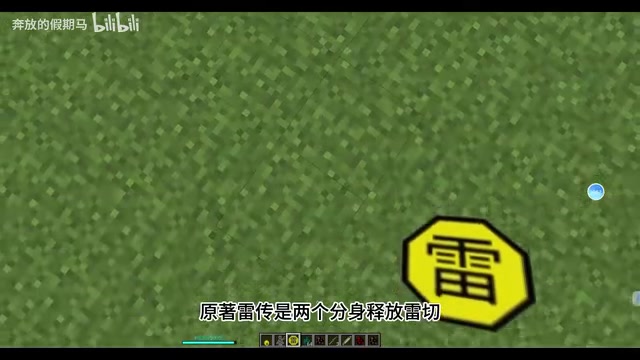
There's also a Lightning Release enchantment scroll: right-clicking to activate it gives any weapon — melee or ranged — a Lightning Release enchantment, greatly boosting lethality. Ranged Kamui works by holding Shift and pressing the phasing key twice, which can teleport a mob directly into the Kamui dimension; the player can enter too — in the video, you can see the enemy that was just teleported in.
Sasuke Uchiha's skills follow a "clan destiny" path: Black Eye Bullet is released with left-click, and any mob it touches is immediately burned to death by Amaterasu, leaving a pool of Amaterasu on the ground; Great Black Eye Bullet raises the power tier and expands the range, but the creator found that the Amaterasu left on the ground actually got smaller and that the launch detection had issues, saying on the spot that "I'll have to get the AI to fix this again." The Kagutsuchi Sword grants on left-click the effect that normally requires a full-body Susanoo, with attacks carrying Amaterasu; right-click fires three Black Eye Bullets. The most outrageous is the Amaterasu Array: left-click leaves a large circular pool of Amaterasu on the ground — simple, brutal area damage.
Interestingly, these skills didn't all come out right the first time. The creator repeatedly exposed problems during the demo — wrong hit-detection ranges, special effects at the wrong size — and then recorded them on the spot as items to fix. This rhythm of "using it while picking fault" is exactly what AI-assisted development really looks like.
The Chain of Bugs Exposed by NPC Testing Is the Real Point
After the skills were done, the creator spawned an Obito and a Kakashi to recreate the classic Kamui battle. The first test failed outright: the mod put the two in the same faction, so they wouldn't fight at all. After having the AI remove the faction setting, the two finally fought — but Obito's model was completely garbled.
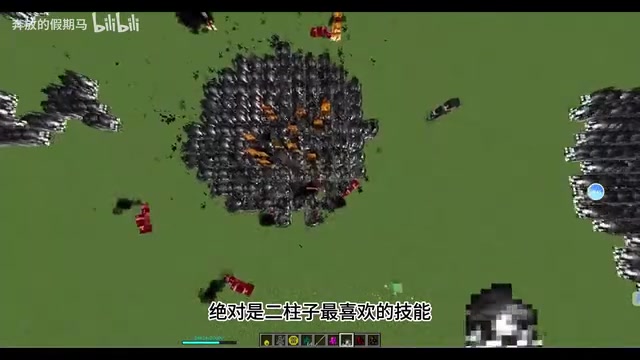
The fix process is telling. The creator opened the texture file downloaded from a skin site and gave it to the AI to apply to the model, but it was misaligned; after another AI fix, it was finally normal; then Naruto's model had problems, and another fix made it perfect.
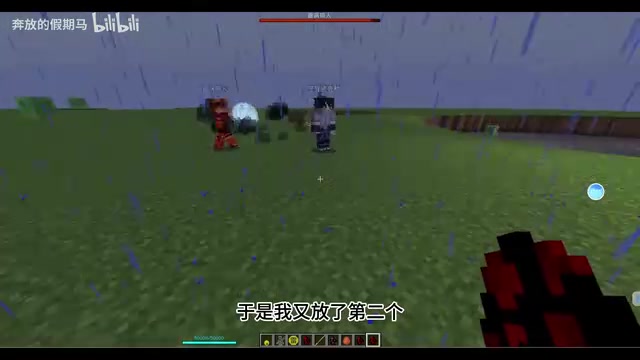
Combat testing was equally eventful. Naruto formed a Rasengan but threw a Rasenshuriken directly — the creator joked it "counts as better output"; with insufficient chakra, he ran out of mana after the shuriken and was beaten to death. Sasuke was one-shot by Naruto's Rasengan, and only the second one fought properly, and Susanoo's model had missing parts. Madara's combo, however, performed impressively — Great Fireball followed by subsequent ninjutsu, then Chibaku Tensei sealing the test hawk into the sky, and Shinra Tensei was confirmed to have been cast.
Obito's problems were the most convoluted. He first vanished after casting Dust Release: Dust Pillar, and the AI explained that Kamui phasing let him pass through blocks and fall into the void; after the fix he no longer vanished, but it turned into a "population-releasing" Wind Release effect entirely inconsistent with the original lore; the creator tested phasing by stabbing him with a kunai, found it didn't trigger, and had the AI revert the phasing. The AI's understanding of "phasing" was summed up by the creator as "directly turning invisible when touching the same thing" — obviously off, but at least it was made to work.
Kakashi and Obito's Kamui battle was equally chaotic: phasing, Great Fireball, and Water Bullet alternated, and in the end no one could tell who cast Dust Release — and it seemed Kakashi still lost.
The Team System and Entity AI
The original's "the mod put the two in the same faction, so they wouldn't fight" corresponds to Minecraft's vanilla Scoreboard Team mechanism: once entities are assigned to the same team, they won't attack each other by default, and attributes like friendly fire and name color can be configured. Mod authors often use this to control NPC hostility.
"Obito passing through blocks and falling into the void" relates to how Kamui phasing is implemented: if "phasing" is simply implemented as disabling collision detection, the entity loses block support and, under gravity, passes through the ground and falls into the void at the bottom of the world (the blank area below the Y axis). The correct approach is usually to keep collision but cancel damage detection, or to lock coordinates during phasing. As for "phasing not triggering," it's often because the condition was written as "turn invisible when colliding with the same entity," and a kunai is a thrown projectile entity — a type mismatch naturally can't trigger it. This precisely confirms what the original says: the AI's understanding of the mechanic stays at the literal level.
Where the Real Boundaries of AI Code Editing Lie
The most valuable part of this video isn't the flashy skills but a line the creator repeatedly emphasized: you can only customize open-source mods. This is both a legal and licensing bottom line, and it points to the realistic positioning of AI-assisted development — it's an efficient "executor" that can translate natural-language requirements into runnable code changes, but it doesn't automatically understand the deep logic of the game engine. Model misalignment, detection anomalies, and faction conflicts still have to be found, described, and verified by a human.
From the experience, DeepSeek Harness's performance on such tasks is "it can run, but needs multiple rounds of polishing." The creator also admitted that there are still many hardcore techniques not covered in the video, and that if viewer feedback is positive, he'll make a from-scratch pitfall-avoidance tutorial specifically on how to make the AI "obey."
For ordinary players, the significance is the collapse of the barrier: in the past, modding required knowing Java and Minecraft's registration mechanisms; now you can at least get the AI to run the first version, then gradually approach the effect you want amid errors and clipping. Zero-code doesn't mean zero debugging, but it does turn "I want to add my own skill too" from a fantasy into something you can try out over a weekend.
Open-Source Licenses and the Legal Boundaries of Mod Distribution
The original's emphasis that "you can only customize open-source mods" rests on the practical constraints of software licenses. Common Minecraft mod licenses include MIT, GPL, LGPL, and custom terms: GPL-family licenses require derivative works to be open-sourced as well, while MIT allows modified closed-source distribution but usually requires retaining the copyright notice. If a mod declares no license, all rights are reserved by default, and modification and redistribution may infringe.
In addition, Mojang's "Minecraft Usage Guidelines" impose extra restrictions on monetization and paid distribution of mods. So "using AI to modify mods" is technically feasible, but legally depends on whether the source is public and whether the license permits derivative works. For ordinary players, this means you should first check the target mod's LICENSE file; private modifications for your own play without distribution carry the lowest risk.
Background Supplement
The Tech Stack of Minecraft Mod Development
Minecraft mods are usually written in Java, rely on mod loaders like Forge or Fabric, and inject new items, blocks, entities, and skill logic into the game through registration mechanisms. A skill often involves multiple steps: registering the skill entry, writing trigger conditions (keybinds, charge states), determining hit ranges (hitbox detection), playing particles and sounds, and syncing client and server state.
Descriptions in the original like "hit-detection range larger than a normal attack" and "leaving a pool of Amaterasu on the ground" correspond to hitbox size, entity spawning, and persistent damage area (AOE) implementation. "Garbled models" and "missing Susanoo model" involve the binding between model files (.json) and textures (.png) in resource packs — a model consists of multiple bone parts, and textures are mapped onto parts by UV coordinates; once the mapping table doesn't match the model structure, misalignment occurs. These are precisely the parts AI struggles to get right in one go and that require a human to point out the specific symptom before they can be corrected.
One-line Summary
A creator uses DeepSeek Harness to add skills to an open-source Naruto mod with zero code, revealing both the power and the limits of AI code editing.
Related articles

Abnormal Error Rate Spike in Claude Mythos 5.2 and Fable 5.2
Claude Mythos 5.2 and Claude Fable 5.2 show an abnormal spike in request error rates, marked as investigating on the official status page. This article covers the incident overview, practical impact on developers, and recommended responses.

ReAct Runtime Context Trimming: Why Claude Code Acts at 70%
A deep dive into ReAct runtime context trimming: why Claude Code compresses at ~70% usage, why tool calls dominate, why messages must be dropped in pairs, and why codebases don't need RAG.

AI Agent vs LLM: How Cursor and Claude Code Actually Work
An in-depth analysis of the essential difference between AI Agents and LLMs: LLMs generate code suggestions, while Agents modify files and run tests via tool calls. Using a Spring Boot bug fix as an example, it breaks down the workflows, permission control, and verification mechanisms of Cursor and Claude Code.