Zero to Vibe Coding in Seven Days: A Complete Beginner's Guide to AI Programming

A structured six-step guide for beginners to learn Vibe Coding and build products with AI.
This comprehensive guide breaks down Vibe Coding into six actionable steps for complete beginners. It covers the three major AI programming tools (Claude Code, Cursor, Codex), prompt engineering techniques, hands-on project practice, advanced multi-tool workflows, and large-scale project strategies — helping readers build a complete framework for AI-powered software development.
What Is Vibe Coding: From Writing Code to Building Products with AI
If you've been hearing terms like "Vibe Coding" and "AI programming" everywhere but haven't found a way in, this article is worth reading through. At its core, Vibe Coding isn't about learning which buttons to press in some AI programming tool — it's about truly mastering the ability to deliver products and get real work done with AI.
The term "Vibe Coding" was first coined by Andrej Karpathy (former Tesla AI Director and OpenAI co-founder) in early 2025. On social media, he described a completely new way of programming: developers fully immerse themselves in the "vibe," building software through natural language conversations with AI, with almost no manual code writing required. The concept quickly sparked widespread discussion in the tech community because it fundamentally challenges the necessity of "writing code" — the central act of traditional software development.
This represents a critical shift in mindset. Many beginners think of AI programming as "finding a tool to type code for me," which often leads them into three typical traps: they can't figure out the tools, the AI-generated output is poor quality, or worse — the AI makes a mess of their local development environment. When these problems stack up, countless newcomers give up in frustration before they've truly even started.
The essence of Vibe Coding is transforming the human role from executor to director and product designer. You don't need to become a programmer first, but you must develop a methodology for collaborating with AI — knowing how to describe requirements, how to break down tasks, and how to verify results. This is a point this tutorial emphasizes repeatedly: before having AI write code, get the entire workflow sorted out first.
From a broader perspective of technology history, software development has undergone multiple abstraction-level leaps — from machine language, to assembly, to high-level programming languages, to visual programming. Each leap lowered the barrier to creating software while changing the core competencies developers needed. Natural language programming can be seen as the latest link in this evolutionary chain. The rise of Vibe Coding means the core capability for software creation is migrating from "mastering syntax and algorithms" to "mastering requirements expression and system design."
Why Beginners Often Fail: Three Common Pitfalls
Before diving into the learning path, it's worth reviewing the most common mistakes beginners make. Understanding "why people fail" is often more instructive than "how to succeed."

Pitfall #1: Tool misuse. Claude Code, Codex, Cursor, and other tools each excel in different scenarios. Beginners often try to solve every problem with a single tool, ending up with twice the effort and half the results. Choosing the right tool is a prerequisite for efficient collaboration. Specifically, Cursor is an AI-native editor built on top of VS Code, developed by Anysphere. Its core capability lies in deeply integrating large language models into the code editing workflow, supporting Tab auto-completion, inline editing, and multi-file context awareness. Claude Code is a command-line AI programming tool from Anthropic that runs in the terminal, directly reads project file structures, and executes code operations — excelling at understanding contextual relationships in large codebases. Codex is OpenAI's programming agent that supports autonomous code execution, test running, and change commits in a cloud sandbox, making it suitable for parallel processing of multiple independent tasks. These three represent three distinct interaction paradigms for AI programming: IDE-integrated, terminal-conversational, and cloud-autonomous. Understanding these differences is key to making the right tool choice for different scenarios.
Pitfall #2: Vague prompts. With requests like "build me a website," the AI can only guess. When the generated output is poor, the root cause often isn't the model's capability but rather the lack of structure and constraints in the requirement description. Prompt quality directly determines AI output quality. Prompt Engineering has evolved from an informal collection of tips into a systematic discipline, with theoretical foundations traceable to research in Human-Computer Interaction (HCI) and information retrieval. In AI programming contexts, a high-quality prompt is essentially a structured requirements specification — it shares striking similarities with a PRD (Product Requirements Document) in software engineering. Both academia and industry have identified multiple effective prompting strategies, including Few-shot (few-shot examples), Chain-of-Thought (reasoning chains), and Role-playing, all of which are equally applicable in Vibe Coding.
Pitfall #3: Lack of engineering discipline. Letting AI make sweeping changes directly in your local environment — without version control, without isolated environments — means a single mistake can "turn your computer into a mess." While these seem like technical issues, they're fundamentally symptoms of missing methodology. This involves two foundational software engineering practices: version control and environment isolation. Git is currently the most widely used distributed version control system, allowing developers to snapshot every code change and roll back to a previous state whenever problems arise. In AI programming scenarios, Git's importance is amplified further — because AI-generated code is inherently unpredictable, creating a new branch before each AI modification is essentially giving yourself an escape route. Environment isolation is typically achieved through Docker containers, virtual environments (like Python's venv), or cloud development environments (like GitHub Codespaces), ensuring that AI operations don't pollute your local system configuration.
Six-Step Learning Path: A Complete Breakdown from Zero to One
This tutorial breaks Vibe Coding down into six progressive steps, forming a replicable growth path. Whether you're a complete beginner or an experienced developer looking to transition into AI development, you can follow this framework step by step.
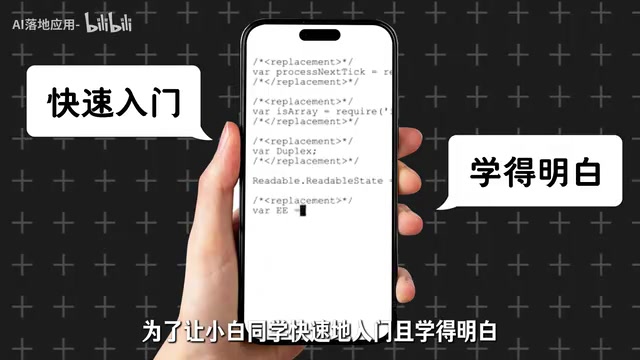
Step 1: Master the Core Tools
Start with the three major AI programming tools — Claude Code, Codex, and Cursor — and understand each one's positioning and operational logic. Cursor leans toward an integrated editor experience, ideal for getting real-time AI assistance within an IDE. Claude Code excels at conversational code understanding and generation, handling complex logic well. Codex stands out for specific programming tasks. Mastering the tools is the foundation, but definitely not the finish line.
It's worth noting that all three tools rely on large language model (LLM) capabilities under the hood, but their interaction methods and applicable scenarios differ significantly. Cursor embeds AI capabilities into the editor environment developers are most familiar with, reducing switching costs. Claude Code uses the terminal as its interface, making it better suited for complex tasks requiring deep understanding of project structure. Codex achieves true "AI autonomous execution" through cloud sandboxes, allowing developers to dispatch multiple tasks for parallel processing. Beginners are advised to start with Cursor since its visual interface is the most intuitive, then gradually try Claude Code and Codex for more complex scenarios.
Step 2: Learn to Write High-Quality Prompts
This is the make-or-break skill for Vibe Coding. Good prompts need to contain four elements: a clear objective, necessary context, constraints, and the expected output format. The more structured your requirement description, the higher the quality of AI output. Training this skill is essentially developing "product manager-style" communication abilities — clear, specific, and verifiable.
Here's a concrete example to illustrate the gap: a vague prompt would be "build me a login page," while a high-quality prompt would be "Create a login page using React and Tailwind CSS, with email and password input fields, supporting form validation (email format check, password minimum 8 characters). The login button should show a loading state on submission. The overall style should reference Linear's design language, using a dark theme." The latter provides constraints across multiple dimensions — tech stack, feature details, interaction behavior, and visual reference — enabling the AI to produce far better output. Mastering this kind of structured expression is the most critical "hard skill" in Vibe Coding.
Step 3: Pick a Small Project and Start Building
Theoretical learning must translate into practice. Through a small but complete project — such as a utility website or a small app — tie together your tool usage and prompting techniques into an end-to-end experience. The project doesn't need to be complex, but it must cover the entire process from requirements to deployment.
The keyword here is "complete," not "complex." A calculator, a to-do list, a personal resume page — these seemingly simple projects actually cover the full lifecycle of requirement definition, UI design, logic implementation, testing, and deployment. I recommend choosing a tool you'd actually use in your daily life as your practice project — this way you have clear requirements to reference and motivation for continuous iteration. Through this process, you'll experience firsthand what AI is good at, what it struggles with, and where human judgment needs to step in.
Advanced Techniques and Large-Scale Project Practice
Once you've got the basics down, the focus shifts to "how to do it better and bigger."
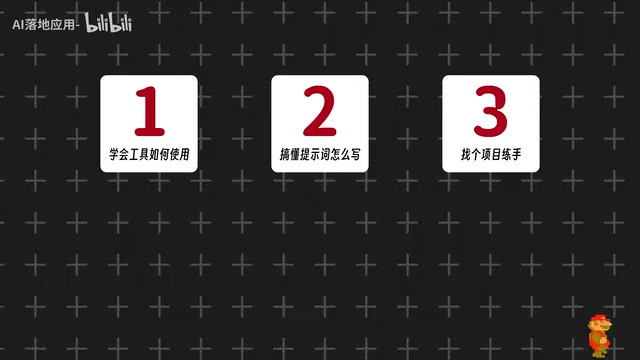
Step 4: Unlock Advanced AI Programming Techniques
This stage expands into various advanced techniques: how to make multiple AI tools work together, how to use AI for complex debugging and refactoring, and how to leverage automated workflows to boost efficiency. These "power moves" can significantly amplify the leverage of AI programming, letting you deliver higher-quality results in less time.
Multi-tool orchestration is one of the most worthwhile directions to explore at the advanced stage. For example, you can use Claude Code to analyze an existing codebase's architecture and develop a refactoring plan, then execute the specific code changes in Cursor, and finally use Codex to run automated tests in a cloud sandbox to verify the changes didn't introduce new issues. Another powerful advanced technique is using "Rules Files" — creating a file in the project root directory that defines code style, architectural conventions, and tech stack requirements. AI tools reference these rules every time they generate code, ensuring project consistency. This practice is essentially equivalent to establishing coding standards in team development, except your "team members" are AI.
Step 5: Take On a Large-Scale Project
Small projects validate methodology; large projects test comprehensive ability. In this step, learners need to handle more complex requirement decomposition, modular design, and multi-iteration cycles. This is also the phase closest to real-world work scenarios, testing your ability to treat AI as a team member — assigning tasks, reviewing output, and continuously optimizing.
The leap from small projects to large-scale projects isn't just an increase in code volume — it's a qualitative change in system complexity. In software engineering, this involves architectural design (such as frontend-backend separation, microservices architecture), state management, database design, API interface specifications, and multiple other dimensions. As project scale grows, the biggest challenge AI tools face is context window limitations — the amount of text a large language model can process at once is finite, making it impossible to "see" an entire large codebase simultaneously. Therefore, learners need to master modular decomposition: breaking large systems into relatively independent sub-modules, having AI handle one module's tasks at a time, then combining modules through clearly defined interfaces. This capability is essentially the core skill of a software architect, and the Vibe Coding era gives non-professional programmers the opportunity to develop this systematic thinking through practice.
Step 6: Distill Your Own Best Practices
The tutorial concludes with battle-tested insights accumulated from real-world experience — lessons typically summarized only after stumbling through countless pitfalls. From choosing project architecture to the subtle art of communicating with AI, these best practices help learners avoid common detours and reach the level of independently delivering products faster.
The value of these best practices lies in the fact that they typically can't be found in official documentation. For instance, "before having AI refactor code, first have it write a functional description document of the current code" — this seemingly redundant step actually helps the AI build complete contextual understanding, preventing the loss of important business logic during refactoring. Another example: "don't include more than three core requests in each AI interaction" — this rule comes from the tendency of large language models to lose focus when processing multiple instructions. These subtle but critical pieces of practical wisdom are often what separates AI programming beginners from experts.
Final Thoughts: The Right Mindset for the AI Programming Era
The rise of Vibe Coding marks a shift in software development from "manually writing code" to "human-AI collaboration for building products." For beginners, this represents both a lowered barrier to entry and a restructuring of required capabilities — you don't need to master syntax, but you must know how to express ideas clearly, how to systematically decompose problems, and how to verify and iterate.
History has repeatedly shown that raising the abstraction level doesn't make understanding the fundamentals worthless — people who understand basic computer science principles tend to make better decisions when using high-level tools. Similarly, in the Vibe Coding era, those with basic knowledge of how software works (even just understanding the division between frontend and backend, or knowing what a database does) demonstrate a clear advantage when collaborating with AI. This isn't contradictory — Vibe Coding lowers the barrier for "coding execution," not for "systems thinking."
This tutorial's "seven-day intensive" positioning is less about quickly mastering three tools and more about rapidly building a mental framework for AI collaboration. Tools will keep updating and evolving, but methodology has a much longer shelf life. For those looking to capitalize on the AI programming wave, rather than rushing to pick up tools, it's better to first take the time to walk this zero-to-one path on solid ground.
Key Takeaways
Related articles
Zero-Dependency AI Memory Layer: Agent Memory Without a Vector Database
Explore zero-dependency AI Agent memory layers that work without vector databases. Compare with traditional RAG architectures and learn when lightweight alternatives make more sense.
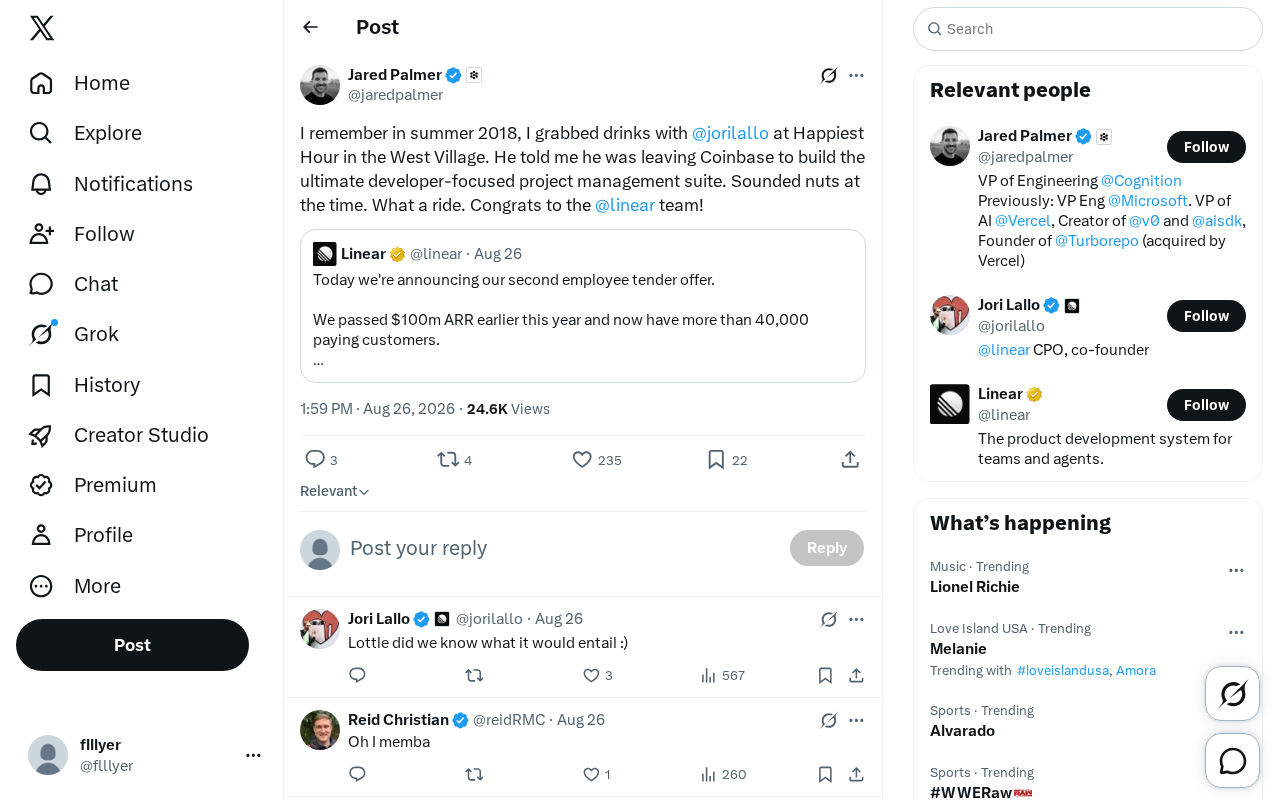
The Linear Startup Story: From Leaving Coinbase to Redefining Developer Tools
How Linear co-founder Jori Lallo left Coinbase in 2018 to build a developer-first project management tool, defying skeptics to carve out success in a market dominated by Jira, Asana, and Trello.
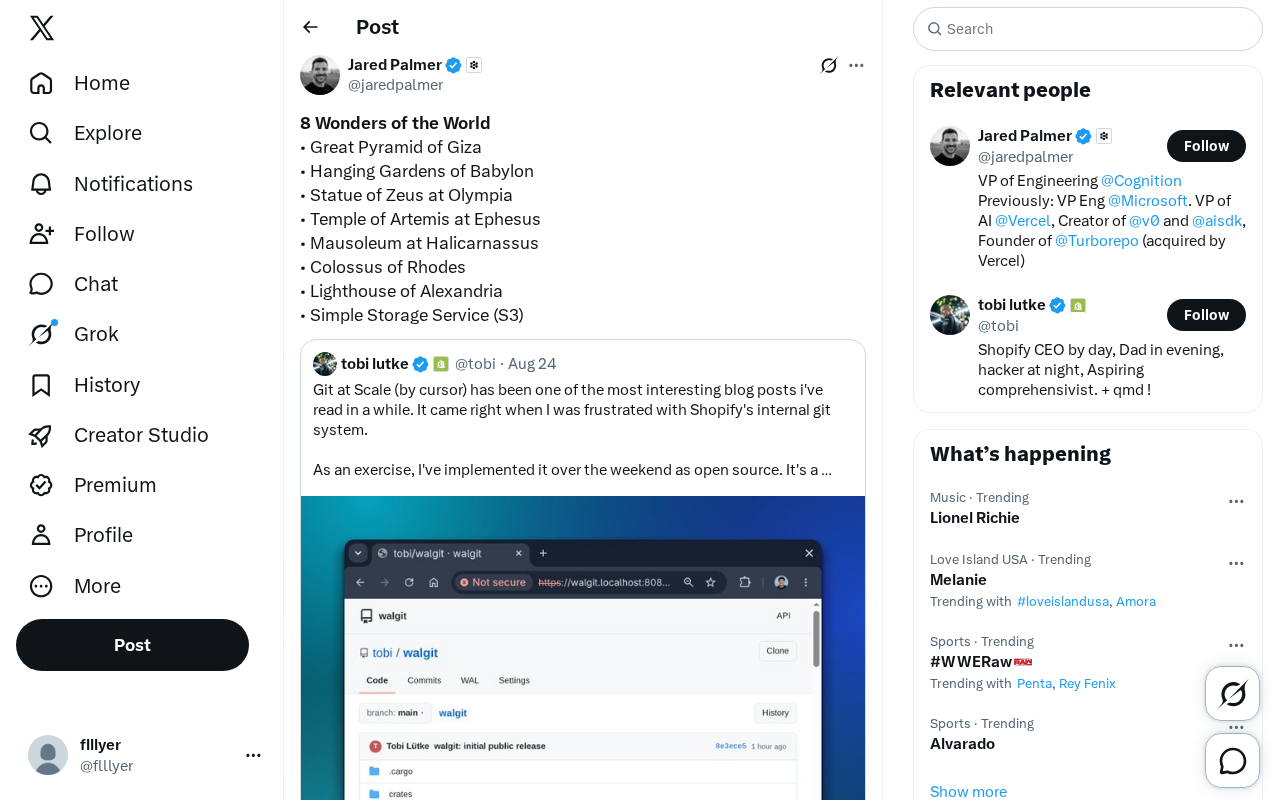
Why Is AWS S3 Called the Eighth Wonder of the World? The Invisible Power of Cloud Storage
A viral tweet listed AWS S3 as the Eighth Wonder of the World. Explore how S3's eleven 9s durability and architectural ubiquity make it the invisible cornerstone of modern digital civilization.