ZeroClaw vs OpenClaw In-Depth Comparison: How to Choose Between Lightweight AI Agent Frameworks

In-depth technical comparison of ZeroClaw and OpenClaw AI Agent frameworks
This article compares the mature Node.js-based OpenClaw framework with the emerging Rust-based ZeroClaw. ZeroClaw achieves roughly a 1000x memory advantage (5-8MB vs 1-2GB) through its static binary design, delivers faster response times, and can run on $10 hardware — ideal for edge computing scenarios. However, it suffers from critical UX shortcomings: skill installation involves WASM concepts, permission approval is tedious, and the ecosystem is immature. OpenClaw, meanwhile, offers a well-established Claw Hub ecosystem and advanced features like Heartbeat.
Introduction: A New Challenger in AI Agent Frameworks
An AI Autonomous Agent Framework is a type of software architecture that enables large language models (LLMs) to autonomously plan, invoke tools, and execute multi-step tasks. Unlike simple chatbots, Agent frameworks give AI the ability to run continuously, perceive its environment, call external APIs, and manage memory. Since 2023, with the leap in capabilities of models like GPT-4, Agent frameworks have experienced explosive growth, with notable projects including AutoGPT, LangChain, and CrewAI. The core challenge for these frameworks is: how to control the framework's own resource overhead and runtime stability while preserving AI reasoning capabilities.
In this space, OpenClawAd is already a mature player — boasting 236K GitHub stars and 430K lines of TypeScript code. Just two weeks ago, however, a new project called ZeroClaw burst onto the scene, rapidly attracting over 20K stars with its ultra-lightweight design written in Rust that requires only a few MB of memory.
What are the fundamental differences between these two AI Agent frameworks? Is ZeroClaw worth migrating to from OpenClaw? This article provides an in-depth comparison across three dimensions: technical architecture, hands-on experience, and use case suitability.
Technical Architecture Comparison: Node.js Runtime vs Rust Static Binary
The Fundamental Difference in Execution Models
OpenClaw is written in TypeScript and runs on a Node.js process. Node.js uses a dynamic runtime model: the program requires the Node.js engine to interpret and execute JavaScript bytecode at runtime, while V8's JIT compilation, garbage collection (GC), event loop, and other infrastructure continuously consume memory. Node.js has a minimum memory baseline of typically 30-50MB, and when you add application code and npm dependencies, complex Agent frameworks easily exceed 1GB. As a runtime environment, Node.js must run continuously and depends on the host system — meaning higher resource consumption and more complex dependency management.
ZeroClaw, on the other hand, is written in Rust and compiles to a static binary. A static binary is a technique that packages the program code and all dependency libraries into a single executable file during the compilation phase. It requires no virtual machine or interpreter at runtime, and memory usage is limited to what the actual business data needs. It's a fully self-contained executable with all runtime dependencies built in, requiring no external environment support. This is the fundamental reason ZeroClaw can compress memory usage down to 5-8MB, and the technical essence behind the roughly 1000x memory gap between the two.
Real-World Resource Usage Comparison
| Metric | OpenClaw | ZeroClaw |
|---|---|---|
| Minimum RAM | 1-2GB | 5-8MB |
| Recommended RAM | 4-8GB | Tens of MB |
| Recommended Hardware | Mac Mini / Raspberry Pi 5 | $10-30 small dev boards |
| Data Storage | Markdown files | Database |
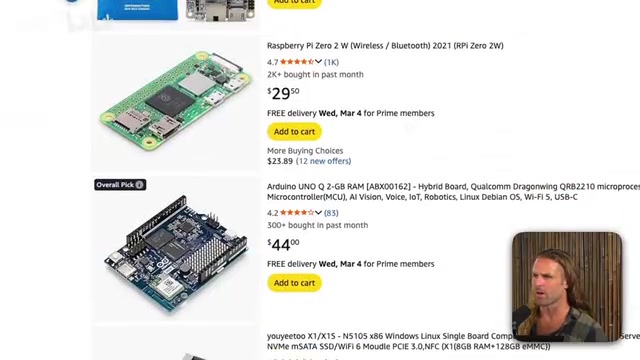
This gap represents approximately a 1000x difference in memory usage. ZeroClaw claims it can run on $10 hardware, such as BeagleBone and other micro ARM development boards. ARM dev boards like the BeagleBone Black and Raspberry Pi Zero 2W represent the typical hardware form factor for edge computing. Deploying AI Agents on these devices enables offline operation, low-latency responses, and local data processing — suitable for industrial IoT, smart home, off-grid environments, and other scenarios. This aligns closely with the rising trend of "on-device AI." OpenClaw, by contrast, requires at least a $100 Raspberry Pi 5 to run smoothly.
Hands-On Installation and Usage Testing
Installation Process: Deploying ZeroClaw with OpenClaw
An interesting test approach: use OpenClaw to install ZeroClaw. Paste ZeroClaw's GitHub repository URL into an OpenClaw instance running Claude Opus 4.6 and let it automatically complete the installation and deployment inside a Docker container.
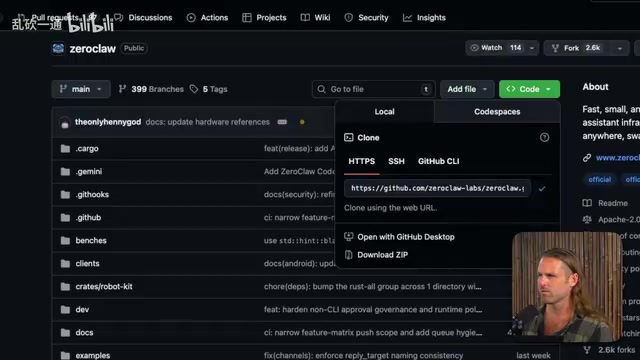
Since ZeroClaw needs to be compiled from source into a Rust binary, the installation process takes quite a while, but it ultimately completes successfully. ZeroClaw's security design philosophy centers on strict sandbox isolation, making Docker a sensible choice.
API Compatibility Configuration
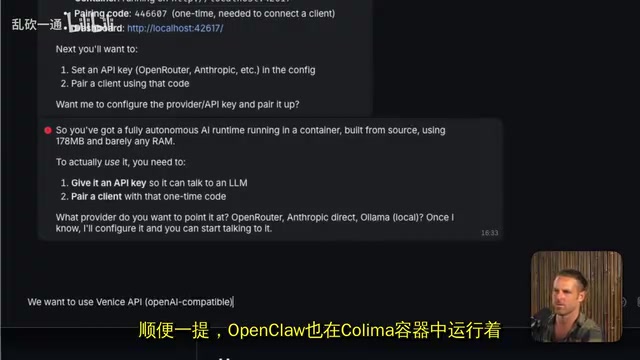
In testing, the Venice API (an OpenAI-compatible interface) was used to drive ZeroClaw. Although ZeroClaw doesn't natively support Venice, its OpenAI-compatible nature allows integration through simple code modifications. This demonstrates the workflow advantage of using an Agent to configure another Agent.
Response Speed: The Rust Framework Is Noticeably Faster
Once configured, ZeroClaw running Claude Sonic 4.6 via Telegram showed noticeably faster response times compared to OpenClaw. While the LLM's own inference time remains the same, the framework-level processing latency is significantly reduced — this is the natural advantage of Rust static binaries over the Node.js runtime: Rust completes all optimizations at compile time, eliminating the extra latency caused by runtime interpretation and garbage collection.
Critical Shortcomings in User Experience
Skill Installation: The Developer Barrier Is Too High
This is ZeroClaw's biggest problem right now. When attempting to install a third-party marketing skill pack, a series of frustrating experiences emerged:
- WASM Concept Barrier: Skill installation involves WebAssembly (WASM) concepts, which are extremely unfriendly to non-developers. WebAssembly is a W3C-standardized low-level bytecode format. ZeroClaw uses it as a plugin sandbox isolation mechanism — each skill pack is compiled into an independent .wasm file that runs in a restricted memory sandbox, providing extremely high security. However, it requires developers to configure the Rust toolchain and understand WASM module interfaces and other low-level concepts, creating a significant technical barrier.
- File Format Limitations: Skill packs cannot be installed directly via zip files.
- Tedious Permission Approval: Even just reading a Markdown file requires going through a complex permission approval process.
- Insufficient Intent Recognition: After directly pasting skill content, the system fails to automatically recognize user intent.
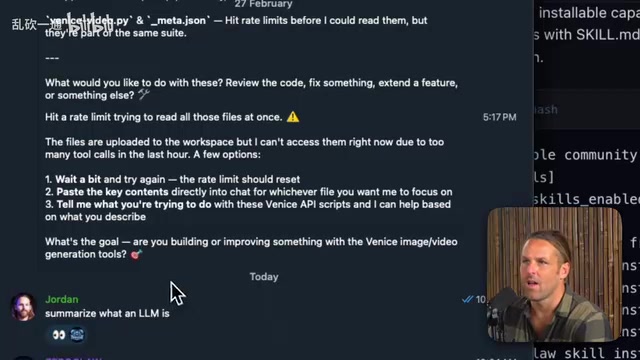
By comparison, OpenClaw has the Claw Hub ecosystem with one-click skill pack installation, offering a far superior user experience to ZeroClaw.
Feature Completeness Comparison
OpenClaw's core advantages include:
- Heartbeat Mechanism: Autonomous heartbeat detection and proactive behavior triggering. Heartbeat is a critical design for achieving "proactivity" in Agent frameworks — the framework periodically fires internal heartbeat events, allowing the AI to proactively check task status, execute scheduled logic, and send proactive notifications without external input. This is what distinguishes a "chatbot" from an "autonomous Agent."
Related articles
 Product Reviews
The Programmer's Desk Setup Guide: Building a Workspace That Feels Like Home
Discover how programmers build productive, comfortable workspaces. From multi-monitor setups to ergonomic design, explore the desk philosophy that drives focus and flow.
 Product Reviews
Qoder vs Cursor Real-World Comparison: Which $20/Month AI IDE Is Better?
Hands-on comparison of Qoder vs Cursor AI IDEs: Agent autonomy, human interaction count, and architecture decisions. Qoder needed only 2 interactions vs Cursor's 8.
 Product Reviews
Cursor Cloud Agent Demo: Eliminating Bottlenecks Across the Entire Software Development Lifecycle
Deep analysis of Cursor's Cloud Agent demo showing how cloud VMs, automated test artifacts, and a full-chain control plane systematically eliminate human bottlenecks across the software development lifecycle.