ZGCM-1: How a Fully Open-Source 7B Model Challenges Hundred-Billion-Parameter Giants with Tool Calling
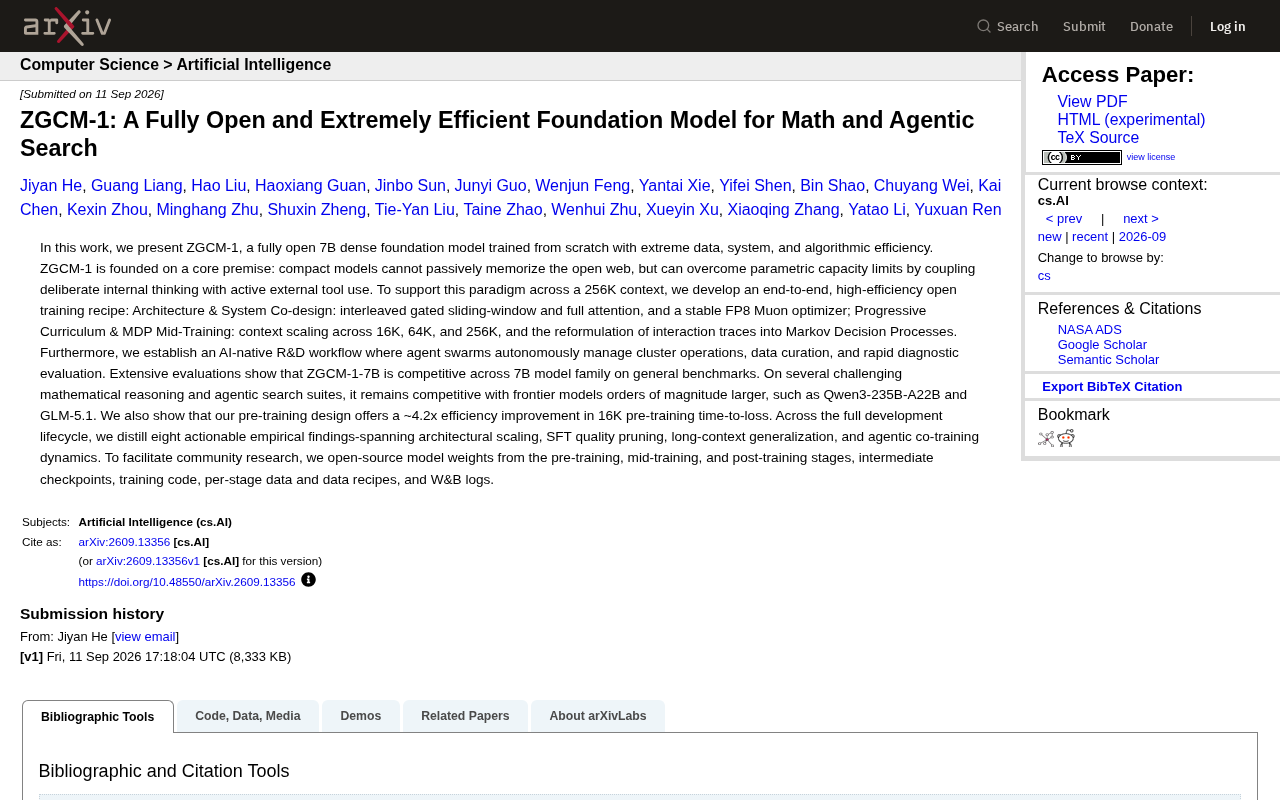
ZGCM-1: a fully open 7B model that uses reasoning + tool calling to challenge hundred-billion-parameter giants.
ZGCM-1 is a fully open-source 7B dense base model built on the premise that small models should actively use external tools and deep reasoning rather than passively compress vast knowledge. It features interleaved sliding-window and full attention for 256K context, a stable FP8 Muon optimizer achieving ~4.2× training efficiency, progressive curriculum learning, and MDP-based tool-call mid-training. ZGCM-1-7B competes with Qwen3-235B-A22B and GLM-5.1 on math reasoning and agentic search, while releasing full weights, intermediate checkpoints, training code, data recipes, and W&B logs.
Small Models, New Strategy: Think and Use Tools Instead of Memorize
The parameter arms race has conditioned us to accept "bigger is better" as gospel truth. ZGCM-1 challenges this with a counterintuitive premise: compact models cannot passively memorize the entire open web, but they can break through their natural parameter capacity limits by tightly coupling "deliberate internal reasoning" with "active external tool calling."
This is a fully open-source, 7-billion-parameter dense base model trained from scratch, with a laser focus on efficiency across data, systems, and algorithms. The question it sets out to answer is straightforward: if a 7B model learns how to "look things up" and "use tools," can it match frontier models orders of magnitude larger on specific tasks?
Based on the evaluation results in the paper, the answer is surprisingly encouraging. On two challenging task categories — mathematical reasoning and agentic search — ZGCM-1-7B holds its own against behemoths like Qwen3-235B-A22B and GLM-5.1.
Architecture and System Co-design
Getting a small model to run fast and reliably takes more than tuning hyperparameters. ZGCM-1 introduces two key architectural decisions.
The first is interleaved gated sliding-window and full attention. This hybrid attention mechanism uses the lower-cost sliding-window attention for local information in most layers, while reserving full attention in key layers to capture long-range dependencies. The result: 256K ultra-long context support without blowing the compute budget.
The second is a stable FP8 Muon optimizer. FP8 low-precision training dramatically improves throughput and reduces memory usage, but stability has always been the Achilles' heel. ZGCM-1 combines the Muon optimizer with FP8 while maintaining training stability — a pragmatic engineering achievement.
The payoff from this co-design is concrete efficiency gains: the paper reports approximately a 4.2× time-to-loss efficiency improvement over the baseline at 16K context pretraining — meaning the model reaches the same loss in roughly one-quarter the training time.
Sliding-window attention works by computing attention weights for each token only within a fixed-size neighborhood (e.g., the surrounding 4,096 tokens) rather than against every token in the sequence. This reduces complexity from the standard Transformer's O(n²) to O(n·w) (where w is the window size), yielding significant savings on long sequences — at the cost of no single layer being able to directly capture dependencies beyond the window. The interleaved design elegantly addresses this: sparse layers handle local semantic coherence, while periodically interspersed full-attention layers capture document-level associations (e.g., a question posed at the start and its answer at the end). The two types work in tandem, balancing efficiency and capability.
FP8 precision means representing model parameters and gradients in 8-bit floating point rather than the more common BF16/FP16. Memory usage is halved and matrix operation throughput is doubled — but the dynamic range of 8 bits is extremely narrow, making gradients prone to overflow or underflow, which has historically made this kind of training highly unstable. Pairing it with the Muon optimizer (a second-order momentum optimizer based on matrix orthogonalization that is insensitive to gradient scale) is ZGCM-1's key engineering solution to this tension.
Progressive Curriculum and MDP Mid-Training
Long-context capability isn't built in a single step. ZGCM-1 uses progressive curriculum learning, expanding context length in stages — 16K → 64K → 256K — letting the model gradually adapt to longer sequences rather than forcing it into ultra-long contexts from day one.
Even more interesting is how it handles interaction trajectories. The process of an agent interacting with tools is reformulated as a Markov Decision Process (MDP) and addressed during the mid-training phase. This means the model isn't simply imitating a text sequence of tool calls; it's learning, within a framework with state transitions and decision structure, when to reason, when to invoke a tool, and how to adjust based on feedback. This modeling approach lays the foundation for subsequent agentic co-training.
Markov Decision Process (MDP) is the standard formalization framework for reinforcement learning, consisting of a state space S, action space A, transition function, and reward function. Modeling tool-call trajectories as an MDP means: at each step, the model observes the current "state" (existing context + tool return results), selects an "action" (continue reasoning, invoke search, invoke a calculator, etc.), and receives a reward signal based on final task completion. The key difference from traditional supervised fine-tuning (SFT) is this: SFT treats tool calling as a fixed text sequence to imitate, with no modeling of why a call happens at that point; the MDP framework explicitly preserves the temporal decision structure, enabling the model to learn conditional policies — knowing when to stop searching upon seeing certain intermediate results, or when to run a second verification. This is a defining design difference between ZGCM-1 and simple "tool-augmented fine-tuning."
An AI-Native Development Pipeline
One easily overlooked but forward-looking aspect of ZGCM-1 is the AI-native research and development workflow it establishes. In this pipeline, agent swarms autonomously manage cluster operations, data curation, and rapid diagnostic evaluation.
In other words, parts of the model training process itself are handed off to agents. This reflects an emerging trend: as model capabilities improve, various stages of model development — from data cleaning to experiment diagnostics — are shifting from labor-intensive human work toward AI-assisted or even AI-led processes. For teams pursuing maximum efficiency, this kind of automated R&D is a powerful lever for cost compression.
The agent swarms in an "AI-native development pipeline" refers to an architectural pattern where multiple specialized AI agents collaborate concurrently to accomplish a single high-level objective. In ZGCM-1's context, these agents take on distinct roles: cluster health monitoring (detecting GPU failures, training divergence, and other anomalies), data quality curation (automatically filtering low-quality corpora and identifying data distribution shifts), and rapid ablation evaluation (validating the effects of hyperparameter changes on small-scale proxy experiments). The practical benefit is compressing human decision latency: in traditional training, engineers must manually analyze logs and trigger reruns, whereas automated swarms can diagnose issues and execute fixes within minutes. For resource-constrained teams, freeing engineering capacity from operational monitoring to focus on core algorithmic iteration is a meaningful efficiency multiplier.
Performance Results and Eight Empirical Lessons
The evaluation results are the most compelling part of this work. On general benchmarks, ZGCM-1-7B is competitive within the 7B model family; on several challenging mathematical reasoning and agentic search suites, it can go toe-to-toe with frontier models orders of magnitude larger, including Qwen3-235B-A22B and GLM-5.1.
This validates the core hypothesis: on tasks that require "verify + reason," a small model that knows how to call external tools can partially bridge the knowledge storage gap that comes from having fewer parameters. That said, this competitiveness is primarily demonstrated on specific task types — general capabilities remain constrained by model scale, and that should be acknowledged honestly.
The paper also distills eight actionable empirical findings, covering architecture scaling, SFT data quality pruning, long-context generalization, and the dynamics of agentic co-training. For researchers hoping to reproduce or improve upon small model training, these insights may be just as valuable as the model itself.
Genuinely "Fully Open-Source"
ZGCM-1's definition of open-source goes considerably further than most models that carry that label. What's released isn't just the final weights — it includes:
- Model weights from all three training phases: pretraining, mid-training, and post-training
- Intermediate checkpoints
- Complete training code
- Data and data recipes for each phase
- W&B training logs
For the broader community, this level of openness means researchers can genuinely reproduce the entire training pipeline, rather than receiving a black-box set of weights to fine-tune. The release of data recipes and intermediate checkpoints is particularly valuable — it makes what actually happened during training visible, auditable, and researchable.
Conclusion
ZGCM-1 is more than just "another 7B model." It offers a clear technical roadmap: rather than futilely compressing the entire internet into a small model's parameters, teach it to think and use tools, leveraging active external retrieval to compensate for limited parameter capacity. Combined with exceptional training efficiency and thorough openness, this work opens a door for resource-constrained teams to participate in frontier model research. Of course, the true gap in general capability relative to hundred-billion-parameter models still awaits broader community validation across a wider range of real-world scenarios.
Related articles
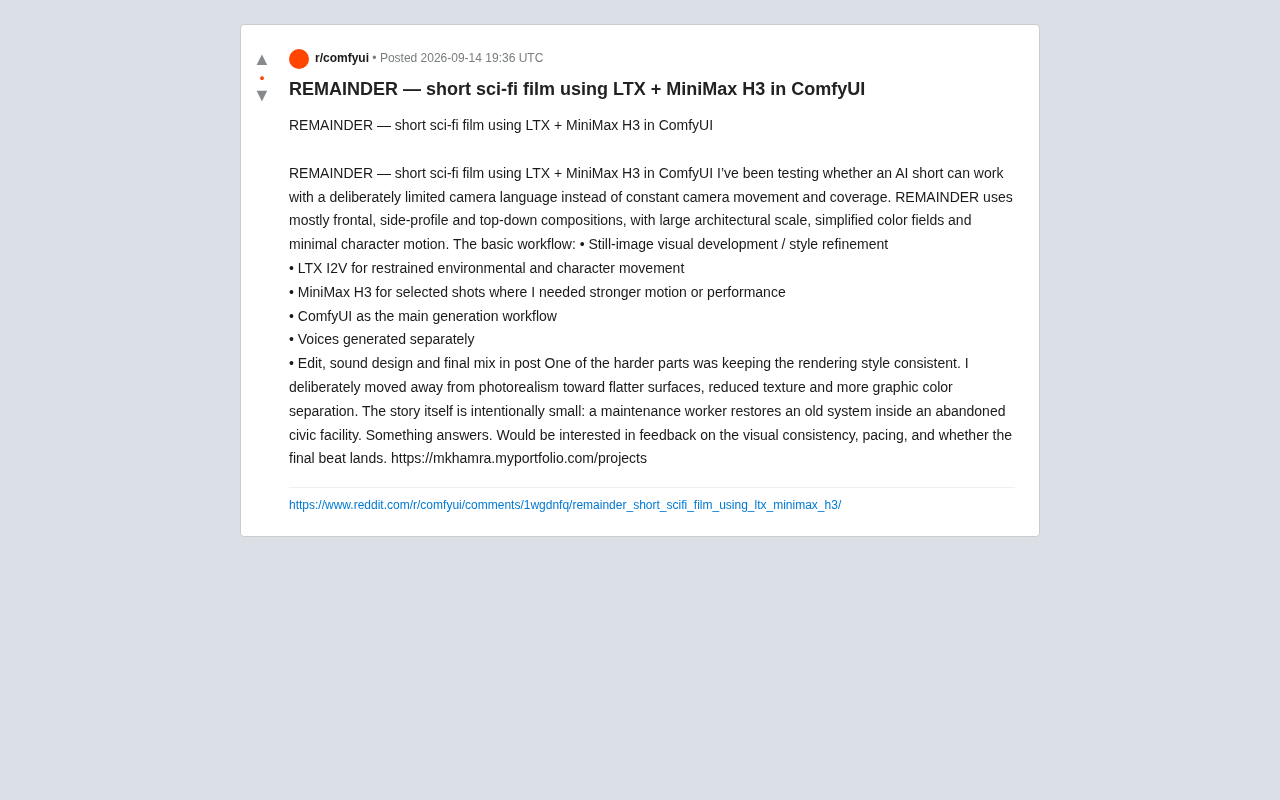
Building an AI Sci-Fi Short with LTX + MiniMax H3: Restrained Cinematography in ComfyUI
Sci-fi short REMAINDER uses LTX, MiniMax H3, and ComfyUI with restrained cinematography and flat aesthetics to solve visual consistency in AI filmmaking.

LangChain Deep Agents vs. MDA: Clearing Up the Confusion for Developers
What's the difference between LangChain's Deep Agents and MDA (Managed Deep Agents)? We break down create_deep_agent vs. define_deep_agent and help developers choose.
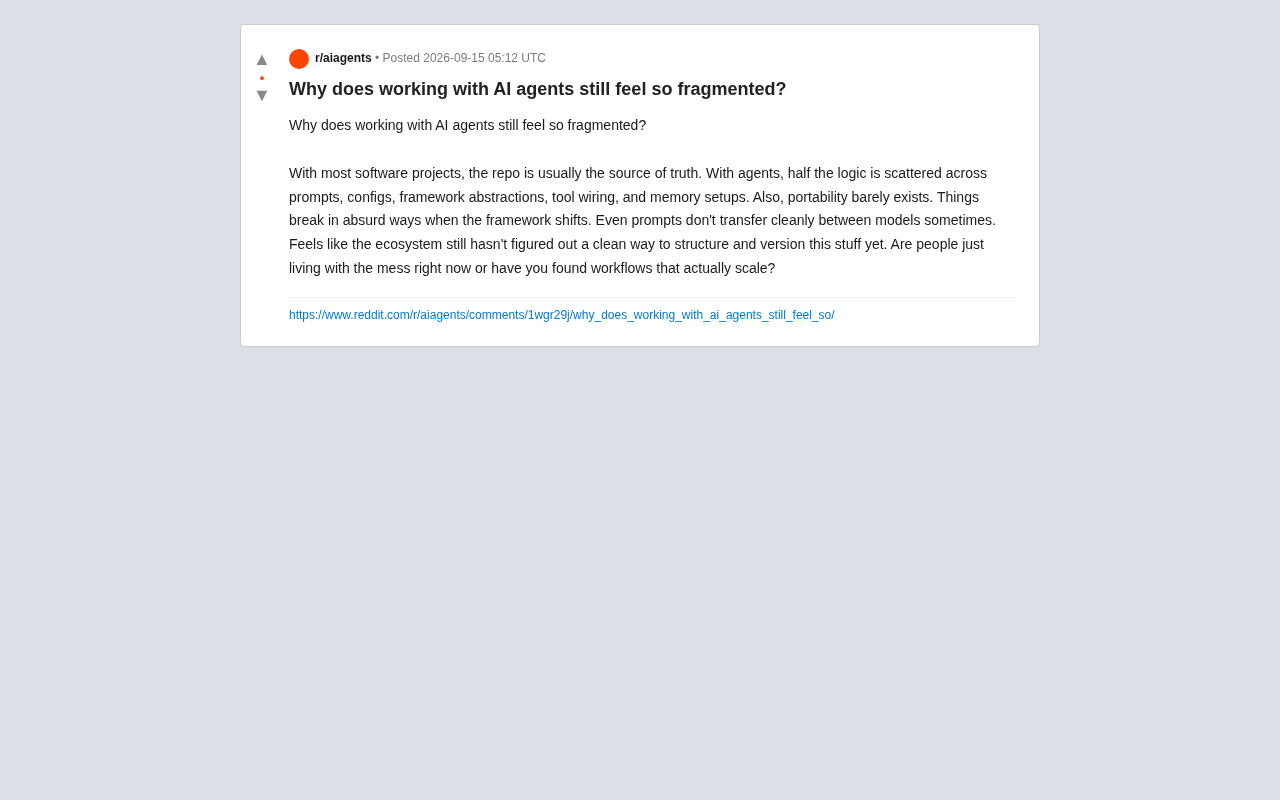
Why Is AI Agent Development So Fragmented? The Real Causes and How to Work Around Them
Why does AI Agent development feel so fragmented? Logic scattered across prompts, configs, and frameworks makes portability nearly impossible. Here's why — and how to cope.