Zuckerberg's Frank Admission: AI Agents Aren't Where They Need to Be — Where Are the Technical Bottlenecks?

Zuckerberg admits AI Agents lag behind expectations, exposing key reliability and planning bottlenecks.
Meta CEO Mark Zuckerberg told employees that AI Agents have not progressed as expected — a candid admission from a company that has invested billions into AI infrastructure. This article examines the technical bottlenecks behind that statement, including error compounding in multi-step tasks and long-horizon planning failures, and contrasts the sober reality with the industry's inflated narratives, offering practical guidance for enterprise adoption.
A Frank Statement and What It Signals for the Industry
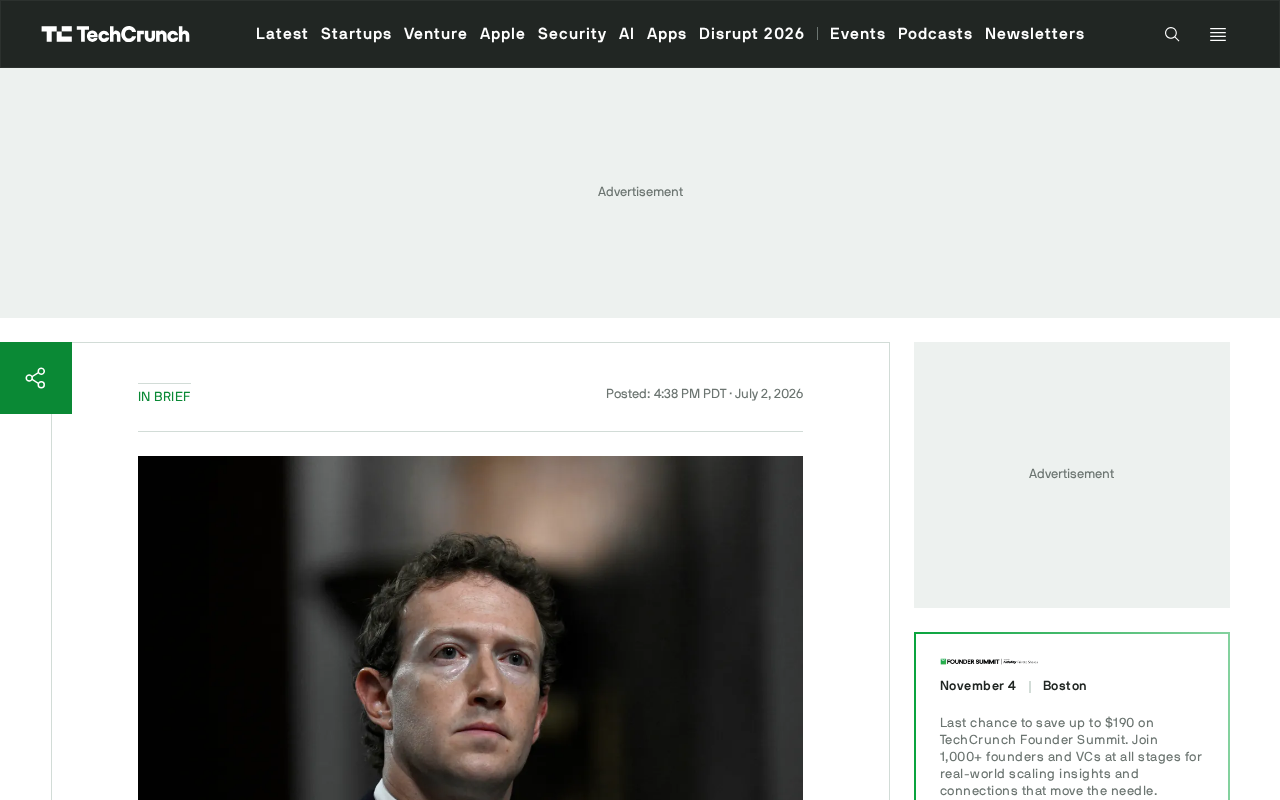
Meta CEO Mark Zuckerberg recently told employees in an internal meeting that AI Agents have not progressed as expected. The remark drew widespread attention — not because it was surprising, but because it came from the leader of a tech giant that has poured enormous resources into AI and publicly bet on superintelligence.
It's worth noting that since Meta established its AI Research SuperCluster (RSC) in 2022, the company has invested tens of billions of dollars in AI infrastructure. The RSC was one of the largest AI-dedicated computing facilities in the world at the time, built on NVIDIA GPUs and designed to support training models with trillions of parameters. It marked Meta's strategic shift from being an "AI application consumer" to an "AI infrastructure provider." On that foundation, Meta open-sourced the LLaMA series of models — unlike OpenAI, Google, and others who pursued closed-source strategies, Meta chose to publicly release model weights, spawning a vast ecosystem of derivative models globally and dramatically lowering the barrier to AI research. In 2024, Zuckerberg announced plans to expand the GPU cluster to 350,000 H100s, explicitly naming "achieving superintelligence" as a company strategic goal. It is precisely this unprecedented level of investment that makes his candid assessment of Agent progress so authoritative — he's not disparaging competitors; he's scrutinizing a race he has bet everything on.
At a time when the entire industry is hyping the "Year of the Agent," Zuckerberg's sober appraisal is like a bucket of cold water on an overheated market. It reminds us that a significant gap still exists between marketing narratives and technical reality.
What Are AI Agents, and Why Are They So Hyped?
From Conversational Tools to Autonomous Execution
AI Agents are AI systems capable of autonomously planning, invoking tools, and completing multi-step tasks in sequence. Unlike chatbots that only answer single-turn questions, an ideal agent should be able to understand complex goals — such as "book me a trip to Tokyo next week and organize it into a schedule" — and then independently break down the task, browse the web, call APIs, handle exceptions, and deliver results.
From a technical architecture standpoint, AI Agents are typically built on a "plan-execute-feedback" loop, a design inspired by the OODA loop (Observe-Orient-Decide-Act) from cognitive science. Core components include: a large language model as the reasoning engine, tool-use interfaces (Tool Use/Function Calling), memory systems (short-term context and long-term vector databases), and a task orchestration layer. OpenAI formally introduced Function Calling in June 2023 alongside GPT-4, allowing models to call external APIs in structured JSON format — this became a critical technical bridge between agents and the real world. Vector databases (such as Pinecone, Chroma, and Weaviate) provide agents with long-term memory storage, compensating for the inherent limitation of LLMs' finite context windows. Mainstream implementation frameworks like LangChain, AutoGen (open-sourced by Microsoft, supporting multi-agent conversational collaboration), and CrewAI (which introduces role division to simulate human team collaboration) all essentially use prompt engineering and code logic to chain an LLM's single-inference capabilities into continuous decision chains. This architecture gives agents capabilities far beyond a chat window, but it also introduces significant complexity challenges at the systems engineering level.
This is precisely the direction every major company is racing toward. From OpenAI's Operator to Anthropic's Computer Use to various coding agents, AI Agents have become arguably the hottest keyword in AI in recent years. Capital markets have assigned extremely high valuation expectations, believing that agents will be the next value explosion point after large language models.
The Gap Between Expectations and Reality
However, Zuckerberg's statement reveals a harsh reality: current AI Agents still lack sufficient reliability. In multi-step tasks, an error at any single step can compound and cascade, causing the entire task to fail. For enterprise applications, an agent with a success rate of only 70–80% often means it simply cannot be deployed in a real production environment.
From the perspective of the technology maturity curve, AI Agents are currently at a critical inflection point transitioning from the "Peak of Inflated Expectations" toward the "Trough of Disillusionment." Gartner's Hype Cycle divides emerging technology development into five stages: Innovation Trigger, Peak of Inflated Expectations, Trough of Disillusionment, Slope of Enlightenment, and Plateau of Productivity. Historical data shows that from the peak of expectations to genuine mature deployment typically takes 5 to 10 years — blockchain reached its expectation peak in 2017–2018 and remains in a slow recovery phase today; Augmented Reality (AR) went through a similar cycle. Gartner's 2024 AI report explicitly marked "AI Agents" as near the peak of inflated expectations, estimating 2 to 5 years before reaching the productivity plateau. Massive capital has flowed in, marketing narratives have outpaced reality, and real production cases with quantifiable ROI data have yet to be validated at scale. Zuckerberg's statement can be read as an early "de-bubbling" signal from a leading player.
Where Exactly Are the Technical Bottlenecks?
Reliability and the Error Compounding Effect
One of the core challenges facing agents is the error compounding effect. This phenomenon stems from the classic "series system failure" model in Reliability Engineering: the overall system reliability equals the product of the reliabilities of all components in series. This model is widely used in risk assessment in high-reliability fields such as aviation and nuclear power. If the success rate of each step is p, the overall success rate of an n-step task is p to the power of n. Assuming each step has a 95% success rate, completing a task with ten steps drops the overall success rate to roughly 60%; extend the task to 20 steps, and the success rate plummets further to about 36%. Importantly, in real AI Agent scenarios, the steps are not fully independent — errors in early steps propagate as "corrupted information" to subsequent steps, meaning actual reliability is often lower than the theoretical product. NASA's mission reliability engineering practices have shown that decomposing complex tasks into shorter, verifiable sub-task chains is the core strategy for improving system reliability — a philosophy that is evolving in the AI Agent domain into a methodology called Hierarchical Task Decomposition. Current top models achieve single-step accuracy rates of roughly 90–95%, meaning that mathematically, multi-step complex tasks already face severe reliability barriers — a problem of system design, not merely model capability.
Developers in engineering communities have echoed this view: agents perform brilliantly in demos, but in real, messy production environments full of edge cases, they frequently fail.
Long-Horizon Planning and Context Management
Another bottleneck is long-horizon planning. Current large language models excel at local reasoning but still struggle with tasks that require maintaining goal consistency over extended periods and managing complex state. As task chains grow longer, context window management, memory retention, and retrieval all become critical constraints on agent performance.
Researchers attribute this to the phenomenon of "Goal Drift": as the number of conversation turns increases, the model's ability to retain the initial goal gradually degrades, and it tends to be dominated by the most recent information. This has deep architectural roots — research from Stanford University and DeepMind shows that mainstream Transformer-based models exhibit significantly declining attention weights on earlier information when processing contexts longer than 8,000 tokens, a phenomenon known as the "Lost in the Middle" effect (Liu et al., 2023). Even GPT-4 Turbo, which supports a 128K context window, has shown in experiments that extraction accuracy for information in the middle of long contexts is noticeably lower than for information at the beginning or end. This suggests goal drift is not a matter of the model being insufficiently intelligent — it reflects a systemic bias inherent in the attention mechanism itself. Existing solutions such as external memory databases and hierarchical task decomposition can mitigate the problem to some extent, but they have yet to fundamentally resolve LLMs' inherent limitations in long-horizon planning.
Multiple Readings of a Giant's Statement
Strategic Recalibration at the Leadership Level
Zuckerberg's emphasis to employees that progress is falling short is, in one sense, an internal strategic recalibration. As a company that has invested enormous resources in AI infrastructure and talent, Meta needs its teams to stay grounded and avoid becoming complacent under overly optimistic expectations. The statement is both pressure and motivation — it clearly identifies the current technical shortcomings, thereby pointing the way for the next phase of R&D.
A Sharp Contrast with Market Narratives
Notably, this statement stands in sharp contrast to the broadly optimistic narratives in the industry. While many startups and investors paint AI Agents as an imminent technological inflection point that will change everything, a CEO with access to first-hand data has chosen to confront the reality head-on. This contrast is itself highly informative: the external marketing noise may have already far outpaced actual technical maturity. Historically, the dot-com bubble, the mobile internet wave, and the blockchain cycle all saw similar "narrative outpacing reality" phenomena — and those who ultimately emerged on the other side of these cycles were often the participants who kept a clear head during the boom.
Practical Advice for Developers and Enterprises
A Rational View of the AI Agent Hype
For enterprises currently evaluating whether to adopt agent technology, Zuckerberg's statement provides an important reference point: don't be misled by demos and marketing — conduct thorough reliability testing in real-world scenarios. At this stage, AI Agents are better suited as "assistants under human supervision" rather than fully autonomous executors.
When conducting technical evaluations, enterprises should focus on the following dimensions: single-step operation accuracy benchmarks, the maximum reliable step count in a task chain, rollback and recovery mechanisms after failure, and the design of triggers for human intervention. These engineering-level considerations often determine an agent's actual performance in production environments more than model capability alone.
Focus on High-Fault-Tolerance, Well-Defined Scenarios
A more pragmatic approach is to deploy agents in scenarios with higher fault tolerance or human review as a safety net — such as code assistance, content draft generation, information retrieval, and summarization. In these domains, even occasional agent errors won't cause serious consequences, yet agents can still deliver significant efficiency gains.
In terms of industry practice, the most mature AI Agent deployments are concentrated in software development (code completion, automated testing), knowledge management (document retrieval, meeting notes), and customer service support (ticket classification, answer drafting). According to McKinsey's 2024 Global AI Survey, software development assistance has the highest enterprise adoption rate at 34%; knowledge management and document processing account for 28%; customer service support ranks third at 22%. GitHub Copilot's commercial success provides the most compelling evidence: according to GitHub's official data, developers using Copilot code on average 55% faster — a quantifiable ROI that makes it one of the most commercially successful AI Agent implementations to date. The common characteristics of these scenarios are: clear task boundaries, manageable failure costs, and low human verification overhead. By contrast, "general-purpose agent" scenarios requiring long-chain operations across multiple systems remain rare at scale, a striking gap from the industry's marketing fervor.
The Real Value of AI Agents After the Hype Fades
Zuckerberg's frank admission may signal that the AI Agent narrative is entering a more mature phase. Real technological progress rarely comes from triumphant proclamations during the hype cycle — it comes from sustained effort after acknowledging shortcomings.
AI Agents are undoubtedly heading in the right direction, but there are still many hard problems to crack on the journey from "usable" to "truly useful" and from "demo" to "production deployment." The core technical breakthroughs needed include: raising the reliability ceiling for single-step reasoning, building more robust long-term memory architectures, designing verifiable task decomposition and validation mechanisms, and exploring error isolation and fault tolerance patterns in multi-agent collaboration. For everyone in this industry, staying optimistic while staying clear-eyed may be the best posture for navigating the technology cycle.
Key Takeaways
Related articles

Disaster and Glory of the Apollo Program: The History We Must Revisit Before Returning to the Moon
From the fatal Apollo 1 fire to Apollo 8's daring lunar orbit to Apollo 11's successful landing—revisiting the disasters, fears, and compromises of the Apollo program and their lessons for today's return to the Moon.

Netflix Trust Exercise Turns Into Firing Trap: Where Are the Boundaries of Corporate Trust?
A Netflix employee was fired after sharing private info in a trust exercise. We analyze the risks of corporate trust exercises and how employees can protect themselves.

AMD CDNA5 Architecture Deep Dive: Technical Evolution and the AI Computing Competition Landscape
Deep analysis of AMD's CDNA5 architecture covering Chiplet packaging upgrades, HBM memory evolution, and low-precision compute optimization, examining how AMD challenges NVIDIA's AI chip dominance.