#AI agent engineering
3980 related articles
 Research
·2 min
Optimize Anything: One API to Unify Optimization of Code, Prompts, and Agent Architectures
UC Berkeley and Stanford propose Optimize Anything, a universal text optimization framework that unifies optimization of CUDA kernels, agent architectures, and prompts through one declarative API.
Read more →
 Tutorials
·2 min
Building an Agent Framework from Scratch: Breaking Down the Four Core Modules with Code Implementation
Learn how to split AI Agent capabilities into four modules—Tool Registry, Message Store, Agent Runtime, and Built-in Tools—and build a reusable, extensible Agent framework using Python decorators.
Read more →
 Tutorials
·3 min
The Complete Guide to Spring AI: A Full Learning Path for Java Engineers Building AI Applications
A comprehensive guide to Spring AI covering LLM integration, prompt engineering, RAG knowledge bases, and five AI Agent patterns, with three enterprise projects for Java engineers.
Read more →
 Tutorials
·3 min
Getting Started with LangChain: Core Concepts and Hands-On Guide for LLM and Agent Development
A systematic guide to LangChain's core features, covering LLM vs. Agent concepts, unified interface design, multi-provider support, environment setup, and hands-on code examples for AI app development.
Read more →
 Deep Dives
·3 min
Hermes Self-Evolution Framework: An Open-Source Solution for Automated AI Agent Prompt Optimization
Deep dive into NousResearch's open-source Hermes Agent self-evolution framework, using DSPy and GEPA for automated prompt optimization with five-layer safety mechanisms.
Read more →
 Tech Frontiers
·3 min
Generic Agent: A Self-Evolving AI Agent Built with Just 3,000 Lines of Code
Generic Agent builds a self-evolving AI agent with just 3,000 lines of code, 9 atomic tools, and a five-layer memory architecture — using only one-sixth the tokens of competitors.
Read more →
 Industry Insights
·3 min
Endava Builds an Agentic Organization with Codex: Requirements Analysis Compressed from Weeks to Hours
Global IT services firm Endava uses OpenAI Codex to build an Agentic Organization, compressing requirements analysis from weeks to hours. A deep dive into AI-driven software delivery transformation.
Read more →
 Tutorials
·3 min
Deep Dive into Claude Code SDK: A New AI Programming Paradigm for Auto-Writing Code and Reviewing PRs
In-depth analysis of Anthropic's Claude Code SDK & GitHub Action: piping, structured output, permissions, session resumption, and fully automated Issue-to-PR workflows.
Read more →
 Tutorials
·2 min
Why Qwen3 Is the Best Open-Source Model for MCP Agent Development
Analysis of Qwen3's advantages for MCP agent development, comparing DeepSeek R1's lack of Function Calling, covering MoE architecture and thinking mode switching.
Read more →
 Tutorials
·3 min
Cursor AI + Back4App Full-Stack Development in Practice: Build Production-Ready Web Apps with a Single Prompt
Learn how to use Cursor AI with Back4App to auto-build user auth, databases, and deploy a full finance tracker app using natural language — no backend code needed.
Read more →
 Tutorials
·2 min
Learning AI Large Language Models from Scratch: A Guide to Learning Paths, Hardware, and Programming Languages
A beginner's guide to learning AI large language models — covering learning paths, hardware requirements, Python essentials, and cloud services for learners at every level.
Read more →
 Product Reviews
·2 min
Cursor Major Update: A Complete Breakdown of Background Agent, Cross-File Editing, and Other New AI Coding Features
Deep dive into Cursor's latest update: new cross-file Tab model, Background Agent for autonomous coding, Max Mode for all models, inline editing upgrades, and more AI programming features.
Read more →
 Tutorials
·3 min
AI Agent Learning Roadmap: From Beginner to Enterprise-Level Development in Three Months
A detailed three-month AI Agent learning roadmap covering LLM basics, ReAct paradigm, LangChain, memory mechanisms, tool calling, and multi-agent collaboration with practical project suggestions.
Read more →
 Product Reviews
·2 min
Cursor 2.0-2.3 Core Evolution: AI Programming Enters the Era of Fleet Command
Deep dive into Cursor 2.0-2.3: multi-agent parallel programming, auto-evaluation, built-in browser, runtime debugging—pushing developers from coders to AI fleet commanders.
Read more →
 Tech Frontiers
·2 min
Meta Muse Spark Released: A Comprehensive Analysis of the Native Multimodal Reasoning Model
Meta Superintelligence Labs releases Muse Spark, a native multimodal reasoning model supporting visual chain of thought, tool-use, and multi-agent orchestration. Deep dive into its capabilities and competitive positioning.
Read more →
 Tech Frontiers
·2 min
Claude Opus 4.8 Deep Dive: Honesty Matters More Than Benchmarks
Claude Opus 4.8 core upgrade: code bug oversight rate reduced 4x, model becomes more honest. Covers Dynamic Workflows parallel orchestration, Claude Code quota reset, effort control, and upcoming Miscells model.
Read more →
 Tutorials
·3 min
Cursor 2.0 in Practice: Vibe Coding Methodology & Guide to 10x Coding Efficiency
Deep dive into Cursor 2.0's Vibe Coding methodology with two real-world scenarios: full-stack site building and enterprise bug fixing using the Rules, Commands, Context architecture for 10x dev efficiency.
Read more →
 Tutorials
·3 min
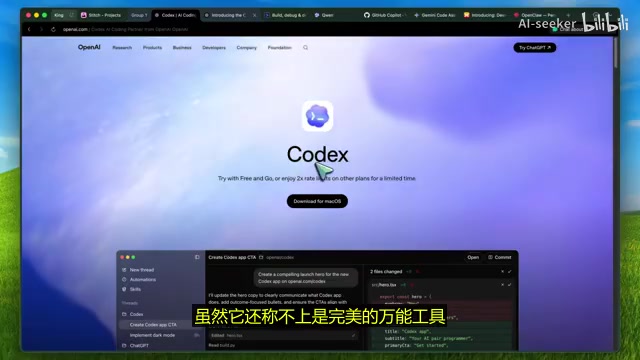
8 Free AI Coding Tools: Build a Complete Development Workflow at Zero Cost
A systematic review of 8 free AI coding tools covering UI design, terminal agents, IDE integration, and async coding to help developers build a complete zero-cost AI development workflow.
Read more →
 Tutorials
·3 min
Harness Engineering: A Practical Guide to AI Programming — From Prompts to Mastery
Explore the three stages of AI programming evolution: from Prompt Engineering to Context Engineering to Harness Engineering. Master enterprise-grade AI coding with Cloud Code + VS Code.
Read more →
 Tutorials
·3 min
Complete Guide to Connecting Claude Code Desktop with DeepSeek: Zero-Barrier AI Programming Setup Tutorial
Step-by-step guide to connecting Claude Code Desktop with DeepSeek via CCSWitch middleware. No VPN or Claude account needed — set up your AI programming environment in 10 minutes.
Read more →