#AI inference optimization
1842 related articles

·3 min
AI Now Writes Over 80% of Code: What Doubling Capability Every 4 Months Really Means
Anthropic reveals Claude now writes over 80% of its code, with AI capability doubling every four months. Three real cases show the speed of AI's rise and the shrinking window for human adaptation.
Read more →

·3 min
Replit President: Writing Code Will Become Insignificant — Ideas Are Everything
Replit's president shares insights on AI programming's future: how a 40M-user platform uses Claude to eliminate coding barriers, making natural language the new programming language.
Read more →

·3 min
Andrew Ng's New Course Explained: A Practical Guide to Using OpenAI's O1 Reasoning Model
Deep dive into Andrew Ng and OpenAI's Reasoning with O1 course covering test-time scaling, new prompting paradigms, multi-model orchestration, and practical applications for developers.
Read more →

·2 min
ZCodeAI Free AI Agent Tool Review: Multi-Model Aggregation at Zero Cost
Detailed review of ZCodeAI, a desktop AI Agent tool by ZhiPu featuring free built-in models like DeepSeek V4 Flash and Xiaomi MiMo, with multi-model aggregation and no API Key required.
Read more →

·3 min
Claude Code Installation Guide & The Five Stages of AI Programming Tools Explained
Complete Claude Code installation guide with the five stages of AI programming tools, from manual coding to agents. Learn 0-to-1 project building and 1-to-100 iteration challenges.
Read more →

·2 min
Building Cloud Computing Clusters from Old Phones: Google and UCSD Explore a New Path to Sustainable Computing
Google and UCSD explore building cloud clusters from old phones, leveraging ARM chip efficiency to cut e-waste and data center carbon footprints.
Read more →

·2 min
Jeff Dean's Commencement Speech at UW Allen School: A Message to the Next Generation of Engineers in the AI Era
Jeff Dean delivers commencement speech at UW Allen School of Computer Science & Engineering, sharing insights with the next generation of CS graduates in the AI era.
Read more →

·3 min
Gemma 4 Open-Source Model Local Deployment Guide: Ollama Installation & Mobile Setup
Step-by-step guide to deploying Google's Gemma 4 open-source model locally with Ollama and running the lightweight version on mobile with tool calling support.
Read more →

·2 min
The Decline of Tokenmaxxing: Why Selling Outcomes Matters More Than Selling Tokens
The Tokenmaxxing craze is fading as enterprise AI procurement shifts from chasing Token counts to focusing on actual business outcomes. Learn why outcome-based AI evaluation is the right approach.
Read more →

·3 min
Key Takeaways from Andrew Ng × OpenAI's Prompt Engineering Course: Two Core Principles Explained
Deep dive into Andrew Ng & OpenAI's ChatGPT Prompt Engineering course: Base LLM vs instruction-tuned models, two core prompting principles, and API-first development thinking for developers.
Read more →

·3 min
Claude Code with Local LLMs: Token-Free Deployment Guide & Configuration
Learn how to connect Claude Code to local LLMs for token-free AI coding. Covers three-layer architecture, Ollama/LM Studio/vLLM setup, protocol translation, and hardware selection.
Read more →

·2 min
The Vibe Coding Flow State: When AI Coding Speed Outpaces Creative Output
A developer shares a zero-frustration Vibe Coding experience using Fable and Replit. Explore how AI coding tools are shifting the bottleneck from execution to creativity.
Read more →

·3 min
Codex vs Claude Code: An In-Depth Comparison of AI Coding Agents
In-depth comparison of Codex, Claude Code, and Cursor across pricing, features, GitHub integration, and team collaboration to help developers pick the best AI coding agent.
Read more →

·2 min
A Complete Guide to LLM Infrastructure: Core Challenges from GPU Clusters to Inference Optimization
A deep dive into core challenges and key technologies for LLM infrastructure, covering GPU cluster management, inference optimization, distributed training, cost control, and observability.
Read more →

·2 min
Anthropic Reverses Controversial Policy of Secretly Throttling AI Researchers Using Claude
Anthropic reverses its controversial policy of secretly throttling Claude Fable/Mythos responses to frontier LLM development requests after community backlash, raising critical questions about AI transparency.
Read more →

·3 min
Headroom: The Open-Source Compression Tool That Cuts AI Agent Token Costs by 10x
Headroom is an open-source token compression tool by a Netflix engineer that achieves 60%-95% token savings for AI coding tools through intelligent category-based compression.
Read more →

·2 min
Claude 4.6 vs GPT-5.1 vs DeepSeek-R1: A Hands-On Comparison of Coding Capabilities
In-depth comparison of Claude Sonnet 4.6, GPT-5.1 Codex, and DeepSeek-R1 across API pricing, specs, and SWE-Bench Verified scores to help developers pick the best AI coding assistant.
Read more →

·3 min
LFM2.5 Local Deployment Hands-On: An 8B Parameter Model That Outperforms GPT-o3s in Tool Calling
Hands-on test of Liquid AI's LFM2.5 local deployment: architecture breakdown, 16GB VRAM troubleshooting, and GraphRAG tool-calling benchmarks vs GPT-o3s.
Read more →

·3 min
Kunpeng AI Agent Architecture: Why General-Purpose Computing Matters as Much as AI Computing
Deep dive into Huawei Kunpeng's AI Agent solution — why general-purpose computing matters as much as AI computing for agent architecture, from memory systems to tool calling and secure runtimes.
Read more →
·2 min
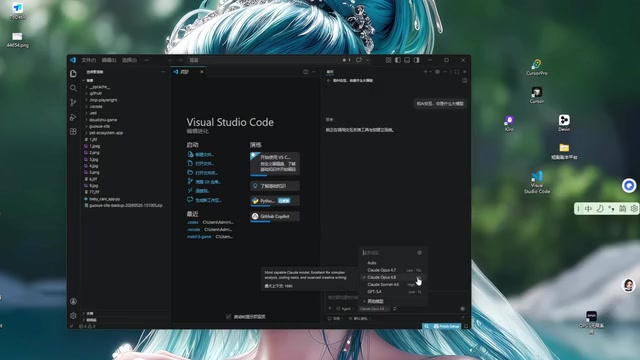
Opus 4.8 vs GPT 5.5 Cost Comparison: Money-Saving Strategies with Tiered Model Pairing
Real-world cost comparison of Claude Opus 4.8 and GPT 5.5 token usage. Opus 4.8 hits 15x consumption. Practical money-saving strategies using tiered model pairing for AI coding.
Read more →