#AIGC
80 related articles

·2 min
AI Pixel Art Cleanup Guide: How the Open-Source Tool pixel snapper Works
AI pixel art grids messy and colors inconsistent? Open-source tool pixel snapper fixes AI output via grid detection, pixel snapping, and color quantization — ideal for indie game developers.
Read more →
OpenAI Ad Revenue Could Miss Internal …
·2 min
OpenAI Ad Revenue Could Miss Internal Targets by 90% — How Can AI Companies Break the Monetization Deadlock?
Analysts project OpenAI's ad revenue could miss internal targets by 90%. We break down why AI chat products struggle to monetize through ads and what sustainable alternatives exist.
Read more →

·2 min
Deep Dive into MCP: How Large Language Models Connect to the Outside World
MCP (Model Context Protocol) is the standardized protocol connecting AI models to external tools and data — the 'USB-C port' of the AI era. Learn its origins and value.
Read more →

·5 min
Complete Guide to the National Mathematical Modeling Contest: Modeling, Topic Selection, and Award-Winning Strategies in the AI Era
A comprehensive guide to preparing for the National Mathematical Modeling Contest: covering the essence of modeling, judging rules, topic selection, AI usage guidelines, and a four-day schedule to boost your chances of winning.
Read more →

·2 min
ComfyUI MCP: AI Autonomously Builds Workflows, Generate Images Locally with a Single Sentence
The open-source ComfyUI MCP project uses Anthropic's MCP protocol to let LLMs like Claude directly control ComfyUI node graphs—describe needs in natural language, AI auto-builds the workflow, and renders locally on your GPU. Zero-click AI image generation.
Read more →

·5 min
Getting Started with AI Agents: Concepts, Architecture, and Core Components Explained
What is an AI Agent? Starting from Bill Gates' claim about the computing revolution, this article explores AI Agents' intuitive concepts, four core components (LLM+Planning+Memory+Tools), and what Agent development means for programmers.
Read more →

·3 min
Getting Started with AI Agent Development: A Complete Learning Path to Building Intelligent Applications from Scratch
AI Agents are reshaping software development with 42.8% market CAGR. Learn the difference between Agents and traditional AI, plus a complete LangChain-based curriculum to launch your career in intelligent agent development.
Read more →

·5 min
Runs on Low VRAM! A Hands-On Look at the ID LoRA Face-to-Video Workflow
A face-to-video workflow built on GGUF quantized models and ID LoRA runs on just an RTX 3060 with 6GB VRAM. This article breaks down its core principles, four-step process, and how it tackles facial consistency in AI video.
Read more →

·3 min
GLM-5.2 Coming Soon? Domestic GPU Code LLM MUSA Coder Goes Open Source
GLM-5.2 enters internal testing; Moore Threads open-sources MUSA Coder, China's first code LLM trained on domestic GPUs; Google backs Anthropic with $35B in guarantees.
Read more →
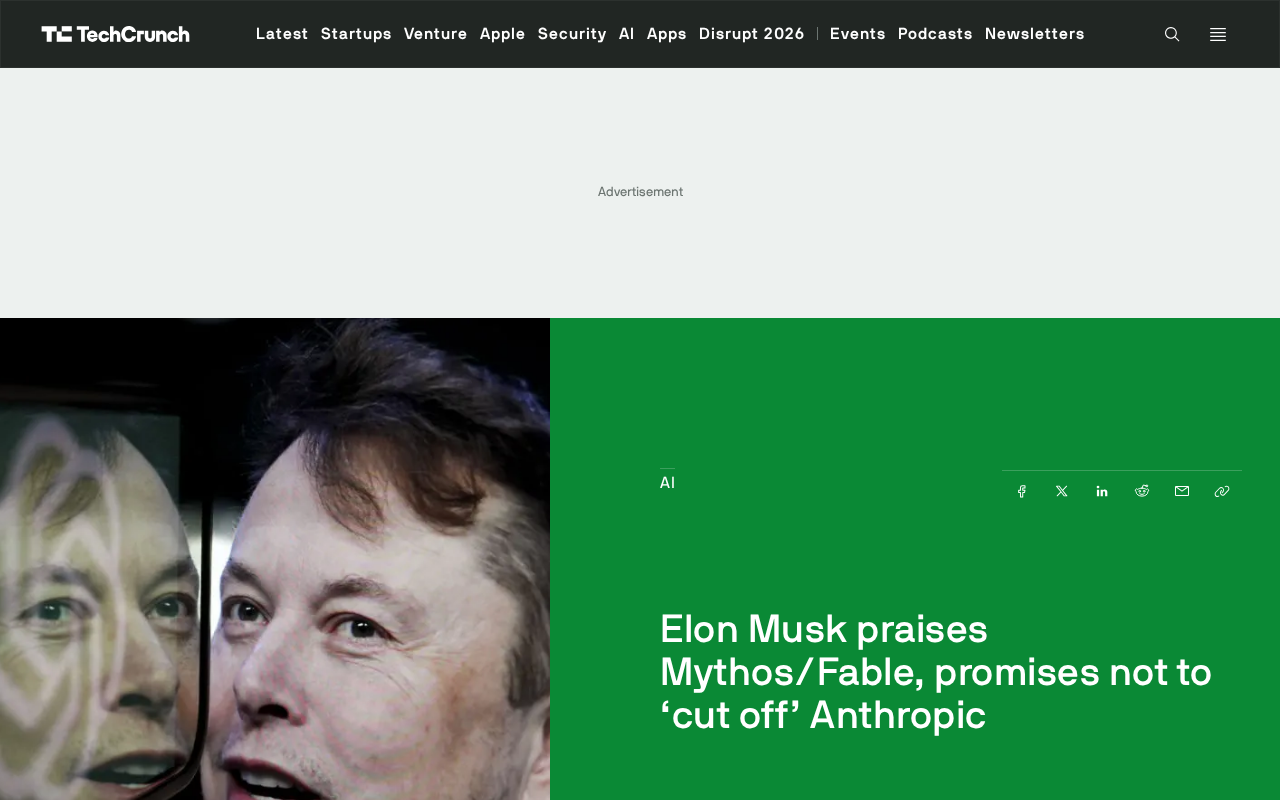
·3 min
Musk Pledges Not to Cut Off Anthropic: The Trust Game in AI Cloud Infrastructure
Musk publicly pledges not to cut off Anthropic's compute access. We break down the $40B stakes, AI infrastructure coopetition, and how companies manage trust risk in a compute-concentrated era.
Read more →

·7 min
Getting Started with LangChain: The Core Framework Connecting LLMs and AI Applications
A deep dive into LangChain's positioning and value—why do LLMs need a middle layer? How does LangChain serve as the 'glue' unifying multi-model interfaces and supporting Agent development? Learn its core modules and learning path.
Read more →

·2 min
Domestic Budget AI Models for Web Novel Writing: A Head-to-Head Comparison of Four Models
Lingxie SoloEnt tested QDAM 3.7 Plus, DeepSeek Feast Pro, LongCat 2.0, and MiniMax Mi3 for web novel writing. Three editors scored results to help authors choose the right AI tool.
Read more →

·6 min
A Beginner's Guide to AI Agents: How Large Models Are Driving a New Computing Revolution
What is an AI Agent? This article systematically explains the core architecture of AI agents (LLM + Planning + Memory + Tools), how they differ from ChatGPT, their combination with robots, and why developers must master Agent development skills.
Read more →

·3 min
Taste-Skill: The Open-Source AI Taste Engine That Fights Generic AI-Generated Content
Taste-Skill is a viral open-source JavaScript project with 56K+ GitHub Stars. It uses prompt engineering and anti-slop rules to help AI generate higher-quality, more distinctive content.
Read more →
The Anti-Slop Fiction Contest: How to …
·2 min
The Anti-Slop Fiction Contest: How to Make AI Write Like It Isn't AI
A fiction contest challenging AI writing 'slop' sparks industry reflection. Learn what AI slop is, why it happens, and how prompt engineering can help AI write with genuine soul.
Read more →
Neural Render Proxies: A New Paradigm …
·3 min
Neural Render Proxies: A New Paradigm for Real-Time Interaction and Differentiable Lighting
A deep dive into Neural Render Proxies: how neural networks replace costly lighting computation to enable real-time interaction, inverse rendering, and end-to-end differentiable optimization across games, digital twins, and NeRF.
Read more →

·2 min
MediaAgent: Building a Brain for ComfyUI in Rust to Fully Automate Workflows
MediaAgent is a Rust-based AI Agent system that gives ComfyUI a brain via PTCA loops and JSON-LD semantic workflows, enabling fully automated model selection, parameter tuning, and retries.
Read more →

·7 min
AI Agent Practical Guide: From Content Generation to Enterprise Applications
A deep dive into AI Agent's two core directions: 2C content generation (text/images/video) and 2B enterprise applications (RAG/AutoGen/LLM integration). With real startup cases and practical methods.
Read more →
 Tech Frontiers
·2 min
Reve 2 vs. Ideogram 4: A Deep Dive into Layout Control in AI Image Generation
A deep comparison of Reve 2 and Ideogram 4's layout control capabilities, covering technical approaches, real-world use cases, and industry trends for designers and creators.
Read more →

·3 min
Breaking Into AI as an Ordinary Person: No Model Training Required — You Can Still Earn $10K+ Monthly by Finding the Right Niche
How can ordinary people break into AI and earn money? This guide covers three entry strategies: zero-barrier data annotation and prompt engineering, career changers becoming AI app engineers, and degree holders diving into algorithms.
Read more →