#Agent Loops
744 related articles
 Tutorials
·2 min
OpenAI Codex Complete Guide: Four Tools for Building an AI Programming Workflow
Deep dive into OpenAI Codex's four core tools: IDE extension, CLI, Cloud service, and code review bot. Learn how they work together to build an efficient AI programming workflow from local coding to cloud automation.
Read more →
 Tutorials
·2 min
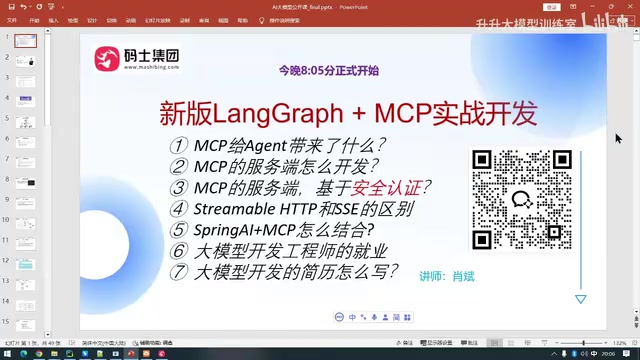
LangGraph 0.5.3 + MCP Agent Development in Practice: Security Authentication & Deployment Guide
LangGraph 0.5.3 introduces MCP server security authentication and agent deployment solutions. Combined with Qwen3 models, it provides a complete production-grade AI agent development stack.
Read more →
 Product Reviews
·2 min
Claude Opus 4.8 Launches on Cursor: Dual Improvements in Efficiency and Persistence
Cursor announces Claude Opus 4.8 is live. CursorBench shows significant gains in coding efficiency and task persistence. Analysis of key improvements and market impact.
Read more →
 Deep Dives
·3 min
memU Memory Framework Explained: Unifying Multi-Modal Agent Memory with a File System
Deep dive into the memU open-source memory framework: how it organizes Agent memory as a file system with three-layer semantic abstraction, dual-loop collaboration, and two retrieval modes.
Read more →
 Research
·2 min
Optimize Anything: One API to Unify Optimization of Code, Prompts, and Agent Architectures
UC Berkeley and Stanford propose Optimize Anything, a universal text optimization framework that unifies optimization of CUDA kernels, agent architectures, and prompts through one declarative API.
Read more →
 Research
·2 min
How GitHub Is Building a General-Purpose Accessibility AI Agent: Lessons Learned and Technical Challenges
GitHub is building a general-purpose accessibility AI Agent to automatically detect and fix software accessibility issues. Explore the technical challenges, human-AI collaboration, and industry impact.
Read more →
 Industry Insights
·3 min
How Jane Street Built a Custom AI Programming Toolchain for OCaml
Jane Street's AI team details how they built a custom LLM toolchain for OCaml, covering workspace snapshot training data, RL with code evaluation, and the AID editor architecture.
Read more →
 Industry Insights
·3 min
AI Agents Deep Dive: The Paradigm Shift from Chat Tools to Autonomous Execution Systems
Deep analysis of AI Agents vs LLMs, covering three evolution stages, four core architecture components, three penetration paths, multi-agent collaboration, and societal impact.
Read more →
 Product Reviews
·3 min
Zenflow Hands-On Review: Spec-Driven AI Coding vs. Pure Prompt-Based Development
In-depth review of Zenflow's spec-driven AI coding vs Google AI Studio's prompt-based approach. Covers multi-agent execution, automated validation, version rollback, and the paradigm shift in AI programming.
Read more →
 Tutorials
·3 min
LangGraph Multi-Agent Architecture: Graph Structure Principles and Enterprise-Level Implementation Guide
Deep dive into LangGraph's core graph structure design, single and multi-agent collaboration patterns, MCP protocol integration, and Time Travel fault-tolerance, with enterprise-level hybrid multi-agent architecture implementation.
Read more →
 Product Reviews
·3 min
Devin 2.0 In-Depth Review: Is the $20/Month AI Coding Agent Actually Worth It?
In-depth analysis of Devin 2.0: dropped from $500 to $20/month, 12x efficiency in code migration, but only 15% completion on complex tasks. Real test data on use cases and limitations.
Read more →
 Expert Opinions
·3 min
Gumloop Founder: 50 AI Agents Running Your Company? Don't Fall for It
Gumloop founder Max shares the truth about AI automation: processing 4M daily workflows taught him why 50 AI Agents running a company is a lie, and why the real AI philosophy is acceleration, not replacement.
Read more →
 Tutorials
·3 min
Hermes Agent + Playwright: A Practical Guide to AI-Driven Browser Automation
A complete guide to AI-driven browser automation with Hermes Agent and Playwright, covering setup, three AI modes (snapshot decisions, multi-turn dialogue, autonomous exploration), retry mechanisms, and optimization tips.
Read more →
 Product Reviews
·2 min
ZenFlow Hands-On: Testing the Spec-Driven Fully Autonomous AI Software Engineer
Hands-on review of ZenFlow—the first spec-driven fully autonomous AI software engineer. Multi-agent parallel collaboration with built-in verification delivers end-to-end development from ideation to production.
Read more →
 Tutorials
·2 min
Career Progression in AI/LLM Application Development: Four Stages from Beginner to 40K Monthly Salary
A systematic four-stage career path for AI/LLM application development: from RAG and Agent fundamentals to architecture design, helping developers transition to AI roles targeting 40K+ monthly salary.
Read more →
 Product Reviews
·3 min
Google Jules 2.0 Major Upgrade: Deep Dive into Seven New Features
Google's AI coding assistant Jules exits Beta with environment snapshots, Critic Agent reinforcement learning code review, interactive planning, web preview, web search, and more.
Read more →
 Tutorials
·3 min
SubAgent Architecture: The Core Implementation for Context Isolation
Deep dive into SubAgent context isolation architecture, covering parent-child Agent roles, tool definitions, run_subagent implementation, and differences from TodoList and Agent Teams.
Read more →
 Deep Dives
·3 min
Deep Dive into MCP Code Execution & Agent Skills: Compressing 150K Tokens Down to 2,000
Deep analysis of two MCP ecosystem breakthroughs: code execution compresses tool definitions from 150K to 2K tokens, and Agent Skills enable capability packaging and reuse.
Read more →
 Tutorials
·2 min
Complete Breakdown of Andrew Ng's LangChain Course: Five Core Components and Hands-On Guide
Deep dive into Andrew Ng and Harrison Chase's LangChain course, covering the five core components—Models, Prompts, Indexes, Chains, and Agents—to help developers master LLM app development.
Read more →
 Tutorials
·3 min
MCP Protocol Explained: The New Agent Communication Standard Replacing Function Calling
Deep dive into MCP (Model Context Protocol): its core concepts, three communication mechanisms, and ecosystem. Learn how MCP replaces Function Calling with Streamable HTTP and SDK 2.0.
Read more →