#AutoGen
724 related articles

·3 min
AI Agent Development Learning Roadmap: A Four-Stage Guide from Zero to Production
A systematic AI Agent development roadmap covering core concepts, ReAct paradigm principles, multi-agent collaboration, and hands-on projects across four stages to master agent development in 2-3 months.
Read more →

·3 min
Getting Started with AI Agents: A Complete Learning Path from Zero to Production
A comprehensive guide to AI Agent architecture covering ReAct paradigm, multi-agent collaboration, RAG integration, and the planning-memory-tools framework, with a complete learning path from concepts to production deployment.
Read more →

·3 min
Xiaomi Open-Sources MiMo Code: Can an Infinite Memory Mechanism Solve AI Coding's Biggest Pain Point?
Xiaomi open-sources MiMo Code, an AI coding tool with infinite memory, multi-Agent collaboration, and Claude Code compatibility — solving context forgetting in large projects.
Read more →

·4 min
A Beginner's Guide to Deep Agents: The Complete Evolution from Basic Agents to Deep Agents
A systematic guide covering the evolution from traditional AI agents to Deep Agents, including core architectures, four development stages, technical features, and practical developer guidance.
Read more →

·3 min
AI Agent Learning Roadmap: A Four-Stage Plan from Zero to Hands-On
A systematic four-stage AI Agent learning roadmap covering LLM API calls, ReAct paradigm, memory mechanisms, and multi-agent collaboration for beginners.
Read more →

·3 min
AI Agent Tutorial Collection: Complete Coverage of Multi-Agent, Memory, and Reasoning
Open-source AI Agent tutorial project with 2600+ GitHub Stars covering multi-agent systems, memory, planning, and reasoning loops via Jupyter Notebooks for hands-on learning.
Read more →

·2 min
Xiaomi MiMo Code Goes Open Source: How Cross-Session Memory Is Changing AI Programming Collaboration
Xiaomi's MiMo Code is an open-source terminal programming Agent with cross-session memory and multi-Agent collaboration. Explore its memory system, self-evolution mechanism, and how it differs from Claude Code.
Read more →

·3 min
Nexent Open-Source Platform: Zero-Code Auto-Generation of Production-Grade AI Agents
Deep dive into Nexent's open-source platform for zero-code production-grade AI Agent generation, covering Harness Engineering, built-in controls, use cases, and comparisons with AutoGen and CrewAI.
Read more →

·3 min
HiClaw Open-Source Multi-Agent Collaboration System: A New Paradigm for Human-AI Collaboration Based on the Matrix Protocol
Deep dive into HiClaw, an open-source multi-Agent OS built on the Matrix protocol for transparent, controllable human-AI task coordination with Human-in-the-Loop design.
Read more →

·2 min
CascadeFlow: Deep Dive into the AI Agent Cascading Runtime Optimization Framework
Deep dive into the CascadeFlow open-source framework and how it optimizes AI Agent cost, latency, quality, and policy decisions through cascading runtime mechanisms for production deployment.
Read more →

·3 min
Deep Dive into LangChain's Social Media Agent Open-Source Project: Architecture, Features, and Practical Value
In-depth analysis of LangChain's open-source social-media-agent: content sourcing, AI curation, scheduled publishing, Human-in-the-Loop design, and LangGraph architecture.
Read more →

·3 min
CrewAI Multi-Agent Collaboration in Practice: A Complete Guide from Setup to API Service
A detailed guide to CrewAI multi-Agent collaboration covering core concepts, FastAPI service setup, and real-world comparisons of GPT-4o Mini, Qwen Max, and Llama 3.1.
Read more →

·2 min
Integrating AI Agents into Project Management Tools: A Practical Upgrade from Chat Assistant to Task Execution
A developer upgraded their project management tool's AI from a simple chatbot to an intelligent Agent capable of data queries, document generation, and automated task execution using Function Calling.
Read more →

·2 min
Getting Started with AI Agent Development: A Three-Stage Learning Roadmap Explained
A complete roadmap for learning AI Agent development from scratch. Covers Python basics, LLM concepts, five core capabilities, mainstream frameworks, and RAG knowledge base projects.
Read more →

·1 min
AI Agent Development Learning Path: Breaking Down Core Competencies from Concept to Production
A deep dive into the core competency matrix for AI Agent development, covering task planning, tool orchestration, and memory management with practical guidance from learning to production.
Read more →
·3 min
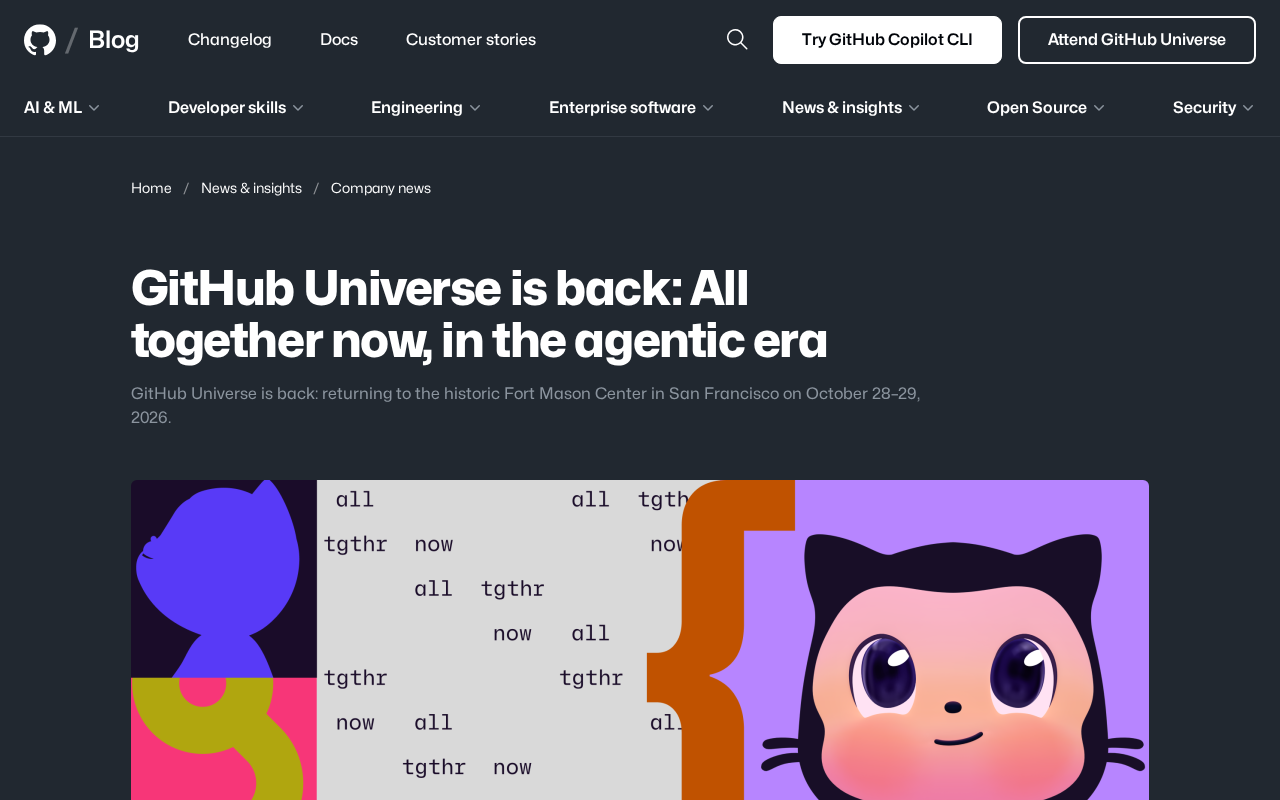
GitHub Universe 2026 Returns: Officially Entering the AI Agent Era
GitHub Universe returns Oct 28-29, 2026 at Fort Mason Center, San Francisco, themed around the Agentic Era. From Copilot to AI Agents, GitHub leads software development into autonomous intelligence.
Read more →

·3 min
AI Large Language Model Learning Path: A Three-Step Practical Guide from Zero to Freelancing
A three-step guide to LLM app development: from Prompt Engineering and API calls, to RAG knowledge bases, to Agent development and multi-agent collaboration.
Read more →

·4 min
MCP vs Function Calling: Core Differences and Selection Guide
Deep dive into 3 core differences between MCP and Function Calling: coupling, interaction breadth, and security. Learn why AI needs a unified protocol and how to choose the right approach.
Read more →

·1 min
Cosmos Unified Agents Platform First Live Demo: A Platform-Level Solution for Multi-Agent Collaboration
Cosmos Unified Agents Platform gives its first live demo, detailing its design philosophy and cloud agent operations. Learn how it solves AI Agent fragmentation with unified multi-agent building, deployment, and management.
Read more →
·2 min
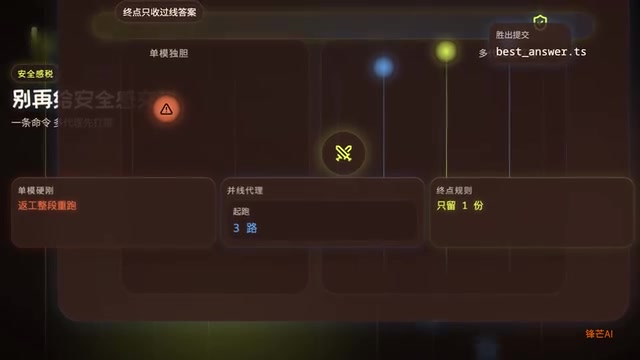
Duel Agents: Multi-AI Agent Competition Mechanism That Automatically Selects the Most Cost-Effective Coding Solution
Duel Agents uses multi-model parallel competition and recursive task decomposition as a routing layer before tools like Claude Code, automatically selecting the most cost-effective AI coding result with claimed 70% savings.
Read more →