#Claude Opus 4.5
91 related articles

·3 分钟
OpenClaw Local Deployment Guide: Free Access to Claude Opus 4.5 and Building an Autonomous AI Assistant
Step-by-step OpenClaw local deployment guide: use Claude Opus 4.5 for free via Google Anti-Gravity, set up Telegram remote control, and test autonomous Agent capabilities including web search and plugin auto-install.
阅读全文 →
 产品体验
产品体验·2 分钟
AntiGravity + Opus 4.5 Real-World Test: The Best Alternative After Getting Banned from Claude Code
AntiGravity + Claude Opus 4.5 tested as the best alternative to Claude Code bans. Completes tasks GPT-5.2 failed, with generous Pro quotas.
阅读全文 →
 产品体验
产品体验·2 分钟
AntiGravity + Opus 4.5 Hands-On Review: The Best Alternative After Getting Banned from Claude Code
AntiGravity now supports Claude Opus 4.5, offering a stable alternative to Claude Code without ban risks. Hands-on tests show it outperforms GPT-5.2 in real projects.
阅读全文 →
 教程攻略
教程攻略·2 分钟
Gemini 3.0 Pro + Claude Opus 4.5: A Practical Guide to Dual-Model Programming Workflows
Compare Gemini 3.0 Pro and Claude 4.5 Opus in programming tasks, build a dual-model workflow with KiloCode for architecture planning and code execution.
阅读全文 →

·5 分钟
Running GPT-5.6 Inside Claude Code: Best Practices for Subagent Orchestration and System Prompts
Deep dive into running OpenAI GPT-5.6 inside Claude Code: comparing Codex vs Claude Code on subagent orchestration, workflow design, and system prompt quality, revealing how harness engineering determines model output.
阅读全文 →

·4 分钟
Fable 5 vs GPT-5.6: An In-Depth Head-to-Head Comparison of Two Top-Tier Coding Models
In-depth comparison of Fable 5 vs GPT-5.6 (Sol) for AI coding. Covering token efficiency, code quality, design, cost, and safety based on $10K+ real usage data.
阅读全文 →

·4 分钟
Fable 5 vs GPT-5.6: An In-Depth Head-to-Head Comparison of Two Top-Tier Coding Models
In-depth comparison of Fable 5 vs GPT-5.6 (Sol) for AI coding. Real-world data on token efficiency, code quality, design capability, and cost from $10K+ testing.
阅读全文 →

·3 分钟
Why Kimi K3's Open-Source Model Has OpenAI and Anthropic Running Scared
Deep analysis of the AI industry shockwave triggered by Kimi K3: the double standard behind distillation accusations, performance comparisons with GPT-5.5, real security concerns, and how open-source models threaten closed-source giants.
阅读全文 →

·3 分钟
Why Kimi K3's Open-Source Model Has OpenAI and Anthropic Running Scared
Deep dive into why Kimi K3 is rattling OpenAI and Anthropic: distillation double standards, GPT-5.5 comparisons, real security risks, and how open-source models threaten closed-source business models.
阅读全文 →
·3 分钟
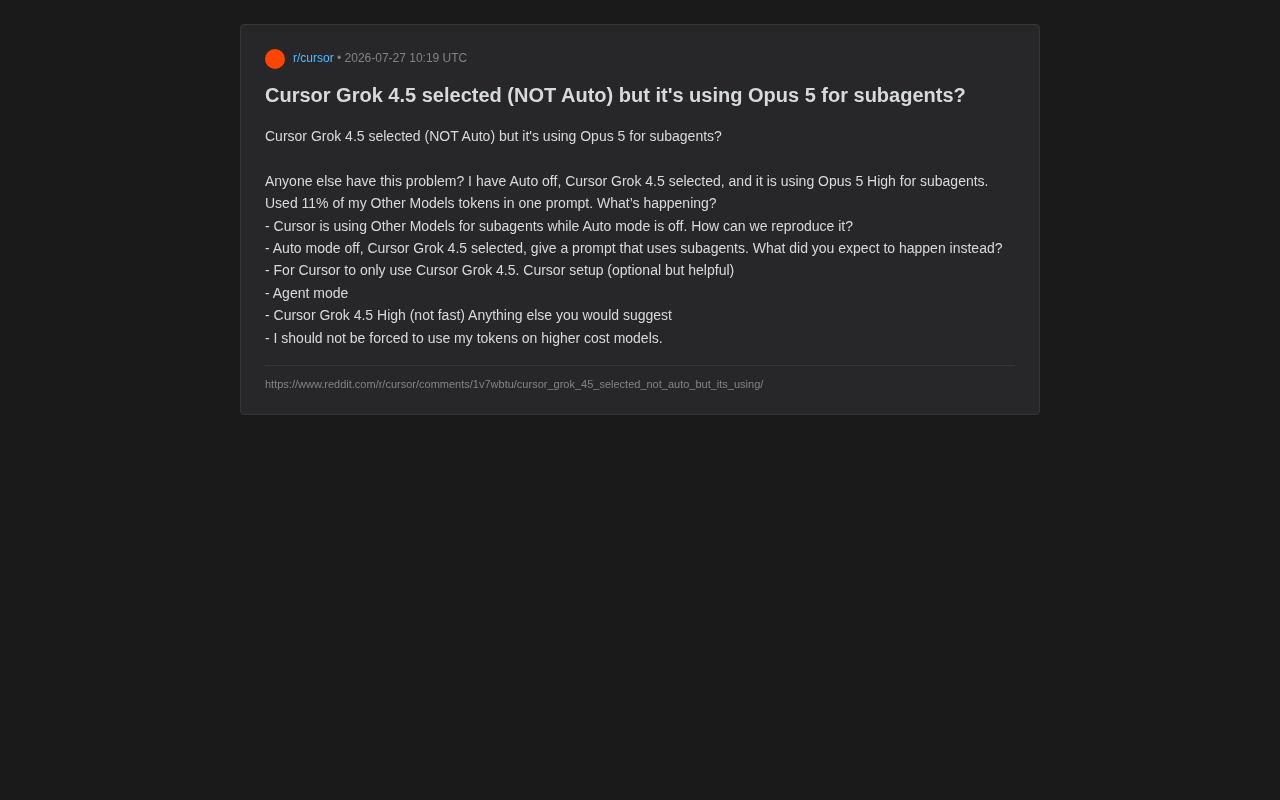
Cursor Selects Grok but Calls Opus: Subagent Model Substitution and Cost Control Issues Explained
Cursor users selecting Grok 4.5 find subagents secretly calling expensive Opus 5, consuming 11% quota per prompt. Analysis of model decoupling, cost transparency, and user strategies.
阅读全文 →

·3 分钟
GLM 5.2 Hands-On: An Open-Source, Low-Cost Model That Rivals Opus
In-depth hands-on review of GLM 5.2: a 753B-parameter open-source model with a 1M-token context, rivaling Opus 4.8 at about one-tenth the price. Full setup guide for Claude Code and Cursor.
阅读全文 →

·3 分钟
Anthropic's Hands-On Guide: How to Scientifically Choose and Evaluate AI Models
Anthropic's Applied AI team breaks down a methodology for choosing AI models: building custom evals, avoiding three common pitfalls, measuring value by cost per success, and cutting costs with prompt caching and context engineering.
阅读全文 →
·2 分钟
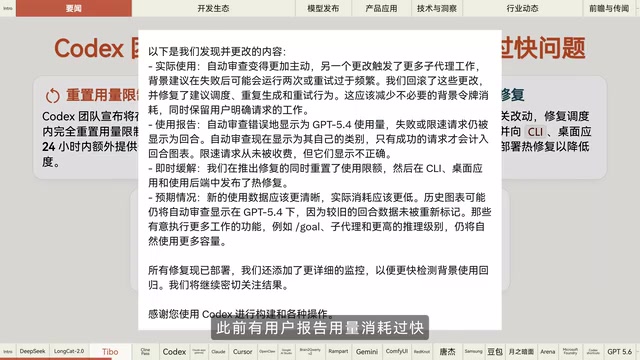
DeepSeek V4 Coming Soon; Meituan Open-Sources 1.6-Trillion-Parameter LongCat 2.0
DeepSeek V4 official release expected mid-July with peak/off-peak pricing; Meituan open-sources trillion-parameter MoE model LongCat 2.0 with million-token context; Cursor launches iOS app. A quick look at the latest AI industry news.
阅读全文 →
·2 分钟
DeepSeek V4 Coming Soon, Meituan Open-Sources 1.6 Trillion Parameter LongCat 2.0
DeepSeek V4 launches mid-July with peak/off-peak pricing; Meituan open-sources trillion-parameter MoE model LongCat 2.0 with million-token context; Cursor debuts iOS app. A quick look at the latest AI industry news.
阅读全文 →

·1 分钟
Codex vs Claude Code: A Deep Cost Comparison — Which AI Coding Assistant Saves You More Money?
Which is more cost-effective, OpenAI Codex or Claude Code? Starting from real bills, this article breaks down the billing structure, multiplier traps, and subscription limits of AI coding assistants.
阅读全文 →

·2 分钟
Grok 4.5 Hands-On Review: Code Generation and Research Visualization Capabilities
Hands-on review of xAI's Grok 4.5: one-shot web code generation and research figures rivaling top journal visuals. Covers core capabilities, Claude Opus comparison, and aggregation platform tips.
阅读全文 →

·3 分钟
Grok 4.5 Review: A Full Breakdown of Elon Musk's Most Powerful AI Coding Model
xAI releases Grok 4.5, ranking #1 on SWE Marathon and outperforming Claude Opus. Explore benchmark scores, Agent capabilities, free access, and CLI installation.
阅读全文 →

·6 分钟
Hands-On with Qwen 3.8 Max: How an Open-Source Model Closes In on Top-Tier Closed Models
Qwen 3.8 Max has 2.4 trillion parameters and will be open-sourced. In KingBench testing it scored 81.25%, ranking second, beating Claude Opus 4.8 and trailing only Fable 5. A deep dive into its performance across 8 tests.
阅读全文 →

·7 分钟
Qwen3 235B A22B in Practice: A 2.4-Trillion-Parameter Open Model Surpasses Claude Opus
Hands-on with Alibaba Tongyi Qianwen's strongest Qwen3: a 2.4-trillion-parameter open weight model scoring 81.25% on KingBench, ranking second and beating Claude Opus 4.8 with perfect scores in game dev, math, and agent tasks.
阅读全文 →

·4 分钟
5 Tips to Cut Claude Opus 5 Costs by Up to 80%
Opus 5 moving to API billing? 5 proven tips to cut token costs by up to 80%: lower Effort Level, architect-executor split, Ponytail compression, Deep Research, and Advisor Mode — while outperforming Opus 4.8.
阅读全文 →