#Codex goal command
277 related articles
 Deep Dives
·2 min
Getting Started with Claude Code: Three Core Capabilities and Usage Guide
A deep dive into Claude Code's core capabilities: understanding codebases, autonomously executing commands, and searching the web. Learn key concepts like context windows and permission control.
Read more →
 Tutorials
·3 min
From Claude Code to Codex: A Practical Guide to Diversifying Your AI Coding Tools
Learn how to integrate OpenAI Codex into your dev workflow alongside Claude Code. Covers pricing comparison, desktop setup, one-click migration, context management differences, and unique visualization features.
Read more →
 Expert Opinions
·2 min
Cross-Agent State Sharing: A More Practical Context Solution Than Memory Management
Analysis of context fragmentation in multi-Agent collaboration, comparing memory vs. state management approaches, and how tools like Opal Bridge enable seamless switching between Claude Code, Codex, and other Agents.
Read more →
 Tech Frontiers
·3 min
Hermes Agent 0.14.0 Update: Native Windows Support and 180x Performance Boost
Hermes Agent 0.14.0 Foundation Update: local proxy unified auth, 180x browser automation speedup, native Windows support, AI video generation, free DeepSeek V4, and lossless Handoff context switching.
Read more →
 Product Reviews
·3 min
Multica Open-Source Platform: A Self-Hosted Solution for Unified Management of Multiple AI Coding Agents
Deep dive into Multica, an open-source Agent management platform for coordinating Claude Code, Codex, and other AI coding assistants as unified team members with self-hosted deployment.
Read more →
 Tech Frontiers
·3 min
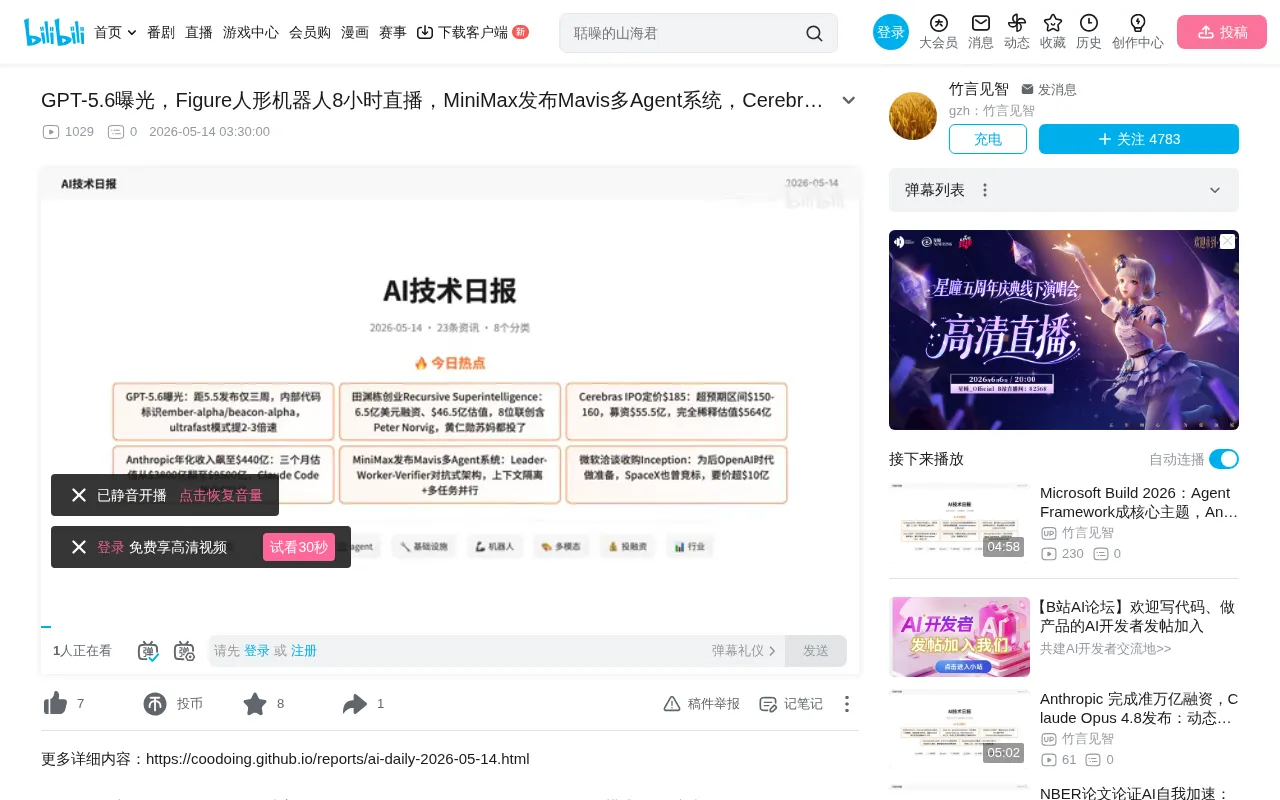
GPT-5.6 Internal Testing Begins: A Complete Breakdown of the Week's Biggest AI Developments
GPT-5.6 internal testing launches UltraFast mode, Codex goal-driven mode revolutionizes AI programming, MiniMax cuts costs 360x, Anthropic vs OpenAI valuation war, Cerebras IPO raises $5.55B, Figure robot validates 8-hour autonomous ops, Google Vio 3.1 leads AI video.
Read more →
 Tutorials
·3 min
Building an AI Agent Mobile App with Zero Code: From Prompt to App Store — A Complete Walkthrough
Learn how to use VibeCodeApp to build a D2C e-commerce AI Agent mobile app with RAG capabilities using natural language prompts — from writing prompts to App Store deployment.
Read more →
 Tutorials
·4 min
Claude Code Agent Architecture Source Code Deep Dive: Agent Loop and Tool System in Practice
Deep dive into Claude Code's four core agent modules: system prompt, Agent Loop, tool system, and memory mechanism. Build a Mini Claude Code from scratch in TypeScript.
Read more →
 Tutorials
·2 min
A Guide to Writing Effective Claude.md Files: Core Principles and Best Practices
Learn how to write effective claude.md files with core principles like concise instructions, progressive disclosure, and proper structure to maximize AI coding agent performance.
Read more →
 Tutorials
·2 min
Superpowers: The Must-Have Codex Plugin That Makes AI Ask Questions to Clarify Your Requirements
Superpowers is a must-have plugin for Codex and Claude Code that uses AI reverse questioning to help developers clarify vague requirements, lower prompt writing barriers, and reduce code rework.
Read more →
 Product Reviews
·2 min
InsForge: The Open-Source Tool That Gives AI Coding Assistants Backend Capabilities
InsForge is an open-source backend platform that lets AI coding assistants like Claude Code and Cursor directly invoke databases, auth, storage, Edge Functions, and deployment via MCP Server.
Read more →
 Deep Dives
·4 min
Can AI Agents Replace a Development Team? A Practical Guide for Non-Technical People
Can non-technical people use AI Agents to build virtual dev teams? From CEO Agent to Developer Agent, we analyze the theory vs. reality and offer a practical implementation guide.
Read more →
 Tutorials
·3 min
OpenRouter Free Models Tutorial: Accessing 28 Free AI Models & Deep Dive into the AI Market Landscape
Guide to OpenRouter's 28 free AI models with API setup, covering GPT-OSS 120B, DeepSeek V4 Flash, and leaderboard insights into the AI model market landscape.
Read more →
 Tutorials
·3 min
35 Lines of Prompts Let Codex Auto-Optimize Your Workflow — Reposted by OpenAI's President
An OpenAI employee used just 35 lines of prompts to have Codex analyze 30 days of work history, identify repetitive tasks, and generate reusable automated Skills. Combined with screen reading and long-term memory, Codex is becoming a proactive workflow optimization agent.
Read more →
 Product Reviews
·3 min
Cursor 3.0 Deep Dive: The AI Agent Command Center Rewritten in Rust
Cursor 3.0 abandons VS Code entirely, rewritten from scratch in Rust as an AI agent management platform. Deep dive into its three evolutions, Composer 2 controversy, parallel agent orchestration, and the paradigm shift from assisted to autonomous coding.
Read more →
 Product Reviews
·3 min
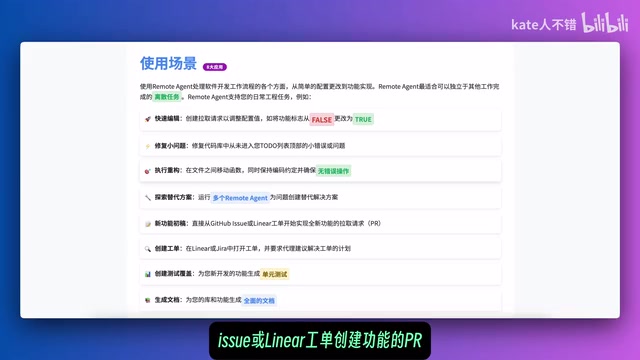
Augment Remote Agent Hands-On: Running 10 Cloud AI Agents in Parallel for Programming
Hands-on review of Augment Remote Agent: 10 cloud AI Agents coding in parallel, covering bug fixes, PR generation, documentation, and more with detailed workflows and real-world examples.
Read more →
 Product Reviews
·2 min
Major Claude Code Update: A Complete Guide to Agent View and the Goal System
Deep dive into Claude Code's new Agent View and Goal system, covering multi-agent parallel management, background sessions, and result-oriented autonomous execution.
Read more →
 Tutorials
·3 min
Codex + Claude Code + Cursor: A Practical Breakdown of a Three-Tool AI Coding Workflow
A deep breakdown of Codex, Claude Code, and Cursor — their positioning, collaboration methods, and a complete practical workflow with pricing and role-based pairing recommendations.
Read more →
 Industry Insights
·3 min
Endava Builds an Agentic Organization with Codex: Requirements Analysis Compressed from Weeks to Hours
Global IT services firm Endava uses OpenAI Codex to build an Agentic Organization, compressing requirements analysis from weeks to hours. A deep dive into AI-driven software delivery transformation.
Read more →
 Product Reviews
·2 min
Google Stitch 2.0 Deep Dive: The Transformation from UI Generator to AI-Native Design Canvas
Google Stitch 2.0 major upgrade introduces infinite canvas, design agents, DesignMD rules, and MCP developer integration—transforming from a UI generator into an AI-native design canvas.
Read more →