#Draw Things
450 related articles
 Product Reviews
·3 min
Google Antigravity IDE Deep Dive: Can This Free AI Coding Tool Replace Cursor?
Deep dive into Google's Antigravity IDE: analyzing this free AI coding tool built by the Windsurf team, its agent-first development mode, real-world performance, and full comparison with Cursor.
Read more →
 Tutorials
·2 min
OpenClaw Step-by-Step Deployment Guide: From Local Installation to Multi-Platform Integration
Step-by-step OpenClaw open-source AI agent deployment guide covering local setup, cloud deployment, WeChat and Feishu integration, and custom Skills development.
Read more →
 Tutorials
·3 min
OpenClaw Local Deployment Tutorial: Connect to WeChat, Feishu & DingTalk in 10 Minutes
Complete guide to deploying OpenClaw locally, covering Windows setup, cloud deployment, WeChat/Feishu/DingTalk integration, and custom Skills—beginners can deploy in 10 minutes.
Read more →
 Product Reviews
·2 min
Gained 25K Stars in One Week: This Chinese Open-Source AI Coding Tool Takes on Claude Code
A Chinese open-source AI coding tool gained 25K GitHub Stars in one week, challenging Claude Code with autonomous closed-loop programming, parallel tasks, checkpoint resume, and intelligent model routing.
Read more →
 Product Reviews
·3 min
OpenSlide: An Open-Source Framework That Lets AI Agents Write React Code to Create Presentations
OpenSlide is an Agent-native open-source slide framework that lets AI Agents write React code to generate professional presentations. Supports Claude Code, Cursor, and other coding Agents.
Read more →
 Tutorials
·2 min
The Core Technique of Vibe Coding: Give Your Judgment Criteria to AI
Most people using AI for coding state actions without judgment, causing outputs to miss the mark. Learn the core Vibe Coding method: provide AI with six judgment dimensions for precise collaboration.
Read more →
 Tutorials
·3 min
The Complete Guide to Hermes Agent: Building a Self-Evolving AI Assistant from Scratch
Complete guide to Hermes Agent's five core pillars: Memory, Skills, Soul, Crons & self-evolution. Covers VPS deployment, Telegram setup, security management & best practices for building an AI assistant that grows stronger over time.
Read more →
Deep Dives
How Maxwell's Equations Derive the Spe…
·2 min
How Maxwell's Equations Derive the Speed of Light: Physics' Most Stunning Unification
How Maxwell's equations mathematically derive the speed of light, revealing that light is an electromagnetic wave. Fermilab physicist Don Lincoln explains how basic research transforms civilization.
Read more →
 Product Reviews
·4 min
Generic Agent: An Open-Source AI Agent That Uses Only One-Tenth the Tokens of Comparable Products
Generic Agent is an open-source AI Agent that reduces token consumption by 90% through minimalist tool design, four-layer memory hierarchy, and experience reuse. Supports computer operation, browser automation, Feishu integration, and more.
Read more →
 Tutorials
·2 min
A Practical Methodology for Dissecting Industrial-Grade Agent Source Code with 3 IDEs Working in Tandem
Learn how to use Codex, Claude Code, and Cursor together to dissect industrial-grade Agent source code, with a reusable layer-by-layer methodology applied to OpenCloud.
Read more →
 Tutorials
·3 min
Claude Code in Practice: Plan Mode and MCP Automated Development Tips Explained
A deep dive into advanced Claude Code techniques: precise file referencing, Plan Mode for plan-first development, screenshot-driven UI iteration, project memory rules, and Playwright MCP server integration for fully automated testing.
Read more →
 Product Reviews
·2 min
GPT-5.5 After 3 Weeks of Real-World Testing: Does It Really Crush Opus 4.7 at Coding?
EVERY team tested GPT-5.5 for 3 weeks using SABench. GPT-5.5 scored 62.5 vs Opus 4.7's 33 in coding execution, but the best workflow combines Opus for planning with GPT-5.5 for execution.
Read more →
 Product Reviews
·3 min
Gemini CLI V0.9.0 Update: Deep Dive into Interactive Shell and Codebase Agent Features
Deep dive into Gemini CLI V0.9.0's two core updates: Interactive Shell for seamless TUI programs like Vim and htop, and Codebase Investigator Agent for intelligent project-level refactoring with safe rollback.
Read more →
 Tutorials
·3 min
Coze Skill Packs Fully Explained: From Concept to Hands-On Creation Guide
Deep dive into Coze's Skill feature: progressive disclosure concepts, practical cases in comic generation and contract review, two creation methods, and layered SOP design principles.
Read more →
 Tutorials
·3 min
Batch AI Image Generation on Mac: Lessons Learned from Generating 10,000+ Illustrations
Practical guide to batch AI image generation on Mac using Draw Things, covering prompt iteration strategies, negative prompt pitfalls, performance tips, and the decision to switch to Replicate cloud platform.
Read more →
 Expert Opinions
·4 min
Is HTML Replacing Markdown? A Deep Dive into the AI Output Format Debate
Anthropic's team claims HTML is better than Markdown for AI output, and Karpathy agrees. A deep analysis of HTML's advantages in information density, interactivity, and visualization, plus its limitations in version control and token efficiency.
Read more →
 Tech Frontiers
·4 min
Anthropic Source Code Leak: Unreleased Model Codenames and Hidden Features Deep Dive
Anthropic's Claude Code source code leaked via Source Map files, exposing the million-token Capybara model, Opus 4.7/Sonnet 4.8, undercover mode, and hidden features like Buddy, Kairos, and Dream.
Read more →
 Expert Opinions
·2 min
People Who Write Great Code Actually Struggle with AI? The Washing Machine Theory Reveals Why
Why do expert developers struggle to embrace AI programming? Through the Washing Machine Theory and imperative vs. declarative thinking, this article explores the mindset shift technical professionals face in the AI era.
Read more →
 Product Reviews
·3 min
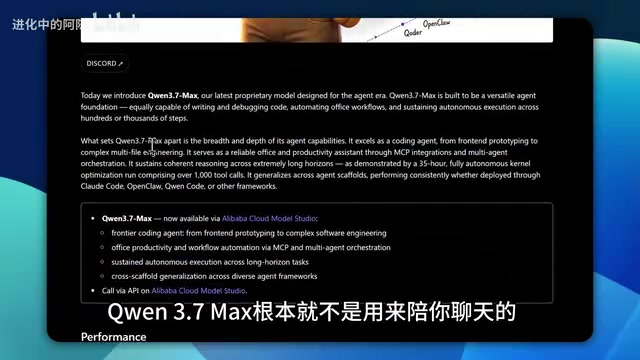
Deep Dive into Qwen3.7 Max: One-Tenth the Cost of GPT, Purpose-Built for AI Agents
Alibaba's Qwen3.7 Max targets AI agents with coding tasks at just $1.30 (one-tenth of GPT-5), supporting 35 hours of continuous execution. Deep analysis of its cost advantages, front-end capabilities, and three key limitations.
Read more →
 Industry Insights
·2 min
What Problem Do You Most Want AI to Solve? A Deep Reflection on the Future Direction of AI
A simple tweet sparks wide discussion: What do you most want AI to solve? From healthcare to education equity and scientific research, exploring the shift from technology-driven to demand-driven AI.
Read more →