#Fable AI coding
160 related articles

·3 min
Five Bombshell AI Stories in a Single Day: GLM-5.2 Goes Open Source, DeepSeek V4 Gray Release, Cursor Acquired
Five major AI events on June 17, 2025: Zhipu GLM-5.2 goes open source, DeepSeek gray-tests V4 with $7B+ funding, OpenAI loses $38.5B, SpaceX acquires Cursor for $60B, and Anthropic's Claude 5 saga.
Read more →

·3 min
Claude Fable 5 Global Ban: Deep Analysis of the AI Economic Chain Fracture Crisis
Claude Fable 5 banned globally just 3 days after launch. Deep analysis of the jailbreak controversy, AI supply chain fracture risk, Anthropic's fear marketing backfire, and local AI deployment strategies.
Read more →

·3 min
Claude Fable 5 Hands-On: Is Doubling the Tokens Worth It? A Rust Programming Comparison with Opus 4.8
Hands-on Rust project comparison of Claude Fable 5 vs Opus 4.8. Fable 5 uses 2x tokens for only marginal quality gains and has stability issues.
Read more →

·4 min
Guide to Building a Second Brain with Claude AI: The Four-C Framework for Your Personal AI Operating System
Learn how to build an AI second brain with Claude using the Four-C Framework (Context, Connection, Capability, Cadence) to create a personal AI operating system with practical examples.
Read more →

·2 min
4 Steps to Simulate the Claude Fable 5 Workflow Using System Prompts
Learn how to simulate the Fable 5 workflow in Claude Code using system prompts: download the prompt file, configure your project, launch safely, and switch to Opus model.
Read more →

·2 min
A Deep Dive into Claude Fable 5: AI Programming Reaches a Tipping Point
Andrej Karpathy's deep review of Claude Fable 5: beyond SOTA benchmarks, it delivers a qualitative leap in long, high-difficulty coding sessions. Exploring the Jevons Paradox of AI programming.
Read more →

·2 min
Claude Fable 5 Hands-On Review: Double the Price — Is It Worth It?
Hands-on comparison of Claude Fable 5 vs Opus 4.8 on landing page design and website rebuilds. Detailed API pricing analysis and practical advice on whether double the cost delivers double the value.
Read more →

·3 min
Anthropic's Fable 5 Halted by Emergency U.S. Government Ban: A Complete Breakdown
The U.S. government emergency-banned Anthropic's Fable 5 and Mythos 5 on national security grounds, with just 5 hours from notice to enforcement. Full analysis of the timeline, rationale, and industry impact.
Read more →

·3 min
AI Tool Fable Ports Classic FPS to Browser in Two Hours — With Full Multiplayer
A developer used AI coding tool Fable to port Return to Castle Wolfenstein to the web browser in just two hours with full multiplayer, revealing AI's power in system-level engineering.
Read more →
Reviving a 28-Year-Old Quake 2 Custom …
·2 min
Reviving a 28-Year-Old Quake 2 Custom Map with AI: New Possibilities in Digital Archaeology
A developer used AI tools to revive a 28-year-old Quake 2 custom map as a browser game, showcasing AI's new role in digital heritage restoration and game preservation.
Read more →

·2 min
The Vibe Coding Flow State: When AI Coding Speed Outpaces Creative Output
A developer shares a zero-frustration Vibe Coding experience using Fable and Replit. Explore how AI coding tools are shifting the bottleneck from execution to creativity.
Read more →

·2 min
Claude Proactively Discovers Bugs in an Open-Source Library: AI Evolves from Coding Assistant to Collaborator
Simon Willison releases asyncinject 0.7, fixing bugs proactively discovered by Claude. This case shows AI evolving from passive coding assistant to active code reviewer and collaborator.
Read more →
·3 min
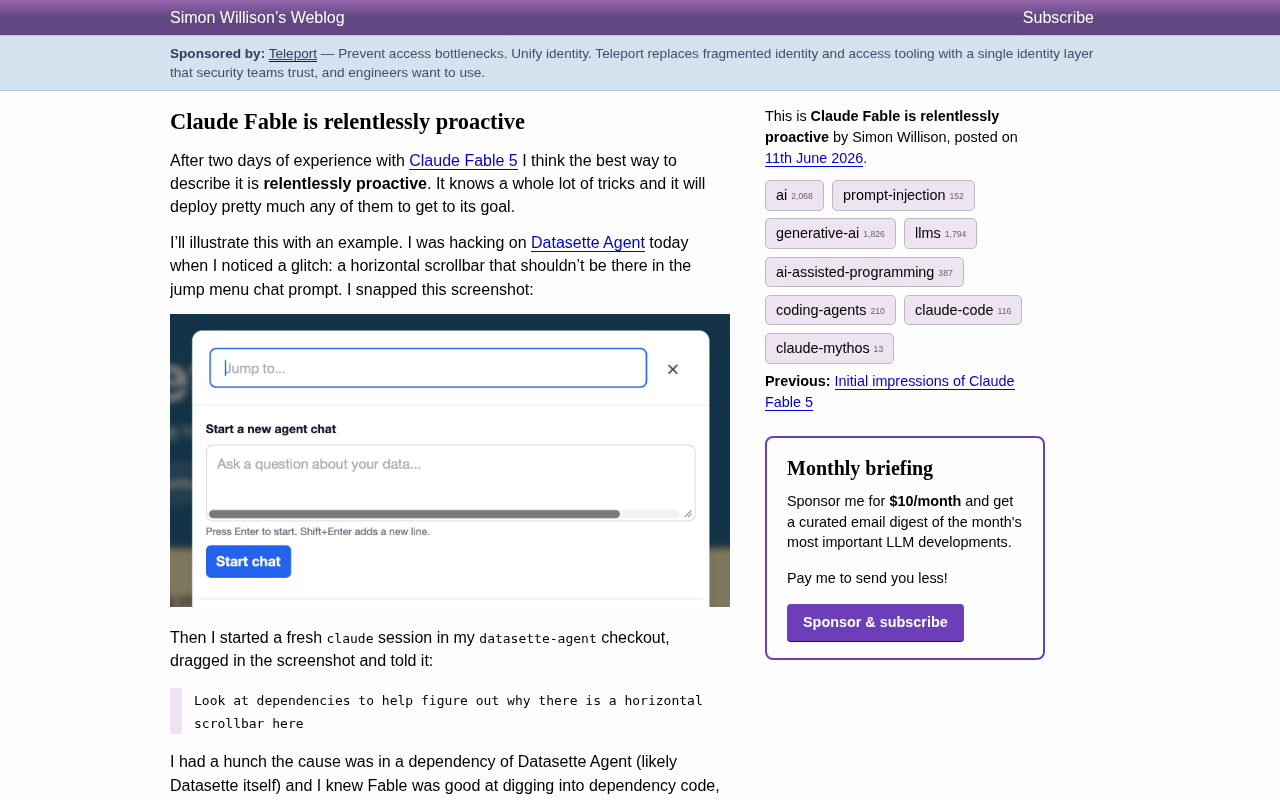
Claude Sonnet 4 Invents Its Own Browser Automation: The Wild Debugging Journey of a CSS Bug
Simon Willison shares how Claude Sonnet 4 (Fable) autonomously invented PyObjC screenshots, built a CORS server, and penetrated Shadow DOM to debug a CSS bug — revealing both tool-making power and security risks.
Read more →

·2 min
Claude Fable 5 Coding Stress Test: Three Hardcore Tasks, All Passed — Plus a Hybrid Cost-Saving Strategy
Hands-on test of Claude Fable 5 on 3D world generation, real repo bug fixing, and physics coupling simulation — all passed first try. Plus a hybrid cost-saving strategy with DeepSeek.
Read more →

·4 min
Claude Fable 5 Hands-On Review: Crushes GPT 5.5, But the Cost Is Brutal
In-depth hands-on review of Claude Fable 5's coding capabilities through full-stack and long-form complex tasks, comparing performance, costs, and use cases vs GPT 5.5 and Opus 4.8.
Read more →

·2 min
Building a CLI Coding Tool for DeepSeek with Claude Fable
A developer used Claude Fable to build a CLI coding tool powered by DeepSeek API — no VPN or subscription needed, just a DeepSeek API Key for command-line AI coding.
Read more →

·2 min
An Anthropic Employee's Firsthand Account: How Claude Fable 5 Evolved from Tool to Collaborative Partner
A veteran Anthropic employee shares observations on Claude's evolution from Opus 3 to Fable 5, highlighting four milestone releases and how Fable 5 marks the shift from tool to collaborative partner.
Read more →

·2 min
Claude Fable User Guide: Four Core Tips to Boost AI Development Efficiency
Anthropic shares four key tips for Claude Fable: assign bigger tasks, choose effort levels wisely, rewrite old instructions, and shift from tasks to goals.
Read more →
·2 min
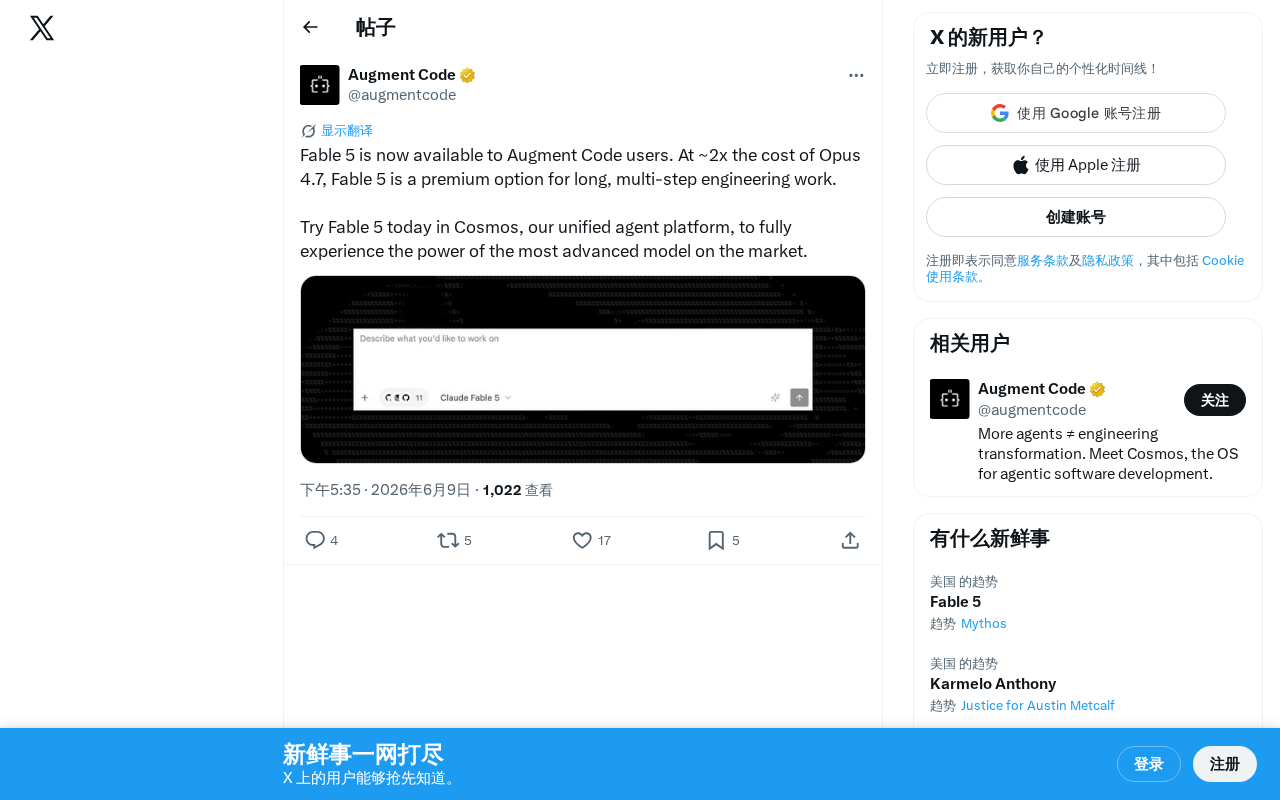
Fable 5 Lands on Augment Code: A Premium Coding Model Priced at 2x Claude Opus 4.7
Fable 5 launches on Augment Code's Cosmos platform, priced at ~2x Claude Opus 4.7, targeting long-chain multi-step engineering tasks. Analysis of its positioning, pricing, and market impact.
Read more →

·3 min
In the AI Era, Everyone Can Build an App — But Distribution Is the Real Bottleneck
AI coding tools have eliminated development barriers, but distribution is now the key to startup success. This article analyzes the three distribution challenges indie developers face and offers strategic advice.
Read more →